WhatTheyThink

Premium Commentary & Analysis

An Imaging Company at Heart, SCREEN Is Building Quite a Production Inkjet Portfolio

The roots of SCREEN are in imaging, dating back to its founding in 1868. The company has leveraged that expertise to create a significant imaging powerhouse which includes industry leading equipment for the production of displays, printed circuit boards, and semiconductors. They also continue to maintain a significant role in the production of printing equipment including high performance inkjet presses for commercial and packaging.

Tuesday, February 01, 2022

Screen Holdings Co., formerly Dainippon Screen Mfg. Co, Ltd is based in Kyoto, Japan. The company’s roots and imaging expertise date back to its founding in 1868 as Ishida Kyokuzan Printing Works. In 1918, it began its evolution from a printing company to a manufacturer of imaging technology and products after receiving its first patent for “Transparent Film Letterpress for Lithographic Transfer.” In 1934, the company created glass screens for photographic reproduction of halftone plates. In 1943, it began to focus on manufacturing tools for photographic reproduction. These tools included horizontal process cameras, and a wide range of film-based contact screens to replace the glass screens developed earlier.

In 1957, SCREEN began to develop electronic components for television camera manufacturers based on some of the imaging technology developed in its screen business. In 1962, it began marketing Fairchild Inc’s scanner in Japan, and subsequently began to develop more technology internally. This included an electronic plate engraver, internally developed scanners, electronic page makeup systems, digital film recorders and platemakers. In 1976, it started to produce equipment used in the production of displays, and today that includes everything from LCD televisions to smartphones. In 2006, it started a semiconductor production equipment business. In 2016, it further leveraged its expertise in imaging technologies to develop advanced production systems for the printed circuit board industry. Today, SCREEN is considered one of the leaders, and its equipment is used by TSMC and others.

In this article, we will look at the commercial printing space. SCREEN introduced its first production inkjet press as the continuous-feed Truepress Jet 520 in 2005. For those who have been following the evolution of production inkjet, you know that this corresponds with the introduction of the InfoPrint 5000, originally an IBM Printer product, manufactured by SCREEN and subsequently acquired by Ricoh. SCREEN and Ricoh still have a very good relationship, and collaborate on design and manufacturing some of their equipment. Although while their corresponding presses may seem the same, there are some key differences in each.


Continue reading your article
with a WhatTheyThink membership.

WhatTheyThink Annual Membership

Less than $4/week.

Get unlimited access to in-depth commentary and analysis covering the latest trends, emerging technologies, operational strategies, and key events across every segment of today's printing industry.

Stay informed. Stay competitive. Stay ahead.
WhatTheyThink Day Pass

$5 for 24 hours

Unlimited access to all of WhatTheyThink. Get your Day Pass

Already a member?
Sign In

About David Zwang

David Zwang travels around the globe helping companies increase their productivity, margins and market reach. He specializes in production optimization, strategic business planning, market analysis, and related services to companies in the vertical media communications market. Clients have included printers, manufacturers, retailers, publishers, premedia and US Government agencies. He can be reached at [email protected].

Recent Articles from David Zwang

Canon: Continued Production Inkjet Development and Growth

Canon: Continued Production Inkjet Development and Growth

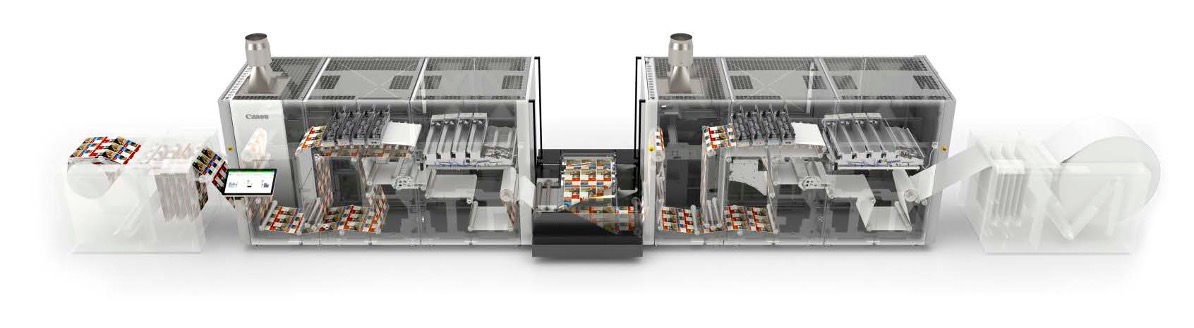
With more than 2,000 ColorStream units delivered worldwide, Canon has introduced the new 7000 series for mid-range production. To say that Canon has been broadening their portfolio of production printers is probably an understatement. There are new developments in the ProStream platform and the new iV7 B2+ cut sheet press is about to hit the street. Read More
Kodak Keeps on Growing!

Kodak Keeps on Growing!

Coming out of three consecutive quarters of year-over-year growth, Kodak has been delivering on their promise to rebuild and transform the company. In this Business Update video, David Zwang talks with Jim Continenza, Eastman Kodak Chairman and CEO. Read More

The Start-Up Chronicles: dappas—Next Level E-Commerce Packaging Intelligence

The Start-Up Chronicles: dappas—Next Level E-Commerce Packaging Intelligence

The ultimate goal of dappas is to help facilitate design and eliminate the entire prepress production, so all the converters who are working with them get a stream of work that is ready to go to press and converting. Read More


Labels and the Connected Supply Chain

Labels and the Connected Supply Chain

You can think of this very competitive connected supply chain landscape in four layers: material suppliers, label converters/printers, hardware OEMs, and software/platform players. The connected supply chain has changed from moving things hand-to-hand or through email to more full-featured automated systems. The good news is that, as a converter, after you decide where you would like to start, there are so many options for you to select from. Read More

Direct-to-Object: Challenging Labels and Tags or Offering New Opportunities?

Direct-to-Object: Challenging Labels and Tags or Offering New Opportunities?

Print is a very adaptive technology and direct-to-object (DTO) is another area where it can offer new opportunities for PSPs and product manufacturers. Today, most of the product and packaging decoration (i.e., labels and tags) that exists is handled by a label converter. It is a well-established process that probably won’t disappear. However, it can and will be challenged by inline DTO printing solutions, offering new opportunities. Read More