 And according to the International Energy Agency (read the discussion paper), the pulp and paper industry alone is the fourth largest industrial use of electricity consuming 5.9 ExaJoules of energy in 2003 (6% of total industrial energy use).(1)
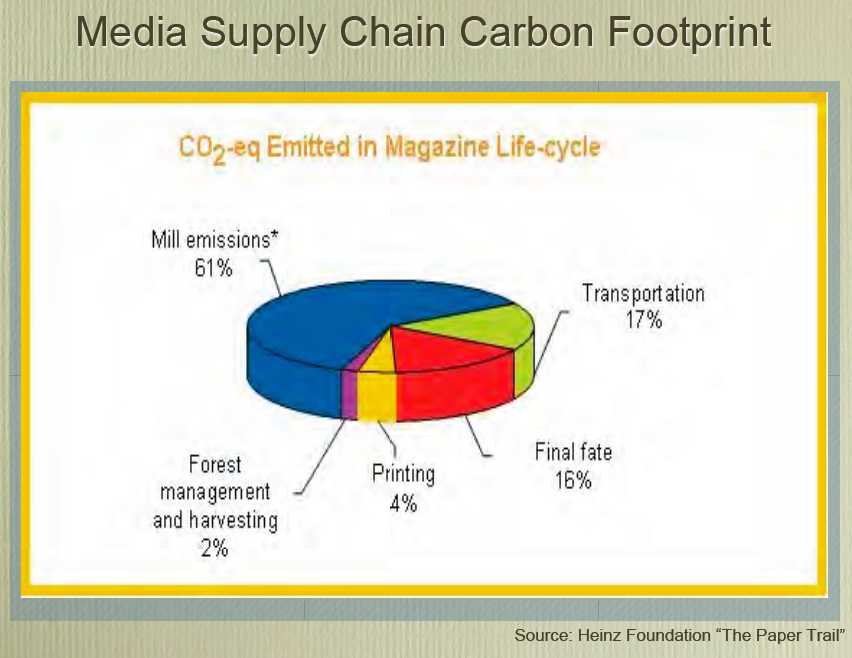
Since the printing process emits only about 6 1/2% of the carbon as does the paper/pulp mill and the production of paper is so energy intensive, what kind of changes can be made to improve the manufacture of the paper? Construction of new plants and placement of new equipment aside, there are ways to capture energy from the waste.
Taking Pulp to the Pump - an article In MIT Technology Review - describes a process that could turn pulp and paper plants into biorefineries, and is now getting funding around the world. A Swedish company Chemrec has pulled in a stream of grants and investments backing a process for turning the black liquor left over from pulp and paper bleaching into a clean-burning synthetic biofuel.
And according to the International Energy Agency (read the discussion paper), the pulp and paper industry alone is the fourth largest industrial use of electricity consuming 5.9 ExaJoules of energy in 2003 (6% of total industrial energy use).(1)
Since the printing process emits only about 6 1/2% of the carbon as does the paper/pulp mill and the production of paper is so energy intensive, what kind of changes can be made to improve the manufacture of the paper? Construction of new plants and placement of new equipment aside, there are ways to capture energy from the waste.
Taking Pulp to the Pump - an article In MIT Technology Review - describes a process that could turn pulp and paper plants into biorefineries, and is now getting funding around the world. A Swedish company Chemrec has pulled in a stream of grants and investments backing a process for turning the black liquor left over from pulp and paper bleaching into a clean-burning synthetic biofuel.
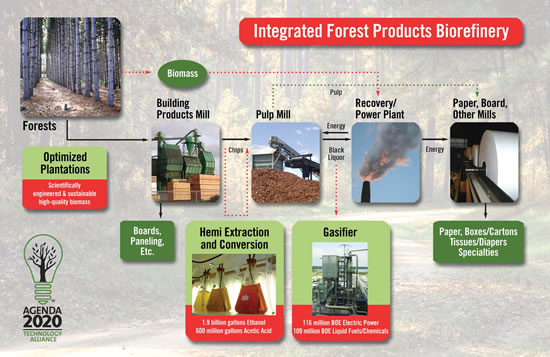
Chemrec and NewPage Corp. are exploring the production of renewable, biomass-based fuels at the NewPage paper mill in Escanaba, MI. The plant would employ Chemrec's black liquor gasification - described in the MIT Tech Review article - to convert waste from the paper pulping process into syngas that would then be processed into biofuels or used to make electricity. The technology could enable the Escanaba mill to produce up to 13 million gallons of liquid biofuel per year, according to Biomass Magazine.
(1) Energy Use, Technologies and CO2 Emissions in the Pulp and Paper Industry, Energy Technology Policy Division, International Energy Agency (2006)