
Premium Commentary & Analysis
In the 3rd century B.C. Aristophanes of Byzantium invented a system of single dots that separated verses and indicated the amount of breath needed to read each fragment of text aloud. The different lengths were signified by a dot at the bottom, middle, or top of the line. For a short passage (a komma), a dot was placed mid-level. The name came to be used for the mark itself instead of the clause it separated.
Friday, October 23, 2009
Continue reading your article
with a WhatTheyThink membership.
Less than $4/week.
Get unlimited access to in-depth commentary and analysis covering the latest trends, emerging technologies, operational strategies, and key events across every segment of today's printing industry.
Stay informed. Stay competitive. Stay ahead.Frank Romano has spent over 60 years in the printing and publishing industries. Many know him best as the editor of the International Paper Pocket Pal or from the hundreds of articles he has written for publications from North America and Europe to the Middle East to Asia and Australia. Romano lectures extensively, having addressed virtually every club, association, group, and professional organization at one time or another. He is one of the industry's foremost keynote speakers. He continues to teach courses at RIT and other universities and works with students on unique research projects.

10 Things PSPs Should Consider Before Adopting Robotics: What You Need to Know to Begin the Journey
Why Highly Targeted Communications Make Digital Print Essential to Modern Marketing
Wide Format in 2026: How Technology Is Reshaping Competitive Advantage

Frank recommends a new book called “Empire of Ink” which documents the growth of the American newspaper industry. We went from 23 newpapers in 1776 to over 20,000 in 1900. Read More
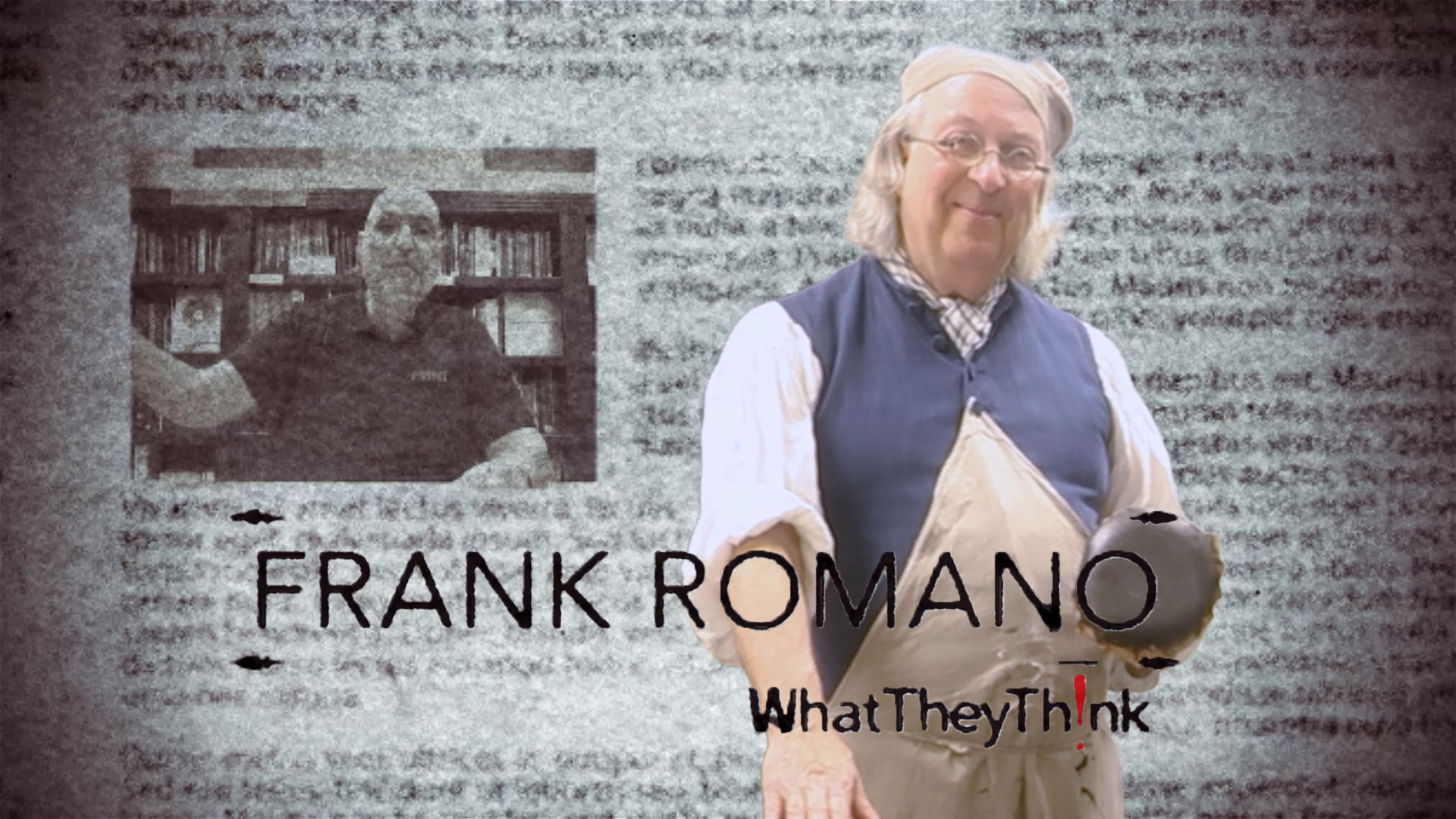
Frank chats with Colonial reenactor Gary Gregory as he prints the Declaration of Independence on a replica of an English Common Press. Read More
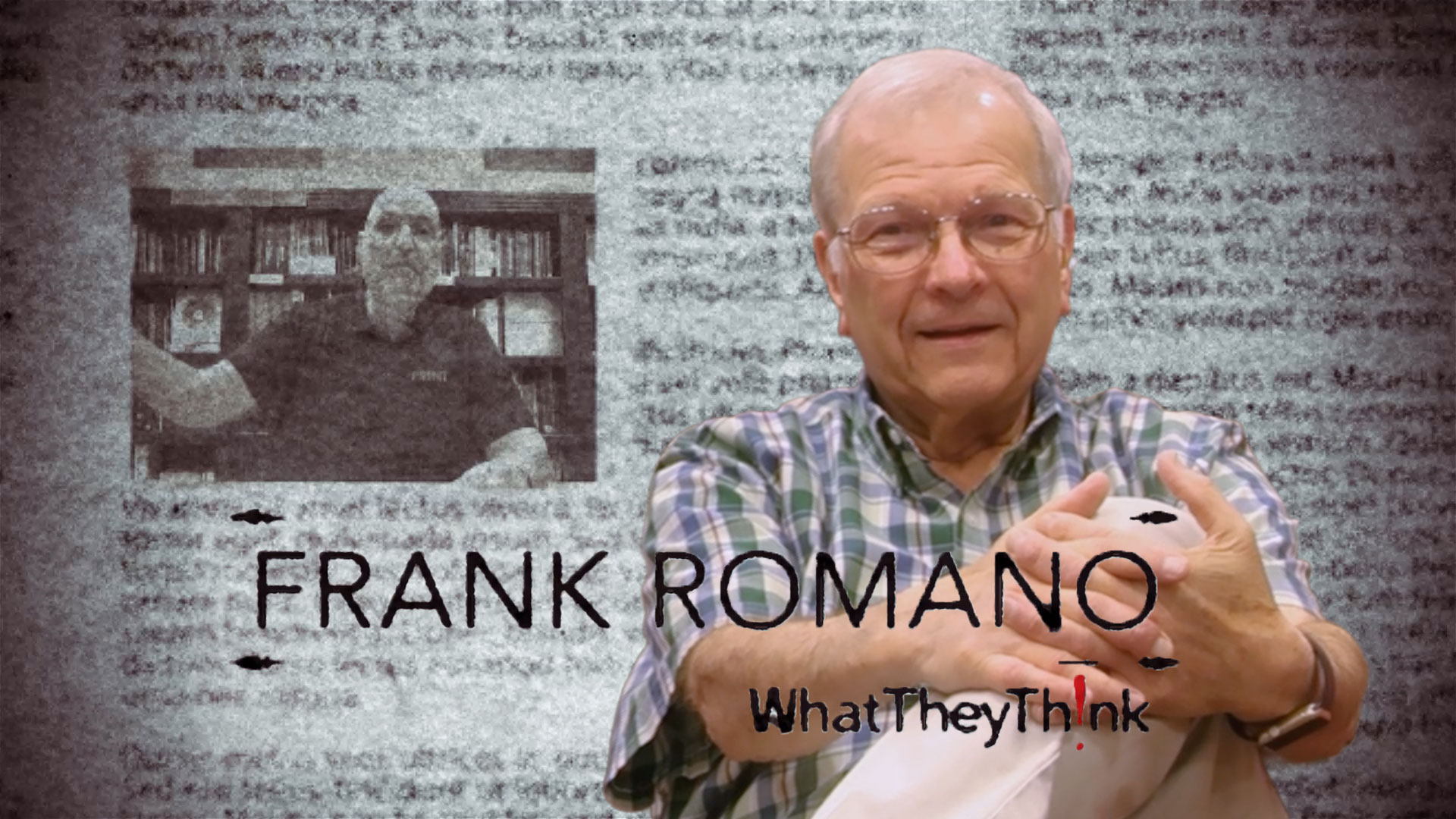
Frank interviews Bob Wislocky, whose typesetting business weathered hot metal, phototypesetting, electronic imaging, digital printing, and other production technologies over 90 years. Read More

Frank and Richard share a sofa and some banter about the printing industry. Read More
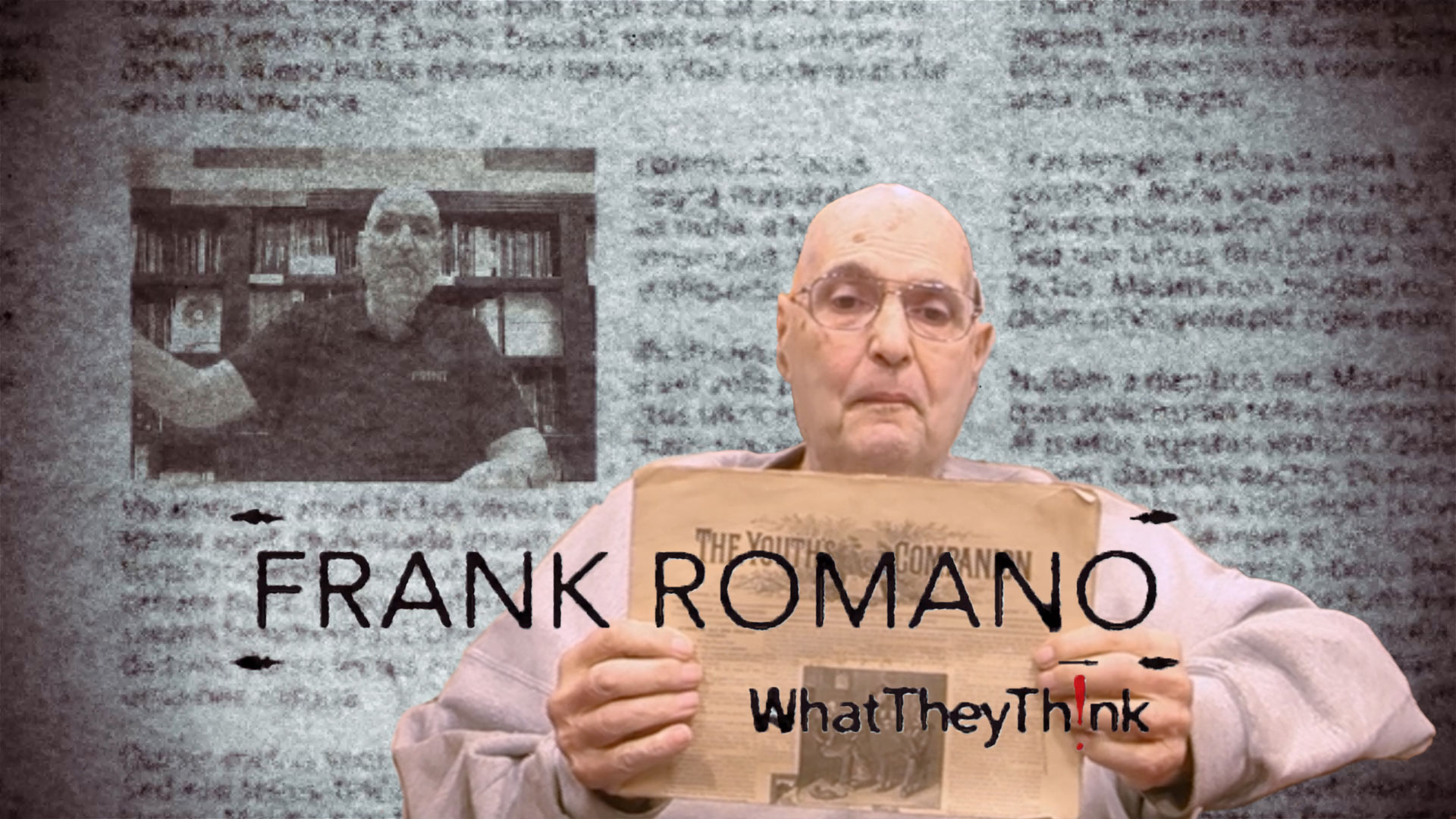
Frank talks about The Youth’s Companion, a newspaper published in Boston for over 100 years. In 1892, its editor proposed a Pledge of Allegiance. Read More

