- The majority of label printing is thermal. It works quietly in the background on loading docks, in stockrooms, at pharmacy counters, and behind retail service desks.
- Label printers were once considered specialized pieces of equipment, but they’re now routine operational tools for businesses of all sizes.
- IT resellers, managed service providers, and office equipment dealers are increasingly present in environments where labeling is part of the technology footprint.
By Anne Valaitis
Introduction
Label printing simply doesn’t generate the same level of conversation as office or production printing. It doesn’t feature prominently in discussions about the digital transformation or the future of the printed page. Despite this, label printing is one of the most consistently active segments in the broader printing landscape. It is embedded into the daily operations of many industries, it’s highly recession-resistant, and it remains relevant even as the industries that are adjacent to it continue to change. This combination of factors makes label printing worth a closer look, so let’s dive in!
Built for Operations
At this time, the majority of label printing is thermal. This technology uses heat rather than ink or toner to produce an image on specially coated media. Thermal printing has been around for decades, and its durability over that time reflects how well it fits into the environments it serves. It is fast, low-maintenance, and produces output that holds up under conditions that would compromise other printing technologies. All of these characteristics made thermal printing the default choice for shipping, logistics, retail, and healthcare applications long before those industries became as operationally complex as they are today.
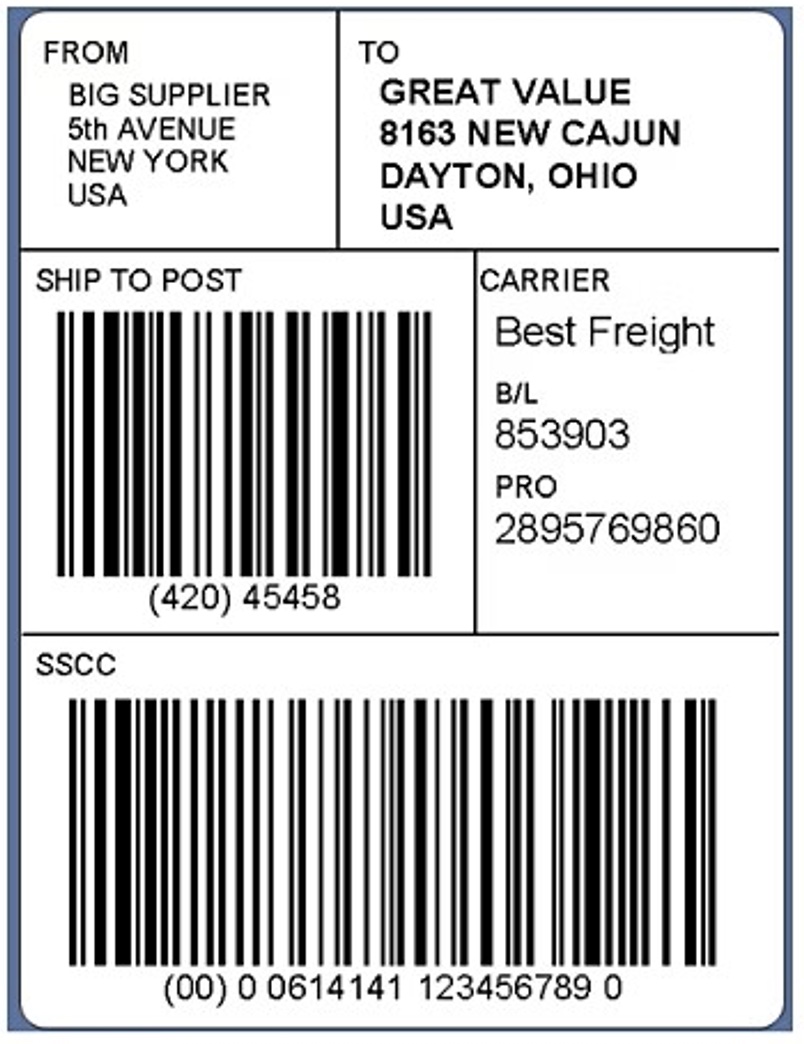
There’s one thing that thermal printing has not historically been, and that’s visible. Instead, it works quietly in the background on loading docks, in stockrooms, at pharmacy counters, and behind retail service desks. Additionally, thermal printing rarely demands attention because it works reliably. This invisibility has been a strength as well as a limitation. The technology has been left alone to do its job, but this also means that it has been left out of broader conversations about print strategy, workflow integration, and technology management.
A Shifting Landscape
Today, several converging trends are bringing label printing into sharper focus. e-Commerce growth has fundamentally changed the volume and distribution of shipping label production. Something that was once concentrated in large fulfillment centers is now spread across smaller warehouses, retail backrooms, branch offices, and even home-based operations. Label printers were once considered specialized pieces of equipment, but they’re now routine operational tools for businesses of all sizes.
At the same time, the retail industry is evolving. Stores are taking on fulfillment responsibilities that they didn't handle in the past, which means labeling for pricing, markdowns, returns, and order pickup has become a more prominent part of store-level operations. In the healthcare sector, the demands on labeling have grown alongside broader compliance and patient safety requirements. In this environment, there’s no other option—all labels must be accurate, durable, and readable. Labels have become a functional requirement, and direct consequences will result when they fail.
Beyond these individual use cases, a broader structural shift is underway. Workflows that were once siloed are becoming more connected. Business systems (e.g., enterprise resource planning (ERP) platforms, warehouse management software, point-of-sale systems, and healthcare information platforms) are increasingly driving label output directly. That integration changes the nature of labeling from a standalone function to a connected component of a larger operational technology environment.
The Fragmentation Concern
Fragmentation, especially for desktop and light industrial devices, is one of the defining characteristics of the label printing market. These printers are often purchased quickly, to solve an immediate need, rather than as part of a planned technology strategy. Different locations within the same organization may use different equipment, different media, and different workflows. Support is inconsistent and visibility into how labeling is used across an organization is often limited.
This fragmentation is not a new issue, but it is becoming more consequential. As labeling becomes more connected to broader business systems, the inconsistencies that were manageable in the past begin to create operational risks. A label format that works in one location may not be right for another. Media that performs well in a climate-controlled environment may fail in a warehouse. These are not hypothetical concerns; they are issues that surface as organizations scale and their reliance on accurate, consistent label output increases.
What This Means for the Industry
Label printing has historically been the domain of specialized automatic identification and data capture (AIDC) resellers. It is built around barcode technology, scanning systems, and the specific technical requirements of labeling applications. This channel remains active and knowledgeable, but its boundaries are becoming less defined.
IT resellers, managed service providers, and office equipment dealers are increasingly present in environments where labeling is part of the technology footprint. In some cases, they’re being asked about it directly. In others, they’ll encounter it as they map out customer environments and realize it has been there all along, outside of any managed relationship. This shift reflects something broader: As technology environments become more integrated and the line between print, IT, and operations continues to blur, the specialized channels that once served distinct categories are now seeing more overlap. Label printing sits at one of those intersections.
The Bottom Line
Label printing is not a market in transition the way office printing has been. Demand is stable, the technology is proven, and the use cases are well understood. What’s changing for label printing is the systems it connects to, the channels that serve it, and the expectations customers bring to it. For anyone tracking the broader print and document technology landscape, this context is worth watching. Label printing has operated as a quiet constant for decades, but it may not stay quiet for much longer.
Anne Valaitis is a Principal Analyst at Keypoint Intelligence focused on customer communications management and AI-powered workflow technologies. She helps businesses understand how AI and automation are reshaping document-driven processes. With a background in product management at leading hardcopy technology vendors, Anne brings a practical perspective to evolving communications and workflow strategies. As a frequent industry speaker, she offers clear insight into how businesses create, manage, and deliver information.