 WhatTheyThink: Canon recently launched some new service options for inkjet press customers. What factors contributed to the decision to rethink Canon service?
William Lowe: Honestly, it came from the field. For the longest time, Canon offered a single, full-service program. If you bought a press from us and had any kind of problem—from the simplest to the most complex—you placed a service call and you waited two to four hours for a technician to show up. Sometimes it took us 20 minutes to fix it, but oftentimes it took us much longer. So, in reality, you may have been down for a day. When I took this position over, I kept hearing from our customers who told me, “We can’t have this downtime. We need to schedule preventive maintenance on our schedule and we need predictive downtime.”
So after listening to our customer’s feedback, we came up with these new service programs to help reduce the impact that service activities has on their production schedules. Canon always wanted to offer the highlest level of service supported by a highly trained team of technicians. But at the end of the day, we decided to partner with our customers, or at least the ones who are willing and able do their own maintenance and service, and offer them a similar level of training. I would also often hear from customers that “I waited for the technician for four hours and he was here for 20 minutes. I could have done that myself.”
The new programs are tailored to different kinds of customers, which is why we have three different levels. Each one gets a little more complicated and you need a more advanced skillset.
WTT: Obviously different customers and customers’ employees have different technical abilities and some are quicker on the uptake than others.
WL: And, to be honest, some customers are going to want the old service plan. They’re saying, “I paid a lot of money for this press, I pay a lot of money to you on a monthly basis, just come out and fix it.” So that’s where we are today.
WTT: Let’s walk a little bit through the three tiers. The most basic is the Operator Pro+.
WL: That’s what I would call the introductory tier. The press operator today pretty much knows how to run a job. He or she knows how to load paper, knows how to clear a jam, knows what to do if the paper rips, but that’s kind of where it ends. And this equipment requires a lot of what I would call basic maintenance—a lot of adjustments, a lot of cleaning, and there are a lot of consumable parts that need to be replaced on a periodic basis. I’ll often ask a technician why a machine was down, and it turns out that if someone had done some basic maintenance, the printhead would have lasted another 100 or 200 hours. So this service tier takes that operator to the next level. It’s about a two- to three-day offsite training class that teaches them how to do that basic maintenance and allows them to schedule their own basic preventive maintenance activites during times that work best for their own production schedules. That’s our most basic service plan and it’s being included in every single sale going forward.
WTT: One step up from that is the Customer Technician Program.
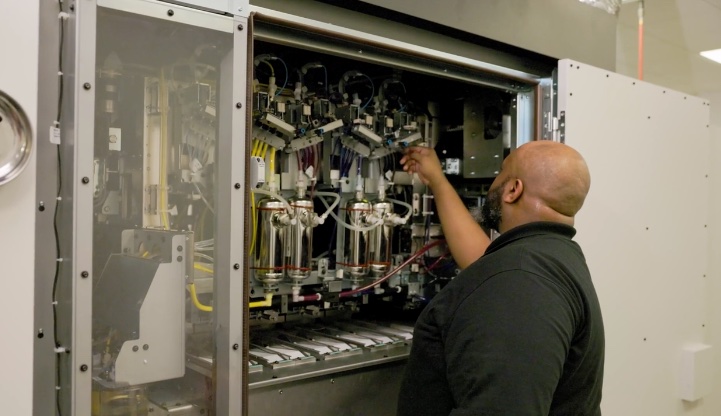
WL: This is the one I’m excited about. This is where we take a customer’s employee and train them on the equipment, just like we would train a Canon technician. It’s the exact same class, the same curriculum. In fact, oftentimes, because of the lack of space, we’ve trained Canon technicians next to customers’ employees in the same class. The classes are designed to be small—they take up to four people—and when people come out of them, they’re certified on the equipment. They get a physical certification from Canon and they can work on the equipment.
We’ve looked at the data and about 60% of the time when a service call comes in, it takes about an hour to fix the problem and the technician uses the parts that they either had on site or in their car. Those are the calls where we think the customer technician could handle. The other 40% to 50% of calls are the ones that need troubleshooting, the ones that really need a level two or level three tech.
WTT: Which would be…
WL: This would be where the machine goes down,and it’s beyond the basic maintenance. The customer tech comes in, he looks at it, and hopefully repairs it. If not, we have a dedicated help desk he could call and then the help desk representative will start the troubleshooting process and try to talk him through it, in effort to resolve the issue without having the customer wait on someone to arrive onsite. The key to this program is there’s still a maintenance agreement in place. So if at any time the customer says, “It’s beyond my skillset” or “I just don’t have the time for this,” they can place a service call and we will still send someone out to support them. And parts are totally included. It’s never a case where, “Oh, you can’t replace that part.” So this service tier is replacing that level one service, where that 50% to 60% of service calls can be resolved right away as opposed to waiting for the technician to come in, and for those issues that occasionally require additional help, we have a strong service organization that’s ready to assist.
WTT: Finally, there’s the Self-Maintenance Program.
WL: The “self maintainer” is truly what it says: you are going to maintain the equipment. The customer is going to come in, we’re going to train them, and they’re going to be a certified Canon technician. This is really targeted for presses that are sold outside of our servicing area. They’re now responsible for the parts, and they’re responsible for all service. That said, if they can’t fix something, we have an option to send a Canon technician out.
Those are pretty much the three new service level tiers. To me, the Customer Tech is the bread and butter and the one that we think helps our customers the most.
WTT: What are some of the specifics of the training program? Is it a more a classroom setting with some hands-on? And I assume they’re trained on the specific machines that they have.
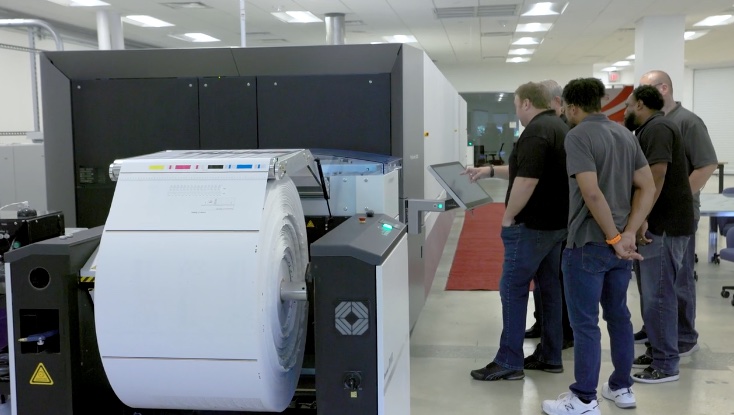
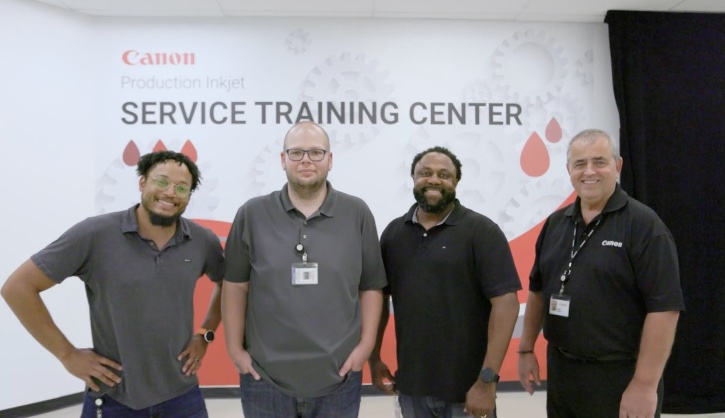
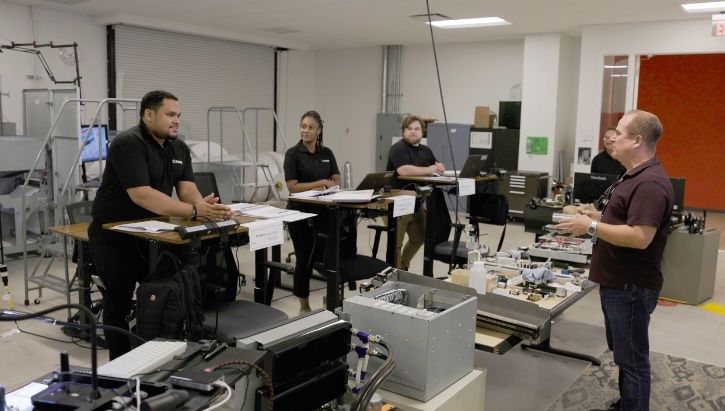
WL: Yes. It’s in a classroom setting at the training facility we opened up in Boca Raton. We’ve always had training there but it was designed for our own technicians. We opened up a separate location that currently has a ProStream, a varioPRINT iX3200, and a ColorStream. We try to keep it to less than four technicians or four employees per class. It’s both hands-on and instructor-based. The Operator Pro+ is about three-day class, and the others range anywhere from a week-and-a-half to two weeks. I have to stress, it’s the same exact class that you would take if Canon hired someone as a technician.
WTT: For the certification, is there a final exam or a machine that’s pre-broken and needs to be repaired?
WL: You spend the two weeks of the class in labs and there is a final exam. It’s usually open book—we don’t want anyone to memorize error codes or anything. It’s just to show us that they know where to find specific information. They take the machine apart, and they put it back together. I used to joke that if the machine still ran after the class, then everybody passes. But it is a formal training class.
WTT: Talk about the new service training facility. What resources are available there and how can customers avail themselves of it?
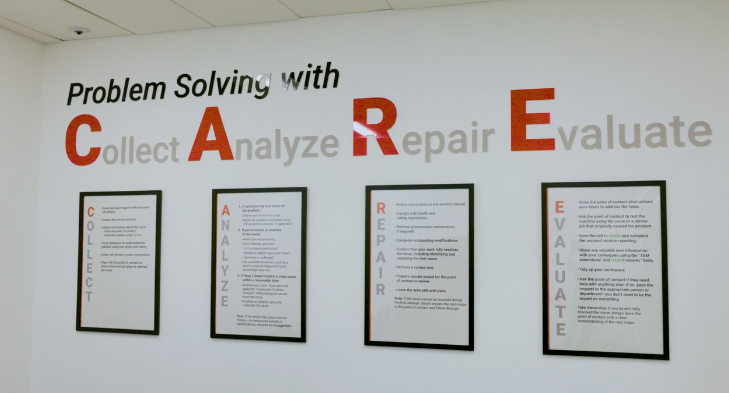
WL: The new Service Training facility is in Boca Raton, FL at our Canon Americas Customer Innovation Center. We doubled the size of our training facility, but made one side of it specifically for customers. It’s there for these three training programs, but if anyone needs a refresher course, or if a customer hires a new employee, we can set them up through our training facility and training team, and they can come in, whether it’s a one-day or three-day or four-day refresher course.
WTT: And if a customer buys a new machine, they get to be trained on that as well?
WL: Yes, absolutely.
WTT: You launched these new service tiers last year. What has been some of the early response from customers?
WL: In the beginning, there was a lot of excitement. We officially kicked them off at thINK, which was in July. There was a lot of excitement at thINK, but it didn’t catch on as quickly as we had originally hoped. However, I just got the stats and we’re now up to eight separate customers that have signed up for Customer Technician Training. It’s early, but the results have been extremely good. The uptime is very good compared to what it was before. I think there’s still a little bit of skepticism out there. And, again, it’s not for every customer. There are some customers who don’t have the skillset or don’t want the responsibility, but for others customers, it’s a benefit. It needed to be something else in in our toolbox.
WTT: Has practical implementation led you to make any tweaks or changes in the program thus far? Do you see any places where you might want to change things up?
WL: We made three pretty big changes and I think we’ll probably continue to tweak it. The first one was postponing the training. When the program first came out, we said, “Hey, let’s get these guys trained on day one.” When this equipment takes sometimes up to four weeks to install after delivery, that’s a great window to train their people. But, unless they’re an existing customer, they’ve never seen the press. We’d bring them in and we’d end up spending two or three days just showing them what the press was. So what we do now for all three programs is require them to have the press onsite running for about six months, so they can get used to the machine. We’re going to spend as much time as we can onsite with them. And to me that helps with the training: they know basically how the machine works.
The second change was moving the training to our facility. Especially with the Operator Pro+, we were trying to install the machine and train employees at the same time at the customer’s facility. Well, it’s really hard to keep them focused. First of all, most customers’ employees have multiple jobs. They’re not just doing that one function. Once the press is working, the owner wants to start running live jobs and it’s really hard to get them to focus on training. Now, we instead bring them to Boca and we have them for three days. And even if they’re taking phone calls, we pretty much have them focused on training for those three days as opposed to, “Hey, I gotta go run this job” or “I have to do this and I also have to do that.” So that was our second tweak.
The last one was pre-vetting the candidates. We’re not looking for engineers, but we do need people with some kind of electromechanical skills. We’re looking for someone who’s not afraid to take something apart and put it back together, and is not afraid to get their hands dirty. In the beginning, we had a couple of people where we’re asking, “What is this person doing?” Not everyone can do everything. I say this all the time with my team. We can’t all do everyone’s job, right? We’re not in sales for a reason—that doesn’t fit our personalities. And some sales reps are not in service because they’re not good at fixing stuff. So now we do a vetting process. We have the Canon technician who’s assigned to that area spend an hour or two with the person and ask some questions and get an idea where they’re at. We’ve only turned down one or two people, for the most part.
WTT: This new service tiers apply just to Canon’s inkjet portfolio. Any thought of opening them up to the toner or wide-format equipment?
WL: We’ve started the wide-format. Right now, the program is open to ColorStream, ProStream, iX3200, Colorado, and Arizona. We’re discussing TITAN, which is the varioPRINT 6000 toner-based cut-sheet machine. We’re probably going to include that and the imagePRESS 1350, which is the cut-sheet color toner-based machine. I think it’s the future, to be honest with you. Like everybody else, we’ve had some manpower struggles. We have a very aging workforce. We take pride in the fact that the average tenure in our service department is 15 to 20 years. That said, I have people who are very close to retirement age. So getting that knowledge transfer is our other issue. How do we transfer that knowledge to the next generation? The younger generation doesn't want to get their hands dirty. We’ve sold them on the fact that they all have to go to college. I have three children all college age, and they look at me like, “You do what?” Everyone thinks they’re going to be a doctor or a lawyer and if they are, that’s great. But we also really need tradespeople. So we’re having that struggle, replacing the really high-quality engineers. And not only finding people, but getting that knowledge transfer. We also think this is a great avenue for our customers to invest in their own people. Customers can give their operators additional education and career growth and hopefully help them with employee retention as well.
WTT: Finally, to what extent are new machines being developed with customer-centric maintenance in mind?
WL: I’m really excited about this program, but I’m more excited about the new products coming out—the varioPRESS iV7, the varioPRINT iX1700, the Colorado XL, and all the new products going forward—which were designed with customer maintenance in mind. The products that we’re building this program around were not designed based on that, so I think this gives us a great foundation. As these new products come out, they’re designed to be very intuitive and customer technicians can say, “OK, if this happens, it’s definitely that problem and we can replace that part.” So I'm really excited. I think it’s going to change the whole way we do service going forward.
Watch a video rundown on Canon’s new service plans at: https://canonproductionprint.com/resources/inkjet-service-programs-and-service-training-facility-offered-by-canon?esource=TECH_Prof_Services