- 9 out of 10 consumers browse the catalogs they receive at least sometimes, proving that print still has power in a world of scrolling.
- Seasonal catalogs don’t interrupt consumers—they invite them into a brand’s world when purchasing intent is naturally high.
- Even Amazon, the world’s largest online retailer, creates a printed holiday gift book so families can spend time reading it together.
By Priya Gohil
Introduction
As the seasons shift and darkness comes earlier, the familiar signs of holiday promotions are unleashed. An incessant mix of early-access e-mails, festive social media campaigns, and digital ads all vie for our attention. Yet despite this digital saturation, something more tactile and traditional arrives through the mailbox: the printed seasonal catalog.
Whether it’s a glossy lifestyle lookbook from a premium brand or a holiday guide from a brick and mortar retailer, catalogs continue to bring consumers a moment of pause. They invite the recipient to browse rather than to click, and they offer a sense of discovery that screens struggle to replicate. New research shows that printed catalogs remain as relevant as ever, and this season’s crop of catalogs demonstrates why the format maintains such a powerful grip on both consumer behavior and brand strategy.
Seasonal Catalogs: A Tradition That Still Performs
The seasonal catalog has long been a retail anchor point, guiding shoppers through curated product selections, gifting inspirations, and new collections. While predictions about the decline of print have been circulating for years, consumer behaviors tell a more nuanced story.
According to Keypoint Intelligence’s recently completed Customer Communications Consumer Survey, 91% of consumers browse the catalogs they receive at least sometimes, while only 9% rarely or never do. This consistency is significant, particularly during seasonal periods where browsing habits intensify.
Figure 1: Frequency of Browsing Catalogs
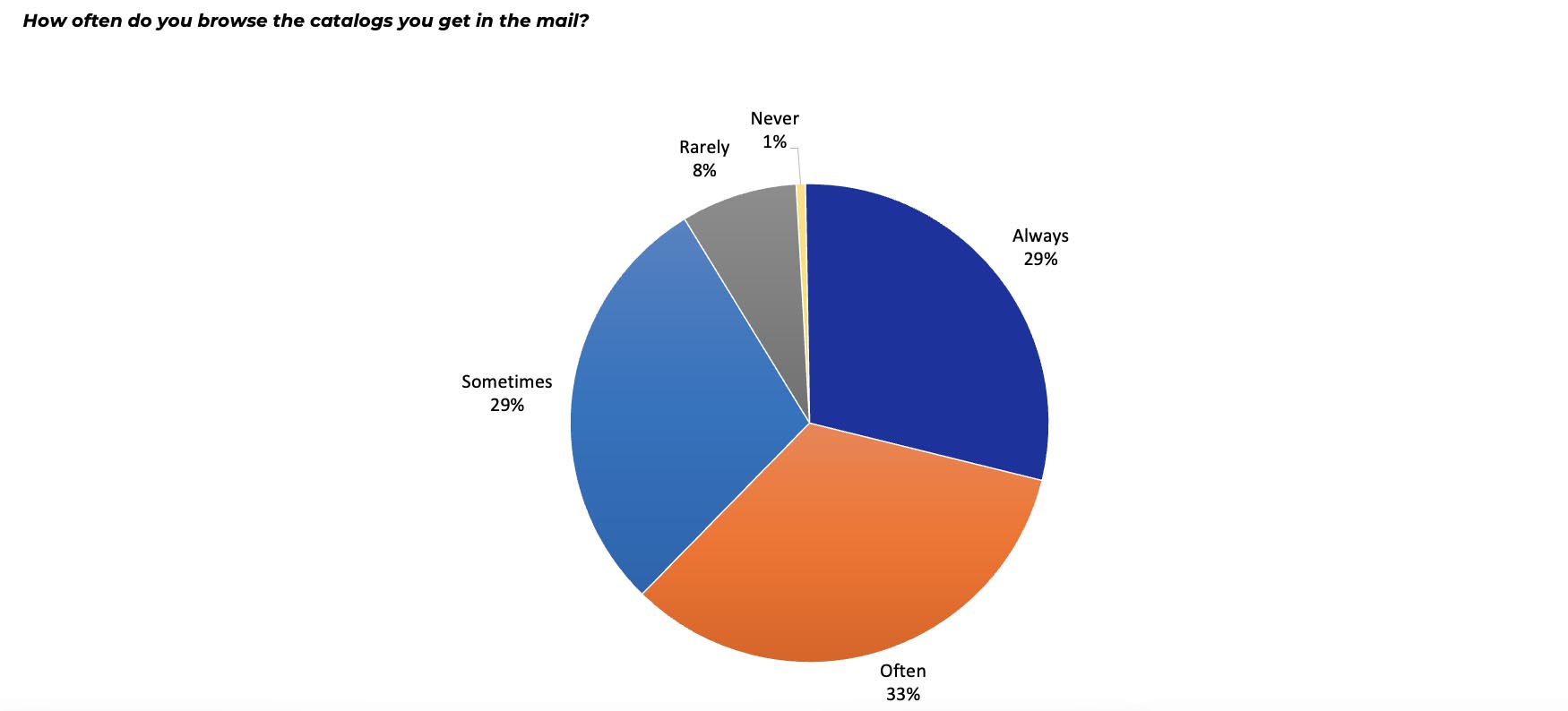
N = 484 Respondents who receive catalogs
Source: Customer Communications Consumer Survey; Keypoint Intelligence 2025
Seasonality amplifies the strengths of printed communications like catalogs. As people spend more time indoors preparing for the holidays, catalogs can become browsing companions as they are placed on coffee tables, shared among households, and earmarked for ideas.
Catalogs endure in a digital world for multiple reasons. Specifically:
- They invite mindful discovery
Unlike the increasing number of digital ads that are fighting for our attention in today’s fast-paced world, catalogs invite consumers to slow down. They create a physical, sensory environment where products can be explored at leisure. This is especially valuable for premium and luxury brands, where catalogs act as an extension of the brand experience.
Our research shows that premium catalogs have evolved beyond transactional tools—they communicate a brand’s identity through paper choice, photography, design, and typography. Their presence in the home carries a sense of permanence and trust that digital simply cannot match.
- They influence real purchasing decisions
Print is far from passive. According to Keypoint Intelligence’s research, 60% of consumers had received a piece of direct mail or a catalog in the past three months that made them consider purchasing a product or service. During peak seasonal periods when consumers are actively seeking gift inspiration, this influence becomes particularly potent.
- They bridge print and digital beautifully
Today’s catalogs are not isolated from digital; they amplify it. Keypoint Intelligence’s data reveals that consumers are significantly more likely to engage online when a printed piece links to a digital experience, such as a QR code or personalized URL. This is crucial for retailers who want to unify the physical and online components of the customer journey during high-volume shopping periods.
The Amazon Example: Even the World’s Biggest E-Tailer Prints a Catalog!
Perhaps the most compelling indicator of print’s enduring power comes from a company that is synonymous with digital convenience: Amazon. Back in 2018, Amazon launched its annual Holiday Kids Gift Book, a full-color printed catalog designed for seasonal browsing. The 2025 edition, described by Amazon as means of transporting families to a “woodland wonderland,” blends the tactile richness of print with digital extensions like wish-list tools, QR-enabled journeys, Alexa experiences, and even a related Roblox game.
Figure 2: Amazon’s Toy Catalog

Despite having one of the world’s most sophisticated digital retail ecosystems, Amazon invests in print for several reasons:
- Children spend more time with a physical catalog than they do with digital ads.
- The book stays in the home longer, as it is designed to remain on tables or counters throughout the season.
- Families can browse the catalog together and engage in shared discoveries rather than isolated screen time.
- It drives digital behavior, seamlessly linking print to Amazon’s online environment.
Amazon’s use of a seasonal printed catalog underscores what research already shows: even digital natives value tangible browsing experiences—especially during gifting seasons.
“Magalogs” Go One Step Further
Another factor that could help the resurgence of print during seasonal periods is the evolution of the catalog itself. Today’s brands are increasingly embracing magalogs, which are hybrid pieces that combine the editorial richness of a magazine with the product-led focus of a catalog. Rather than delivering a straightforward list of items, they act as curated resources that are designed to be kept, browsed repeatedly, and shared among multiple readers. This staying power makes them particularly effective during gifting seasons, when consumers are actively seeking ideas.
What sets a magalog apart is its ability to deliver an aspirational lifestyle alongside the merchandise. High-quality photography, feature-led articles, styling tips, and stories that complement the products help capture attention and create a more meaningful buying experience. Readers naturally spend more time with the piece, discovering new items as they move through editorial content. This increases engagement and prompts more interaction than traditional catalogs.
Magalogs can also strengthen word-of-mouth, one of the most powerful marketing tools. Their combination of informative articles, attractive design, and tactile print encourages people to pass them along or discuss ideas with others. Particularly during the competitive holiday period, magalogs offer brands a compelling way to elevate perception, increase loyalty, and guide customers from inspiration to purchase in a format that feels premium yet personal.
A Tool for Loyalty, Memory, and Brand Connection
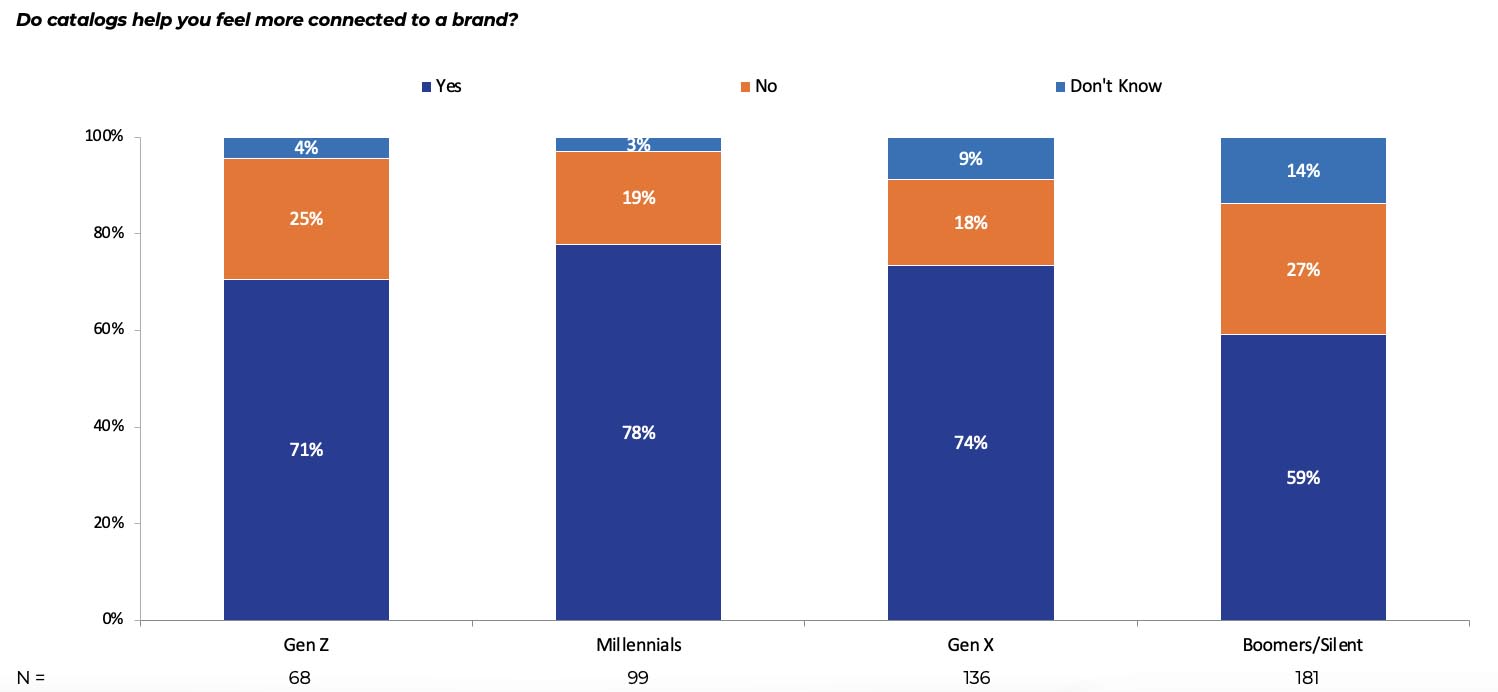
Another key finding from Keypoint Intelligence’s consumer research is that catalogs help consumers feel more connected to a brand. While this sentiment is shared across all age groups, even the younger digital natives stated that catalogs helped increase their connection with a brand.
Figure 3: Catalogs and Brand Connection by Age
Base: Respondents who receive catalogs
Source: Customer Communications Consumer Survey; Keypoint Intelligence 2025
This emotional connection is especially important in the run-up to seasonal events, when brand visibility and loyalty are tested. Print reinforces trust, enhances recall, and supports multi-generational engagement within households.
Catalogs also benefit from:
- High memorability that is boosted by its tactile qualities
- A longer in-home lifespan compared to digital content
- Strong word-of-mouth influence
- A sense of authenticity, particularly within the premium and gift-focused categories
The Bottom Line
Seasonal catalogs deliver inspiration, enhance storytelling, and increase tactile engagement at the exact moment when consumers are in the mood to discover, browse, and buy. Far from declining, catalogs remain steady in terms of consumer preferences and continue to deliver measurable results across both print and digital touchpoints.
Whether in luxury or mainstream retail, the message is clear: seasonal catalogs are so much more than nostalgic throwbacks. They are powerful marketing tools that help brands connect meaningfully with consumers. The next catalog season is already underway, so now is the time for retailers and print service providers to embrace innovation and elevate creative design. Catalogs are a great way to let print do what it does best: captivate, connect, and convert!
With over two decades of publishing experience, Priya Gohil has been providing A3, production, and wide format analysis since joining Keypoint Intelligence in 2013. While sharply focused on custom test reporting as well as high-value subscription content, she also contributes blogs and a variety of other articles across all of Keypoint Intelligence’s channels.