(All images courtesy of Texintel)
What if creativity, sustainability, and efficiency could converge seamlessly in one of the most traditional industries in the world?
The fashion industry is at a tipping point, where cutting-edge technologies like AI and augmented reality (AR) promise to deliver unprecedented changes, addressing pressing challenges while unlocking incredible opportunities. Nowhere is this more evident than in smart manufacturing and innovative design processes. But with opportunity comes responsibility—the responsibility to adapt, collaborate, and lead.
This article shares our thoughts and key takeaways for fashion design and its future—as presented at the “Design2Futures” Summit held in Istanbul, 2025.
The summit concluded the METAMORPHOSIS project, a project spearheaded by the Istanbul Ready-to-Wear and Apparel Exporters’ Association (IHKIB), which aims to enhance the global competitiveness of Türkiye’s ready-to-wear and textile industries. By supporting businesses and intermediary institutions, the project seeks to integrate the Turkish ready-to-wear and textile sectors into global value chains. Its primary focus is on empowering SMEs within these sectors through digital transformation, alignment with international standards, and environmentally sustainable solutions.
Key Takeaways for Fashion Design and its Future
The Future Starts with AI in Fashion: The integration of artificial intelligence into fashion is more than just a fleeting trend; it’s a reinvention. AI is reshaping the industry at every level, from designing garments to managing supply chains, and even improving customer experiences. This digital transformation is no longer optional. For the fashion industry to remain competitive and relevant, professionals and organizations must rethink the way they operate.
But this evolution doesn’t come without its challenges. From preserving authenticity in design to achieving digital literacy across a historically artisanal workforce, the path forward demands innovation, transparency, and collaboration. Digital transformation is the bridge between tradition and innovation in the fashion industry. By leveraging technology thoughtfully, we can preserve our heritage while meeting the demands of a modern, sustainable, and connected world.
Redefining Creativity and Authenticity in Design
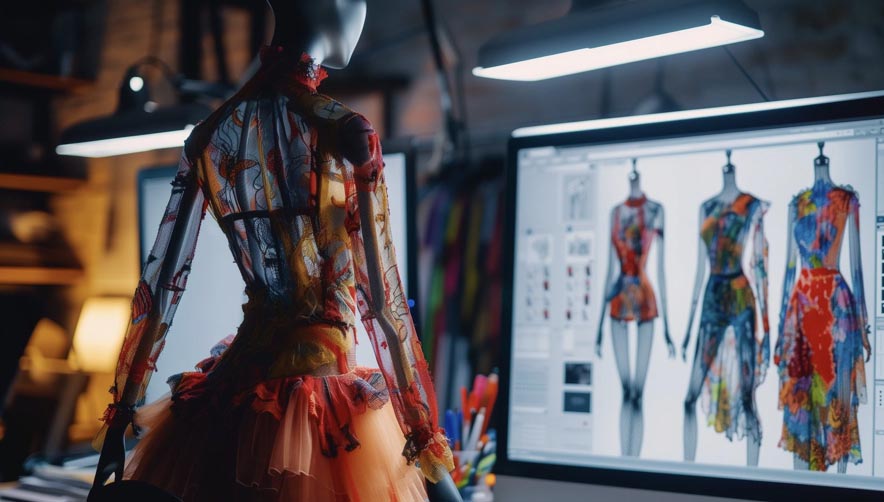
One of the industry’s greatest hurdles in adopting AI is maintaining authenticity and creativity in AI-facilitated designs. The fear of AI taking over human ingenuity is prevalent, but tools like AI-driven design curation offer enhancement, not replacement. For instance, AI tools now allow designers to animate sketches, creating photorealistic visuals for quicker design iteration. This is not about automating art but empowering designers to bring their ideas to life faster and with greater precision. London College of Fashion’s ground-breaking work has demonstrated how teaching AI prompting can imbue designers with enhanced control while keeping the creative process distinctly human.
Matthew Drinkwater, Head of the London College of Fashion’s Fashion Innovation Agency, encapsulates this vision perfectly, stating: “AI will not replace designers; rather, it will elevate their creative potential, allowing them to achieve outcomes they could never have imagined before.” This statement underscores the LCF’s commitment to integrating technology with creativity in a way that empowers the next generation of innovators. These advancements also address another weighty challenge in fashion education. With AI portfolios becoming integral in course applications, defining how authenticity is measured in the academic world has become a pressing debate. This evolution highlights the importance of teaching not just design, but also the responsible and strategic use of AI tools.
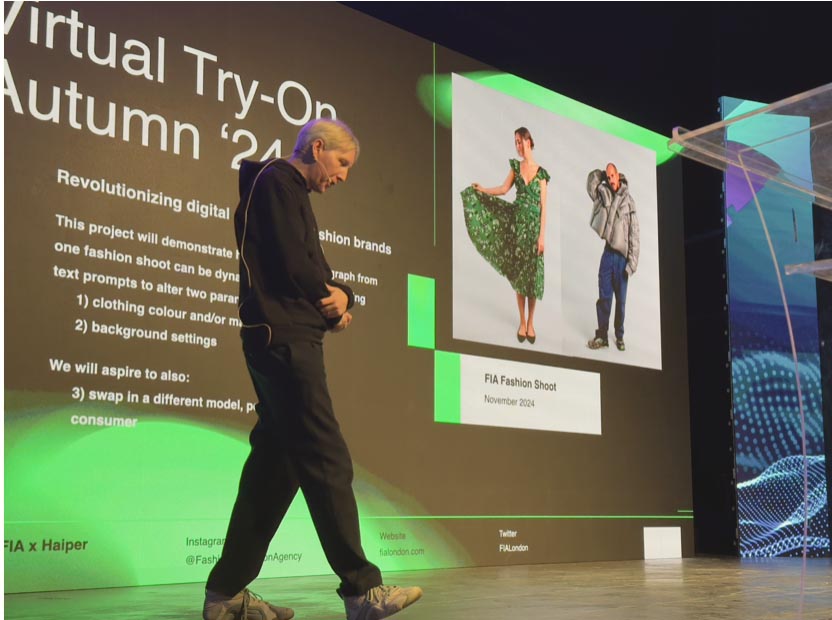
Personalization at Scale: Imagine custom-fit garments for every consumer, delivered without the waste of overproduction. This possibility is becoming a reality thanks to personalized avatars and virtual try-on technologies powered by AR and AI. These tools enable better fits, fewer returns, and an overall stronger connection between brands and their customers.
The impact is significant: According to insights shared at the Design2Futures Summit in Istanbul, AI-driven virtual fitting rooms are decreasing return rates for major retail brands while enhancing customer satisfaction. But there’s still work to be done. To realize the full potential of this technology, the industry must integrate it deeply into the supply chain, ensuring transparency, traceability, and functional calibration.
Accelerating Sustainability Through Innovation: Sustainability is no longer just an option for the fashion industry; it’s a mandate. AI plays a pivotal role in making sustainability achievable. By enabling smarter manufacturing processes, AI can support on-demand production models and reduce fabric waste, a massive contributor to the industry’s environmental footprint. The innovation doesn’t stop there. Imagine smart textiles equipped with sensors to increase supply chain traceability or digital prototypes that eliminate the need for physical samples. AI and AR are transforming sustainability efforts from ideas into actionable, measurable results. Companies like Printful have already paved the way with their on-demand production models, but as the industry looks ahead, more organizations must adopt similar approaches to build a circular future.
Digital Literacy and Collaboration Across the Workforce: One of the critical roadblocks to fully integrating AI and AR into the fashion workflow is achieving digital literacy within the workforce. Traditional craftspeople are at risk of being excluded from this digital revolution if they are not equipped with the right skills and tools. The London College of Fashion’s Innovation Agency plays an essential role in addressing this challenge. By nurturing the next generation of industry professionals and embedding digital tools like 3D design, photogrammetry, and volumetric capture into education, the industry is building a future-ready workforce. However, for real impact, this effort must scale industry-wide, with companies proactively investing in upskilling their teams.
Collaboration as the Key to Progress: No digital transformation can succeed in isolation. AI’s success in the fashion industry depends on transparency and collaboration across the supply chain. Open communication and data sharing, paired with robust privacy protections, will ensure that all stakeholders—from designers to manufacturers to retailers—can reap the benefits of this new technology.
Collaboration is not just a strategy; it’s a necessity. Initiatives like smart manufacturing hubs and shared data platforms demonstrate how an interconnected industry can improve efficiency, unlock innovation, and reduce waste.
Turning Vision into Actions: The convergence of AI and fashion is no longer a distant future; it’s happening now, driven by pioneers and institutions like London College of Fashion. Whether it’s implementing virtual try-ons, incorporating sustainability into manufacturing, or transforming education, the opportunities are immense. But it’s up to the industry to rise to the occasion, breaking down barriers between art and technology to shape a better, more responsible future for fashion. Fashion’s digital transformation is already underway, but we need your voice, expertise, and creativity to steer it in the right direction. Whether you’re a designer, retailer, or industry academic, now is the time to reimagine your role in this rapidly changing landscape.
Summary Highlights
This article explores the profound impact of artificial intelligence on the fashion industry, highlighting its ability to drive innovation in areas such as virtual try-ons, sustainable manufacturing, and education transformation.
It emphasizes the pressing need for the fashion sector to unite art and technology to build a more ethical and forward-thinking future. By urging creatives, retailers, and academics to leverage AI-driven tools, the piece serves as a call to action, encouraging individuals to actively participate in shaping the industry’s digital evolution.