- Of our 235 respondents, 193 (about 82% of total) had implemented policies or strategies to drive paperless adoption.
- Marketers can use data-driven insights and machine learning to better predict consumer behaviors, tailor their messaging to individual preferences, and optimize campaigns in real time.
- Balancing changing customer demands while maintaining brand trust and delivering measurable results makes modern direct marketing more complex than ever.
By Eve Padula
Introduction
Direct marketing is always evolving as technologies, consumer behaviors, and data analytics reshape the way that businesses connect with their audiences. Traditional methods of communication like direct mail have given way to more personalized and data-driven approaches, including e-mail marketing, social media ads, and automation. Adaptability is the key to success because today’s direct marketing techniques are more dynamic, customer-centric, and reliant on digital channels than ever before.
In an effort to better understand our changing industry, Keypoint Intelligence conducted two direct marketing surveys at the end of 2024—one for business respondents and another for consumer respondents. This article focuses specifically on the 235 respondents to our business survey. Citing our latest research, this article explores how direct marketing businesses can maximize their impact, get noticed, and deliver a better customer experience.
The Respondents
At the end of 2024, Keypoint Intelligence conducted a web-based survey of 235 business respondents in the United States and Canada. As shown in the Figure below, survey participants came from a wide range of vertical industries.
Figure 1: Vertical Industry
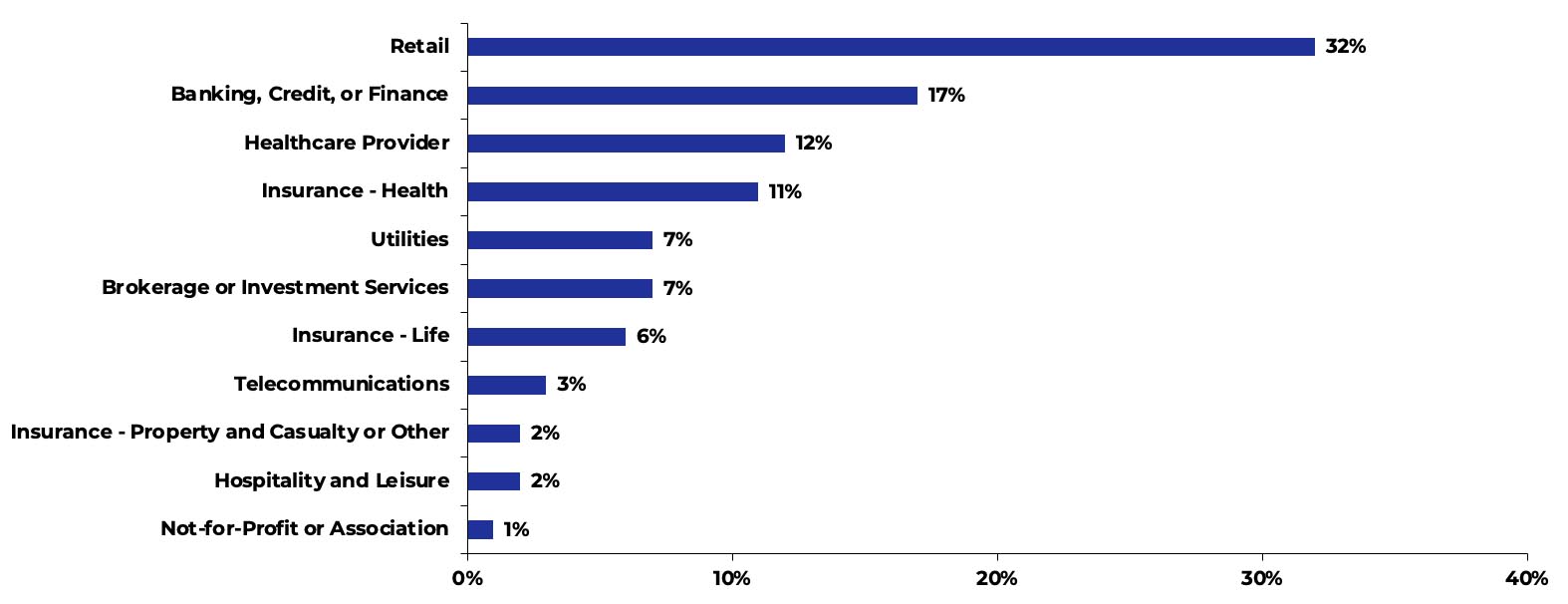
N = 235 Total Respondents
Source: Customer Communications Business Survey; Keypoint Intelligence 2024
In conducting this research, we hoped to gain a better understanding of how business’ direct marketing practices are changing as they strive to meet their customers’ shifting needs.
The Shift to Paperless
Consumers’ communication preferences are evolving all the time, and businesses must remain nimble and responsive to these shifts if they hope to retain existing customers, attract new ones, and improve the overall customer journey. Of our 235 respondents, 193 (about 82% of total) had implemented policies or strategies to drive paperless adoption. The most popular reasons for implementing these strategies were cost reduction and the drive toward increased adoption of digital channels. It is worth noting, however, that over half of respondents (53%) were doing so to deliver a better customer experience.
Figure 2: Reasons for Implementing Paperless Policies (Top Responses)
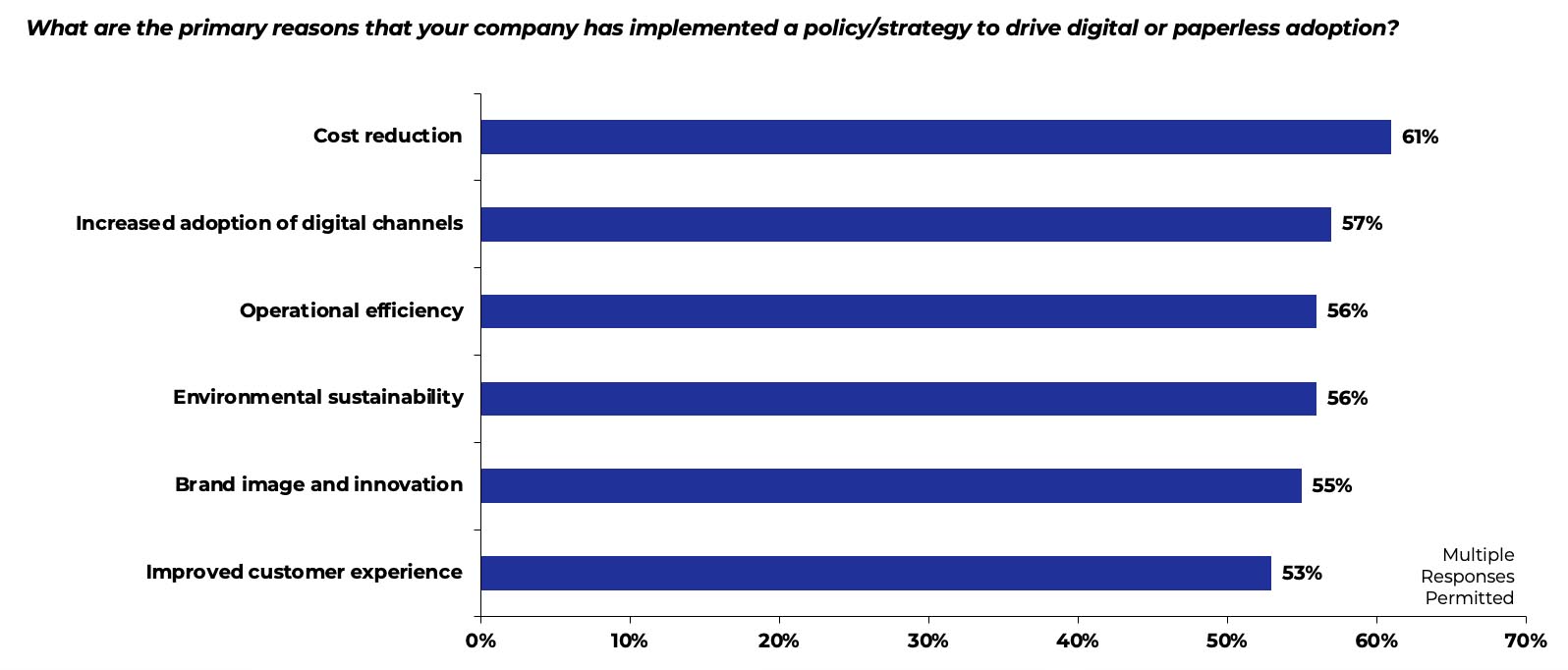
N = 193 Respondents that have implemented policies/strategies to drive paperless adoption
Source: Customer Communications Business Survey; Keypoint Intelligence 2024
The Impact of AI
Artificial intelligence (AI) is revolutionizing just about everything these days, and this includes the direct marketing world. Thanks to AI, today’s businesses are able to intelligently connect with their customers with more relevance, personalization, and efficiency than ever before. Marketers can use data-driven insights and machine learning to better predict consumer behaviors, tailor their messaging to individual preferences, and optimize campaigns in real time.
Keypoint Intelligence’s research confirms that businesses understand AI’s potential. When respondents were asked which technologies they were considering for future implementation, AI tools captured the top spot at 50%.
Figure 3: Technologies Considered
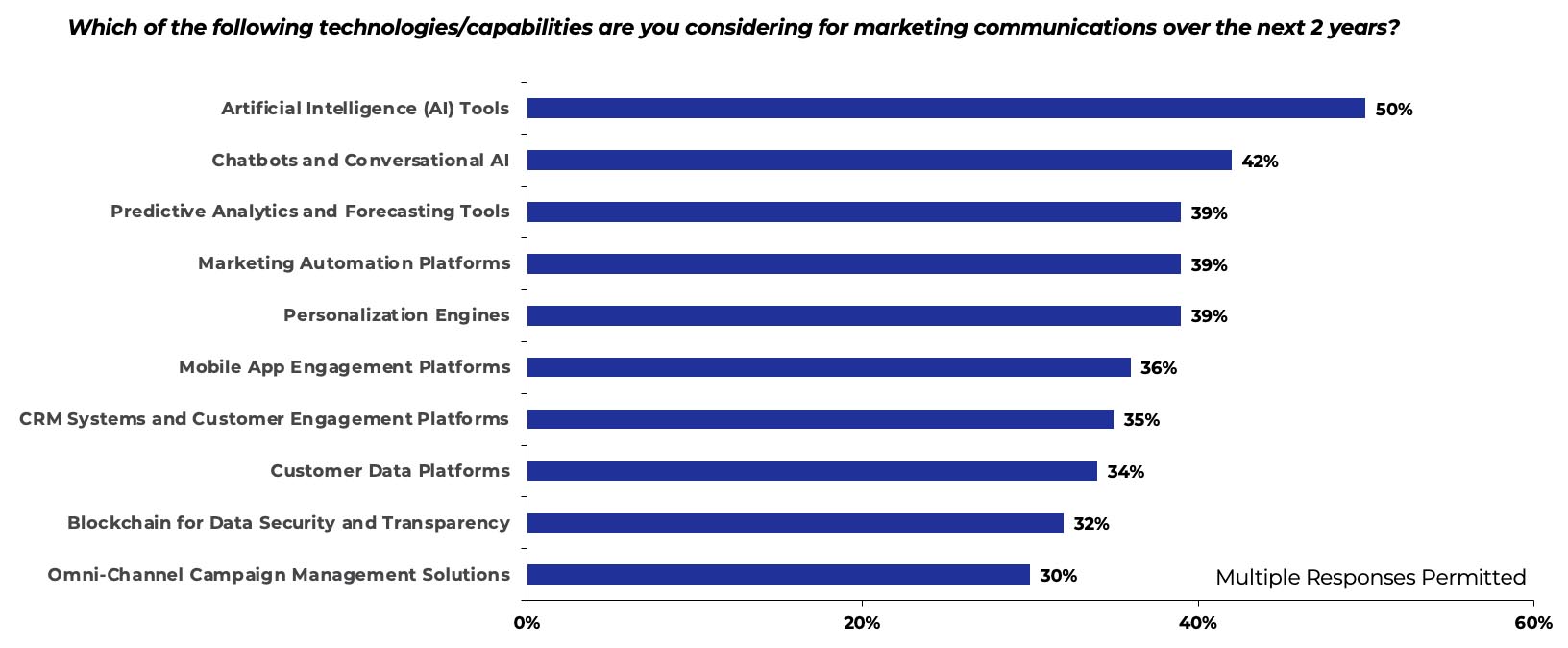
N = 218 Respondents who are considering technology investments
Source: Customer Communications Business Survey; Keypoint Intelligence 2024
Business respondents have high expectations for AI’s potential. When survey participants were asked about the effects they expected AI to have on their direct marketing, the most commonly cited benefits included reduced costs (57%) and improved efficiency/accuracy (53%)
As marketing becomes increasingly digital, AI-driven strategies can help businesses maximize impact, reduce costs, and drive higher conversions with unprecedented precision.
Common Challenges
There is no question that today’s direct marketers will face a variety of challenges as they strive to effectively communicate with their customers. Modern consumers are inundated with marketing messages across multiple media channels, making more complicated to capture attention and foster engagement. In addition, consumers expect—and in many cases demand—personalized and relevant interactions that are seamless and consistent across all channels. Balancing these demands while maintaining brand trust and delivering measurable results makes modern direct marketing more complex than ever.
When survey participants were asked about the challenges they faced in delivering a consistent customer experience across channels, the most common included data consistency and personalizing at scale.
Figure 4: Direct Marketing Communication Challenges
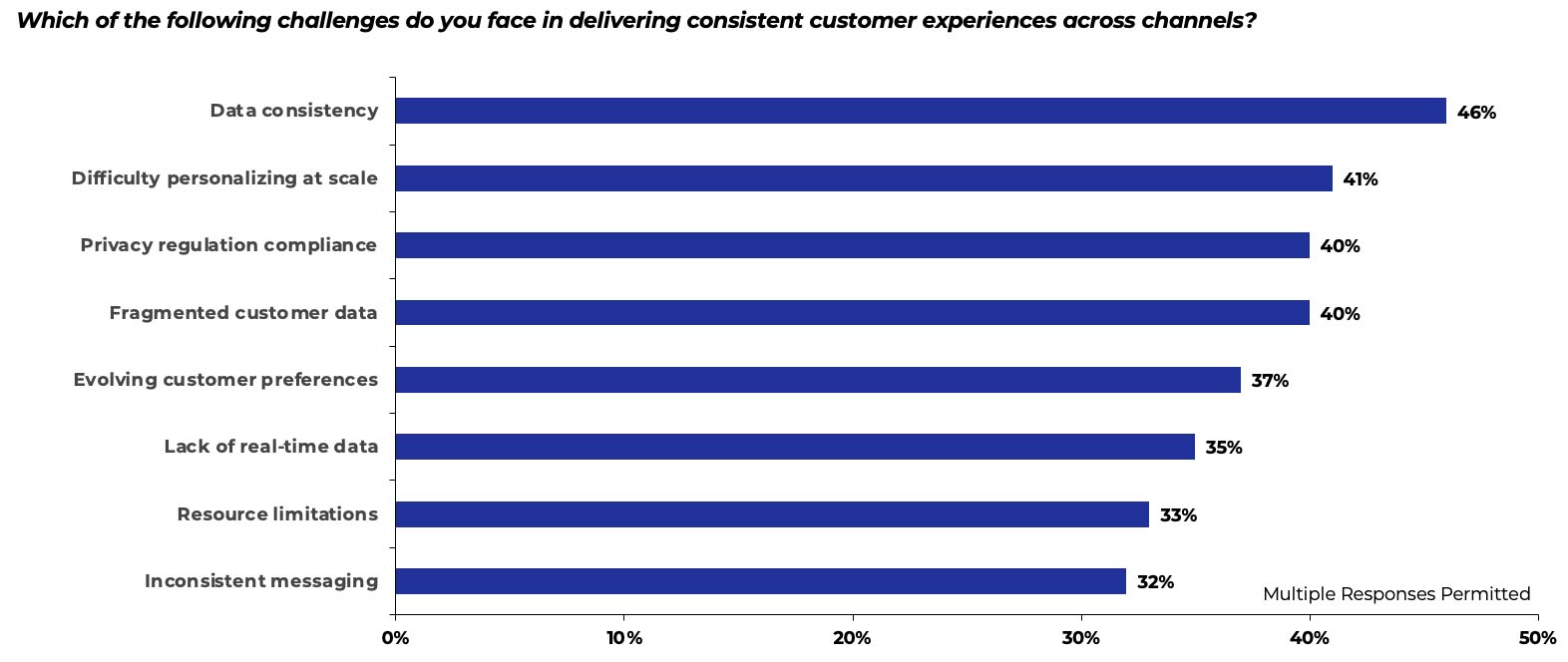
N = 235 Business Respondents
Source: Customer Communications Business Survey; Keypoint Intelligence 2024
Despite these challenges, direct marketers can take steps to ensure that they are delivering the right messages at the right time. These steps include embracing:
- An omni-channel approach: To create a seamless customer experience, meet customers where they are and ensure consistency across e-mail, social media, SMS, and direct mail.
- Data-driven insights: With data-driven insights, messaging can be tailored to various demographics, behaviors, and preferences. Keypoint Intelligence’s research has consistently shown that personalization and customization can increase engagement and conversion rates.
- Automation and artificial intelligence (AI): With today’s marketing automation tools and AI-powered analytics, direct marketers can help ensure that their messages reach the right customers at the right time for a better experience.
The Bottom Line
Thanks to technological advancements, evolving consumer expectations, and ongoing regulatory pressures, direct marketing practices continue to evolve. Data-driven personalization, omni-channel engagement, and automation are making marketing more precise and effective, but it is also becoming more complex. Today’s direct marketers must find new ways to deliver the relevant and timely interactions that their customers have come to expect. Direct marketing is changing rapidly, but businesses can position themselves for success by embracing agility, data insights, and knowledge about their customers’ preferences.
Eve Padula is a Senior Consulting Editor for Keypoint Intelligence's Production Services with a focus on Business Development Strategies, Customer Communications, and Wide Format. She is responsible for creating, analyzing, and formatting many types of content, including forecasts, blogs, industry analyses, and research/multi-client studies. She also manages editing and client distribution for many types of deliverables.