Premium Commentary & Analysis
This is the first in a series of articles that looks at the evolution of equipment manufacturers and their portfolios in the display graphics space. First up: Epson.
Thursday, February 29, 2024
Continue reading your article
with a WhatTheyThink membership.
Less than $4/week.
Get unlimited access to in-depth commentary and analysis covering the latest trends, emerging technologies, operational strategies, and key events across every segment of today's printing industry.
Stay informed. Stay competitive. Stay ahead.Richard Romano is Managing Editor of WhatTheyThink. He curates the Wide Format section on WhatTheyThink.com. He has been writing about the graphic communications industry for more than 25 years. He is the author or coauthor of more than half a dozen books on printing technology and business. His most recent book is “Beyond Paper: An Interactive Guide to Wide-Format and Specialty Printing.

10 Things PSPs Should Consider Before Adopting Robotics: What You Need to Know to Begin the Journey
Why Highly Targeted Communications Make Digital Print Essential to Modern Marketing
Wide Format in 2026: How Technology Is Reshaping Competitive Advantage

swissQprint America marks 10 years in the North American market—and an expanding installed base—with a new, larger facility in West Dundee, Ill. The wide-format printer manufacturer celebrated the occasion with an Open House. Read More

In partnership with the Foundation for Graphic Communication Education (formerly the Print and Graphics Scholarship Foundation), WhatTheyThink is profiling promising students in a graphic communications or related program. This month, we profile Adrian Martinez, a third-year student at Illinois State University majoring in Graphic Communication Technology. Read More

In partnership with the Foundation for Graphic Communication Education (formerly the Print & Graphics Scholarship Foundation), each month we profile a promising student in a graphic communications or related program. The goal is to raise awareness of graphic communications programs, as well as help students get a “leg up” on entering the industry after graduation. This month, we profile Adrian Martinez, a third-year student at the Illinois State University majoring in Graphic Communications Technology. Read More
Ken Hanulec, Vice President of Worldwide Marketing for EFI, talks about the latest trends in display graphics as well as some of the recent EFI product releases. Read More

David Bistrovic, Product Manager, Professional Imaging, for Epson highlights some of the company's most recent product introductions—including its new UV flatbed printer, the 10-color SureColor V4000. Read More
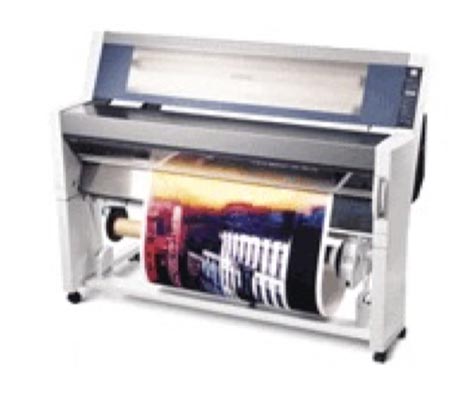 My relationship with Epson dates back to the late 1990s. When I was managing editor of the long, sadly defunct Digital Imaging magazine in 1999, Epson released the Stylus Pro 9000—which I reviewed for the magazine. These were the days when companies like Encad still ruled the wide-format roost and inkjet was just starting to muscle in on electrostatic wide-format devices. At the time, Epson was a top (if not the top) vendor in the photo printing and proofing market. The idea at the time, said Reed Hecht, group product manager of Epson America, was to “go and make Epson’s brand equal photo and equal proofing because that is our strength, with our technology and in developing these products.” The Stylus Pro 9000 was a 44-in. inkjet device and a landmark product for Epson. But there was one fatal flaw with the dye-based inks that were used in virtually all inkjet devices at the time: they faded —often very quickly.