

(Watch the complementary WhatTheyThink LunchNLearn Webinar presented by Kevin Karstedt here.)
I’ve lost count of how many times I’ve been asked, “Should commercial printers get into packaging?” —so many that if I had a nickel for each time, I could buy a dozen eggs or maybe even a new TV. While this question has been asked for decades, it remains as relevant as ever. Let’s explore the answer with a fresh lens for today’s market realities and develop a comprehensive understanding of why, where, and how commercial printers should consider entering this dynamic space.
The Printing Market Today
Across all sectors—home office, industrial, commercial—print markets are either flat or in decline. Digital transformation, environmental pressures, and changing consumer behaviors have all contributed to this shift. Traditional print media such as newspapers, magazines, and direct mail have seen decreased demand. Offices and industrial facilities have adopted digital document workflows, further reducing print volumes.
The exception? Packaging. As e-commerce expands and product proliferation continues across industries, packaging has become an increasingly essential element of brand identity, product protection, and customer engagement. Forecasts predict the global packaging print market will reach $507.6 billion by 2030, surpassing all other printing combined at $338.4 billion. Packaging is now the dominant force in global print revenue, and this growth trajectory is expected to continue as consumer demand for premium, customized, and sustainable packaging rises.
So, the market is huge—but where do commercial printers fit in, and what does it take to participate?
Key Questions to Consider
- Why should I be interested?
- Where and how can my business participate?
- What are the rules of engagement?
- What are the requirements for success?
- What are the potential rewards?
Understanding the Market
When we refer to packaging printers, we’ll use the term converter—companies that produce packaging materials like labels, folding cartons, flexible bags, corrugated boxes, and other containers used to ship and display consumer goods. These converters mostly serve large brands. For example, the top five corrugated converters make up over 80% of the market. The top four in folding cartons dominate 75%.
Their model is simple: high volume, low cost. This efficiency is achieved through capital-intensive infrastructure, streamlined workflows, and long-standing relationships with large consumer goods companies. Even as digital printing offers faster turnaround and customization, traditional converters continue to prioritize scale and cost-effectiveness.
However, this focus on scale creates a gap for smaller buyers—an underserved market—that commercial printers can potentially fill. These buyers often have short-run needs, require faster turnaround times, and value personalized service over rock-bottom pricing.
Who Is the Underserved Market?
According to the U.S. Small Business Administration, there are around 300,000 manufacturing establishments in the U.S. Smaller firms (under 100 employees) account for roughly $650 billion of the $3.5 trillion in manufactured goods. Many of these smaller manufacturers are not well served by the current converter model and need flexibility, speed, and better service.
This $100 billion market of small-scale manufacturers represents a significant opportunity for commercial printers. They need packaging solutions that fit their budget, turnaround expectations, and brand positioning. These companies may be launching new products, trying new markets, or simply operating on tight timelines. They don’t need 500,000 folding cartons—they may only need 1,000.

Source: U.S. Small Business Administration
These small manufacturers, are underserved packaging buyers and include independent food producers, boutique beverage brands, artisanal cosmetics companies, local breweries, subscription box startups, and more. Each of these businesses requires high-quality packaging in relatively small quantities—making them ideal clients for commercial printers who can pivot to serve this niche.
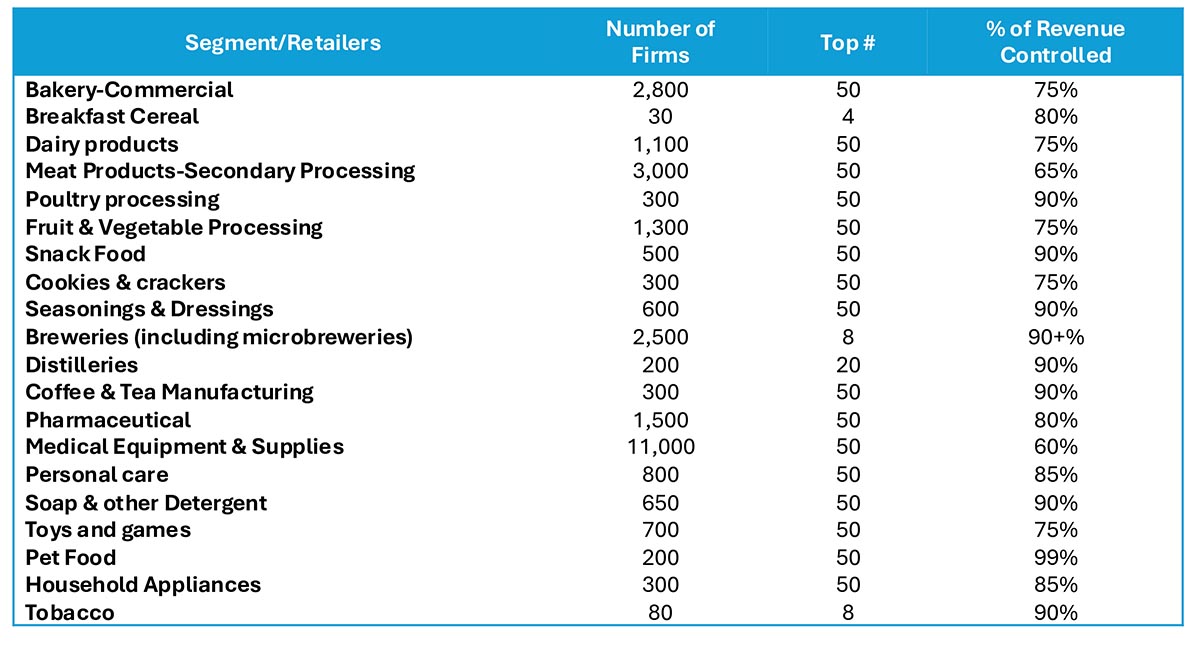
Source: National Retail Federation, Dun & Bradstreet
Compiled by Karstedt Partners
These businesses are often led by passionate entrepreneurs who care deeply about their brand presentation. For them, packaging is not just functional—it’s a key part of the product experience. A beautifully designed label or a custom-printed mailer box can elevate their offering and create lasting impressions on customers. That’s why these clients are willing to pay a premium for service, design support, and low minimums.
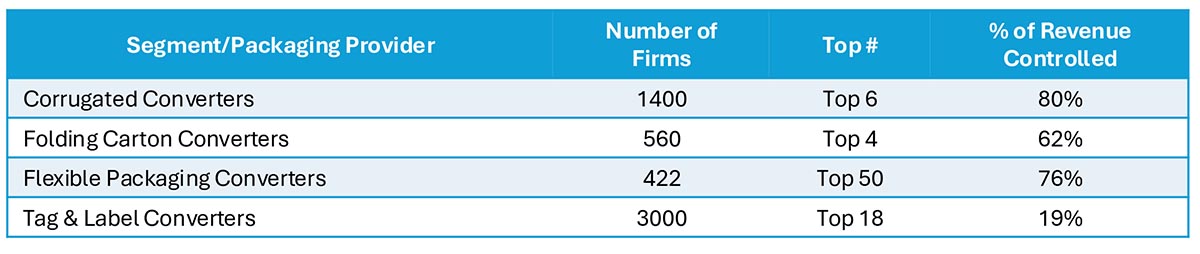
Source: Compiled by Karstedt Partners
Proof of Concept: Companies Serving the Underserved
Companies like ePac Flexible Packaging and Packlane offer successful case studies of businesses built to serve the underserved.
ePac Flexible Packaging focuses on digitally printed, short-run flexible packaging for products like snacks, pet food, supplements, and coffee. With over 350 employees, ePac offers fast turnaround and low minimum order quantities, appealing directly to small and mid-sized businesses. Their digital-first model allows for agility in design and production.
Packlane takes a different approach by providing an intuitive, online design and ordering experience for custom corrugated boxes, folding cartons, and mailers. Their target market includes e-commerce businesses and startups that need affordable, attractive, and protective packaging. By offering flexibility in quantity and full control over customization, Packlane has carved out a valuable position.
Both companies have built their success around simplicity, service, and speed—core values that small business clients prioritize. Their models prove that there is strong demand for packaging solutions that go beyond the high-volume, low-cost approach of traditional converters.
Another noteworthy company is Sticker Mule, which started with custom stickers and expanded into packaging. They emphasize simplicity, fast delivery, and transparent pricing. By streamlining the user experience, they’ve captured a loyal following of creatives, entrepreneurs, and small brands looking for easy access to professional-quality products.
Commercial Printers Entering the Packaging Space
Using data from Printing Impressions Magazine surveys of top U.S. commercial printers:
- 2018: Of mid-sized printers ranked #100–#150, only 2 offered packaging services.
- 2020: That number grew to 13, with packaging making up 13.6% of their combined revenues.
- 2023: Among the top 50 (excluding RR Donnelley, Quad, and pure packaging firms), 15 companies earned 20% of $23.9 billion total revenue from packaging.
This growth trend is strongest among large commercial printers, but even smaller players are seeing traction. While large printers have the capital and infrastructure to quickly pivot, mid-sized and regional commercial printers are increasingly recognizing the potential of this growing niche.
According to Smithers’ latest report, small-format packaging solutions—especially digitally printed folding cartons and labels—are expected to grow 9.2% annually through 2028. That means printers who specialize in these areas can expect a growing share of business, even in a volatile economy.
Strategies for Participation
For commercial printers exploring packaging, a successful entry requires a thoughtful, phased approach:
- Evaluate Your Existing Customer Base
Start by identifying which of your current clients may have packaging needs. Many companies who buy marketing collateral or forms from you might also need packaging materials—labels, folding cartons, or mailers. A simple conversation can reveal new business opportunities. - Invest in the Right Equipment
Digital presses, flatbed die-cutters, and wide-format inkjet printers are ideal for short-run packaging. Investing in the right finishing capabilities, such as laminating, folding, gluing, or specialty coatings, will allow you to deliver a complete solution. - Develop an E-commerce Portal
A user-friendly online storefront for ordering custom packaging is essential. It should allow clients to select packaging types, upload artwork, preview designs, and get instant quotes. This reduces friction and builds trust with small businesses. - Train Your Sales Team
Packaging is a different beast. Your sales reps will need to understand packaging materials, regulatory requirements (especially for food and cosmetics), structural design considerations, and fulfillment logistics. Consider hiring packaging specialists or consultants. - Start with Simple Products
Begin with straightforward offerings like labels, folding cartons, or mailers. As your confidence and capabilities grow, you can expand into more complex items like flexible packaging or rigid boxes. - Focus on Sustainability
Eco-conscious packaging is no longer optional. Consumers expect brands to use recyclable, compostable, or biodegradable materials. Offering sustainable packaging solutions not only aligns with buyer values but also differentiates your services.
Revisiting the Questions
- Why should I be interested?
- The packaging market is growing consistently.
- Commercial printers are already finding success in this space.
- Diversifying into packaging reduces reliance on declining traditional print revenues.
- Where and how can my business participate?
- Target small to mid-sized local manufacturers and consumer product startups.
- Expand services to current clients who may also need packaging.
- Partner with designers and agencies that specialize in branding and product launches.
- What are the rules of engagement?
- Focus on service, not just product. Prioritize flexibility, responsiveness, and customer experience.
- Build user-friendly online platforms and ordering systems.
- Provide support from design through delivery.
- What are the requirements for success?
- Offer fast, flexible, and convenient service.
- Position yourself as a solutions provider, not just a print vendor.
- Stay agile and responsive to customer feedback.
- What are the potential rewards?
- Boost revenues by 10–30%.
- Gain higher margins through value-added service.
- Build recurring revenue through repeat orders from growing brands.
- Establish long-term relationships with high-potential clients.
Final Thoughts
The transition from commercial printing to packaging is not without challenges, but it presents a clear and compelling growth opportunity. By identifying the underserved market, investing in the right tools and skills, and focusing on value-added services, commercial printers can carve out a profitable and sustainable niche. As packaging continues to dominate the print landscape, the real question may no longer be should you get into packaging—but how soon can you start?
For printers willing to learn, adapt, and connect with a new generation of brand owners, the packaging space holds immense potential. In this ever-evolving print economy, staying still is the greater risk. Forward-thinking commercial printers can seize the packaging opportunity and position themselves as essential partners in the modern marketplace.