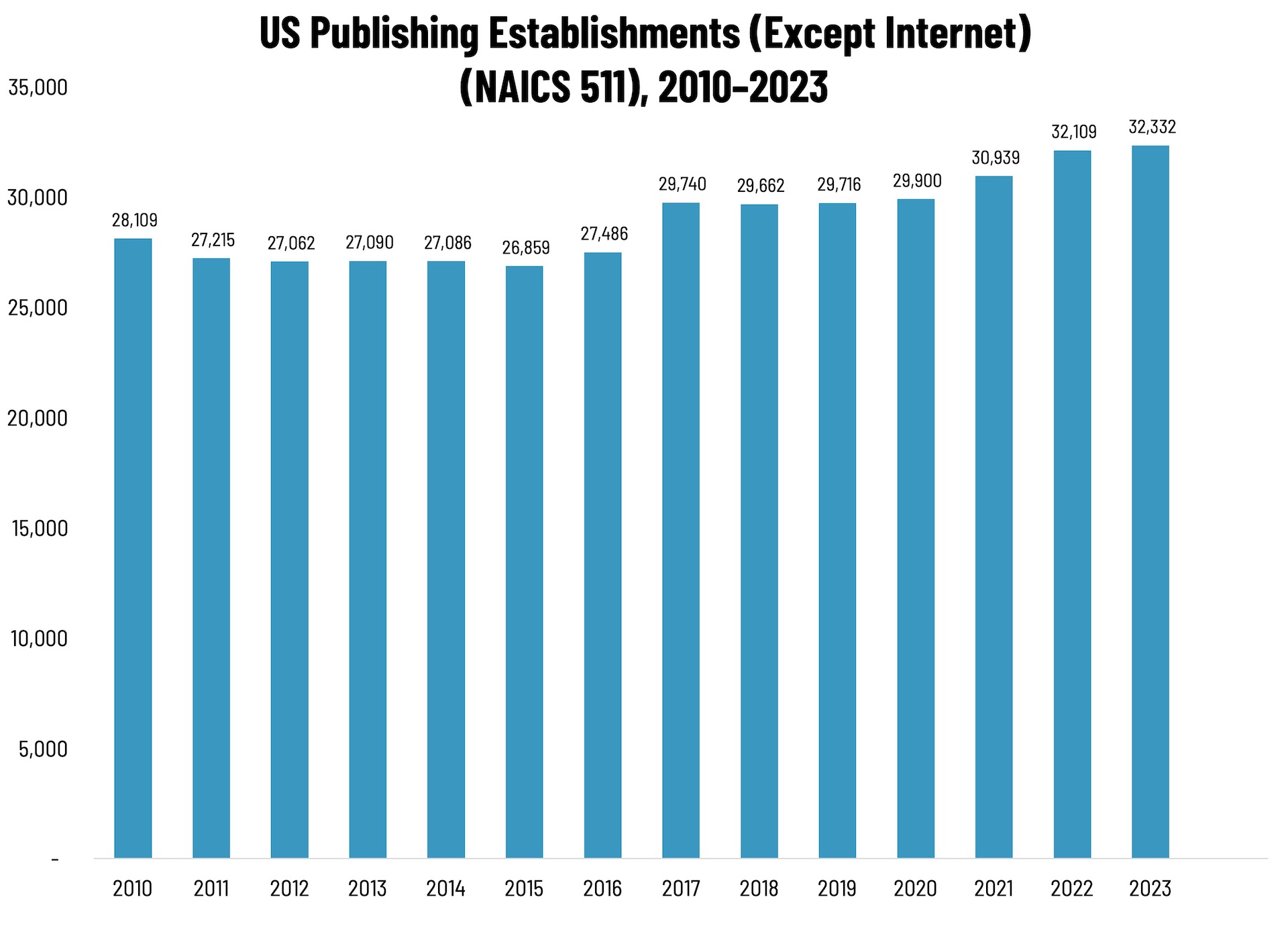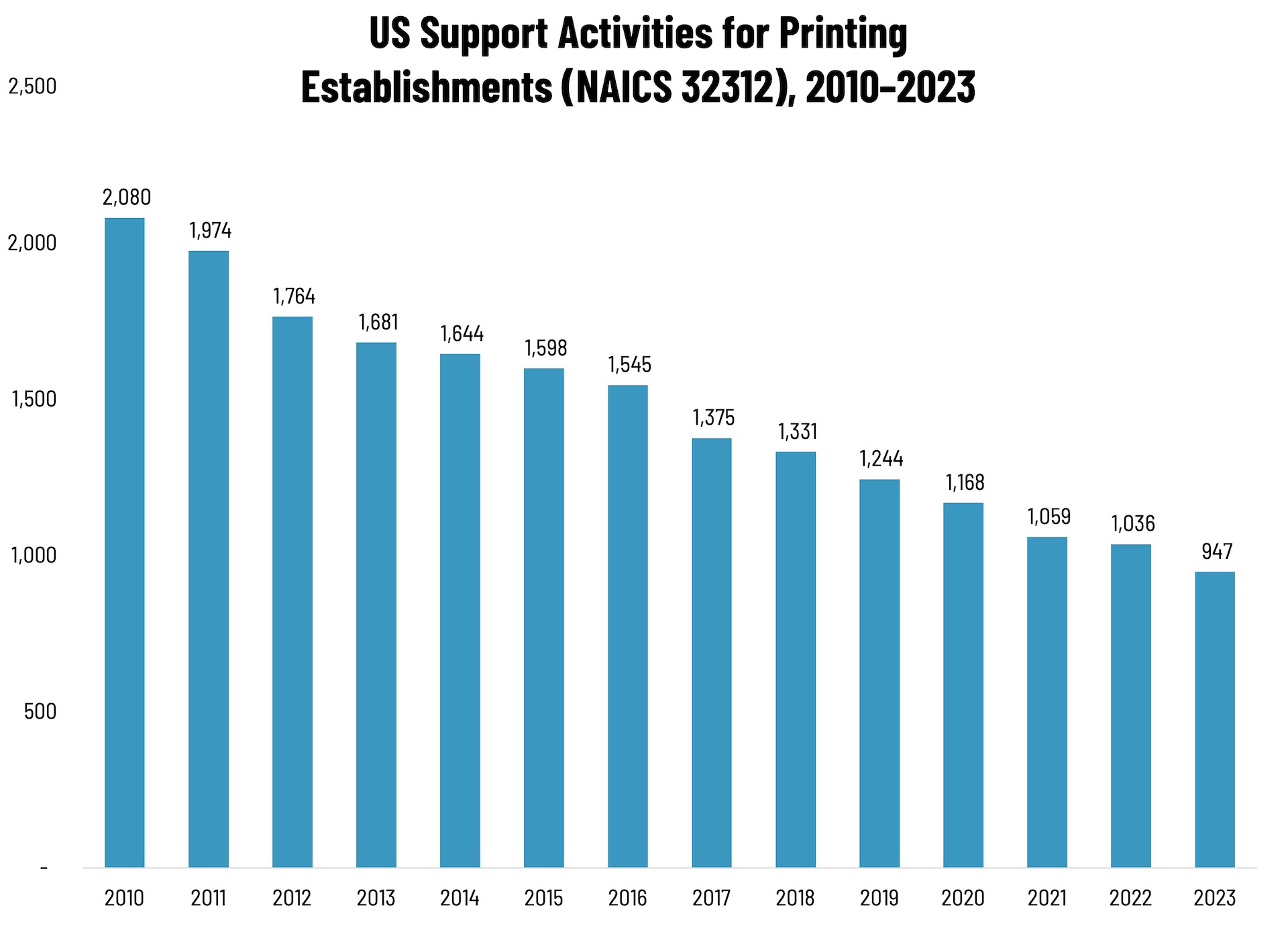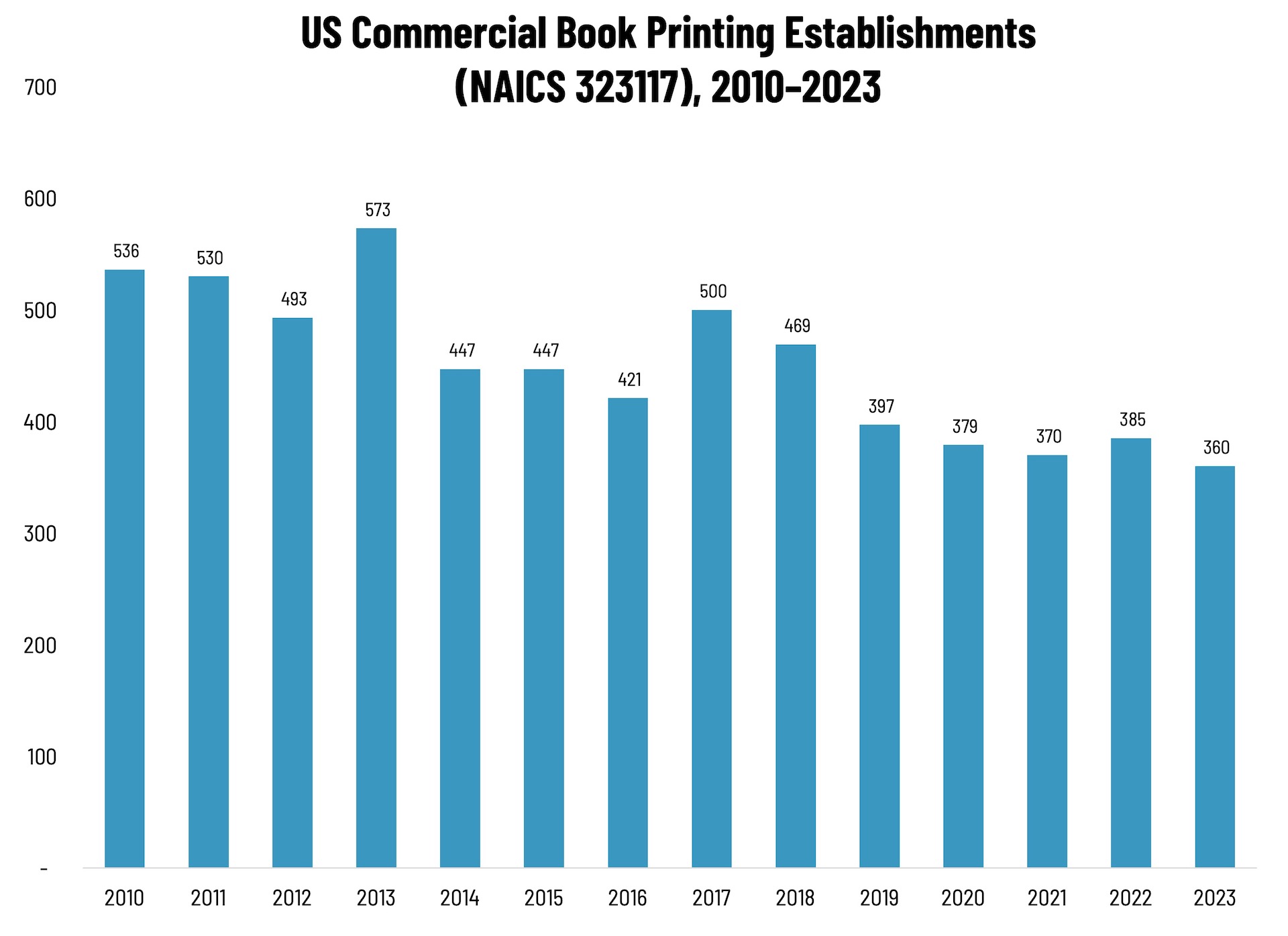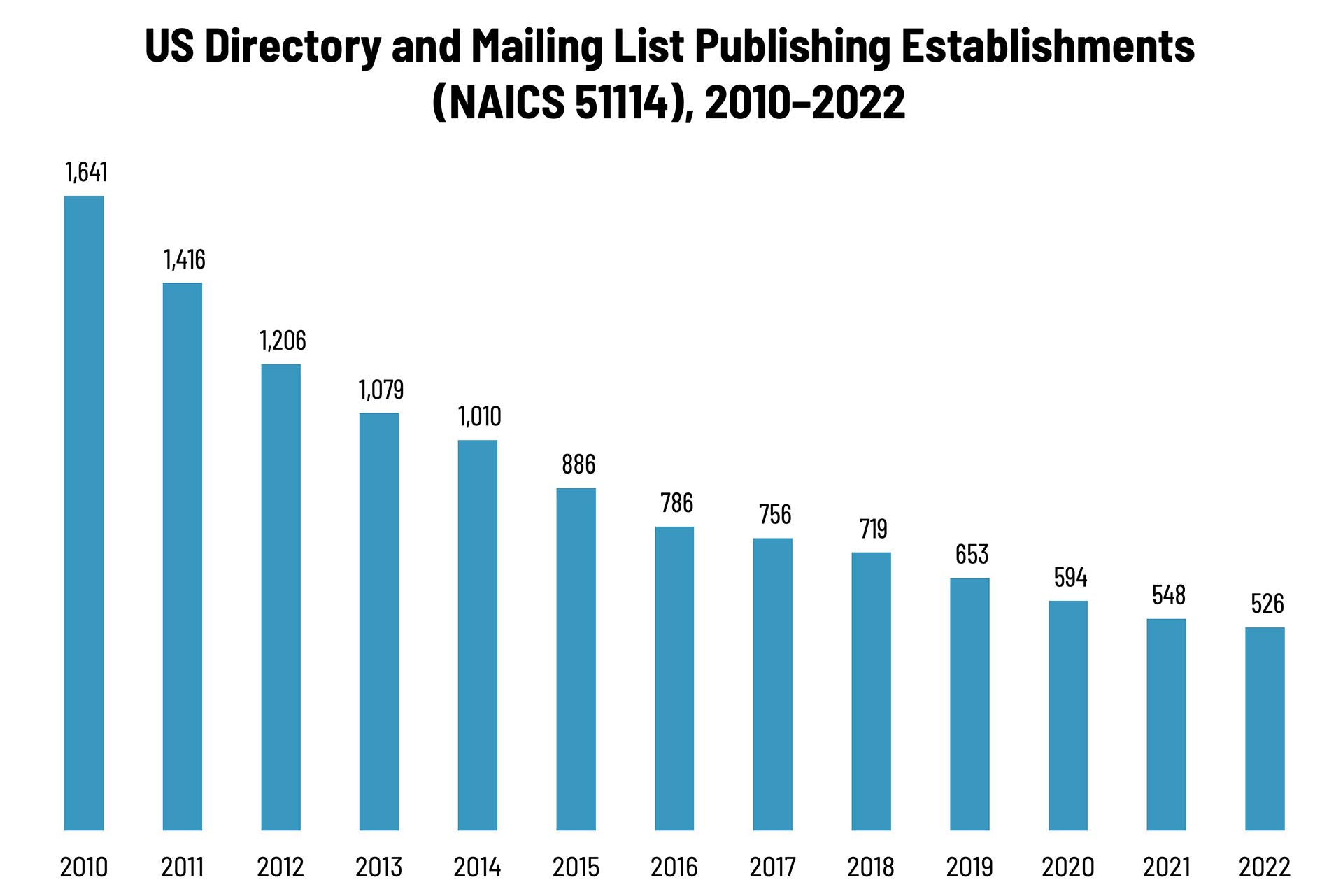
Our Friday data slice’n’dice look at the latest edition of County Business Patterns has been detailing the publishing industries. As 2022 began, there were 526 establishments in NAICS 51114 (Directory and Mailing List Publishing), a decrease of 68% since 2010.
The Bureau of the Census definition for this business classification:
This industry comprises establishments primarily engaged in publishing directories, mailing lists, and collections or compilations of fact. The products are typically protected in their selection, arrangement and/or presentation. Examples are lists of mailing addresses, telephone directories, directories of businesses, collections or compilations of proprietary drugs or legal case results, compilations of public records, etc. These establishments may publish directories and mailing lists in print or electronic form.
There is no mystery to what is happening with these businesses: directories and mailing lists, when they haven’t been replaced by Google, are distributed almost entirely electronically. The USPS’s woefully underutilized Every Door Direct Mail (EDDM) bypasses traditional directory publishers (when it’s used at all), although some commercial printers—such as 4Over—offer and promote their EDDM services.
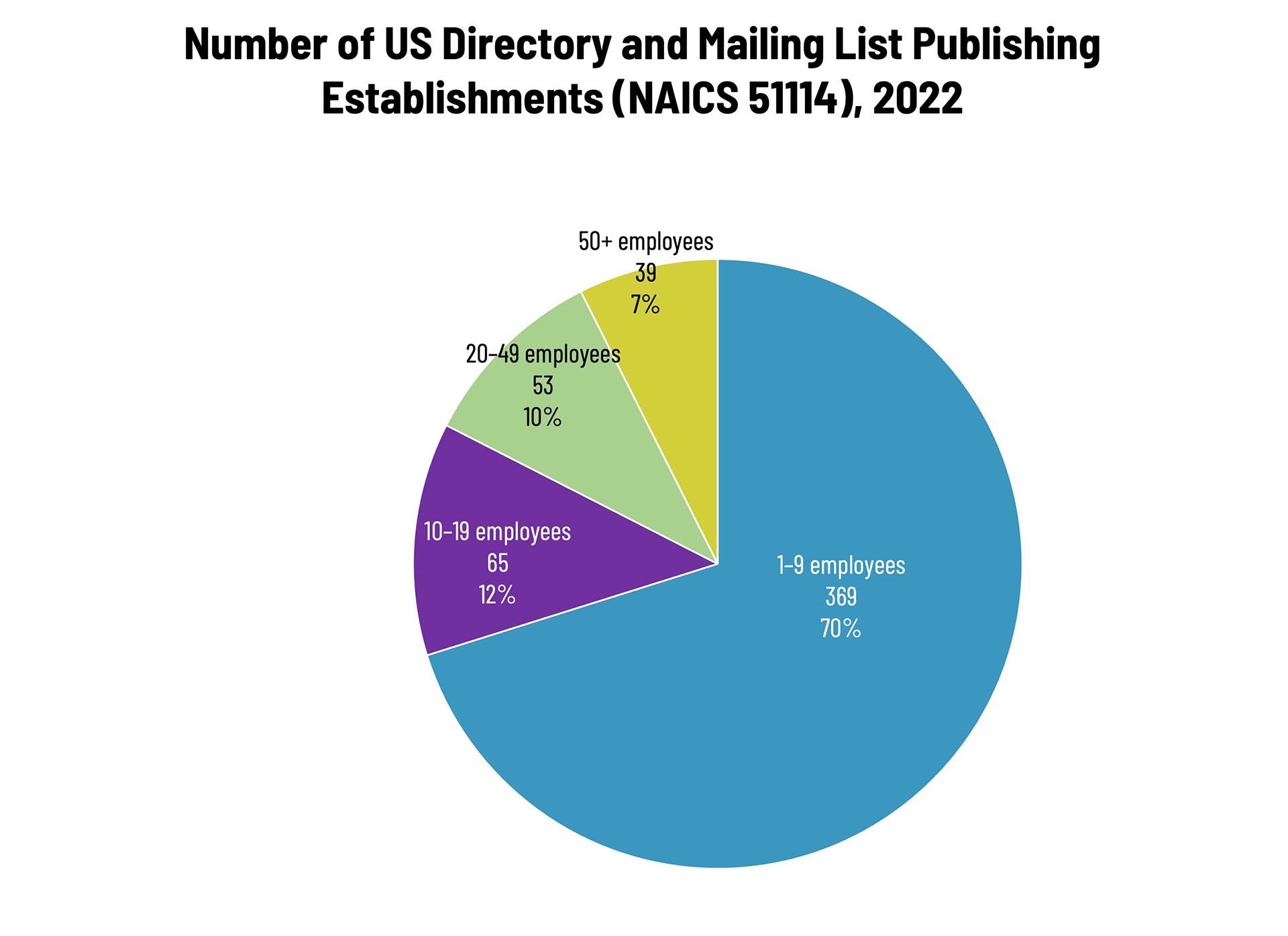
Directory and mailing list publishing establishments—such as they are—are concentrated at the lower end of the employee-count spectrum. Small publishers (1 to 9 employees) comprise the bulk of the establishments, accounting for 70% of all establishments, with the other three size classifications just about equal.
These counts are based on data from the Census Bureau’s County Business Patterns. Throughout this year, we will be updating these data series with the latest CBP figures. County Business Patterns includes other data, such as number of employees, payroll, etc. These counts are broken down by commercial printing business classification (based on NAICS, the North American Industrial Classification System). Up next:
- 51119 Other Publishers
- 511191 Greeting Card Publishers
- 511199 All Other Publishers
These data, and the overarching year-to-year trends, like other demographic data, can be used not only for business planning and forecasting, but also sales and marketing resource allocation.
This Macro Moment…
Last week, the Bureau of Economic Analysis released its advance estimate of Q1 2025 GDP growth—and it was not good. They said:
Real gross domestic product (GDP) decreased at an annual rate of 0.3 percent in the first quarter of 2025 (January, February, and March), according to the advance estimate released by the U.S. Bureau of Economic Analysis. In the fourth quarter of 2024, real GDP increased 2.4 percent.
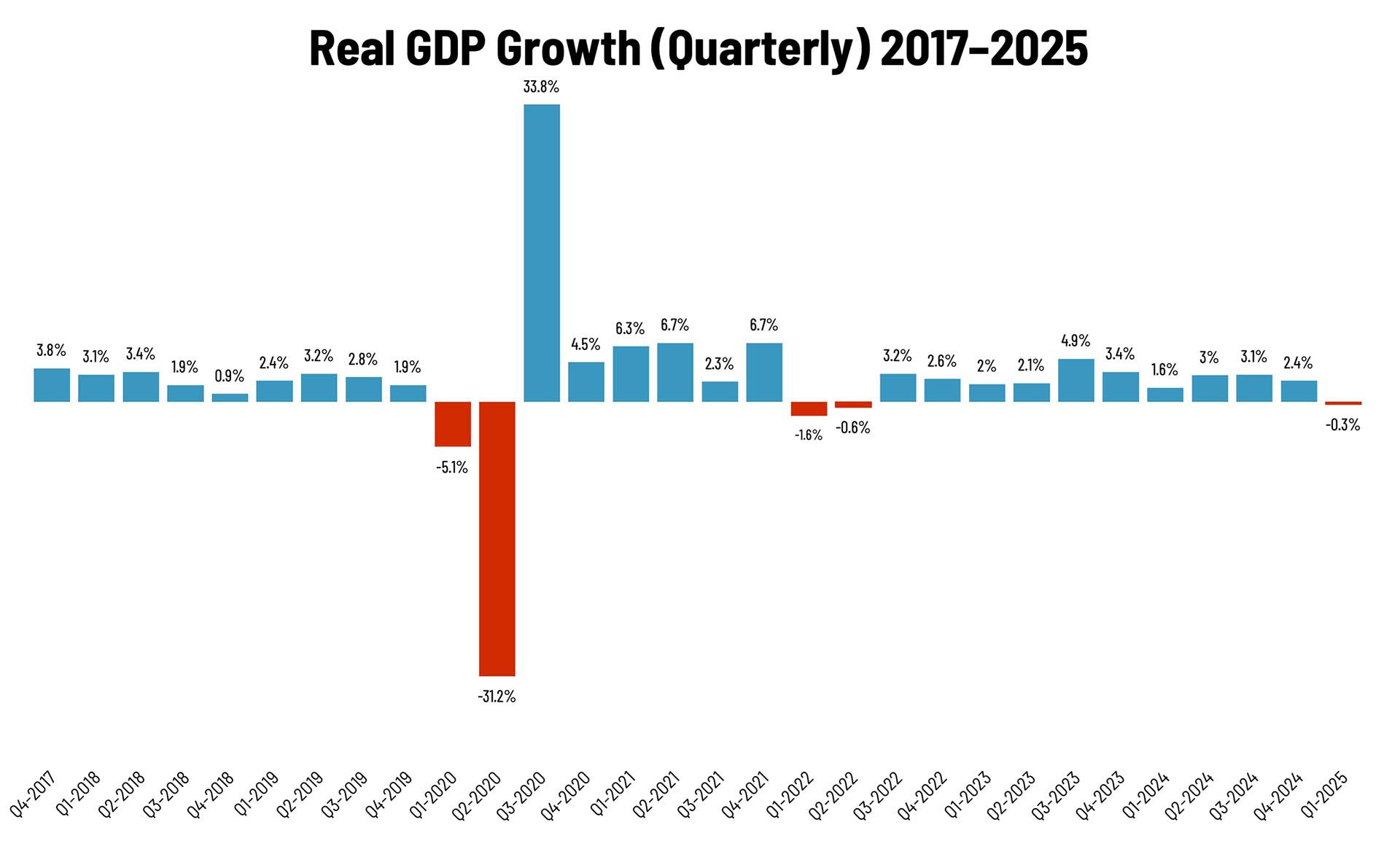
Source: Bureau of Economic Analysis
Compared to the fourth quarter, the downturn in real GDP in the first quarter reflected an upturn in imports, a deceleration in consumer spending, and a downturn in government spending that were partly offset by upturns in investment and exports.
The GDP report was generally below expectations, although the Atlanta Fed’s GDPNow was not far off.
A couple of things to note that make this less dire than it seems. Firstly, advance estimates are always a bit noisy and more subject to revision than later estimates based on more data. Secondly, imports were way up, suggesting companies were stocking up in anticipation of tariffs. And thirdly, this report only covers up to March 31—before “tariffopolooza” started in earnest. So whether this report is a one- or maybe two-time anomaly (like we saw in Q1/Q2 2022) or the shape of things to come, remains to be seen.
Our Printing Outlook 2024 report is now available for download! The brand-new report provides detailed analysis of the latest WhatTheyThink Printing Industry Survey, the latest industry economic data and macroeconomic trends, as well as industry and cultural technological trends to look out for in 2025 and beyond. Purchase now!