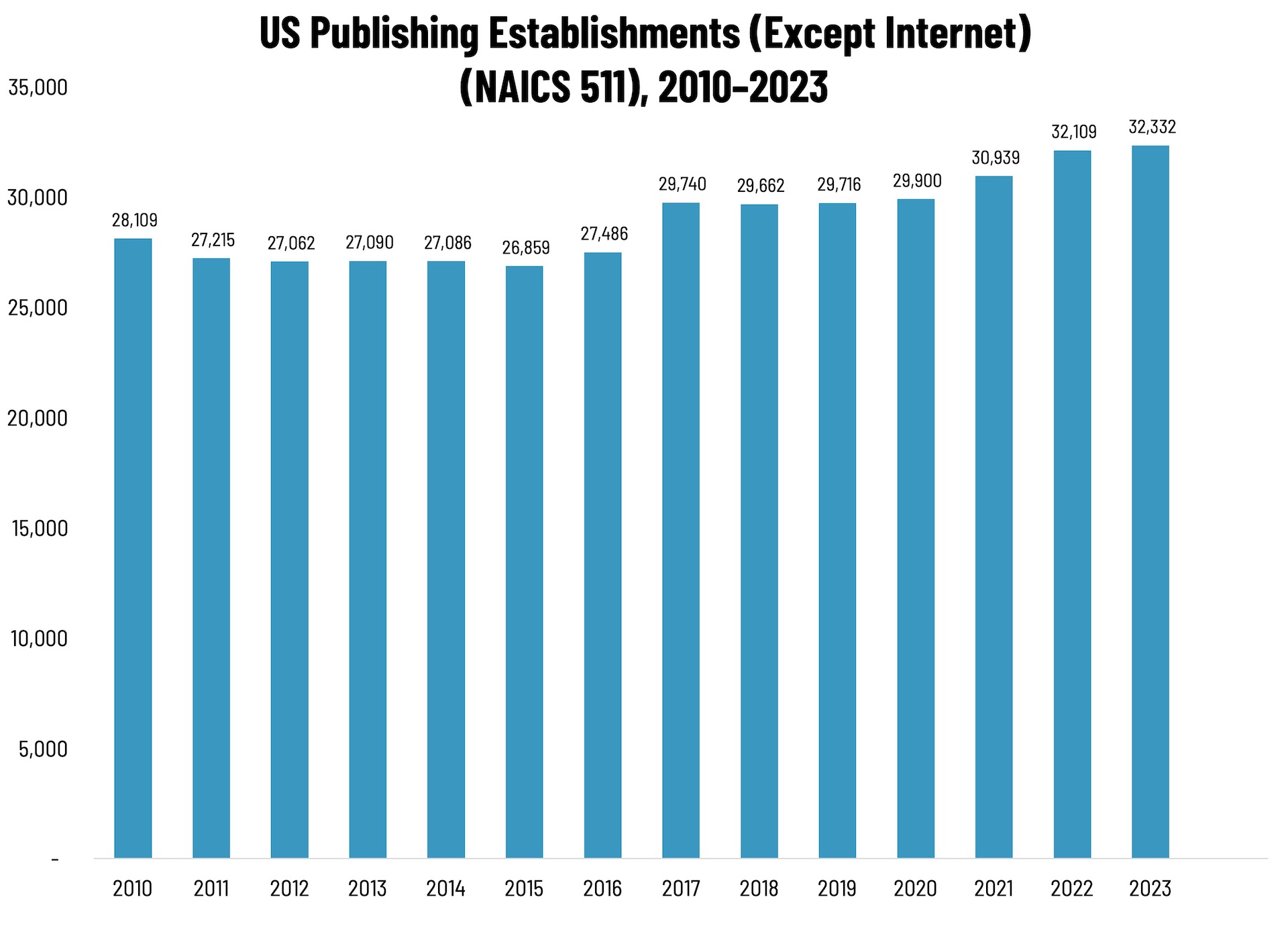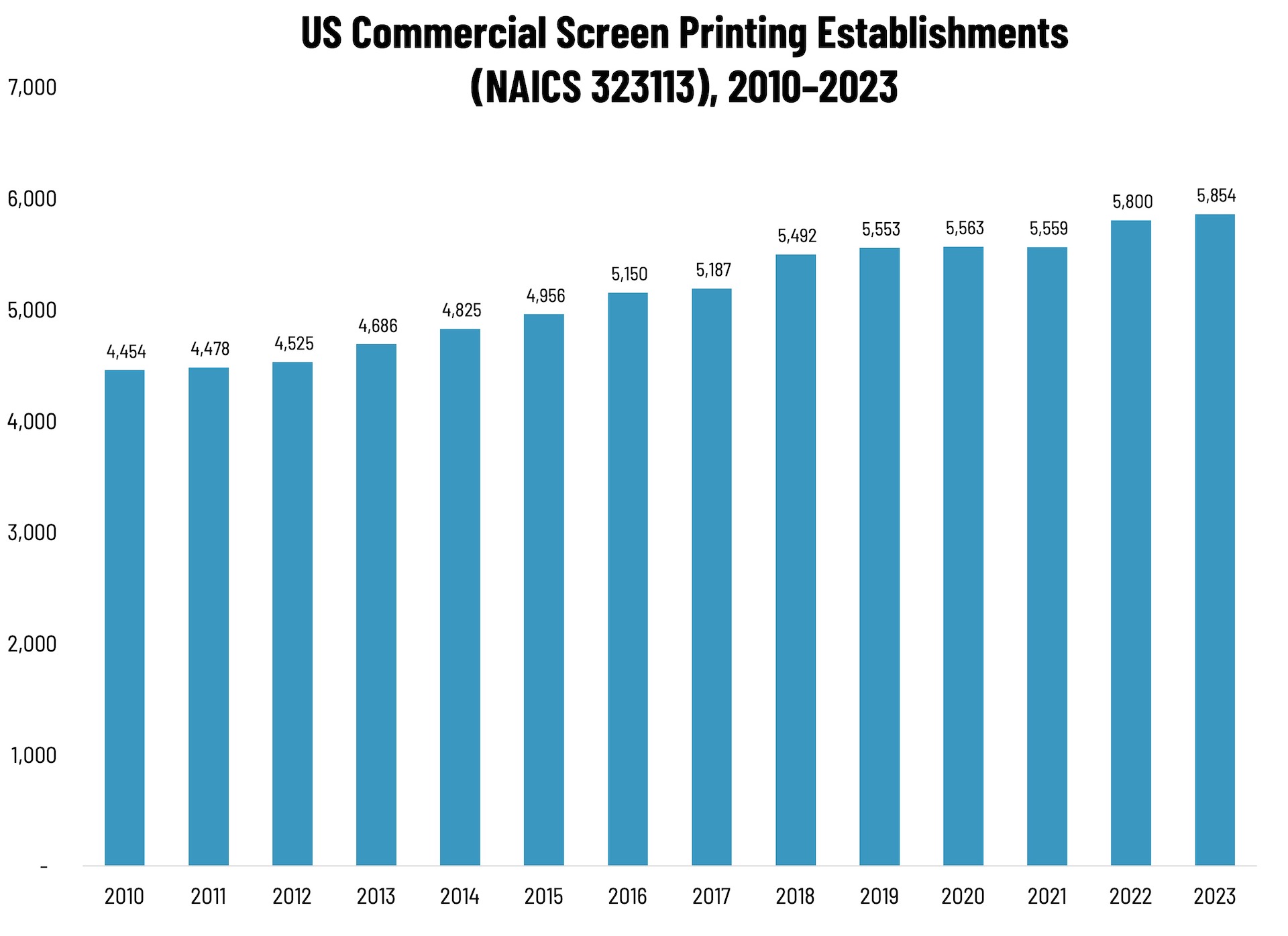
As 2023 began, there were 5,854 establishments in NAICS 323113 (Commercial Screen Printing). This represents an increase of 31% since 2010, the only commercial printing category that has seen a steady (or any) growth in establishments.
The Census Bureau describes this NAICS category:
This U.S. industry comprises establishments primarily engaged in screen printing without publishing (except books, fabric grey goods, and manifold business forms). This industry includes establishments engaged in screen printing on purchased stock materials, such as stationery, invitations, labels, and similar items, on a job-order basis. Establishments primarily engaged in printing on apparel and textile products, such as T-shirts, caps, jackets, towels, and napkins, are included in this industry.
The growth in this category is thanks to the rise of specialty printing. Screen is commonly used to print on textiles (T-shirts being the emblematic example), and these kinds of promotional items really started to take off in the past decade. Couple this with the rise of short-run and digital technologies that can complement screen, and as demand for specialty items has increased, establishments have grown to take advantage of this hot print application area. It’s very common to find hybrid screen/digital shops, and even hybrid screen/digital workflows for the same products—kind of like the “digital printing on offset shells” approach that used to be very popular (and still exists to some extent) among commercial printers. And let’s also not forget the growth of industrial printing, in which screen and pad printing also play a very large role.
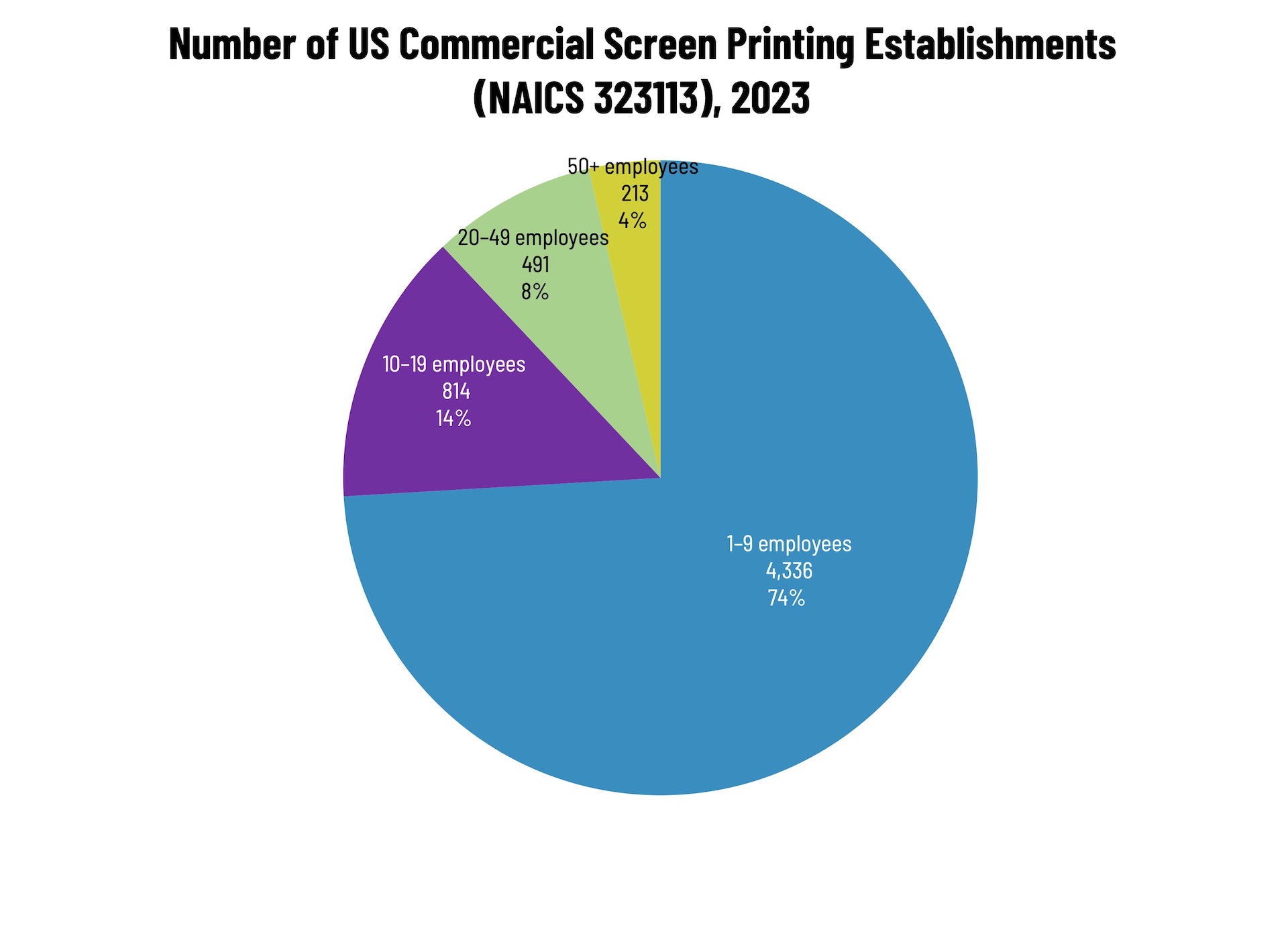
Small shops (1 to 9 employees) still comprise the bulk of the screen printing industry, accounting for 74% of all establishments. The largest shops account for only 4% of industry establishments with mid-size shops accounting for just under one-fourth of establishments. These percentages have not varied substantially since at least as far back as 2010.
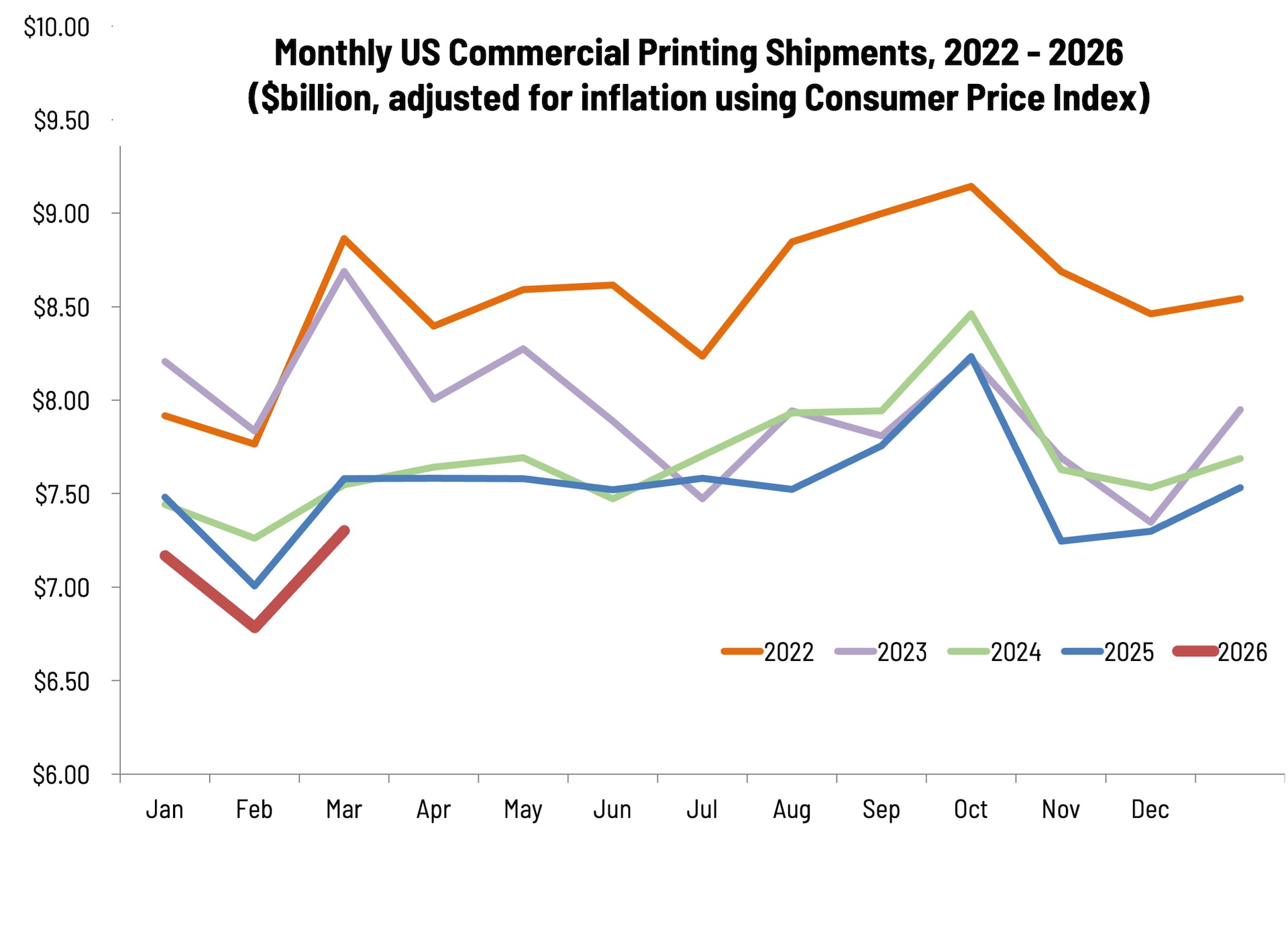
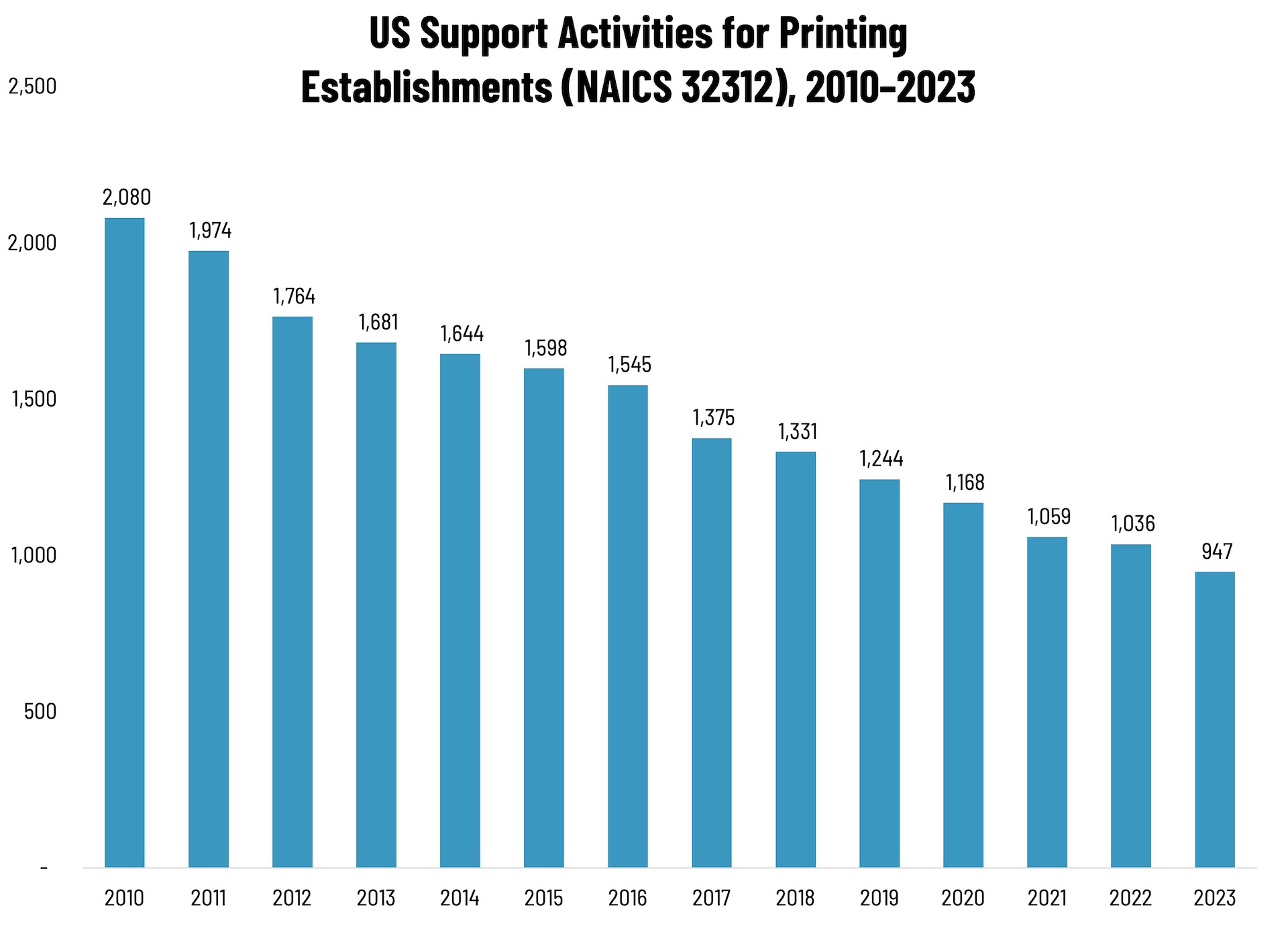
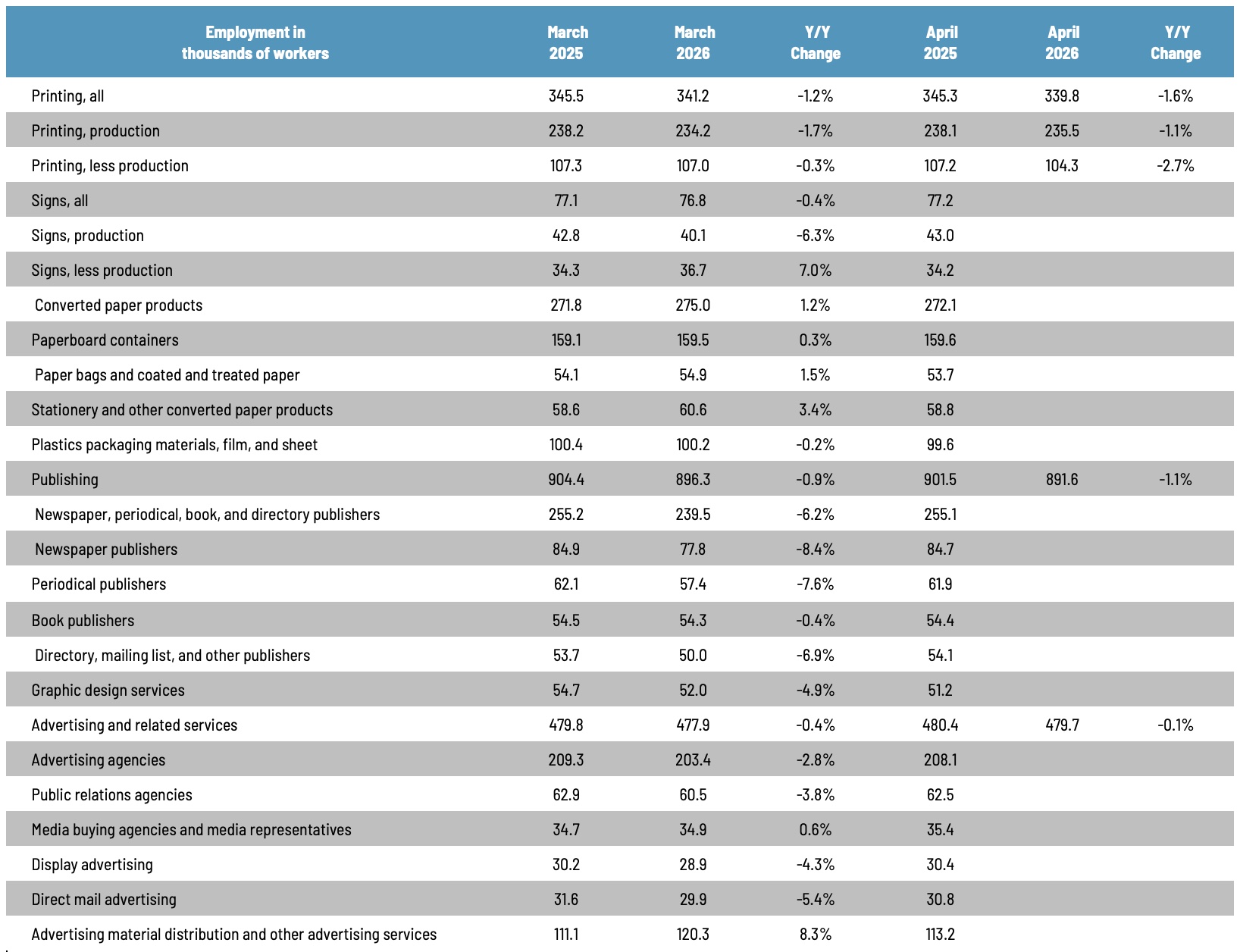
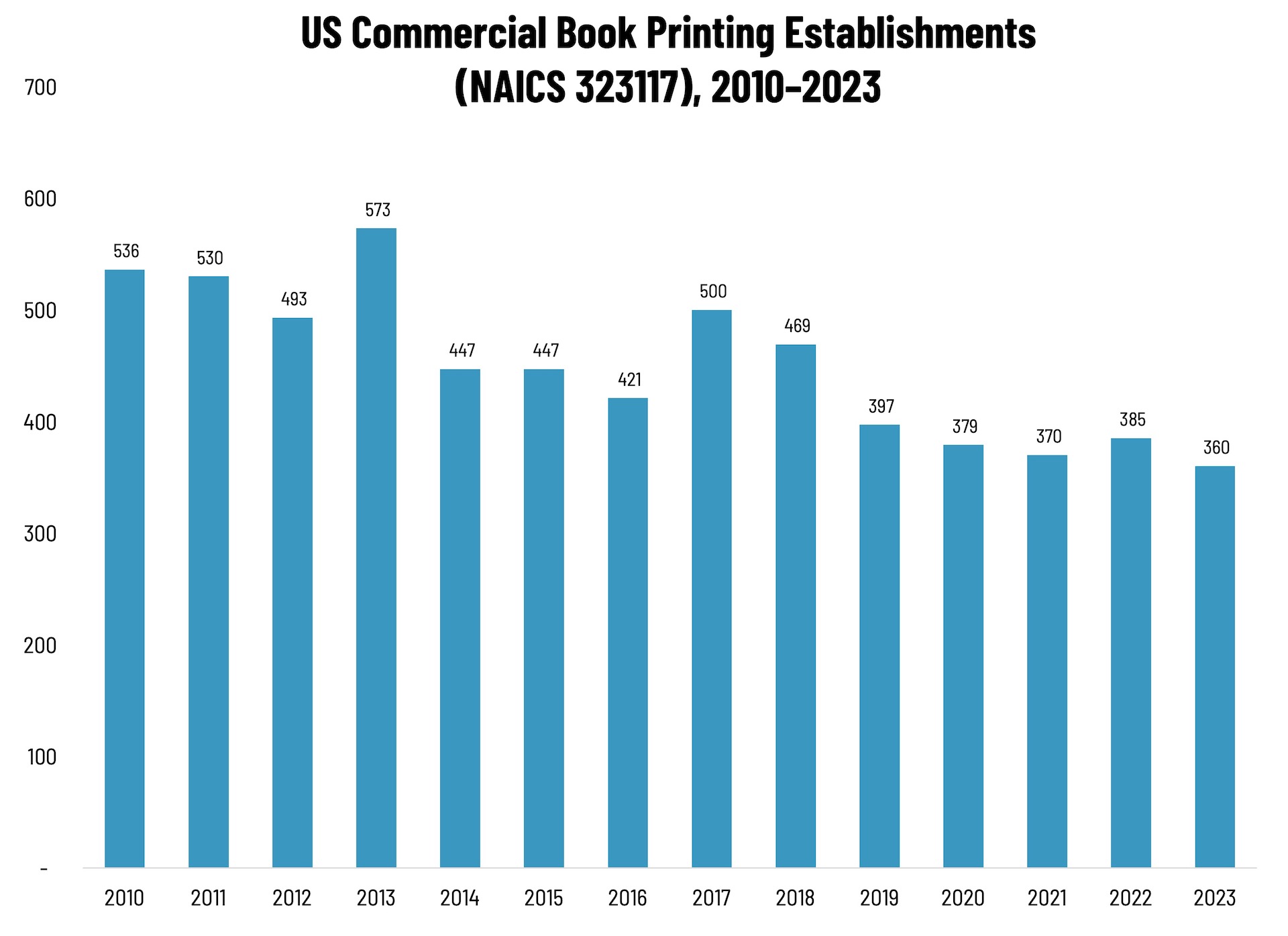
These counts are based on data from the Census Bureau’s County Business Patterns. Throughout this year, we will be updating these data series with the latest CBP figures. County Business Patterns includes other data, such as number of employees, payroll, etc. These counts are broken down by commercial printing business classification (based on NAICS, the North American Industrial Classification System):
- 323117 (Books Printing)
- 32312 (Support Activities for Printing—aka prepress and postpress services)
These data, and the overarching year-to-year trends, like other demographic data, can be used not only for business planning and forecasting, but also sales and marketing resource allocation.
This Macro Moment…
Yesterday, the Bureau of Economic Analysis released its advance estimate of Q1 2026 GDP growth:
Real gross domestic product (GDP) increased at an annual rate of 2.0 percent in the first quarter of 2026 (January, February, and March), according to the advance estimate released today by the U.S. Bureau of Economic Analysis. In the fourth quarter of 2025, real GDP increased 0.5 percent.
The contributors to the increase in real GDP in the first quarter were investment, exports, consumer spending, and government spending. Imports, which are a subtraction in the calculation of GDP, also increased.
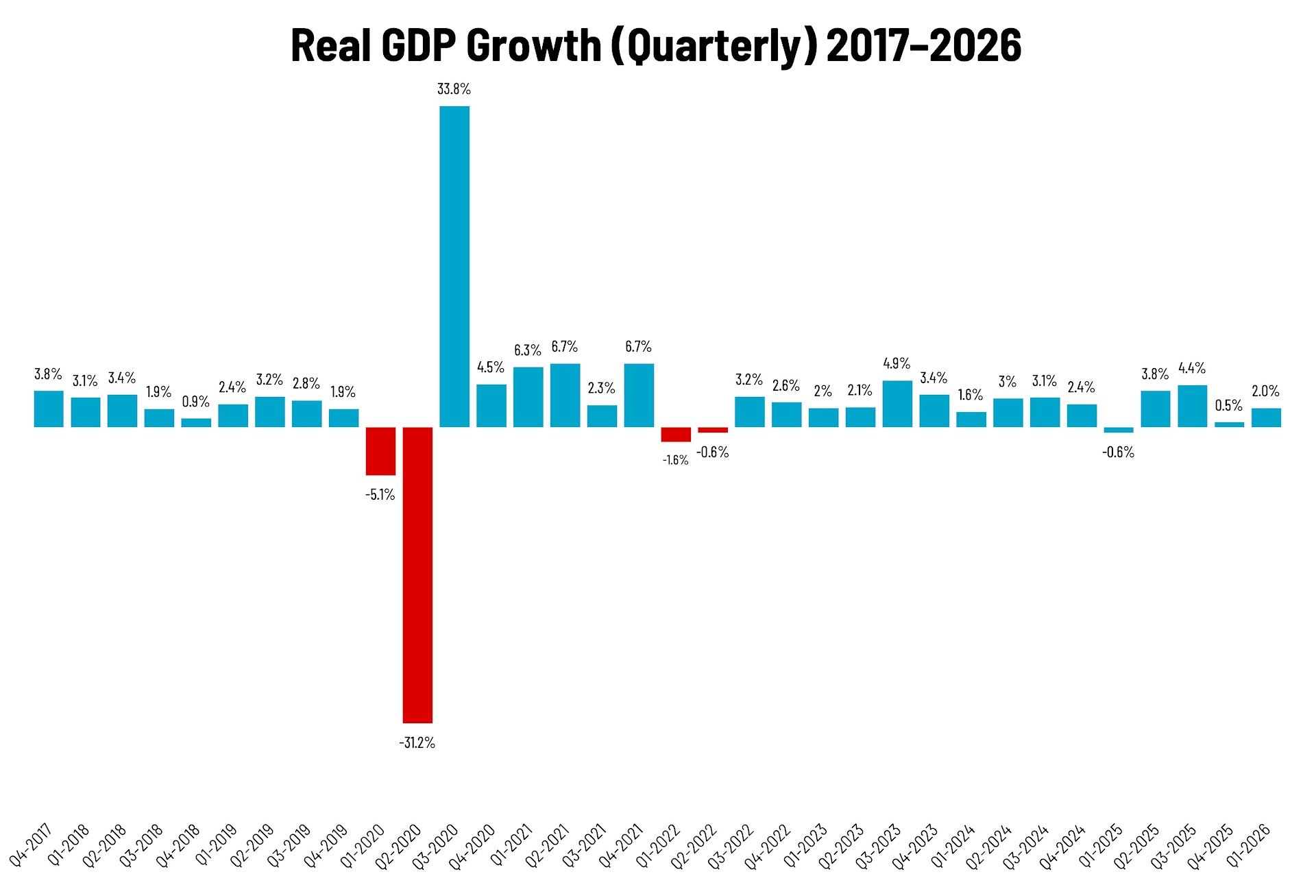
Bureau of Economic Analysis
This was certainly better than Q4 but still a scosh below the expected 2.2%.