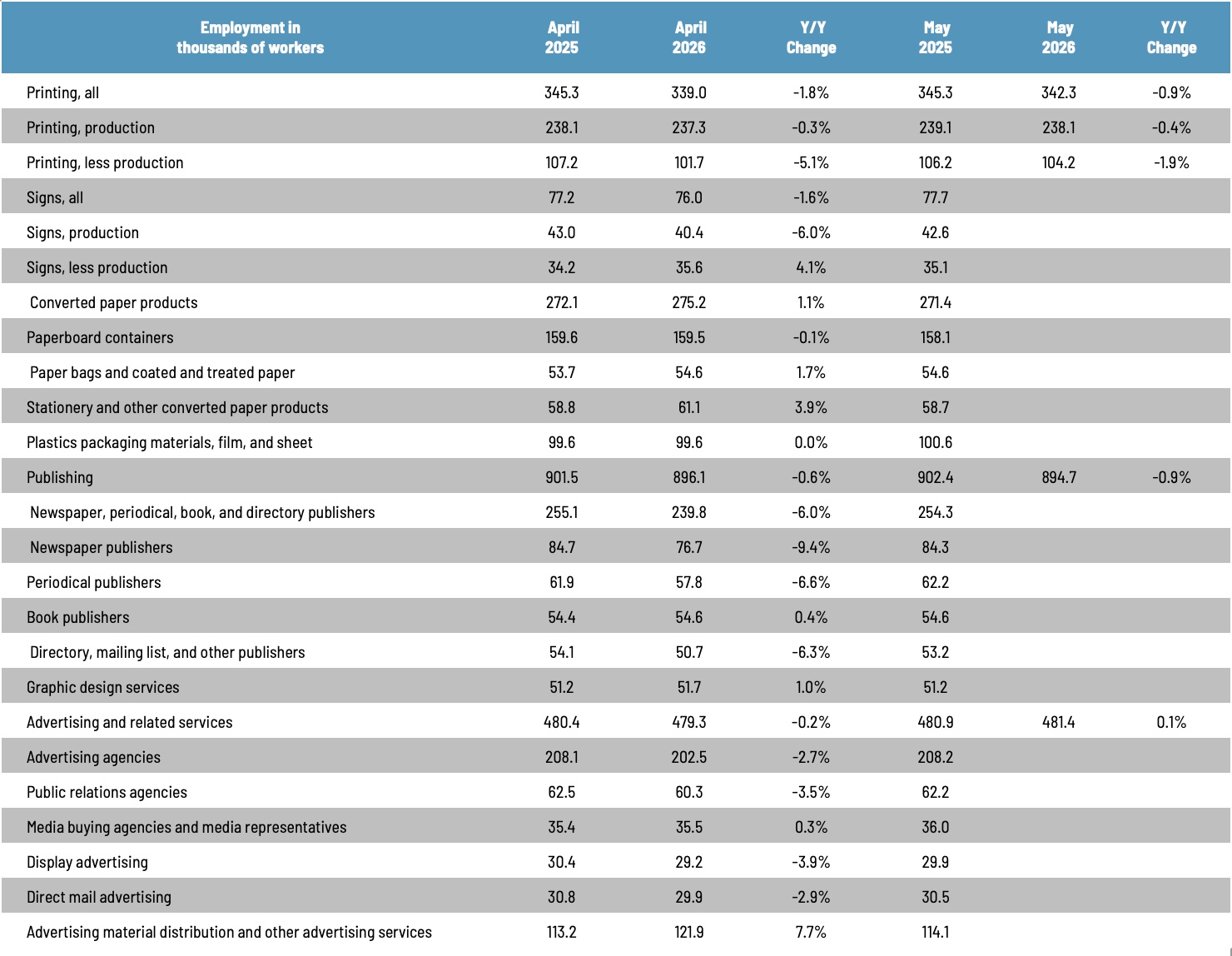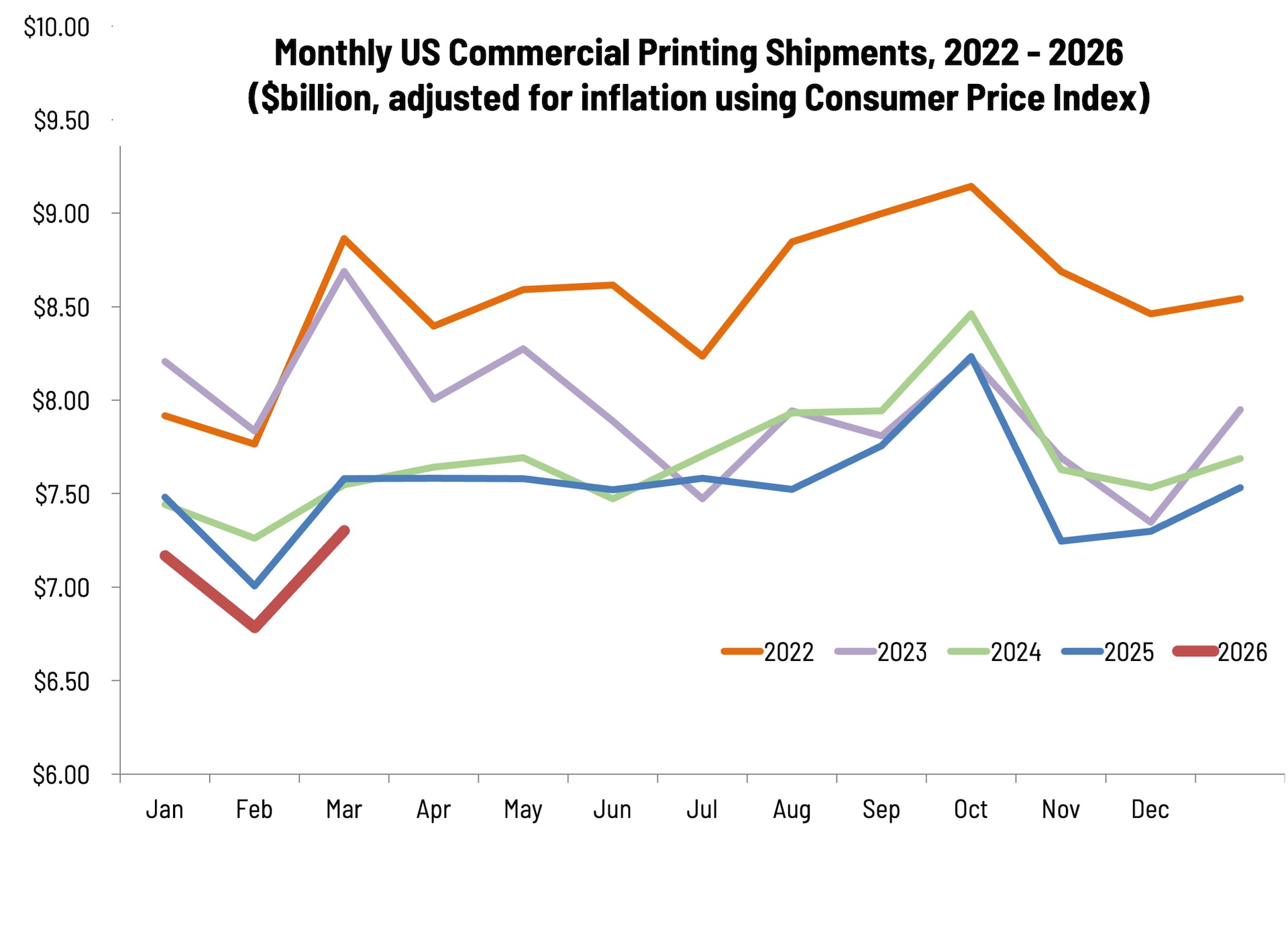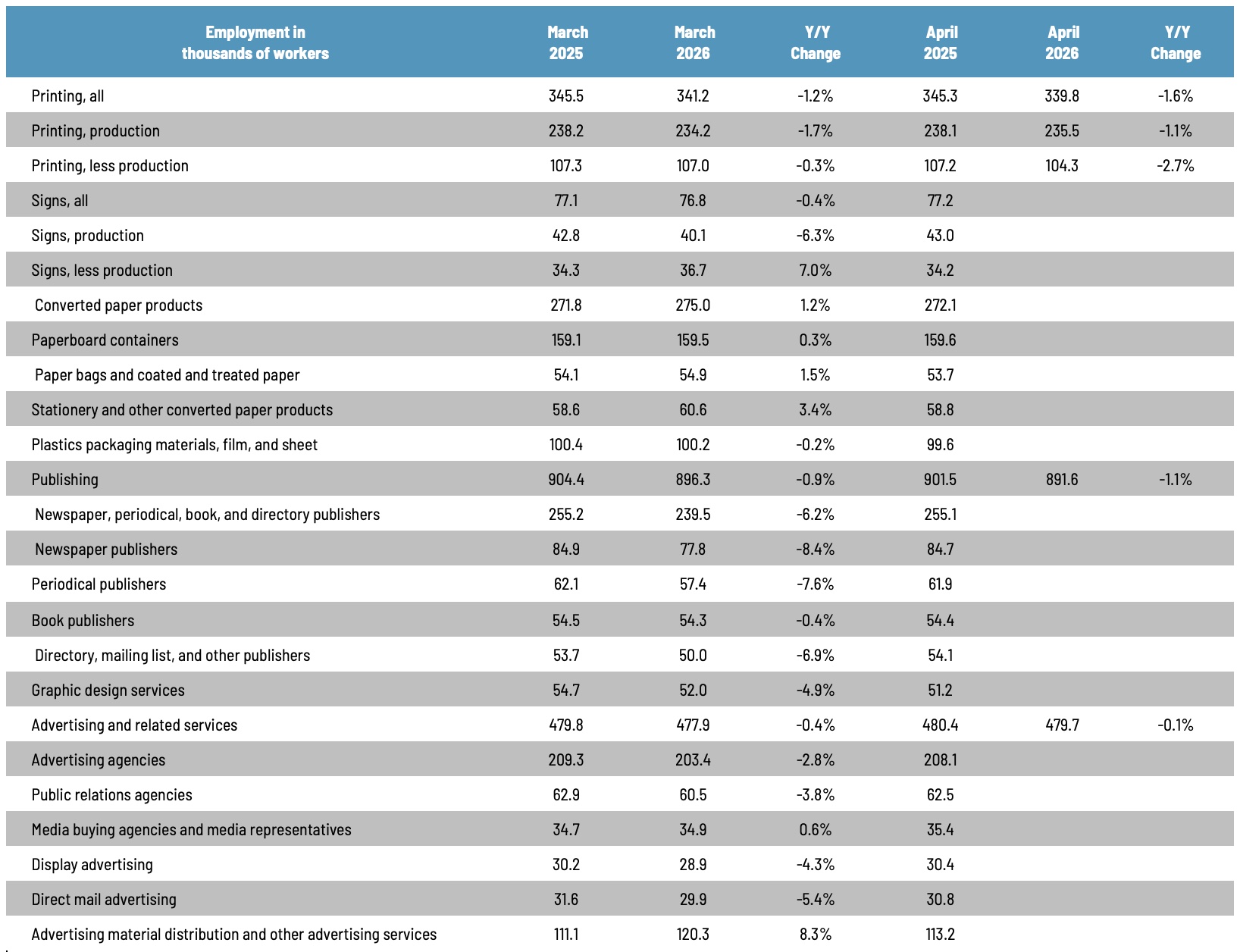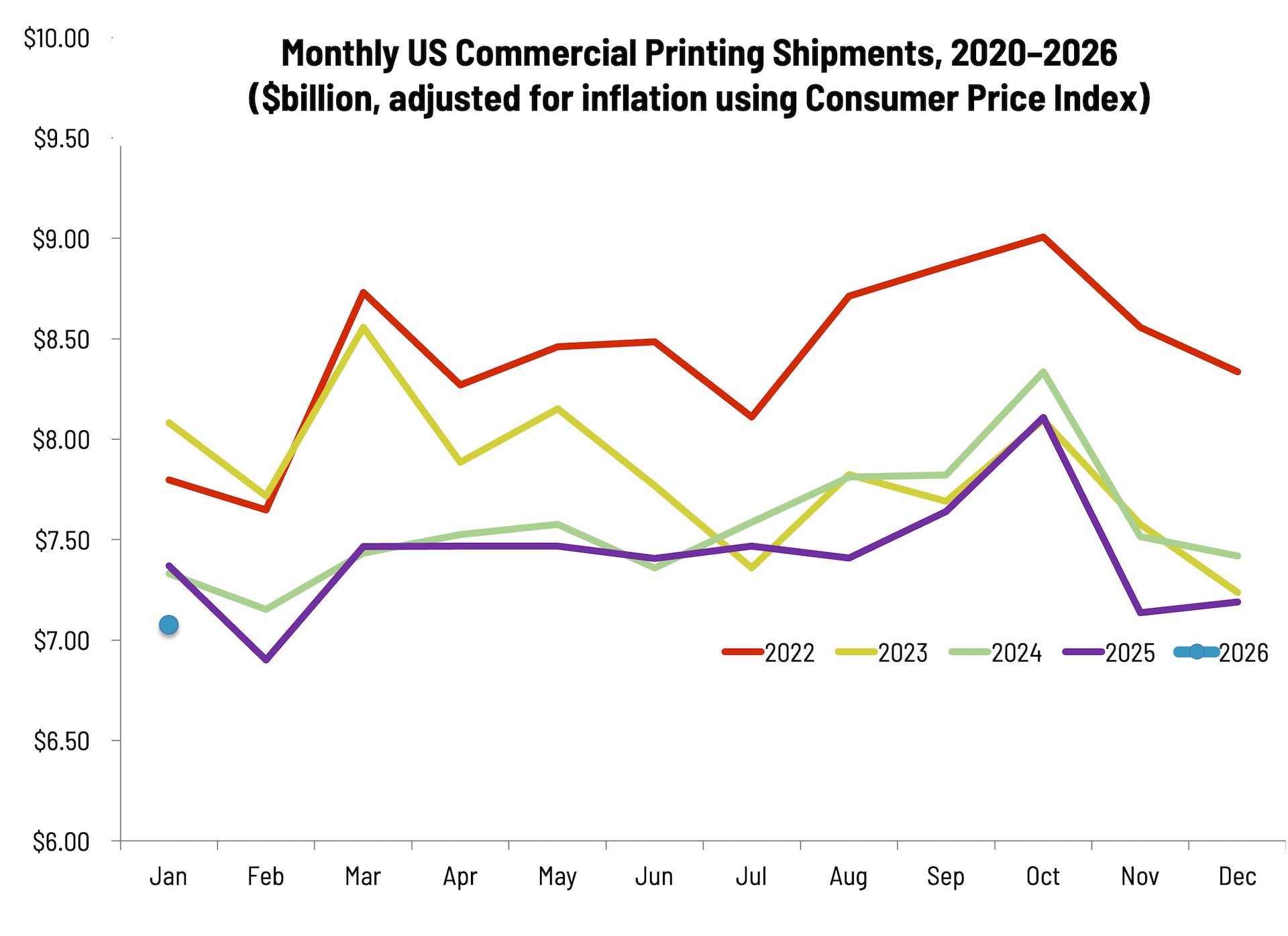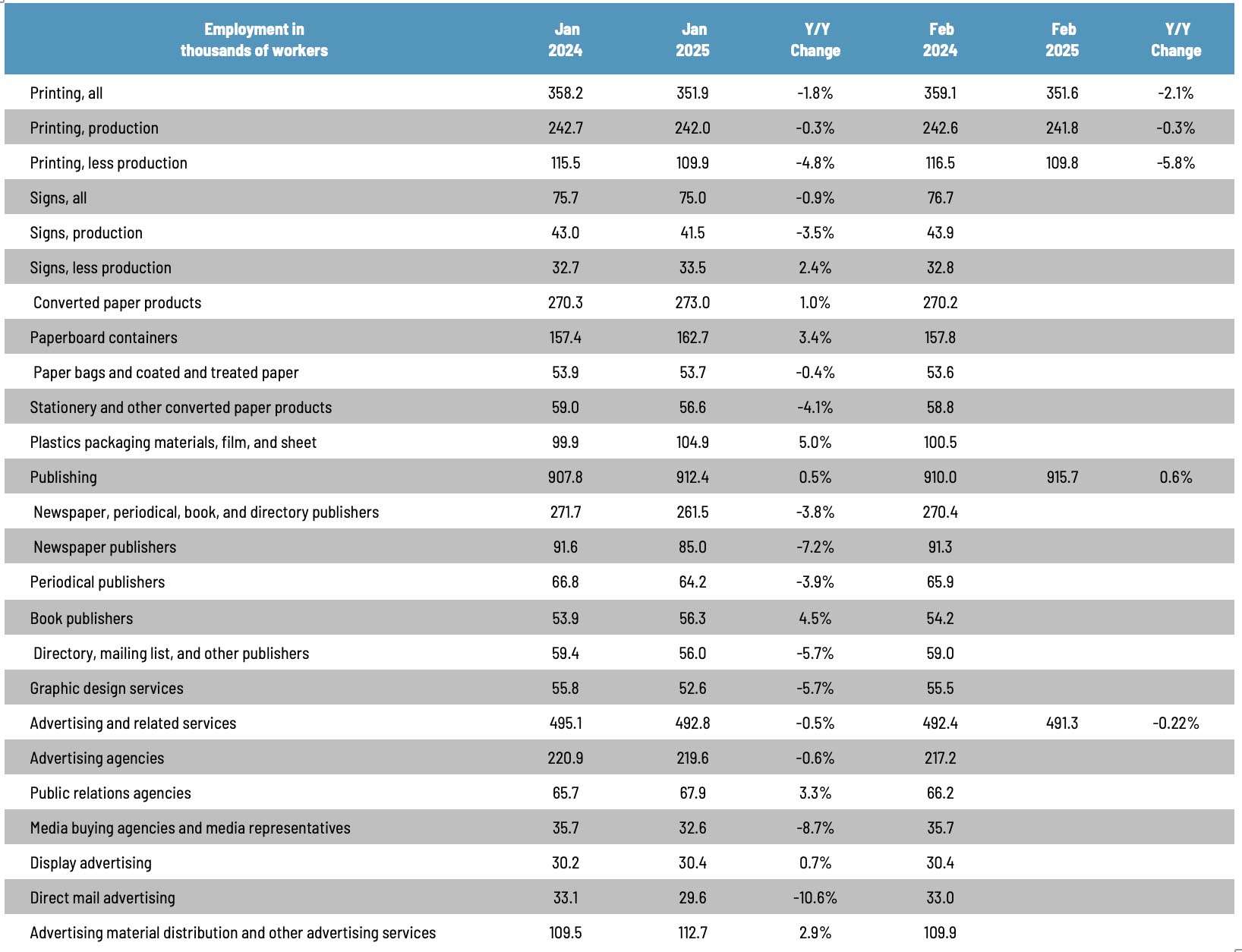
For the last several months of 2024, production and non-production employment alternated being up and down, and January employment was down a bit from December—quite a bit in the case of non-production employment. In February, the slowdown…slowed down, with overall, production, and non-production employment down 0.1%. We’ll tease February shipments data (which we’ll look at in two weeks)—spoiler alert, it’s dismal—so it’s entirely possible printing industry employment will follow suit. The two data sets aren’t usually that connected, but what has been normal lately?
Publishing employment was down 0.4% from January to February.
Looking at other business categories, the reporting of which lags a month:
Overall employment in the signage industry was down 2.1% from December 2024 to January 2025, with sign production employment down a big 4.8%, but non-production up 1.5%.
Converted paper products employment was up 0.3% from December to January, with paperboard container employment up 0.4% and paper bags and coated and treated paper employment down 0.4%.
Looking at some specific publishing and creative segments, from December to January, periodical publishing employment was down 1.8%, while newspaper publishing employment was down 2.2% and book publishing was unchanged. Graphic design employment was down 4.0%, ad agency employment was down 0.2%, and PR agency employment was down 3.1%. Direct mail advertising employment was up 0.3%.
As for February employment in general, the BLS reported on March 7:
Total nonfarm payroll employment rose by 151,000 in February, and the unemployment rate changed little at 4.1 percent, the U.S. Bureau of Labor Statistics reported today. Employment trended up in health care, financial activities, transportation and warehousing, and social assistance. Federal government employment declined.
The U-6 rate (the so-called “real” unemployment rate which includes not just those currently unemployed but also those who are underemployed, marginally attached to the workforce, and have given up looking for work) increased from 7.5% to 8.0%.
The labor force participation rate decreased from 62.6% to 62.4% and the employment-to-population ratio decreased from 60.1% to 59.9%. The labor force participation rate for 24–54-year-olds was unchanged at 83.5%.
The January report was slightly below economists’ expectations, and December and January payrolls were revised down by 2,000.
We’re a month behind employment reporting; we’ll look at the March report in a couple of weeks.