The textile and apparel industry is notorious for its contributions to the climate crisis, including, but not limited to, contamination of precious fresh water, excessive waste with much of it ending up in landfills, generation of greenhouse gases and reliance on petroleum-based fibers that do not biodegrade, and a continuing push to get consumers to buy cheaper, often trending, clothing that is only worn a few times before being discarded (fast fashion). Progress to mitigate these issues has been slow, but there are two recent developments that can help with some of these issues, including de-inking of fabric printed using dye sublimation, and a graphene-enhanced water filtering system that removes 79% to 85% of contaminates in wastewater, including toxic textile dyes. In this article, we provide information on these projects, both of which are in early stages of development. We hope this discussion both raises awareness of the sustainability challenges facing the textiles and apparel industry and some potential solutions which, if scaled sufficiently to be brought to market in a commercially viable manner, could help the industry make substantial progress against sustainability goals.
De-Inking Fabrics Printed with Dye Sublimation
In the commercial printing industry, there was a significant effort made to ensure de-inkability of paper in order to be able to more effectively recycle it. This included removing ink applied with both analog and digital printing technologies. The industry responded relatively quickly to these challenges, including removing of UV-cured and toner-based inks. These days, you really don’t hear much discussion about de-inkability—it’s table stakes.
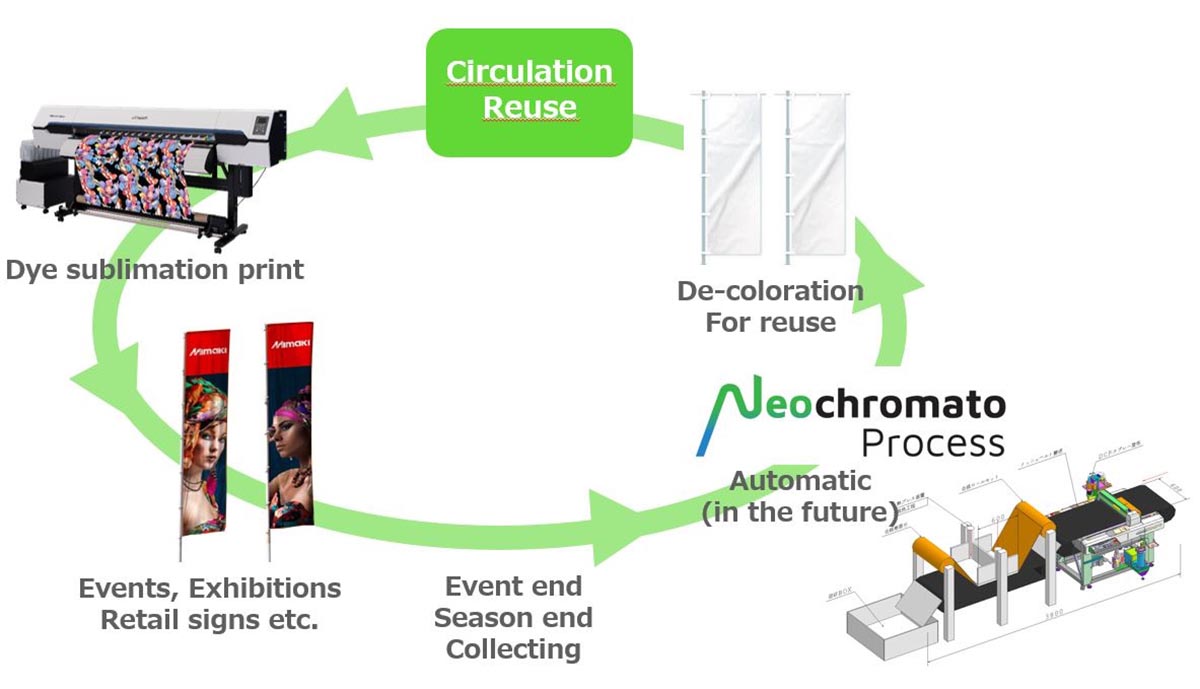
But with printed textiles, it’s a whole different story. Some 60% of printed textiles are polyester or poly blends, and much of that is printed or decorated with dye sublimation inks, both in analog and digital processes. Last spring at the ISA Sign Expo, and again last fall at PRINTING United, Mimaki introduced its Neo Chromato Process, a pilot project that removes ink dye-sublimated onto textiles, resulting in a white textile that can then be reprinted or more easily recycled.
 We spoke with Mimaki’s Senior Segment Specialist, Victoria Harris, to get more details on this innovative process. The full video interview can be accessed here. Harris explains, “The Neo Chromato Process was created around our initiatives to create circularity within the digital textile sphere, to be able to recycle and reuse sublimated fabrics. Some 92 million tons of waste goes into the landfills every year. It cannot be incinerated. And consumers continue to purchase more than they need and throw away clothing with little use. That’s the basis of bringing this concept to market—to mitigate that waste.”
According to Harris, the process uses a proprietary discharge fluid that coats the fabric. An absorbent layer of non-woven fabric is then placed on top of it, and the material is put in a heat press for about three minutes at 160 to 200°C. Once removed from the heat press, the non-woven fabric, which has absorbed all of the ink, is removed, and what remains is fabric which can be reprinted. She adds, “Our internal testing indicates that this process can be repeated up to 20 times.” Alternatively, the processed fabric could be broken down and repurposed into new fiber or other polyester applications.
A challenge here is scaling the solution. Harris says, “The concept we have brought to market thus far definitely needs full technology development, and the equipment is still in design and development. With this proof of concept, we are looking to gauge the market to determine if there are other industry leaders and/or collaborators that are also interested in taking this further toward commercialization, and if so, we encourage them to contact us.”
Harris points out that apparel is a key target, but also trade show exhibits, which might be an easier one to tackle first. “After the trade show is over, those exhibits, which are increasingly textile-based, are just torn down and put in the trash. It’s a huge waste. Perhaps this is a service that trade show companies could offer. That’s an example of the type of collaboration we are looking for.”
Advanced Dye-Namics: An Innovative Strategy for Removing Toxic Dyes from Wastewater
Clearly, preparing sublimated fabrics for reuse or recycling is an important step toward increased sustainability. But another aspect that dogs the textiles and apparel industry is the massive amount of water that is used in preparation of textiles, as well as the effects of dyes emitted into the wastewater stream. There are, of course, filtering systems available to remove all or part of the dyes and other contaminates from wastewater, but they can often be costly and require substantial changes to the wastewater processing systems already in place.
A ray of hope comes from a project underway in India through a collaboration between researchers from the Indian Institute of Technology Madras (IIT Madras) and Tel Aviv University, Israel, who have developed an aerogel adsorbent modified with graphene that can remove trace pollutants from wastewater. This aerogel removes over 76% of trace pollutants and textile dyes (PPM level) in continuous-flow conditions, offering a sustainable path for large-scale water purification. The research team is dedicated to enhancing these results for large-scale applications. It’s another fascinating use for graphene, often called a miracle material and which was discovered in 2004 at the University of Manchester in the UK.
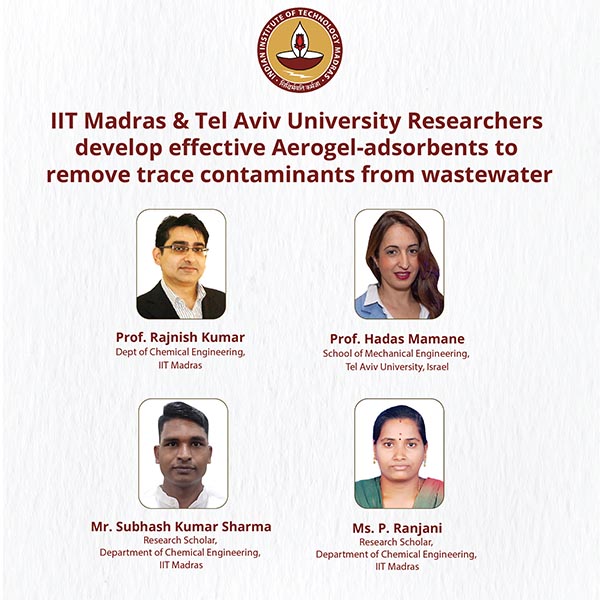
The new aerogels, which are incredibly lightweight solids composed mostly of air, are excellent adsorbents (a solid substance used to remove contaminants). In addition, they offer advantages like adjustable surface chemistry, low density, and a highly porous structure. These materials, often referred to as “solid air” or “frozen smoke,” can be easily fabricated. Under real-life conditions mimicked in the researchers’ experiments, the material removed over 85% of pollutants in controlled settings and more than 76% in continuous-flow conditions.
According to Subhash Kumar Sharma, one of the IIT Madras researchers, “After a thorough review of multiple research articles on graphene and its properties, we decided to employ graphene oxide for the doping process. Graphene oxide, a derivative of graphene, features a single layer of carbon atoms arranged in a hexagonal lattice. While graphene possesses exceptional mechanical, electrical, and thermal properties, graphene oxide offers advantages in terms of ease of production in large quantities and enhanced functionalization. This characteristic makes it suitable for a broader range of applications. The development of graphene oxide-based materials has been driven by the desire to harness the unique properties of graphene for practical purposes. Researchers and scientists have explored its applications in electronics, energy storage, sensors, biomedical technology, and more.”
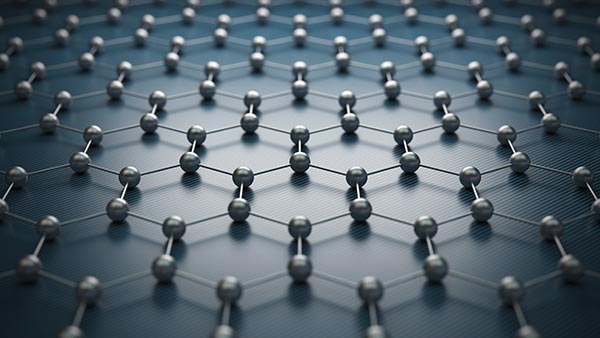
The structure of graphene
Subhash notes there are a number of properties of graphene that make it a remarkable material for this use case including:
- Large Surface Area: Graphene oxide (GO) has a two-dimensional structure with a large surface area. This extensive surface provides ample active sites for the adsorption of pollutants, allowing for a higher adsorption capacity.
- GO contains various oxygen-containing functional groups, such as hydroxyl, epoxy, and carboxyl groups, on its surface, that enhance the chemical reactivity of GO and provide active sites for interaction with pollutants through mechanisms like hydrogen bonding and electrostatic interactions. These functional groups increase its reactivity, allowing it to effectively interact with a wide range of pollutants present in wastewater.
- GO is versatile and can be easily modified or functionalized to tailor its properties for specific pollutants. This versatility makes it adaptable to various wastewater treatment scenarios and allows for the optimization of its adsorption capacity.
- Compared to pristine graphene, GO is more easily produced in large quantities. This scalability is advantageous for practical applications in wastewater treatment on a larger scale.
- The biocompatible nature of GO is advantageous for certain applications, especially in biological wastewater treatment processes. Its compatibility with biological systems can facilitate the removal of organic pollutants.
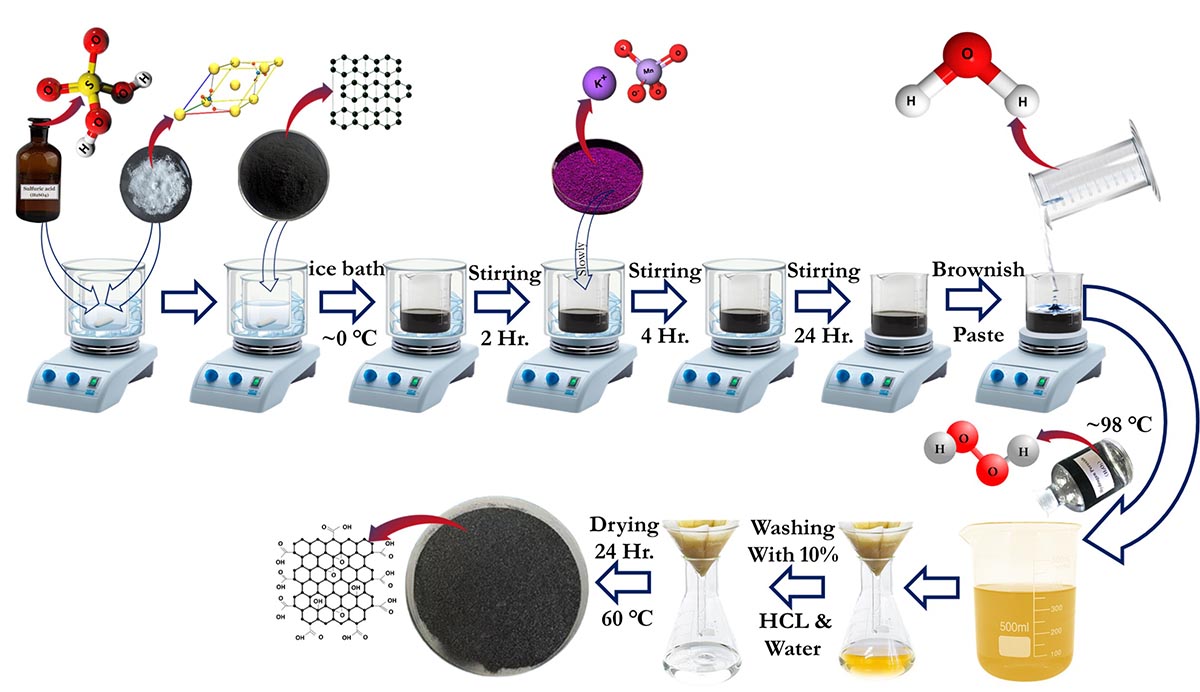
GO preparation
Subhash adds, “Compared to energy-intensive processes like reverse osmosis, GO-based adsorption typically requires lower energy consumption. This can contribute to a more energy-efficient and environmentally friendly water treatment solution. GO-based adsorption systems can potentially integrate with existing water treatment infrastructure, minimizing the need for extensive modifications or replacements.” Plus, with reverse osmosis, the water recovery percentage is a maximum of 50% while this new system does not have this limitation.
One example of a use case would be implementation of this system in textile mills. This could deliver multiple benefits including production of treated water that could be recycled for reuse within the mill. This has the potential to reduce the overall water consumption of the facility. In addition, recycling water can lead to cost savings for the mill, as it reduces the need to source and treat fresh water for industrial processes.
This is just a surface overview of the benefits of this research and its potential viability in the marketplace. For a more detailed technical explanation, download a peer-reviewed article published in Scientific Reports of the Nature Portfolio.
Like the Neo Chromato Process from Mimaki, it will take some time for this filtering system to be commercially available. Subhash concludes, “Regarding our market entry, it will require some time as we are diligently addressing various aspects to ensure a well-prepared and thoroughly analyzed approach. We are committed to entering the market when adequately equipped and have comprehensively assessed the potential market dynamics. The scalability of our solution is not an issue, given that we have already conducted a successful pilot-scale plant study.”