And Now, A Word…
What is the Oxford University Press’s Word of the Year for 2025? Drumroll, s’il vous plaît…Via Le Monde, the honor goes to “rage bait.” Technically, that’s two words, but hey. Anyway: Norman, coordinate:
"Rage bait," the slang term describing online content designed to elicit anger and drive internet traffic, has been crowned 2025 word of the year, Oxford University Press (OUP) announced on Monday, December 1. It said the word – chosen through a combination of public voting, sentiment and analysis of OUP's "lexical data" – had "captured our emotions" this year.
The Oxford English Dictionary defines “rage bait” as “online content deliberately designed to elicit anger or outrage by being frustrating, provocative, or offensive, typically posted” in order to increase web traffic or engagement.
Casper Grathwohl, president of OUP's languages division, said the growing use of such words "reveal how digital platforms are reshaping our thinking and behavior." "It feels like the natural progression in an ongoing conversation about what it means to be human in a tech-driven world – and the extremes of online culture," he added in a statement.
Apparently, other top contenders had included “aura farming” and “biohack.” Maybe we need to get out more (or, perhaps, stay in more) as we had never heard of any of these.
Carry That Weight
Via Boing Boing, Miles Wu, a 14-year-old student at New York City’s Hunter College High School modified a traditional origami fold such that it could support more than 9,000 times its weight. The fold won him the top prize in the Thermo Fisher Scientific Junior Innovators Challenge.
Using the Miura-ori or Miura fold, a tessellated pattern of parallelograms that forms a rigid structure, Miles tested 54 variations. He found that small panels with steep angles were the strongest, able to hold up over 9000 times their weight, "like a New York taxi cab supporting the weight of over 4000 elephants." In his video explaining the project, one piece of paper easily supports his weight.
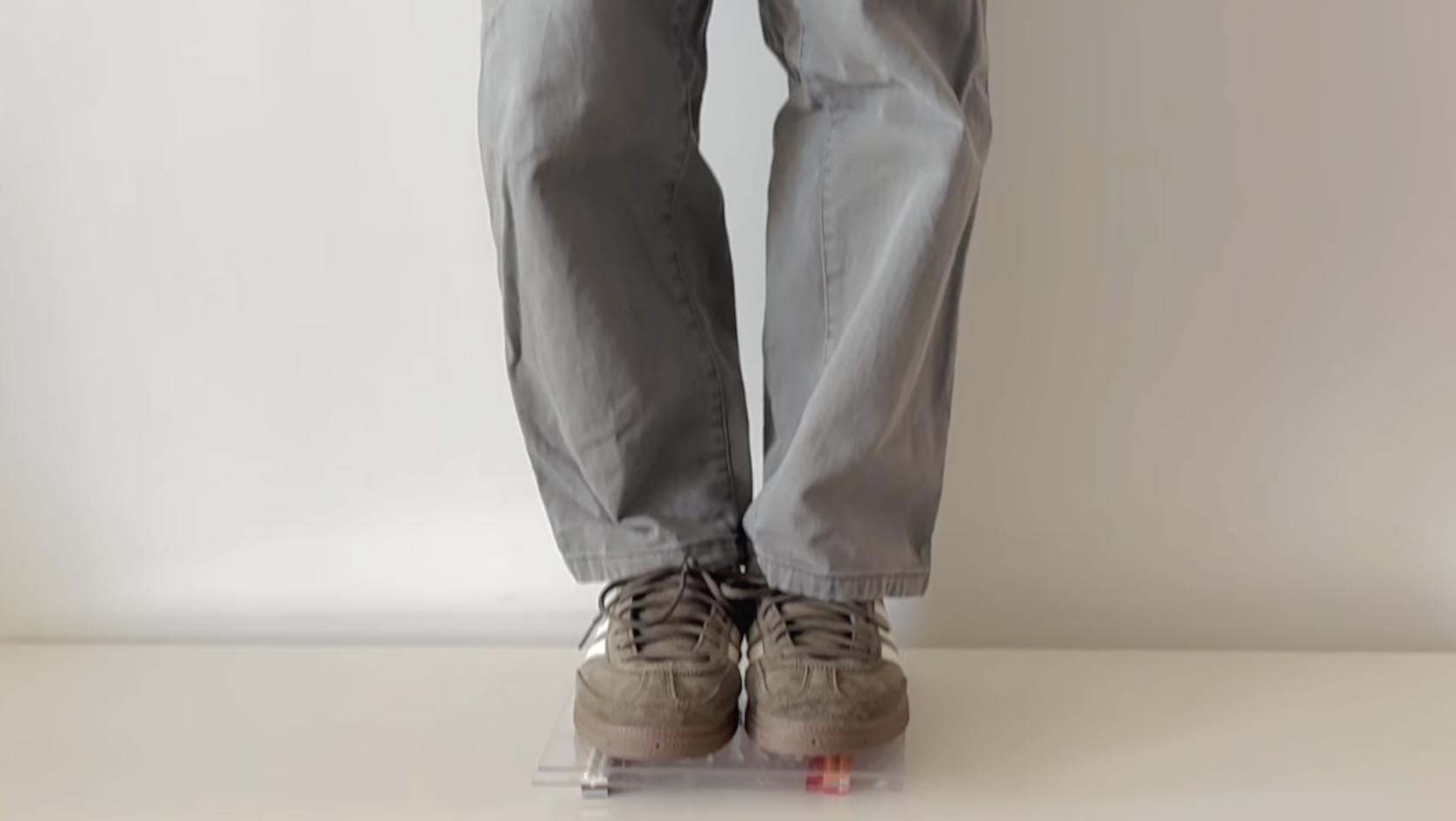
Miles…has practiced the Japanese art of paper folding since he was seven years old. He started taking the hobby more seriously during the pandemic, winning contests and even having his work displayed on the American Museum of Natural History holiday tree, which is viewed by hundreds of thousands of visitors.
The demonstration was part of his project called “Optimizing the Strength-to-Weight Ratio of Miura-Ori Patterns.”
Pretty cool.
Baby Got Black
(Optional musical accompaniment to this item.)
The idea of a black dress may have inspired The Hollies, sure, and black may be useful in nature and fashionable in society, but materials scientists need dark, dark blacks for certain applications. Ergo, via Gizmodo:
A team of designers, ornithologists, and materials scientists at Cornell University have successfully developed a method to create “ultrablack” fabric, described in a recent Nature Communications paper.
Ornithologists? Why, yes:
The new technique, a two-step process, takes heavy inspiration from the plumage of magnificent riflebirds. Their feathers combine melanin (a pigment) with distinct structures that trap and absorb light.
Color theory is replete with terms like “true black” and printers have often wrestled with files set up to print “rich black.” But what is “ultrablack”?
the term is used more as a measure of reflectivity, being defined as a dark shade that reflects less than 0.5% of the light that hits it. Many creatures naturally sport ultrablack in their skin, scales, and feathers, as it grants them mating or survival benefits.
For materials scientists, ultrablack is highly desirable for things like cameras, solar panels, telescopes, and the like, and attempts at creating it have not been especially successful. Although the new research is getting there.
For now, though, the team used it to make that classic black dress, finished with a dash of iridescent blue in tribute to the riflebirds that inspired the discovery. The new fabric features an average reflectance of 0.13%, making it the darkest fabric reported so far, according to the paper.
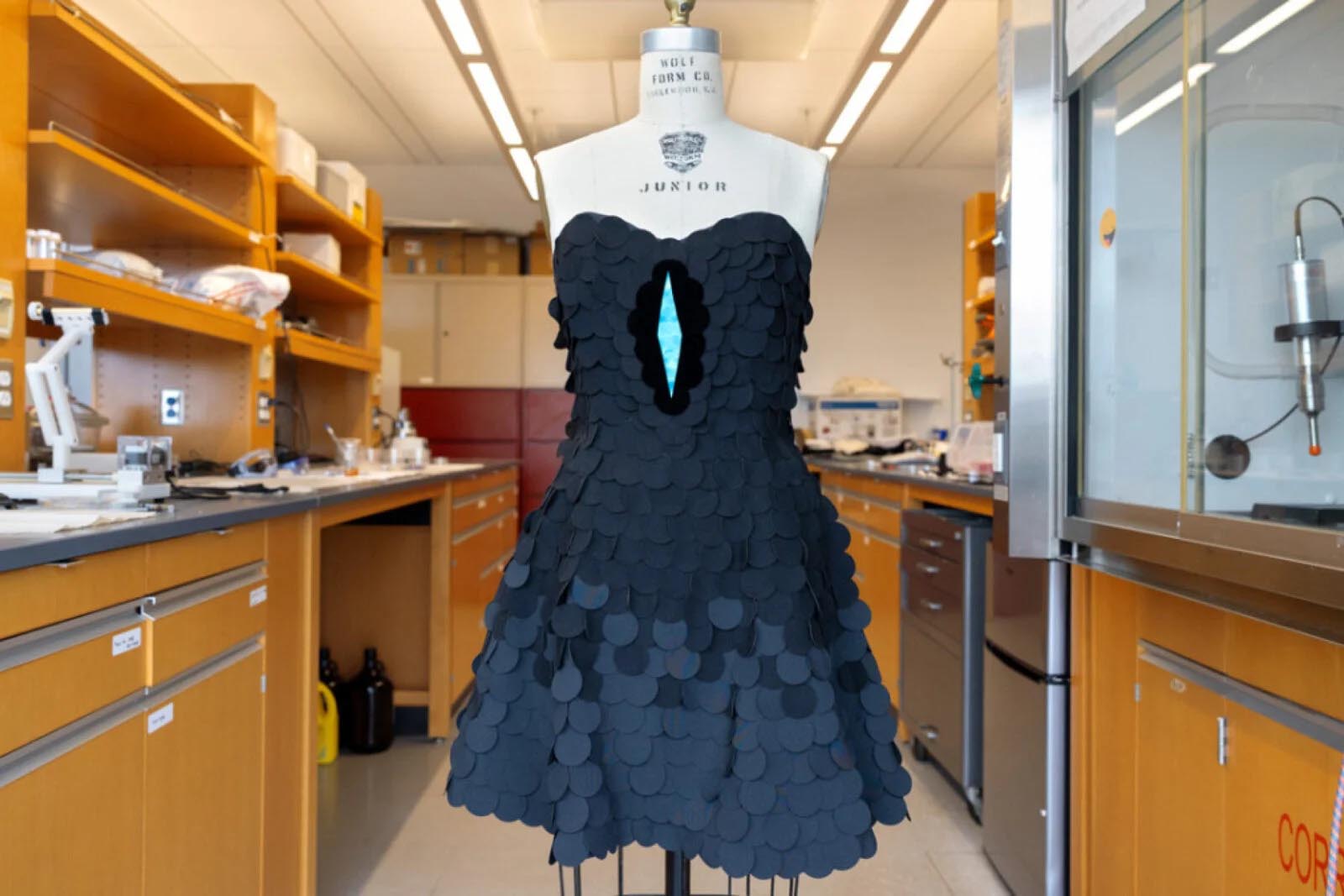
Perfect for cat burglars who like to burgle in high style.
Studio System
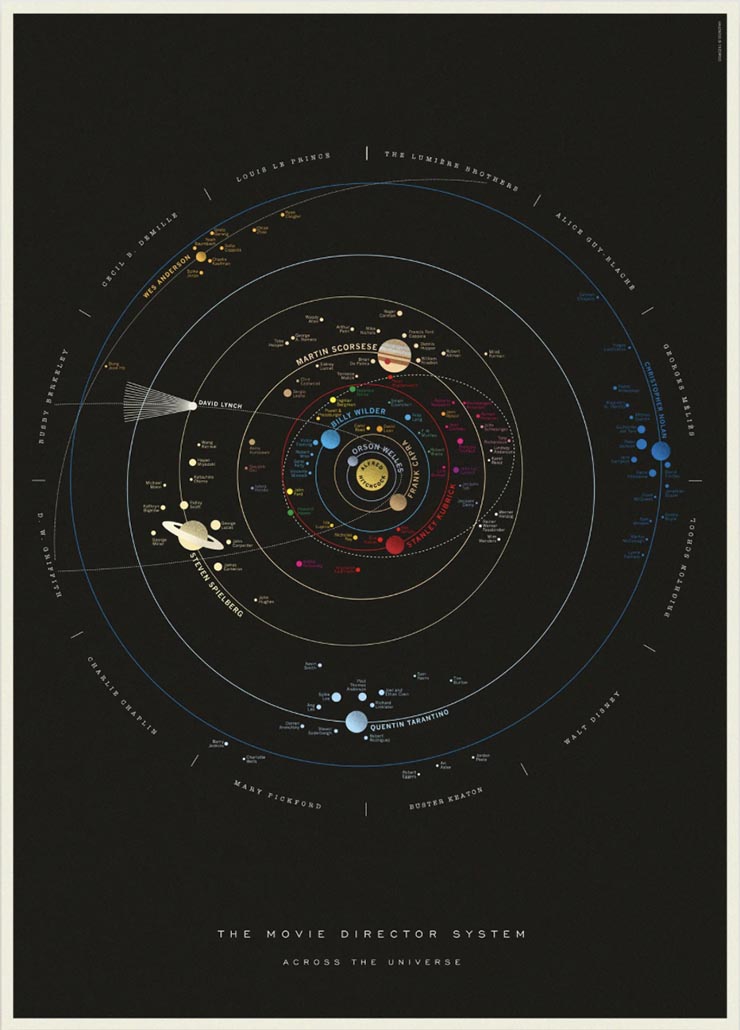
Looking for a nice holiday gift for the classic movie lover in your life? Via Laughing Squid, why not try this beautiful litho print, the “Movie Director Solar System” that features the names of prominent film directors orbiting in their own solar system.
Says Dorothy, who created the print:
Alfred Hitchcock, who’s influence stretches back almost 100 years is at the centre of our solar system. He is closely orbited by Orson Welles and other directors from the golden age of Hollywood including Howard Hawks, Billy Wilder, Victor Fleming, Robert Wise, Vincente Minnelli and John Ford.
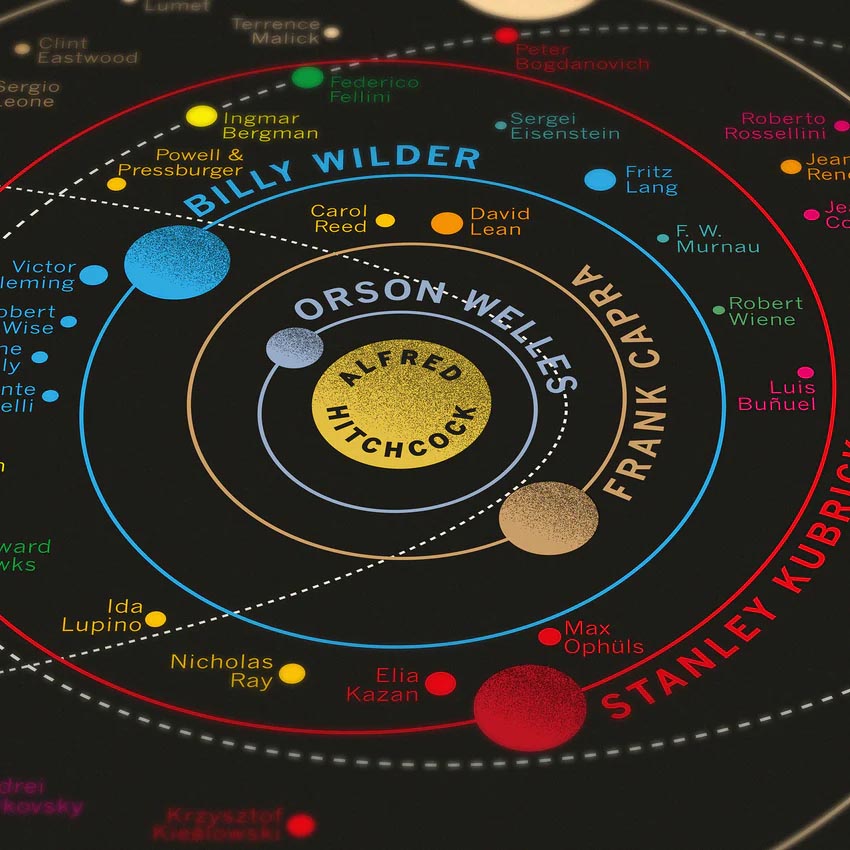
A steal at £35.
Print’s Charming
We’ve been writing about this for a while (see, for example, Keypoint Intelligence’s article yesterday about printed catalogs), but Print magazine takes a deep dive into why “Smart Brands Are Returning to Print”—“Not as a nostalgic throwback, but as a deliberate strategy to stand out, slow down, and regain trust.”
A printed piece can’t be swiped away or hidden by an algorithm. It’s physical, personal, and inherently scarce. The very qualities that make it powerful again, and smart brands have noticed.
Patagonia still mails its print catalogs, not as sales tools, but as brand storytelling artifacts. They blend essays, photography, and activism in a format meant to be read slowly, not quickly scrolled. Airbnb experimented with a print zine featuring stories from hosts and travelers, transforming user-generated content into something tactile and timeless.
Meanwhile, smaller independent brands have started producing short-run printed journals, art books, and direct-mail experiences designed to live on desks and coffee tables—physical reminders of the brand values.
These aren’t mass-market pieces. They’re intentional acts of presence in a world of digital noise.
But of course, it’s not just print but interactive print.
QR codes, augmented reality, and near-field communication (NFC) chips have made printed materials more interactive than ever. A poster can trigger an immersive digital film. A product label can link to behind-the-scenes content. A direct-mail piece can connect customers to a personalized online experience.
For those who want one, that is.
Don’t Be Tarotfied
Do tarot cards have supernatural predictive powers? Of course not. But that doesn’t mean they’re not cool. Open Culture has an interesting history of the tarot deck. One might think it dates back to antiquity—or to the Middle Ages at the very least—but interestingly the tarot card only appeared as recently as the 18th century.
They were, at first, playing cards, used for a game known as tarocchi in Renaissance Italy. That was the original purpose of the oldest tarot cards in possession of the Victoria and Albert Museum, which you can see unboxed by curator Ruth Hibbard in [this video]. Throughout its fifteen minutes, Hibbard and two colleagues also “unbox” five other decks produced across the half-millennium of tarot history.
So when did tarot cards start to be used for divination?
Later, circa 1807, comes Le Petit Oracle des Dames, “the petite oracle of women,” the earliest deck in the video expressly produced for cartomancy, or prediction of the future through cards — albeit only as a form of light entertainment for gatherings of ladies. A decade or two later, out came the luxurious Tarocco Soprafino, which bears lavish illustrations made with copper-plate engraving and colored stenciling.
It’s an interesting video, which we naturally are unable to embed.
The Write Stuff?
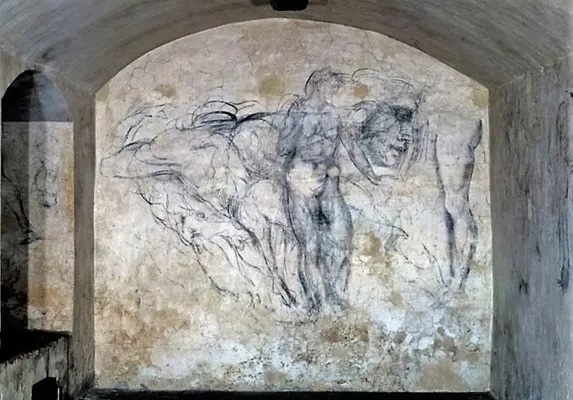
Some people enjoy writing so much, that when they do it, they have a ball. And, it seems, when Alberto Essesi, a Milan-based industrial designer, has a ball, he writes. Via Core 77, Essesi was inspired to return to the days when people used rocks to write on cave walls—sure, why not—and created this unnamed writing implement:

A simple tool I created for myself. I saw a documentary about how we used to use rocks to sketch on walls and there was something that intrigued me. I grabbed a rock and tried to sketch, I noticed that i was forced to create long and bold lines, focused on the larger form rather than details, each line flowed and had a certain energy to it."
The first thing that reminded us of is the Flying Death Sphere from the 1979 horror film Phantasm:
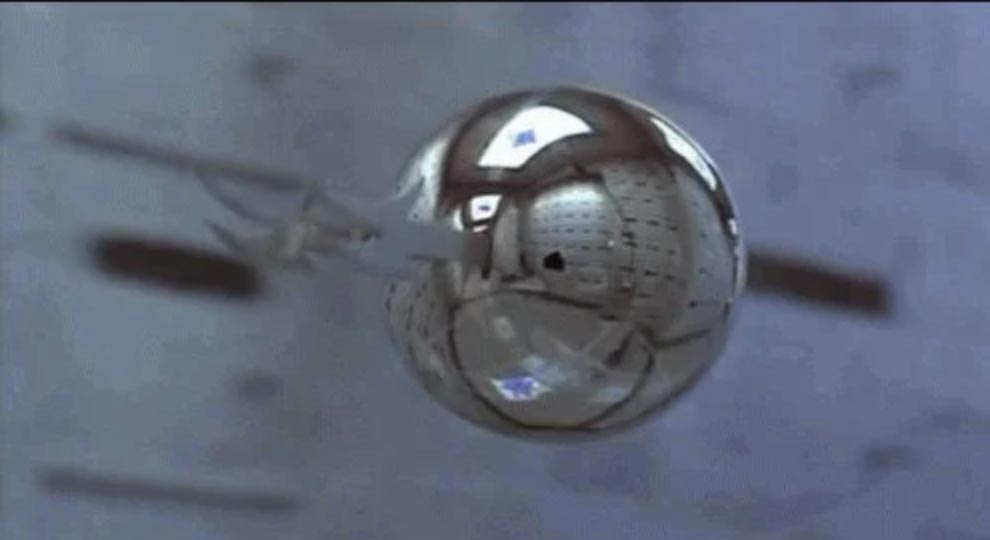
Probably not what Messesi had in mind.
Have Yourself a Merr—Oh My God!!!!
If you happened to be in England’s Kingston upon Thames, ambling down Riverside Walk, and happened to stop at the Côte Brasserie restaurant and look up, you might have thought the apocalypse was upon you. Via Futurism (so you know where this is going), someone had created a Christmas mural—and, yes, used AI.
Closeups show human faces distorted beyond recognition, sprouting extra appendages. The bodies of what appear to be dogs horrifically merge with human figures. Happy holidays indeed.
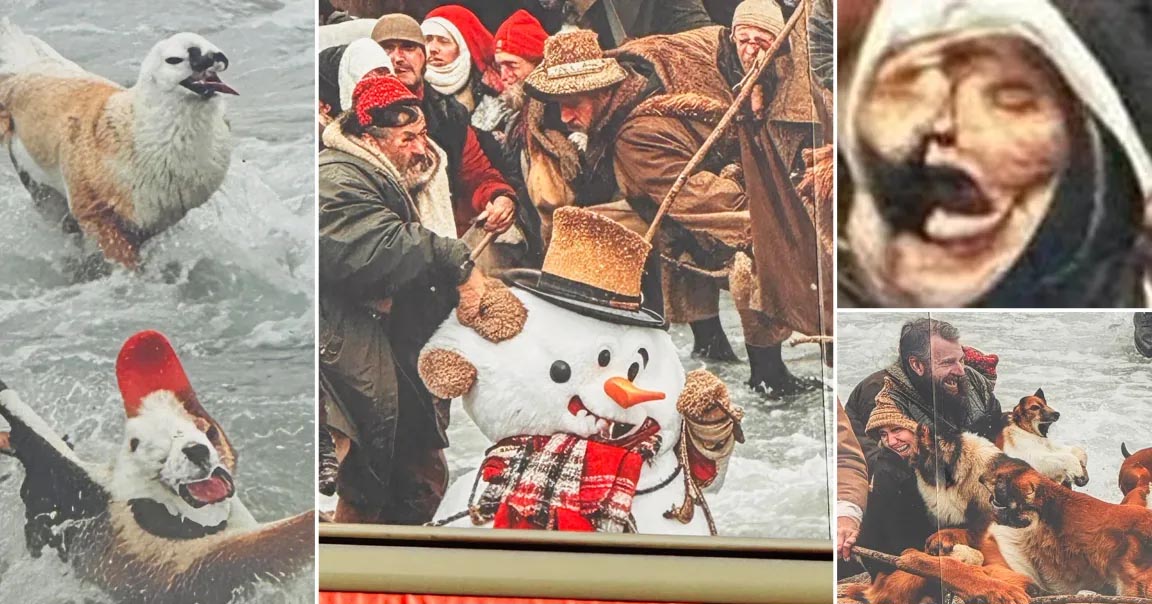
Now, our first thought was “is this a hoax”? Sure, it’s good AtW fodder, but could it just be too bad to be true? Adds Londoncentric, from a distance it looks Christmassy enough:

Yet up close something was uncanny about this modern recreation of an ancient frost fair of the River Thames, which filled a ten metre wall. Dogs blurred into chickens, humans became animals, and there was a truly grotesque snowman. In one section a penguin appears to be on fire. The south west London public passing by seemed to have an allergic reaction to its whiff of artificial intelligence, while online speculation suggested it must have been the creation of an overworked marketing intern.
And apparently there was such a public backlash that it is scheduled to be torn down. No one is entirely sure who created it, although one candidate is rumored to be an artist Mat Collishaw, who, in recent years, has been focusing on creating art with AI.
All of this builds the case that Kingston’s AI Christmas display is one of the most provocative artworks the capital has seen in years. As one diner exiting a restaurant argued: “It’s so bad it’s good.”
Wait until someone comes up with an AI-generated Nativity scene…
Graphene On the Brain
Was it a good week for graphene news? It’s always a good week for graphene news! A new coating advances graphene-based brain interfaces. From (who else?) Graphene-Info:
Researchers at the Catalan Institute of Nanoscience and Nanotechnology (ICN2) and Institute of Microelectronics of Barcelona (CSIC) have developed graphene-based brain interfaces using a new, hybrid organic/inorganic combo of materials that make the interfaces “more robust and durable.” “This represents an important step toward developing a new generation of neural interfaces designed for long-term clinical use.”
Graphene-based neural interfaces, which are thin, flexible devices that can record and stimulate brain activity with remarkable precision, are already being tested in clinical procedures, including brain tumor surgeries. They are also being explored as potential tools for treating neurological disorders, such as Parkinson's disease.
To continue advancing this technology, the researchers developed a new generation of microelectrodes capable of withstanding moisture and mechanical stress, two of the main challenges for long-term implantation in the human body.
He Is the Eggman
Here’s an odd headline, from CNN: “Man charged with theft after allegedly swallowing Fabergé egg.” How the heck do you swallow a Fabergé egg? Did he dislocate his jaw and eat it like a snake?
Police in New Zealand have charged a man with theft after he allegedly stole a jewel-encrusted gold Fabergé egg locket from a jewelers by picking it up and swallowing it.
Ah, a locket. That makes a bit more…sense?
The stolen item is a Fabergé James Bond Octopussy Egg locket worth 33,585 New Zealand dollars ($19,300), according to court documents seen by CNN affiliate Radio New Zealand.
As of this writing:
“...the pendant has not been recovered,” he added.
And we’ll just leave it at that.
Of Course, in Alabama…
(Optional bad pun accompaniment to this item.)
Here’s a question for you: how many people have ever been hit by a meteorite? For the longest time, only one: Anne Hodges, a 54-year-old Tuscaloosa, Ala., resident who, on November 30, 1954, was napping on her couch when a meteorite crashed through the roof, bounced off a large radio cabinet, and whanged her in the side. Fortunately, she only sustained some bruising. But the meteorite would be the least of her problems. Atlas Obscura takes up the story.
As it turns out, meteors are pretty much space gold and ownership of the mineral came into question almost immediately. Hodges had been renting her home from the owner who felt that since the meteor had crashed through his roof, it was legally his. Understandably, Hodges felt differently and a heated legal battle ensued.
She won, but also sustained no small amount of unwanted fame. In the end, she donated the meteorite to the Alabama Museum of Natural History in Tuscaloosa, and it is still on display, if you ever find yourself in Alabama.
Space rocks have had other impacts, as it were. Adds Smithsonian:
In 1992, a meteorite blazed across the sky in Peekskill, New York, before striking a woman’s parked car. The repair bill probably stung a bit, but she wasn’t injured in the strike. In 2003, a 40-pound meteorite crashed through the roof of another home, this time in New Orleans, though fortunately no one was hurt. And in 2007, a meteorite strike made people sick in Peru when it released arsenic fumes from an underground water source, writes Brian Howard for National Geographic. In 2013, a meteorite exploded over central Russia. The resulting shock wave injured 1200 people and caused $33 million in damage.
Sadly for Hodges, in 2020 she lost her claim to fame as the only meteorite bonkee. Says Smithsonian (more recently):
Archivists in Turkey have discovered what they say may be the first credible historical account of a person being hit and killed by a meteorite on August 22, 1888 in Sulaymaniyah, Iraq, reports Sid Perkins for Science.
As for the odds of being hit:
One scientist found the lifetime odds of dying from a meteor strike near you to be 1:1,600,000—to put that in perspective, your odds of being struck by lightning are 1:135,000. The odds of dying as the result of a meteor strike anywhere in the world—like the kind of rare but catastrophic geologic event that shapes an eon—are 1:75,000.
However:
The odds of winning the PowerBall lottery? 1:195,249,054. Stop buying lotto tickets and watch out for meteorites, folks.
A Pizza the Action
Do you ever feel the urge to dress like…take-out food containers? It would never have occurred to us, but apparently Pizza Hut has decided that people would be interested in matching their outfit to a pizza delivery box. Via (who else?) Food & Wine:
The chain has brought back its seasonal Triple Treat Box and, for the first time, turned the festive packaging into a limited-edition holiday onesie created in collaboration with Tipsy Elves. The pizza-meets-pajama moment lands just ahead of National Ugly Sweater Day on December 19 and taps into the annual rush for over-the-top festive gear.
Clumsy eaters have many “pizza-meets-pajama” moments…
The Triple Treat Box remains a holiday staple for the brand: a tiered bundle with two medium one-topping pizzas, five breadsticks, and a choice of dessert, all packed into bright, gift-ready holiday packaging. The new onesie mirrors that design, covered in the same graphics fans will recognize from the box.
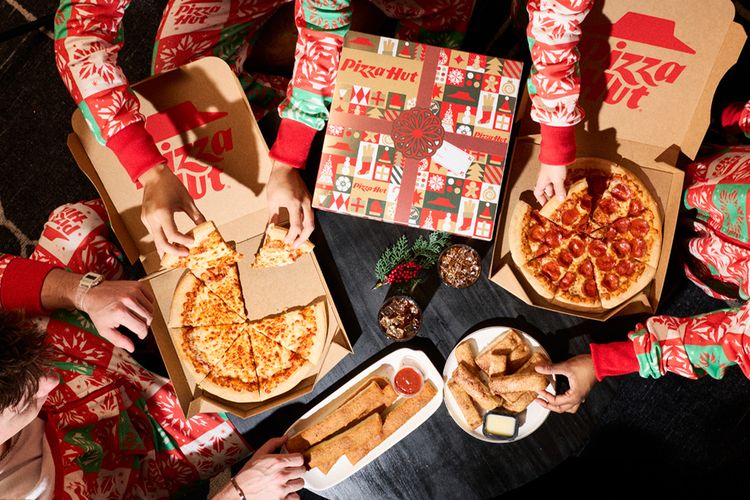
The onesie extends that seasonal moment into Pizza Hut's holiday offering, giving fans a way to match their outfit to the bundle that arrives at the door.
If we were delivering a pizza and the person answering the door looked exactly like the box, we’d just drop the pizza and RUN.
It’s available in men’s and women's sizes from small through 2XL and is a steal at $90 (!).
This Week in Printing, Publishing, and Media History
November 24
1713: Irish novelist and clergyman Laurence Sterne born.
1859: Charles Darwin publishes On the Origin of Species.
1877: Anna Sewell’s animal welfare novel Black Beauty is published.
1962: The influential British satirical television program That Was the Week That Was is first broadcast.
November 25
1915: Albert Einstein presents the field equations of general relativity to the Prussian Academy of Sciences.
1952: Agatha Christie’s murder-mystery play The Mousetrap opens at the Ambassadors Theatre in London. It will become the longest continuously-running play in history.
1968: American novelist, critic, and essayist Upton Sinclair dies (b. 1878).
1974: English singer-songwriter and guitarist Nick Drake dies (b. 1948).
November 26
1789: A national Thanksgiving Day is observed in the United States as proclaimed by President George Washington at the request of Congress.
1863: United States President Abraham Lincoln proclaims November 26 as a national Thanksgiving Day, to be celebrated annually on the final Thursday of November.
1912: American journalist Eric Sevareid born.
1917: The Manchester Guardian publishes the 1916 secret Sykes-Picot Agreement between the United Kingdom and France.
1919: American author and publisher Frederik Pohl born.
2003: The Concorde makes its final flight.
November 27
8 BC: Roman soldier and poet Horace dies (b. 65 BC).
1809: The Berners Street hoax was perpetrated by Theodore Hook in the City of Westminster, London.
1839: In Boston, Massachusetts, the American Statistical Association is founded, against all odds.
1852: English mathematician and computer scientist Ada Lovelace dies (b. 1815).
1924: In New York City, the first Macy’s Thanksgiving Day Parade is held.
1942: Guitarist Jimi Hendrix born.
November 28
1628: English preacher, theologian, and author (Pilgrim’s Progress) John Bunyan born.
1814: The Times of London becomes the first newspaper to be produced on a steam-powered printing press, built by the German team of Koenig & Bauer.
1859: American short story writer, essayist, biographer, historian Washington Irving dies (b. 1783).
November 29
1832: American novelist and poet Louisa May Alcott born.
1877: Thomas Edison demonstrates his phonograph for the first time.
1972: Atari releases Pong, the first commercially successful video game.
2001: English singer-songwriter, guitarist, and music producer George Harrison dies (b. 1943).
November 30
1667: Irish satirist and essayist Jonathan Swift born.
1835: American novelist, humorist, and critic Mark Twain (né Samuel Clemens) born.
1900: “Either that wallpaper goes or I do”: Irish playwright, novelist, and poet Oscar Wilde dies (b. 1854).
1947: American playwright, screenwriter, and director David Mamet born.
1979: Pink Floyd’s The Wall is released.
1982: Michael Jackson’s Thriller is released. It will become the best-selling record album in history.
December 1
1913: Ford Motor Company introduces the first moving assembly line.
December 2
1939: New York City's LaGuardia Airport opens. Has not been upgraded since.
1971: The Soviet space program's Mars 3 orbiter releases a descent module. It lands successfully but loses contact. It is the first man-made object to land softly on the surface of Mars.
December 3
1857: Polish-born British novelist Joseph Conrad (né Józef Teodor Konrad Korzeniowski) born.
1894: Scottish novelist, poet, and essayist Robert Louis Stevenson dies (b. 1850).
1910: Modern neon lighting is first demonstrated by Georges Claude at the Paris Motor Show.
1994: The PlayStation developed and marketed by Sony Computer Entertainment is released in Japan.
December 4
1732: English poet and playwright John Gay dies (b. 1685).
1791: The first edition of The Observer, the world’s first Sunday newspaper, is published in the U.K.
1875: Austrian-Swiss poet and author Rainer Maria Rilke born.
1881: The first edition of the Los Angeles Times is published.
1965: The Grateful Dead makes its first concert performance under that name (they had been founded as The Warlocks).
1993: American singer-songwriter, guitarist, and producer Frank Zappa dies (b. 1940).
December 5
1791: Austrian composer and musician Wolfgang Amadeus Mozart dies (b. 1756).
1901: American animator, director, producer, and screenwriter Walt Disney born.
1901: German physicist and Nobel Prize laureate Werner Heisenberg born. Of that there is no uncertainty.
December 6
1877: The first edition of The Washington Post is published.
1953: Vladimir Nabokov completes his controversial novel Lolita.
1955: American actor, comedian, and screenwriter Steven Wright born.
December 7
43 BC: Roman philosopher, lawyer, and politician Cicero dies (b. 106 BC).
1902: German-American cartoonist Thomas Nast dies (b. 1840).
1923: American actor and comedian Ted Knight born.
1930: W1XAV in Boston, Massachusetts telecasts video from the CBS radio orchestra program, The Fox Trappers. The telecast also includes the first television commercial in the United States, an advertisement for I.J. Fox Furriers, who sponsored the radio show.