Adobe Stock
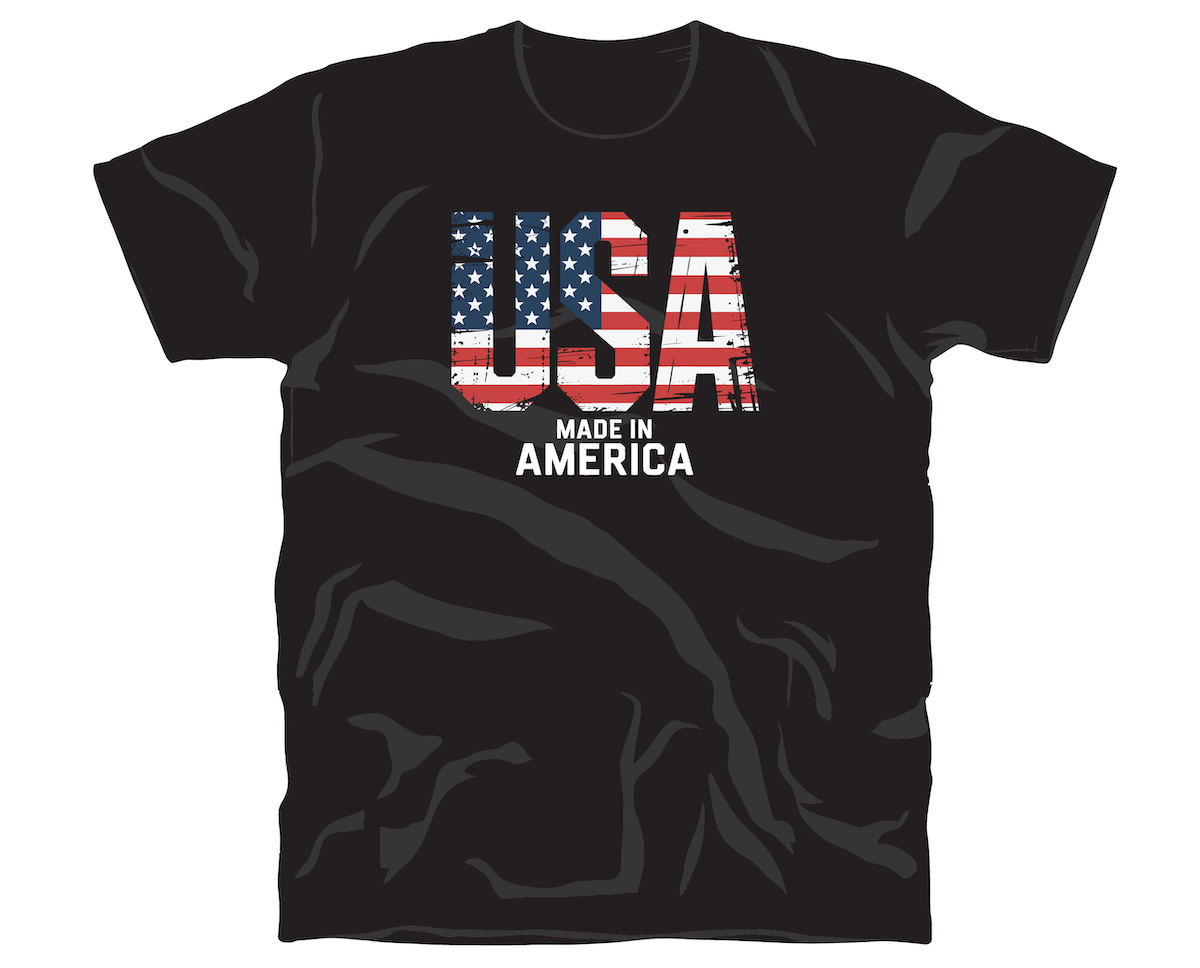
I was intrigued by a recent article in Fast Company about Walmart’s plan to make clothing in America again. I wondered how realistic that really is.
The article tells the story of a family cotton farm that was established in 1941, and whose cotton was sent to U.S. mills and ultimately ended up in domestically manufactured T-shirts, jeans and more. They note that today, 97% of clothing Americans buy is imported, largely from Asia. And that farm’s cotton is now shipped to Asia, “where it will be turned into fabric, then cut and sewn into garments at low-wage factories.”
I remember a CFO I used to work with talking about the law of large numbers. Not being a mathematician or statistician, I really didn’t understand what he meant, and the technical meaning doesn’t make a lot of sense to me. But when you consider that 97% of clothing is imported, that’s truly a large number! And it seems almost insurmountable to reduce it to a meaningful volume—say, more than 50% of clothing made here in America?
The farmer cited in the Fast Company article sure would like to see apparel factories returned to America, giving him a better market for his cotton. He’s struggled of late, losing money on his harvest, due to the declining price of cotton, and then considered the shipping back and forth to Asia, which is detrimental to the environment in addition to being costly. Asian factories probably prefer cotton produced over there.
But there seems to be a resurgence in demand for Made in America. A recent New York Times article cites the experience of retailer American Giant, who has seen growth in demand for T-shirts made in America, especially around the 4th of July, even though they cost $60 each! The article states, “Sixty-five percent of U.S. adults said they intentionally bought ‘Made in America’ products over the past year, according to a Morning Consult survey released last month. That’s about the same rate of U.S. adults who said they had those intentions last year.”
The uptake in Made in America T-shirts is likely to increase following Walmart’s entry into this market, with shirts mostly costing under $20. Fast Company notes, “The world’s biggest retailer is spending millions to revive domestic farms and factories with the help of startup American Giant.” And Walmart is not alone. Other labels, including Buck Mason, American Trench, Imogene & Willie, and Duckworth, are also tapping into this market, but at a small scale presently.
It will take time to scale up these efforts, but it is encouraging that a) the demand is there, and b) savvy retailers are leaning into fulfilling that demand. One question, though. Where will the workers come from? As the immigration scene in the U.S. continues its upheaval, will workers who might be harvesting the cotton, working in the factories, and working in cut-and-sew operations be available at the scale needed? Even though some exceptions seem to be coming, it’s not clear we’ll rapidly get to scale in this regard. Check out this CBS Evening News report.
But also keep in mind immigration raids in Los Angeles, one of the hubs for the apparel industry and cut-and-sew operations. A GQ article notes, “When It Comes to Clothes, ‘Made in USA’ Has Always Meant Made by Immigrants.” And when they go, it makes it less likely that Made in America can scale like it should.
Meanwhile, there’s been a lot of noise about tariffs, and their ability to redirect manufacturing to the U.S. According to The Sourcing Journal, supply chain upheaval and trade uncertainty has more brands taking a look at U.S. manufacturing. But it’s not a simple task to bring factories back. But there is movement.
For example, Hocking Hills Garment Center in Southeast Ohio opened last fall. Yet it’s not all smooth sailing, according to Betsy Franjola, founder. She says, “Building a new domestic sewing factory from the ground up isn’t easy, especially here in the U.S., where we have allowed so much of our manufacturing capacity and our workforce to erode over the decades.”
Training is often required from the ground up. However, training time can be shortened if the trainees are immigrants from countries with more emphasis on sewing skills. Costs of manufacturing, compared to, for example, Asian countries, can also be a barrier—maybe not if a T-shirt is being sold for $60, but at less than $20? Not sure how that is profitable for the vendor. Of course, manufacturing locally has a lot of benefits—less freight cost, faster time to market, and the ability to not only manufacture to order or to limited inventories as well as to quickly shift to adjust evolving trends, to name a few. The Sourcing Journal hosted a webinar on this topic that can be viewed here. Presenters agreed that while tariffs may be top of mind, they are not the key driver toward rebuilding a Made in USA structure. Availability of talent, and time required for training, are bigger hurdles, according to the experts.
Another example of bringing manufacturing back home is Wolverine, who has rolled out a new Made in America program for work boots, although it should be noted that this effort was planned before the current President took office. The company notes that “making shoes in any new facility takes a long time” to get up and running. The company’s first product to launch from its new partner facility in Texas is the Workshop Wedge boot, which is currently on the market. It uses both domestic and globally sourced materials and features a Goodyear Welt construction that can be re-soled repeatedly, as well as a PU wedge sole for sturdiness and cushioning. As for the price, the boot retails for $249.95 in a direct-to-consumer channel, a price that is as much as $100 more than a similar boot that is not Made in America.
A USA Today article echoes the fact that establishing manufacturing locally takes time, saying, “reviving the U.S. manufacturing base would take years, and economists have doubts that [the President’s] tariffs will be enough to bring it back to its former glory. Meanwhile, many U.S. manufacturers that rely on imports may be more likely to pass on tariff costs to consumers than reshore their supply chains. This will be true across the board, from gears and phones to apparel, shoes, and more. There are bright spots, including some of those mentioned above, but scaling to its former glory will take a long time, if ever. One driver that can help escalate the process is consumer demand, as discovered by American Giant and its $60 Made in America T-shirt. As far as I can tell, the jury is still out on the Wolverine work boot, and whether consumers will flock to it because it is made here.
The U.S. military does require uniforms to be Made in America, and many of them are manufactured in Puerto Rico, where there is a larger skilled labor force available. Now there is a bipartisan effort in Congress to ensure all combat boots worn by U.S. service members are manufactured entirely in the United States.
According to a recent article in Defense News, “The Better Outfitting Our Troops, or BOOTS, Act has united a diverse coalition of lawmakers across the political spectrum in proposing that all U.S. military boots are produced from only American-manufactured components. That includes optional combat boots, which are authorized by commanders as an alternative to the military’s standard-issue boots.”
Right now, regulations allow for the purchase of boots made in foreign countries, which sponsors of the bill say “are not only cheap in quality but undermine the domestic supply chain and American businesses.” The article notes that, “According to the United States Footwear Manufacturers Association, American shoe manufacturers currently produce less than 1% of an average of 2.7 billion shoes sold annually in the country.”
New Balance is another example of shoes made in the U.S., with factories in Massachusetts and Maine, although they do have foreign manufacturing as well.
One way to more quickly bring manufacturing back home is to use direct-to-garment or direct-to-film technologies to produce apparel items, and even to decorate shoes. The challenge here is finding the blanks that are manufactured in the U.S., to provide a truly Made in America solution—back to the issue of finding sewing talent!
Made in America sounds great, but it’s a thorny challenge. As tariffs and other restrictions on imports increase, while at the same time demand for Made in America being demanded by consumers—and the military—progress is slowly being made. We applaud the efforts of companies who are looking to manufacture here and are taking the steps to do so. In addition to the benefits noted above, there are clear sustainability benefits with cleaner manufacturing and a shortened supply chain that reduces the transportation costs and the carbon footprint associated with importing these and other products.