By Mark Boyt
Let’s start with the obvious: Printing is getting smarter. Workflow software has come a long way. Automation can now onboard jobs, preflight files, optimize layouts, and even push them straight to press. But, if you work in print, you know that’s not the whole story.
What slows you down isn’t the software. It’s the stack of envelopes no one’s picked up, the pallet of paper that needs to be moved to press, the finished job that still needs to be wheeled across the plant to bindery. These aren’t digital problems—they’re physical ones—and software alone won’t fix them.
That’s where robots step into the picture.
What Keeps Print Leaders Up at Night
Labor shortages are clear to anyone working in the industry, and market research backs it up. Hiring is harder, training takes longer, and many experienced staff are aging out. That alone would be enough to worry about…but the pressure doesn’t stop there.
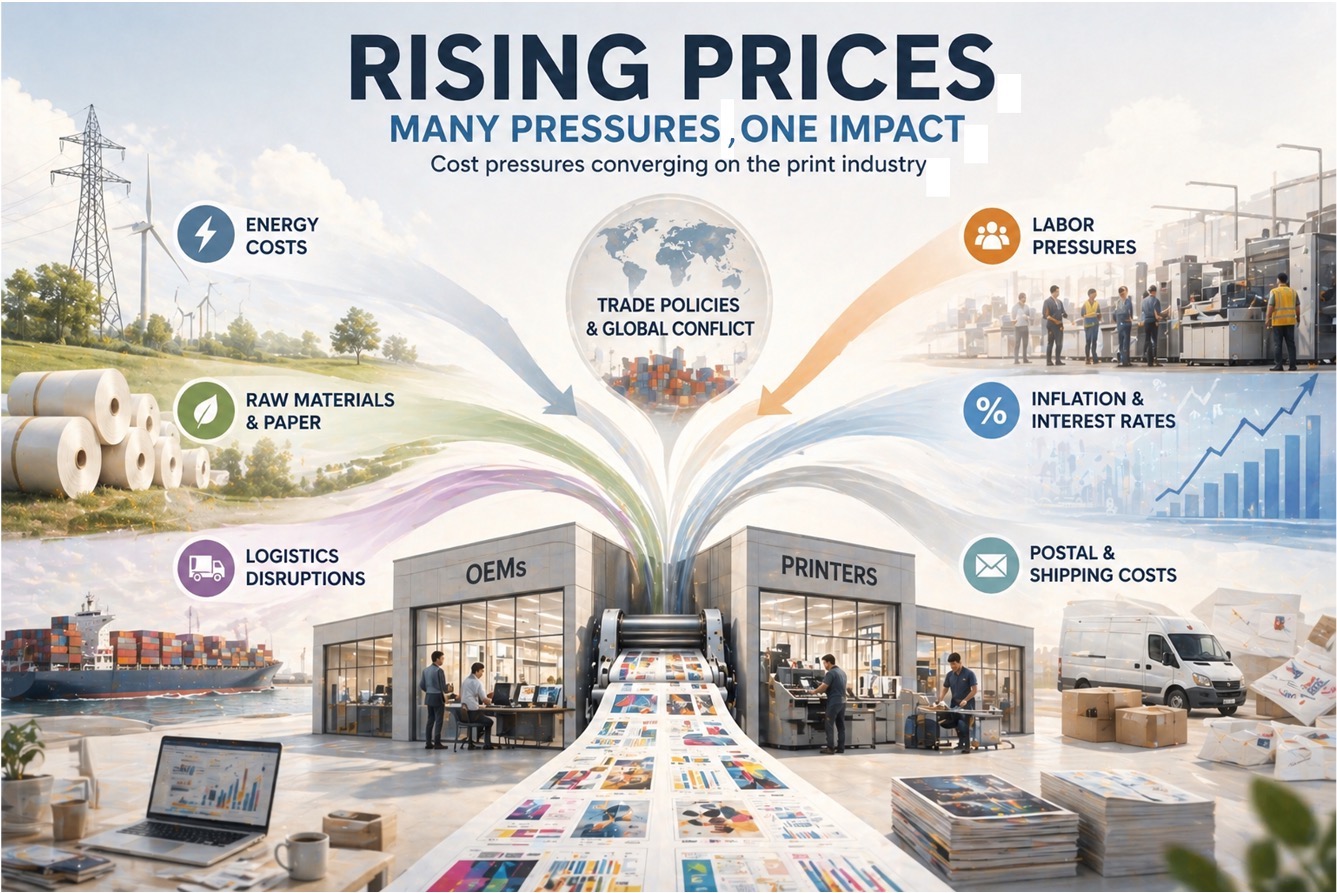
Costs are rising across the board. From paper, energy, and shipping to the rising costs tied to hiring, training, and retaining reliable talent—everything is getting more expensive. At the same time, customers have grown used to faster turnarounds, personalized service, seamless experiences, and more sustainable practices. That shift in expectations puts even more pressure on providers to deliver more with less. There is no doubt that customers are feeling it, too.
Some shops are trying to solve this with more software (especially with AI-enhanced solutions). And while that’s part of the answer, it’s not the full one.
Why Print Automation Still Needs People and Robots
If your current team is overwhelmed by the number of tasks, the answer isn’t to push them harder. The answer is to reduce the number of tasks. That’s the point of automation: Take away what doesn’t require skill, judgment, or creativity so your people can focus where they actually add value.
The best way to get there? Map out your print process step by step and identify the repetitive parts. Where does work pile up? Where are people physically moving materials from one step to the next? If AI is planning jobs efficiently but output is still getting backed up, you haven’t solved the real bottleneck.
That’s where robotics matters. AI tools have made huge leaps in job planning, scheduling, color management, and even quality checks—but they can’t move a box of envelopes or pallet of paper. Robots, however, can. They handle the physical work that software alone can’t touch. And now, those robots are being trained, optimized, and continuously improved with AI. Combined, they solve problems faster and keep work flowing with less friction.
The Printing Industry Is Ready for Robots
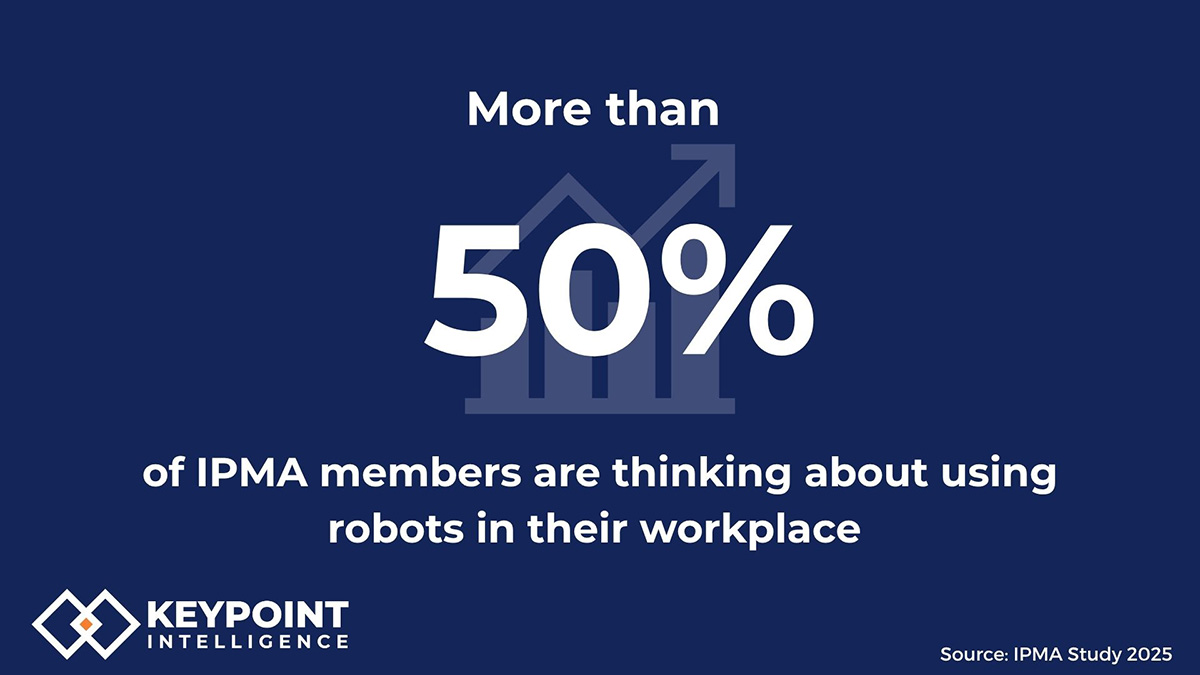
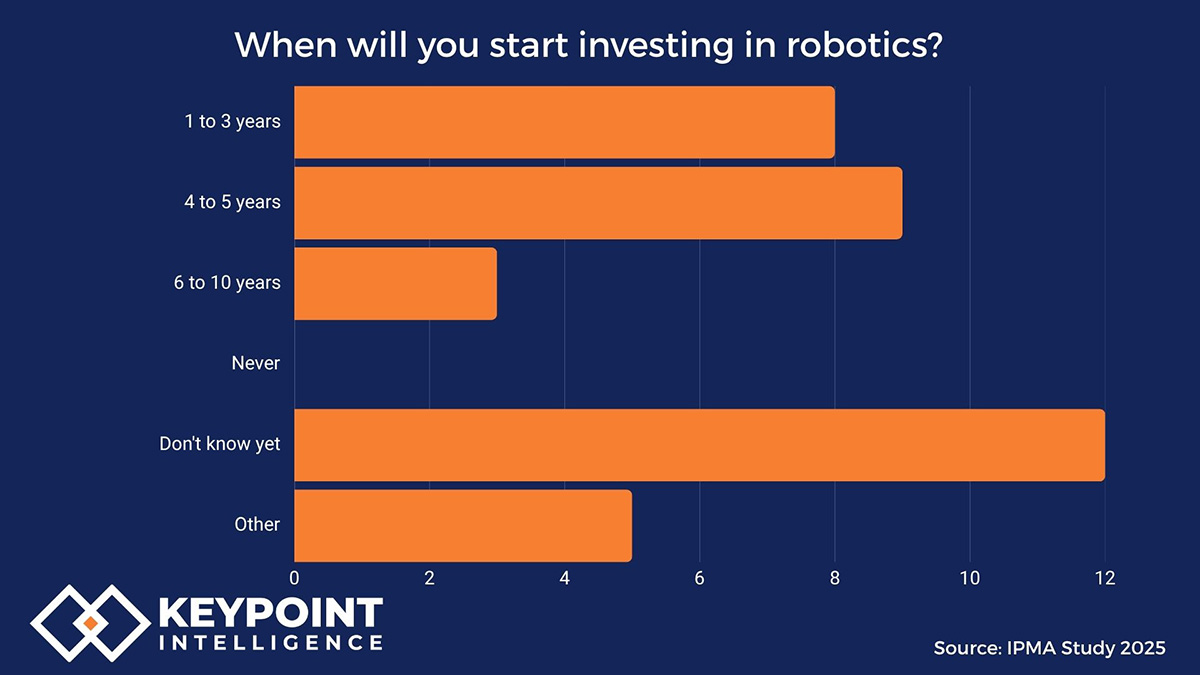
According to a recent survey conducted with the IPMA (In-Plant Printing and Mailing Association), nearly half of print operations are actively planning to invest in robotic process automation. That’s clear evidence that the industry moving forward.
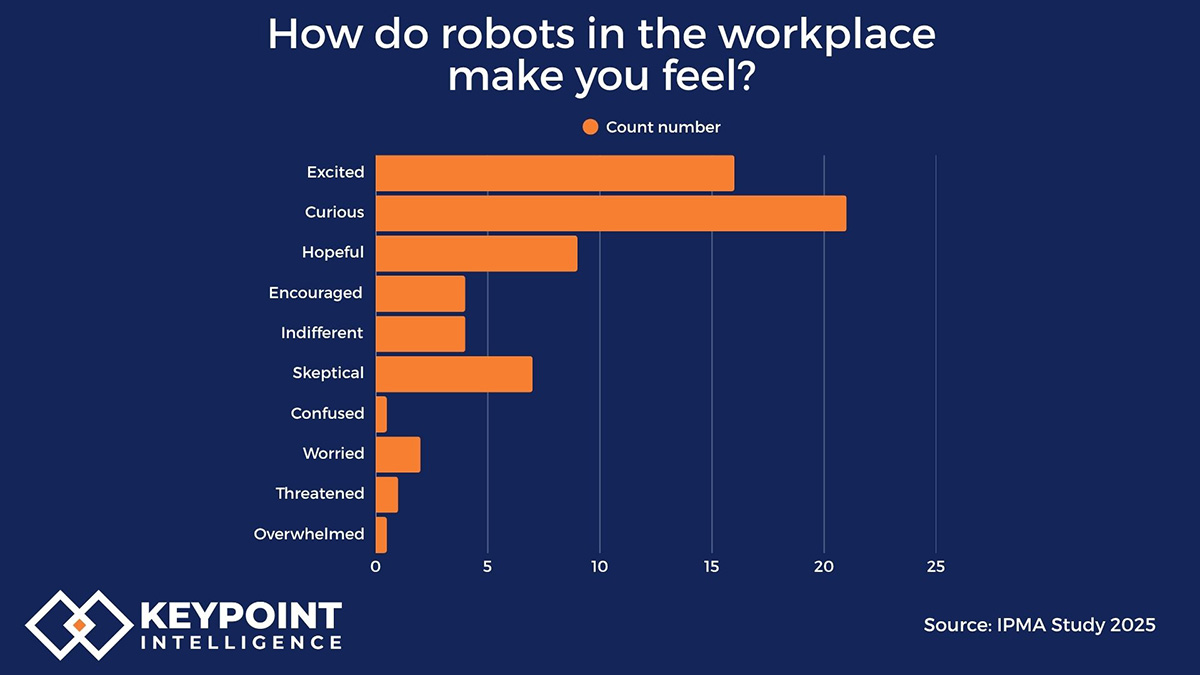
According to the IPMA survey, nearly half of print operations were excited, curious, and hopeful at the thought of having mobile robots in their workplace.
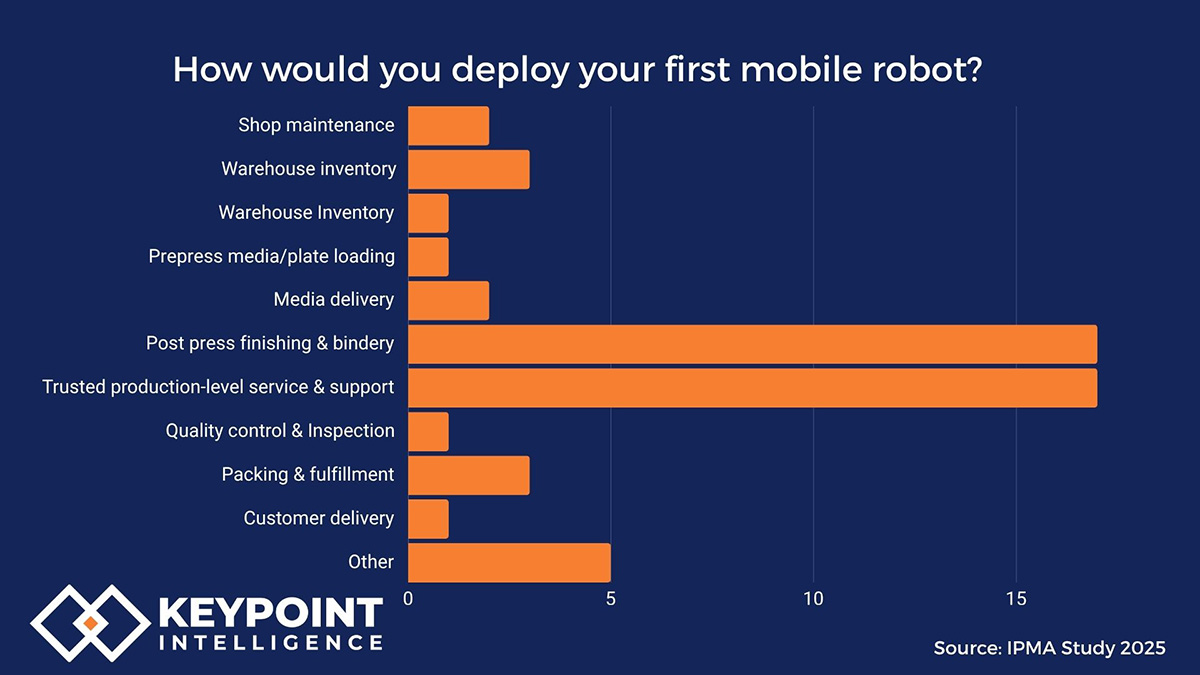
In a recent Keypoint Intelligence survey of in-plant printers, finishing and bindery emerged as the top areas where robotics offer real value. It makes sense because these tasks are some of the most repetitive, physical, and time sensitive. And, of course, they’re also among the hardest roles to keep staffed. Internal logistics was another popular pick as materials don’t move themselves, but robots can.
A Look at the Robots Showing up First
Here’s what’s really showing up on the shop floor. The robots making the biggest impact right now aren’t humanoid helpers. They are autonomous mobile robots (AMRs). AMRs are nimble, warehouse-style vehicles that move materials around the shop. Systems like the Sharko5 or Konica Minolta’s FORXAI future collaborative robot (cobot) lines are designed specifically for production environments.
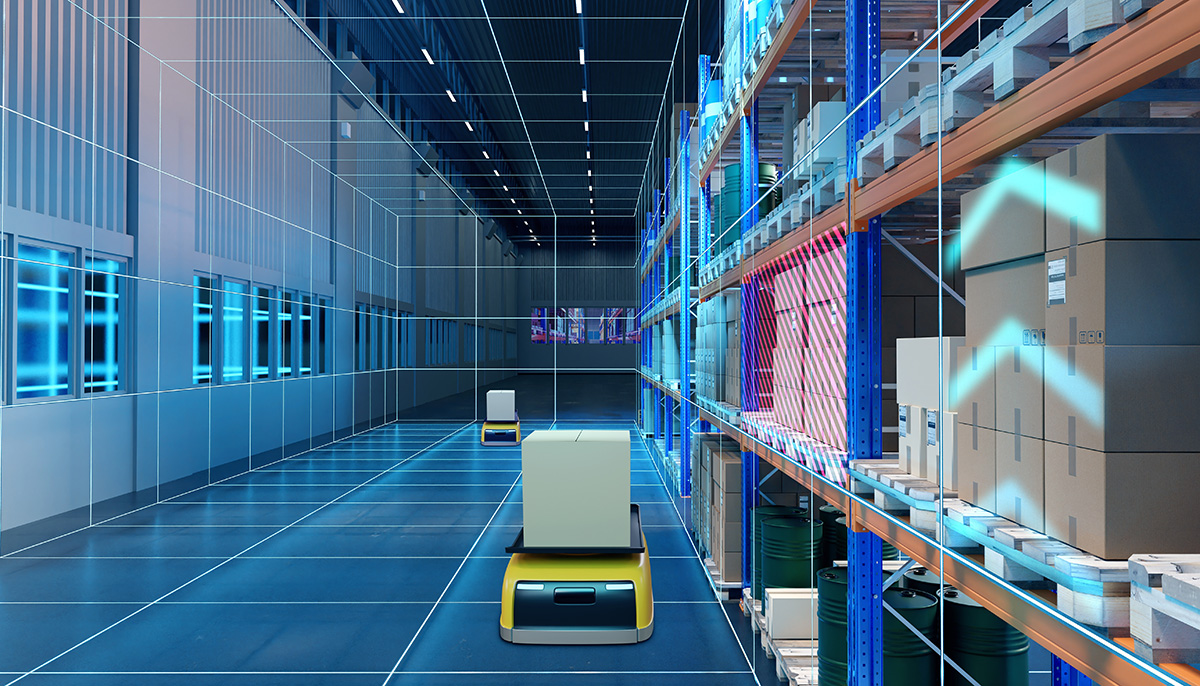
AMRs are a key development in manufacturing. These compact machines use advanced sensors and onboard AI to navigate spaces on their own without fixed paths or wires. Unlike automated guided vehicles (AGVs) that require strict layouts, AMRs adapt in real time—adjusting to workflow changes and unexpected obstacles. One example is the MoviGo Robotics Sharko10, designed for pallet transport in fast-paced production environments. It’s small, maneuverable, and easy to integrate with existing logistics systems—making it an ideal fit for sectors like pharmaceuticals, food production, and commercial printing.
Cobots are also proving valuable. Built to work safely alongside humans, they’re designed to enhance (not replace) your workforce. Cobots could assist with repetitive precision tasks, load printers, support finishing, and even prep shipments—freeing up human operators to focus on higher-value jobs.
Then there’s the next wave: humanoid robots. These machines are built in a human-like form with arms, legs, and sensors that allow them to perform physical tasks in ways that feel intuitive in a print environment. While still emerging, their potential is real. They could retrieve paper; operate equipment; move jobs to bindery or shipping; and even handle sorting, packing, and loading delivery vehicles. They’re well suited to print production’s unique blend of logistics, hands-on labor, and attention to quality.
By automating low-value, repetitive tasks, these robotic tools won’t just solve labor shortages. They will make the jobs people still do more enjoyable, more focused, and more efficient. And they will help print service providers (PSPs) do more with less, without compromising quality or speed.

They’re built to move like us for a reason so they can fit seamlessly into the environments we’ve already built. This isn’t hypothetical. AMRs and robotic arms are already in print facilities. They’re delivering paper to presses, offloading output, moving pallets to bindery, restocking materials, and even prepping shipments. These aren’t prototypes. They’re already proving their value on real production floors.
What PSPs Are Looking For
According to the survey, IPMA members already have an idea of where the robots will be most helpful.
They want proof they work. They want to know how these systems integrate with their management information systems (MIS) or digital front end (DFE). They care about safety, service, and the return on investment (ROI).
That same survey showed that the top reasons people hesitate to buy come down to trust: Will this work in my environment? Will it pay off? Who will support it? They want vendors who understand print, not just robotics. That’s a big opportunity for OEMs and workflow providers.
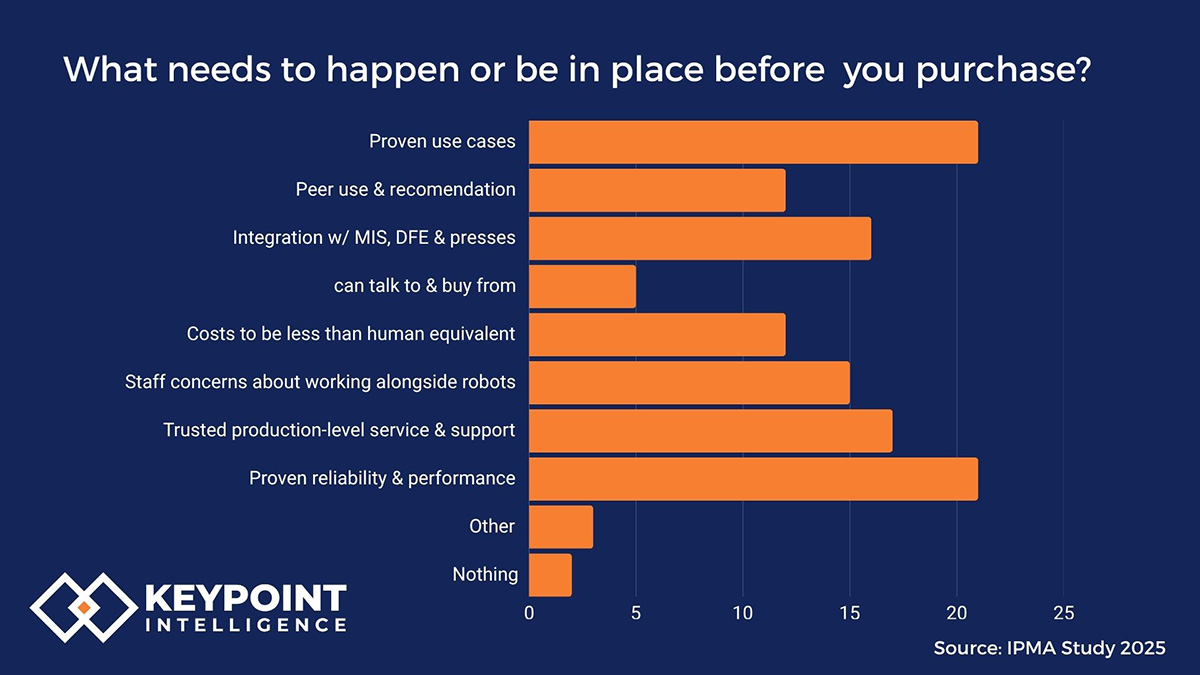
Cost is another barrier. But prices have come down. What used to feel out of reach is now well within range for many PSPs. As more vendors enter the market and the tech matures, costs have become more manageable making it easier to pilot a solution without putting your entire operation on the line.
Final Takeaway: Start Exploring Now
AMRs and robotic arms are already in print facilities. They’re delivering paper to presses, offloading output, moving pallets to bindery, restocking materials, and even prepping shipments. They’re addressing labor shortages, improving throughput, and helping PSPs compete in a tighter and faster market. If early results are any indication, this isn’t a passing trend.
According to the IPMA survey, nearly half of print operations are actively planning to invest in robotic automation. That’s clear signal that the industry moving forward.
Humanoid robots are particularly well-suited to print environments that combine production, warehousing, and logistics. These spaces demand flexible, reliable labor for a wide range of tasks. In a typical shop, staff jump between roles—so robots must, too. That means navigating around carts and press doors, adapting to daily layout changes, and working side-by-side with people. Humanoids powered by AI are being built for exactly this kind of dynamic interaction.
For widespread adoption, these robots must prove themselves as launch-ready products. That means reliability, long operating windows, and service infrastructure built for industrial environments. Features like self-swapping batteries and modular servicing will prove essential. With those in place, humanoid robots could become mainstream in three to seven years.
In the meantime, AMRs offer faster solutions. These self-driving robots are often used to transport paper, printed jobs, or supplies between departments helping reduce manual labor and improve workflow efficiency. They’ve advanced from concept to production and are already delivering results. They’re easier to deploy and well-suited for material handling, transport, and internal logistics. Machine learning and AI will only accelerate this trend, redefining automation and boosting uptime.
Start by reviewing your printing workflow. Pinpoint repetitive and physically challenging tasks. Identify pain points that are holding up production. Rethink tasks. Determine what can be offloaded. Stay curious about what new robots are hitting the market. Stay current with what others in the industry are doing. You can bet your competitors are…
The smart money isn’t waiting for perfection. It’s starting now, step by step, with real automation that works. Perfect systems don’t exist, but workable ones are already making a difference. Start exploring practical automation use cases now. Try a solution and learn from it. When done right, automation improves the experience for everyone: Employees shift to higher-level, less repetitive work; print business owners see greater productivity and profit; and customers get faster, more accurate results.
Before making any investment, it’s crucial to conduct thorough research. It’s essential to understand the product, how it fits into your workflow, and what the real-world results look like. Take time to explore your options, talk to peers, and get input from workflow automation experts.
Mark Boyt is Principal Analyst of Production Workflow Software at Keypoint Intelligence. With a strong background in business development, and workflow automation, Mark focuses on understanding market trends, exploring recent technologies, and offering insights to help clients streamline production workflow processes. Previously serving as Global Head of Software Marketing at Xerox, he helped launch new software solutions, develop effective market strategies, and lead digital transformation efforts on a global scale. Mark is known for breaking down complex software innovations into practical strategies that drive business success, and he is always up for a good conversation.