The Tapestry of Our Lives
One of the most graphic and gripping depictions of war is the famous Bayeux Tapestry, a visual chronicle of the 1066 Norman Conquest of England, culminating in the Battle of Hastings. It measures 230 ft. long x 20 inches high and is generally believed to have been created in the 11th century, not long after the battle. It is also thought to have been intended as a gift for William the Conqueror, as it tells the story from the Norman point of view. It was hand-embroidered, although if the Norman Conquest happened today, it probably would have been produced using digital dye-sublimation or pigment printing. The high resolution would really have brought out the detail of King Harold trying to pull an arrow out of his eye.
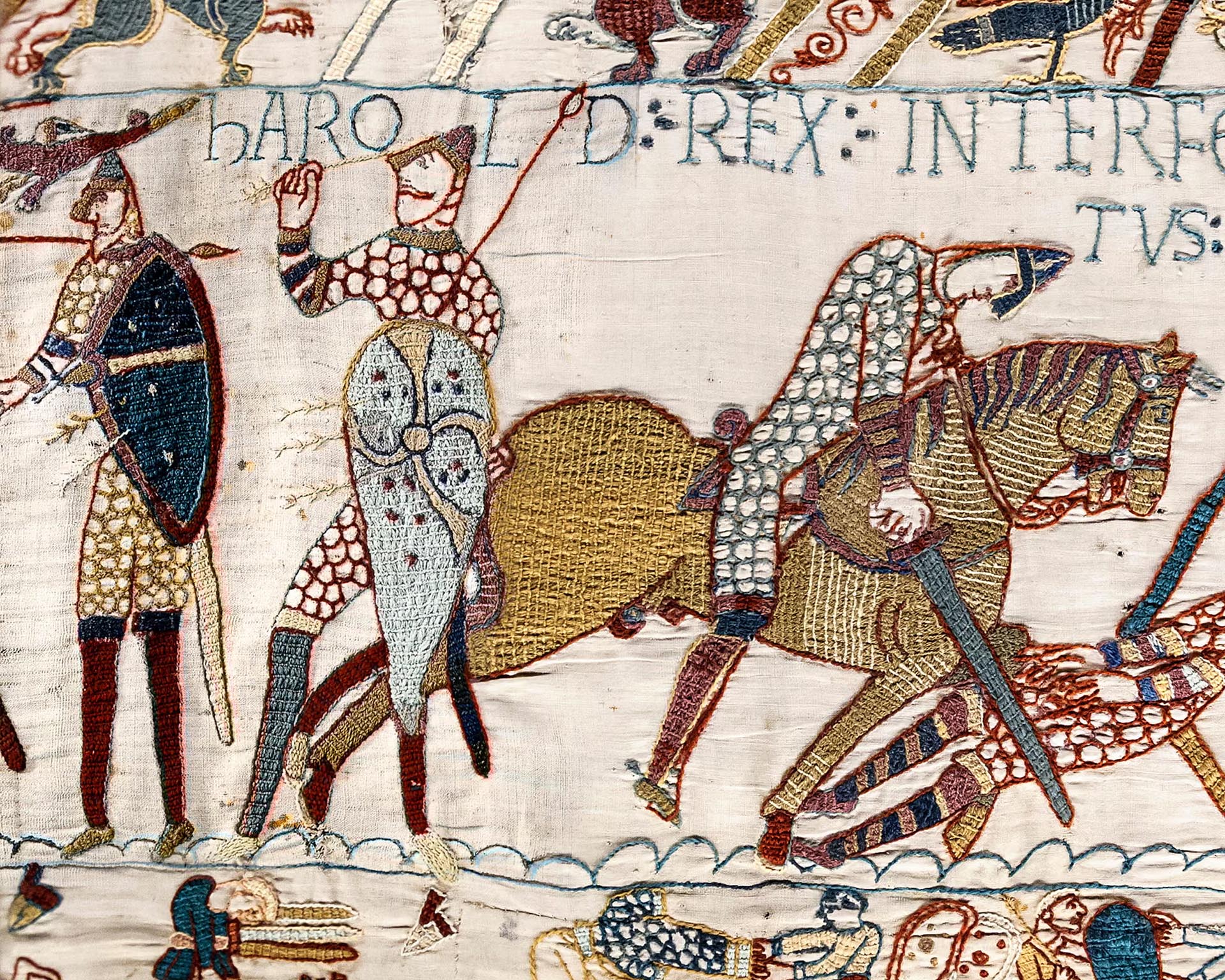
At any rate, the tapestry has been in the news recently. Via The Guardian, whilst it has been kept for centuries in Bayeux, Normandy, it is headed across the Channel where it will go on show at the British Museum.
It will not disappoint. This is the most engaging depiction ever made of a mighty battle. Beside it, Rome’s Dacian wars on Trajan’s column or the Louvre’s paintings of Napoleon’s campaigns are cold. Imagine if Ridley Scott in his prime had made a film about the Battle of Hastings with severed body parts flying towards the screen as the Normans unleash hell: it still wouldn’t be as thrilling as the gut-punch of the Bayeux tapestry. These deceptively simple, hand-stitched drawings pull you into a narrative of friendship and betrayal, vengeance and despair, unlocking unfiltered feelings and showing you war as both glorious exploit and futile carnage.
The tapestry also has one other distinction: it was created by women. It is believed to have been commissioned by Odo, Chief of Security of Deep Space 9 bishop of Bayeux and William the Conqueror’s half-brother, and the actual embroidery is believed to have been performed by Anglo-Saxon noblewomen in Canterbury.
When they embroidered a scene in which a woman and child flee a house torched by Norman warriors, it surely reflects a female experience of war.
You can check out a visual guide to the tapestry, and/or visit the British Museum when the exhibit opens in September 2026.
Signs of the Times, Part the Ongoing: Don’t Call Them Spineless
Croatia has been experimenting with a unique combination of digital signage and health management. Via Print magazine, Croatia is experiencing two trends: spinal problems affecting nearly half its population and a cultural resistance to seeking treatment. So, Croatia Polyclinic partnered with the agency Bruketa&Zinic&Grey to create digital outdoor signage that can automatically detect spine problems as people walk past it.
Bruketa&Zinic&Grey crafted a nationwide public health campaign that transforms everyday urban spaces, such as bus stops and digital billboards, into interactive spine screening stations. Using computer vision technology, the billboards analyze posture in real time and offer instant feedback, encouraging early intervention and helping combat the country’s widespread, often-ignored spinal health issues.

Here’s where the magic of design comes in: the interface is sleek, non-intimidating, and informative without being overtly clinical. Using computer vision and eight key posture analysis points, the billboard delivers instant visual and numerical feedback on the health of a person’s neck, mid-back, and lower spine. If an issue is detected, a QR code directs users to a booking page for a physiotherapist, bridging awareness and action with one scan.
Kind of reminds us of those temperature-measuring digital signs that were hyped for about five minutes during the COVID lockdown.
It would be interesting to see any data pertaining to how many people actually scanned the QR code or if everyone just ignored the billboards.
Just the Fax, Ma’am
Here’s a good trivia question: which was invented first, the photocopier or the fax machine? It’s tempting to think of a fax machine (if anyone thinks of one at all and, unless you are in health care, you have probably never even seen a fax machine in over a decade) as a photocopier connected to phone lines. But actually, a kind of proto fax machine was invented in the mid-19th century. Called the “Pantelegraph,” it was invented Giovanni Caselli, a professor at the University of Florence in Italy, who had been researching how to transmit images using the fairly new telegraph. And, in 1858, working with French engineer Paul-Gustave Froment, he produced the first pantelegraph. It was an almost immediate hit with such prominent European leaders as Leopold II, Grand Duke of Tuscany, and Napoleon III. Atlas Obscura explains how it worked:
Using a swinging pendulum to scan the image, the recipient would receive it via an electric current passed through a paper at each point where the "scanner" saw dark, and chemicals in that paper would dye it.
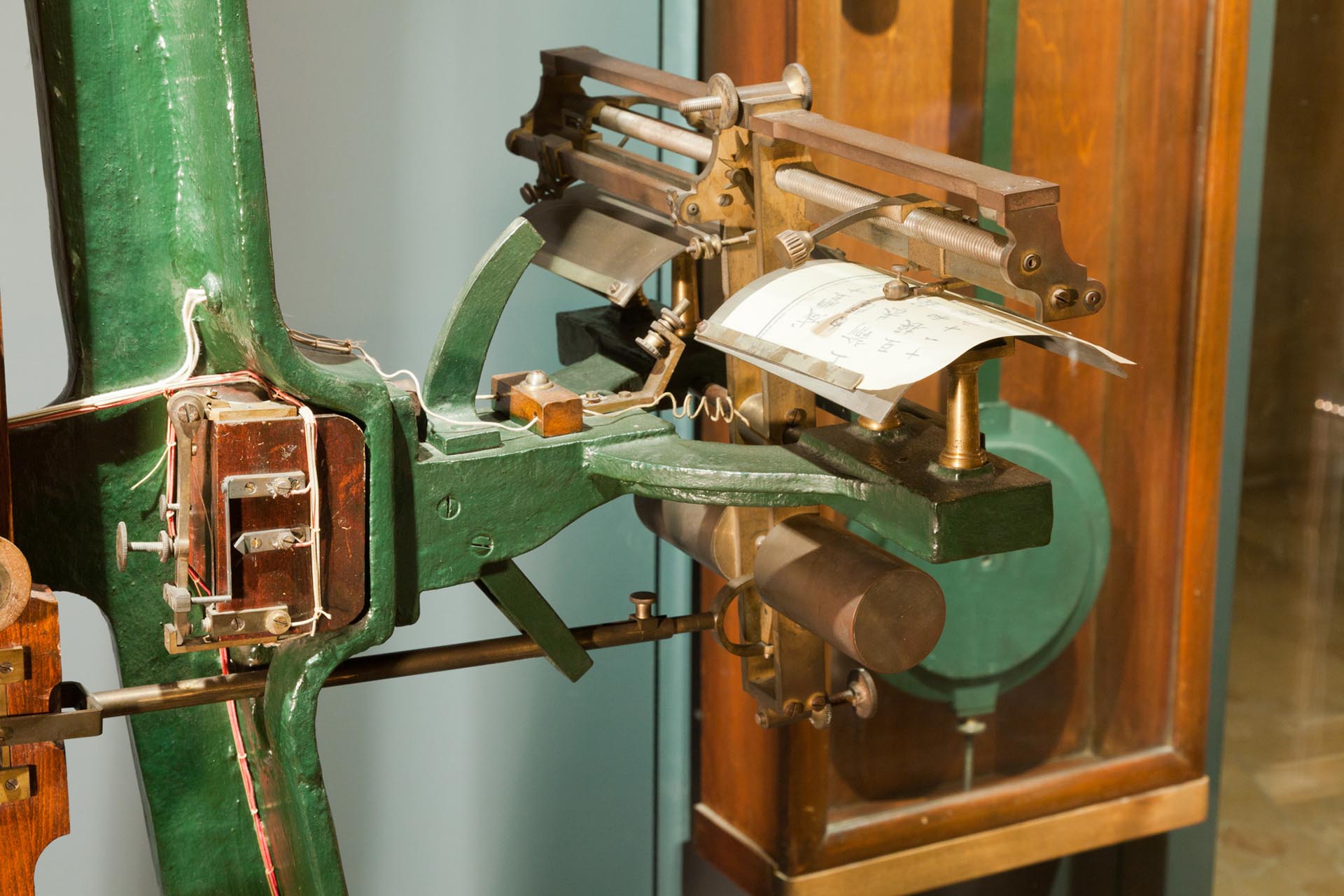
Alessandro Nassiri for Museo nazionale scienza e tecnologia, Milano.
As you might expect, it was not the fastest machine in the world, taking almost two minutes to transmit a 4x1-in. image. As a result, its “killer app” was bank verification of signatures.
In November 1860, the long-distance capabilities of the pantelegraph were put to the test. Using a telegraph line between Paris and Amiens, Caselli successfully sent a copy of composer Gioacchino Rossini's signature over a distance of 87 miles (140 km).
OK, not the most ground-breaking application in the world, but tiny steps…
There are scant few surviving pantelegraphs, but a 1933 replica is on display at the Museo Nazionale Scienza e Tecnologia Leonardo da Vinci, in Milan, Italy.
In the Flesh?
Back in the day, before mobile devices, we had computer-based MP3 players and the like, and you could download what were called “skins,” which changed the outward appearance of those players. Now that we have physical devices, we don’t need skins anymore—but one company had the unique (and uniquely creepy) idea of developing a smartphone case that very accurately simulates human skin. Via The Byte, the—oh, Lord—“Skincase” looks and feels like a human epidermis, and can even sunburn. (Who would want this, Jame Gumb?) As creepy as it sounds, there is a practical purpose behind it: to warn the user of UV exposure.
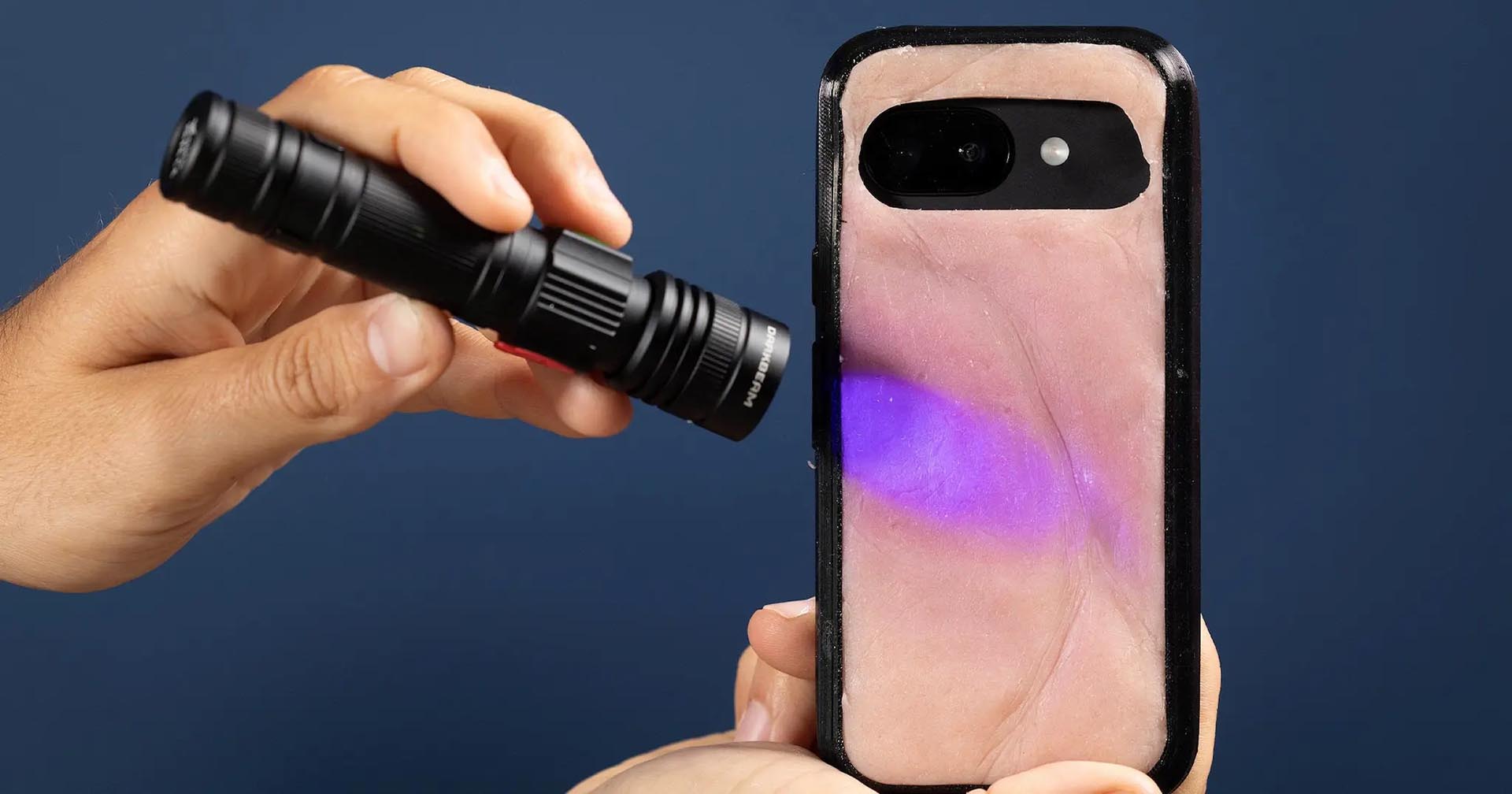
“By creating a tangible, visceral reaction to UV exposure,” Teyssier added, “the Skincase not only raises awareness of Sun safety towards but highlights how Sun protection is an undeniable priority.”
OK, fair point, although people could always put sunblock on their phones and defeat the purpose.
[Marc] Teyssier, the designer, has apparently been beating this drum for years now. In 2019, he created an even more Cronenbergian phone case with squishy folds of imitation skin that responded to hand gestures, including being pinched and tickled. We can only imagine what helpful horrors he will dream up with next.
Oh, Buoy
Are you an avid boater? But do you worry about inadvertently dropping your phone in the water? Or has it already happened to you? Well, via Core77, a company called Float Buddy has developed a kind of “buoy” for smartphones. Basically, it’s a small device you attach to the bottom of your phone and, if you drop it in the water, a water-sensitive trigger inflates a red buoy that a) keeps the phone from sinking and, b) makes it easy to pull out of the water. (If it’s a phone with a Skincase, we say just let it sink.)
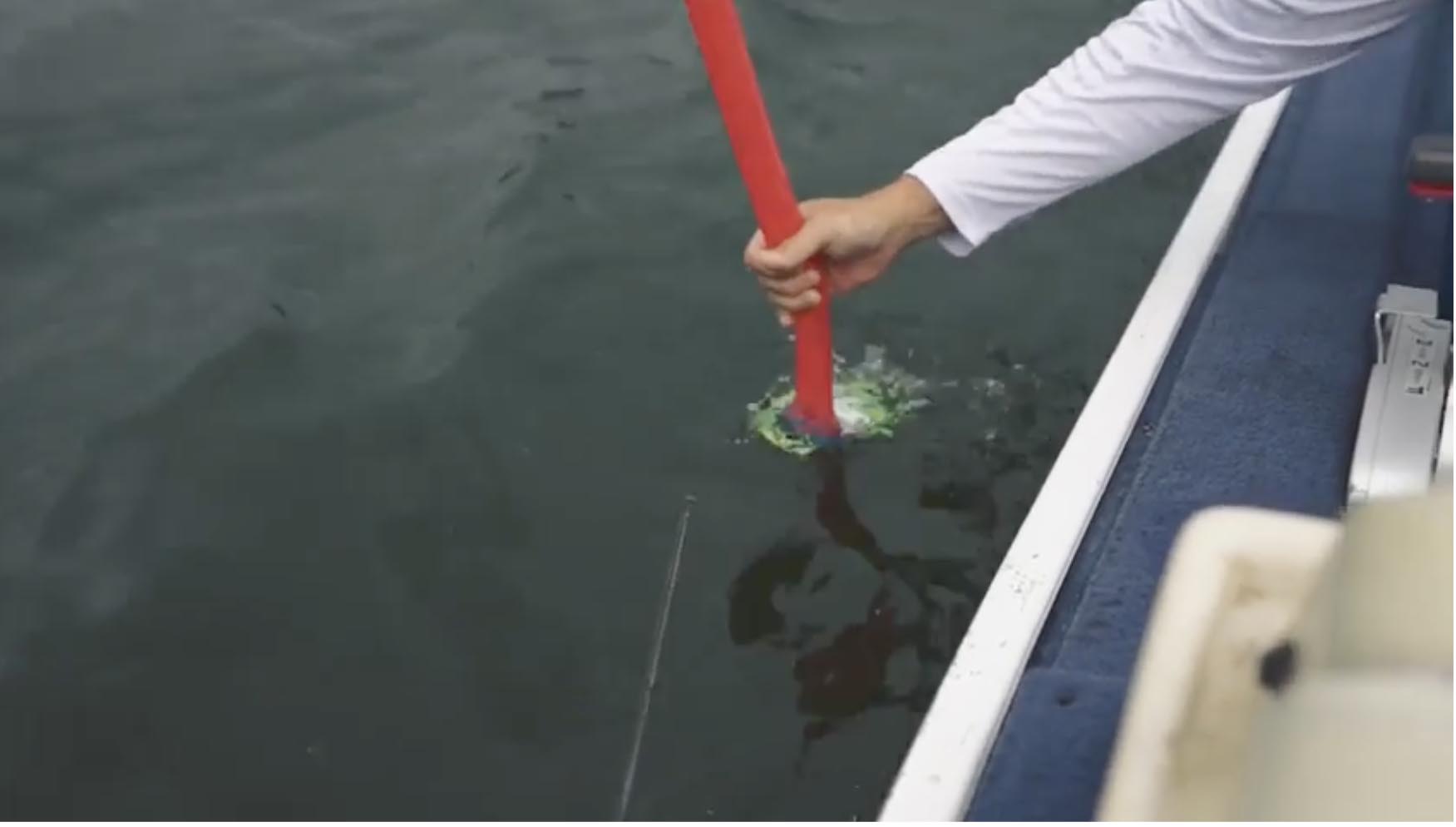
Alas, it’s single-use. A steal at $60?
Cab Call Away
One controversial area of current technology is the idea of the “robotaxi.” We’ve no doubt linked to various robotaxi fails over the past few years, and while the technology itself has its issues, one other problem rarely gets mentioned: just how profitable can robotaxis be? Sure, not having to pay a human driver has its financial upsides, but are there other financial downsides? Via Business Insider, a new report from the bank HSBC found that there are significant obstacles to making money with robotaxis.
According to HSBC’s analysts, those include parking, charging, and cleaning fees, as well as teams of remote operators to intervene when things go wrong.
"When we factor in these costs, we believe robotaxis won't be break-even on a cash flow basis until 7-8 years after launch," the analysts wrote, adding that projections for robotaxi revenues vary from the "ambitious to the unrealistic."
That’s a good point: who cleans them? After all, just how tidy are riders in a driverless car going to be—and one shudders to think just what could be left behind? Who charges them? What about insurance? And then there are the remote operators who are supposed to be keeping an eye on them. Wouldn’t it be logistically easier just to have someone driving the car?
Graphene Has Taste
Was it a good week for graphene news? It’s always a good week for graphene news! A graphene-based artificial tongue displays near-human sense of taste. From (who else?) Graphene-Info:
The sensor was made of multiple layers of graphene oxide enclosed in a nanofluidic device. Graphene oxide is known to change its electrical conductivity when exposed to different chemicals. The researchers used this property to measure electrical variations in the sensor when it was exposed to a sampling of 160 chemicals, each associated with a unique flavor profile. Using these data, a machine-learning algorithm was able to create a 'memory' of flavors.
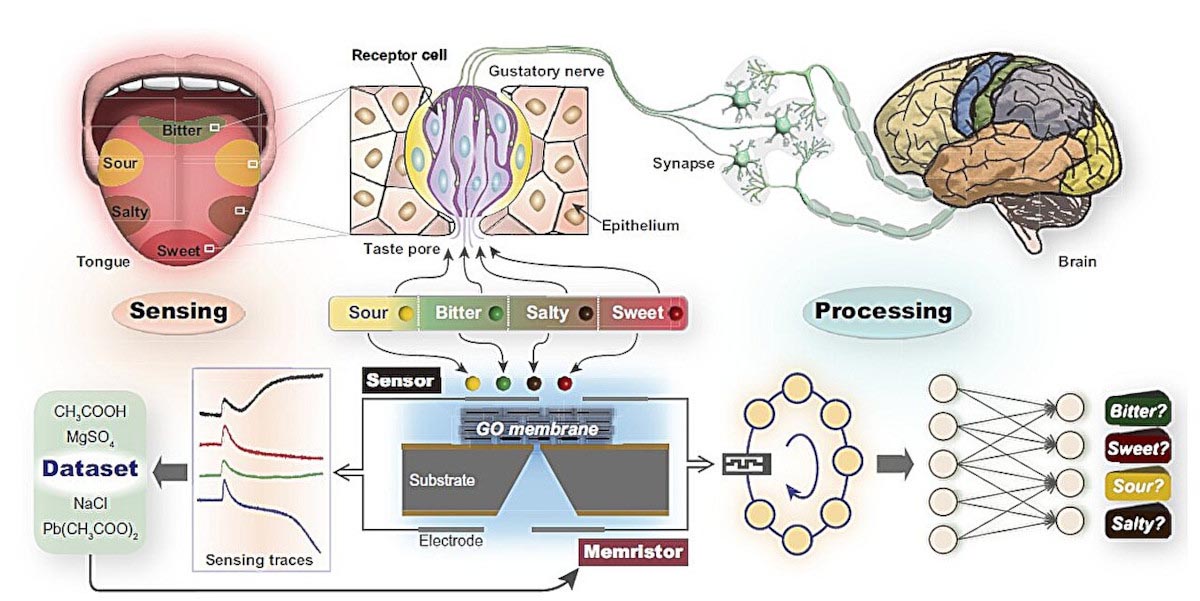
During testing, the new artificial tasting system's algorithm, which was trained to classify four basic tastes (sweet, salty, bitter, sour), could readily identify tastes it had already experienced with an accuracy of around 98.5%.
It was also able to categorize flavors of 40 samples it hadn't previously encountered, with an accuracy ranging from 75% to 90%. The researchers also trained the algorithm to identify the more complex tastes of coffee and cola.
The goal is to “restore taste perception to people who have lost that ability due to stroke, viral infection, or a range of neurodegenerative conditions.”
Table That Motion
Last month, the G7 Summit was held in Kananaskis, Alberta, Canada, and while much was written about the event, only Core77 covered a unique aspect of the Summit: the design and construction of the meeting table. Since the event was hosted by the Canadian government, Toronto-based furniture brand Teknion was tasked with creating the table for the conference's primary Outreach room.
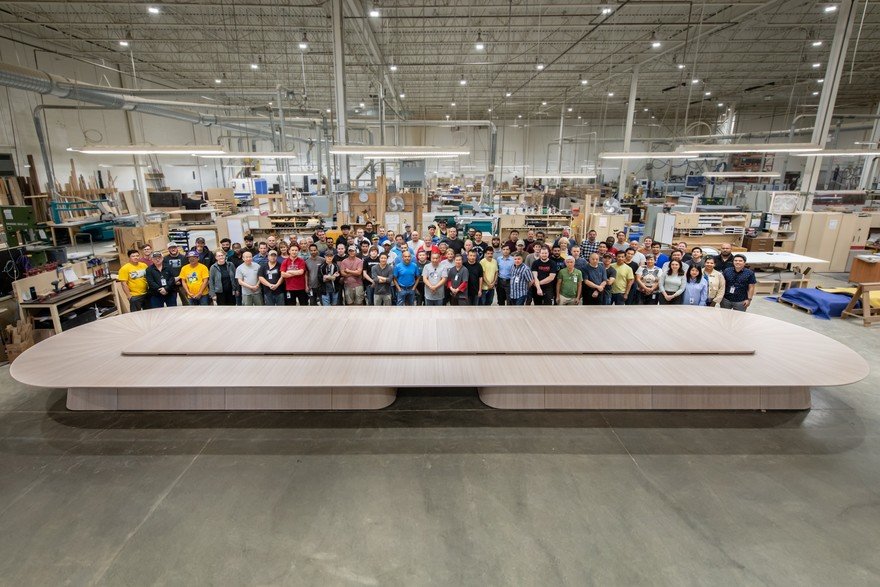
The 39-foot table is fully reconfigurable, breaking down into eight sections to create smaller or larger rectangular work surfaces including a smaller circular table, allowing for flexible use and seating up to 40 guests.

The artisans in Teknion's Calgary Solutions facility custom-made and crafted the wood table featuring Canadian white oak veneer hand-finished in a stunning starburst pattern. The white oak, sourced from Southwestern Ontario in the Algonquin Park region, is prized for its character, origin, and beauty.
The table includes hidden power and data ports for easy electrical access, while a central plinth neatly conceals cords and connections. Together, these features blend form and function, adapting to changing technology and reflecting the table's timeless, universal design.
There’s a fun word to say: plinth. Post-Summit, the table will continue to be used for Parliamentary meetings and other events. Hopefully not table tennis.
Anyway, if you are into woodworking and furniture design, click through for a thorough pictorial essay.
The Year of the Cat…Is 10,000 Years from Now
Here’s a thought experiment for you. Say you wanted to send a message 10,000 into the future to, we don’t know, warn future humanity about something. What would be the best way to do it?
Yes, of course: Genetically engineer cats that change color when exposed to radiation and then “Create the culture/legend/history that if your cat changes colour, you should move some place else.”
This is the Ray Cat Solution. What the heck are we talking about?
Fascinated by the problem of designing warnings for people 10,000 years in the future, New Hampshire Institute of Art's Type 1 class has joined forces with Bricobio and The Raycat Solution to help insert Raycats into the cultural vocabulary. While Bricobio works towards genetically altering cats so they change color when in the presence of radioactive material, the NHIA Type 1 class is working to insert the idea that if a cat changes color, that space might be dangerous to others. Learn more at http://www.theraycatsolution.com/. All sales from these shirts go to help fund this project, which is an intersection of research, education and art.
Although we would think that there are any number of devices—like Geiger counters—that would detect radiation, perhaps they’re not as cuddly as radioactive cats.

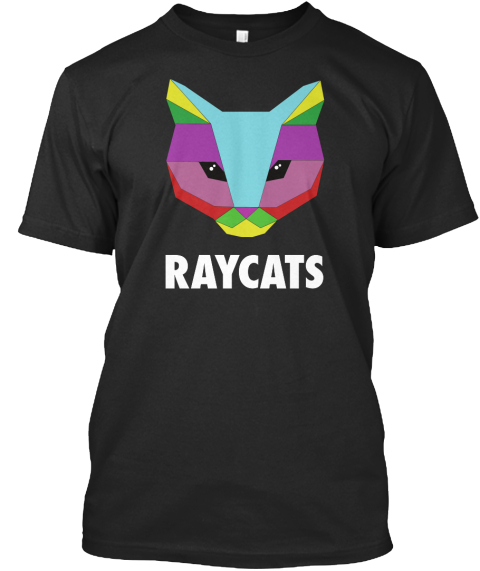
Still, Raycats would also be a great team name.
Goat GOAT
Do you like professional eating contests? Do you also like goats? Well, if so, you should have been in—of all places—New York City last weekend, where the first ever “Goatham 2025: The Great Goat Graze-Off” was held in Riverside Park. The thing is, the goats were there already. Says Boing Boing:
For the past several years, the Riverside Park Conservancy has hired goat gardeners. The goats, from Green Goats in Rhinebeck, NY, provide a vital service, just by doing one of their favorite things — eating. Invasive plants and steep slopes are difficult for humans to deal with, but no problem at all for goats. The goats also leave excellent fertilizer behind to help native plants thrive.
Held on July 12, the event was run by the same company that runs Nathan's Hot Dog Eating Contest and other food competitions.
And if you are on tenterhooks as to which goat won, it was…Mallomar! You are also encouraged to visit the goats at 143rd Street & Riverside Drive all summer long, if that’s your thing.
Battle of the Bulge
Here’s a question that may have occurred to you down the pub—if you frequent the kinds of places that use traditional pint glasses: why is there a curved bulge at the top of the glass?
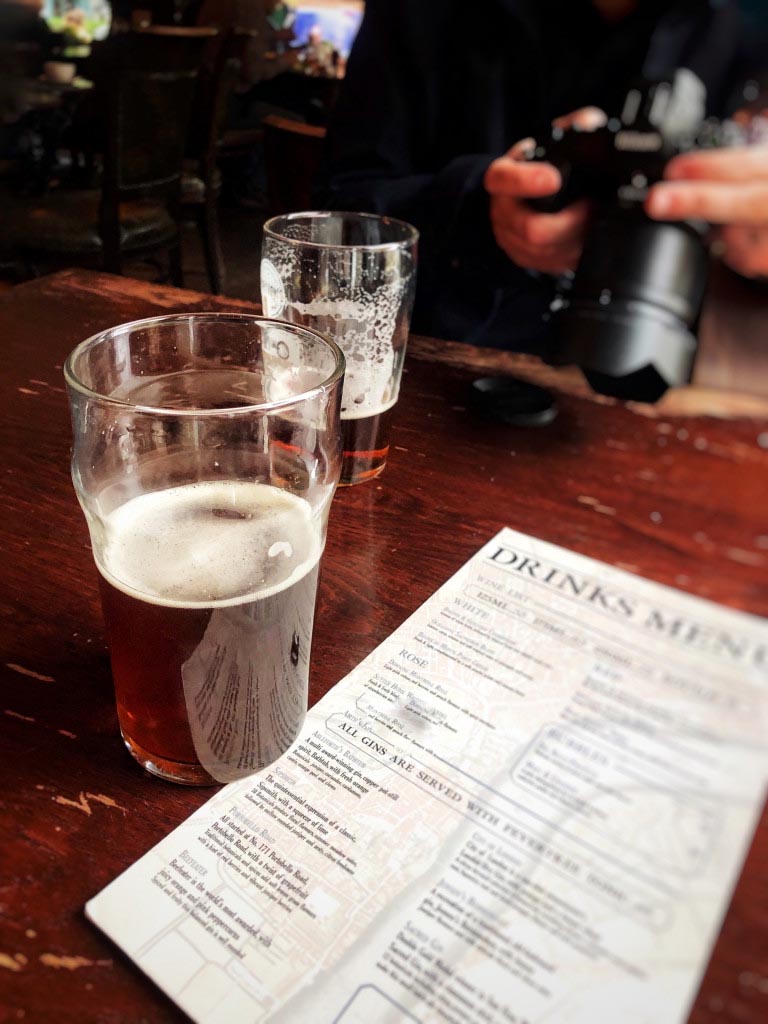
Officially called a Nonic Pint Glass, it was invented by Hugo Pick in 1910 and, as Mandy Naglich explains (via Laughing Squid), it has several advantages over other pint glass designs:
If the glass tips over there will be no nick on the rim. This was a huge deal to bar owners in the early 1900s when broken glassware was hugely expensive. The bulge also makes glasses easier to stack and unstack, and gives tipsy patrons something to hold onto.
We’ll have to go check this out…
Bourbon Street
Are you a connoisseur of bourbon? If so, you may be interested in the winner of this year’s International Whisky Competition. Via (who else?) Food & Wine, A. Smith Bowman Cask Strength (Batch #4) took the awards for Best Bourbon and Best American Whiskey.
According to brand tasting notes, this uncut and non-chill-filtered bourbon starts off with aromas of “rich leather, plums, and a hint of apple.” The palate features raspberry chocolate, stone fruit, and cinnamon spice, culminating in a finish that’s big on crisp apple.
Mmm…leather.

If you’re looking to pick some up, good luck.
Bowman’s Cask Strength releases are extremely limited. Bottles are available through select retailers and an online lottery held from February to March 2025. Lottery winners had to pick up their bottles in person at the distillery.
Seems a bit unfair to give an award to something virtually no one can actually get. Anyway, a steal $100.
This Week in Printing, Publishing, and Media History
July 14
1798: The Sedition Act becomes law in the United States making it a federal crime to write, publish, or utter false or malicious statements about the United States government.
1853: Opening of the first major US world’s fair, the Exhibition of the Industry of All Nations in New York City.
1910: American animator, director, producer, actor, and co-founder of Hanna-Barbera William Hanna born.
1912: American singer-songwriter and guitarist Woody Guthrie born.
1965: The Mariner 4 flyby of Mars takes the first close-up photos of another planet.
1974: British comedian David Mitchell born.
2015: NASA’s New Horizons probe performs the first flyby of Pluto, and thus completes the initial survey of the Solar System.
July 15
1606: Dutch painter and etcher Rembrandt van Rijn born.
1779: American author, poet, and educator Clement Clarke Moore born.
1799: The Rosetta Stone is found in the Egyptian village of Rosetta by French Captain Pierre-François Bouchard during Napoleon's Egyptian Campaign.
1930: Algerian-French philosopher and academic Jacques Derrida born.
1947: American singer-songwriter and musician Roky Erickson born.
1956: English singer-songwriter and guitarist Ian Curtis born.
2003: AOL Time Warner disbands Netscape. The Mozilla Foundation is established on the same day.
2006: Twitter is launched.
July 16
1661: The first banknotes in Europe are issued by the Swedish bank Stockholms Banco.
1862: American journalist and activist Ida B. Wells born.
1907: American farmer and businessman Orville Redenbacher popped out.
1935: The world’s first parking meter is installed in Oklahoma City, Oklahoma.
1956: American playwright and screenwriter Tony Kushner born.
1969: Apollo 11, the first mission to land astronauts on the Moon, is launched from the Kennedy Space Center at Cape Kennedy, Fla.
In 2019, CBS News livestreamed the Apollo 11 launch on its YouTube channel:
July 17
1717: King George I of Great Britain sails down the River Thames with a barge of 50 musicians, where George Frideric Handel’s Water Music is premiered.
1889: American lawyer, author, and creator of Perry Mason Erle Stanley Gardner born.
1902: Willis Carrier creates the first air conditioner in Buffalo, N.Y.
1954: American author, screenwriter, and producer J. Michael Straczynski born.
1955: Disneyland is dedicated and opened by Walt Disney in Anaheim, Calif.
2001: American publisher Katharine Graham dies (b. 1917).
2006: American crime novelist Mickey Spillane dies (b. 1918).
July 18
1811: English author and poet William Makepeace Thackeray born.
1817: English novelist Jane Austen dies (b. 1775).
1906: American director, playwright, and screenwriter Clifford Odets born.
1937: American journalist and author Hunter S. Thompson born.
1968: Intel is founded in Mountain View, Calif.
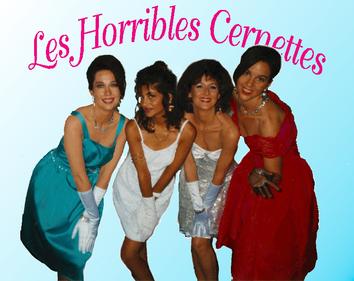
1992: A picture of Les Horribles Cernettes was taken, which became the first ever photo posted to the World Wide Web.
July 19
1834: French painter, sculptor, and illustrator Edgar Degas born.
1868: American “singer” and educator Florence Foster Jenkins born.
1947: English singer-songwriter and guitarist (Queen) and astrophysicist Brian May born.
1977: The world’s first Global Positioning System (GPS) signal was transmitted from Navigation Technology Satellite 2 (NTS-2) and received at Rockwell Collins in Cedar Rapids, Iowa, at 12:41 a.m. Eastern time (ET).
1983: The first three-dimensional reconstruction of a human head in a CT is published.
July 20
1822: Give peas a chance—Austro-German monk, geneticist and botanist Gregor Mendel born.
1903: The Ford Motor Company ships its first automobile.
1938:– The United States Department of Justice files suit in New York City against the motion picture industry charging violations of the Sherman Antitrust Act in regards to the studio system. The case would eventually result in a break-up of the industry in 1948.
1969: Apollo 11’s crew successfully makes the first manned landing on the Moon in the Sea of Tranquility. Americans Neil Armstrong and Buzz Aldrin become the first humans to walk on the Moon six and a half hours later.