History of the World Net, Part 2
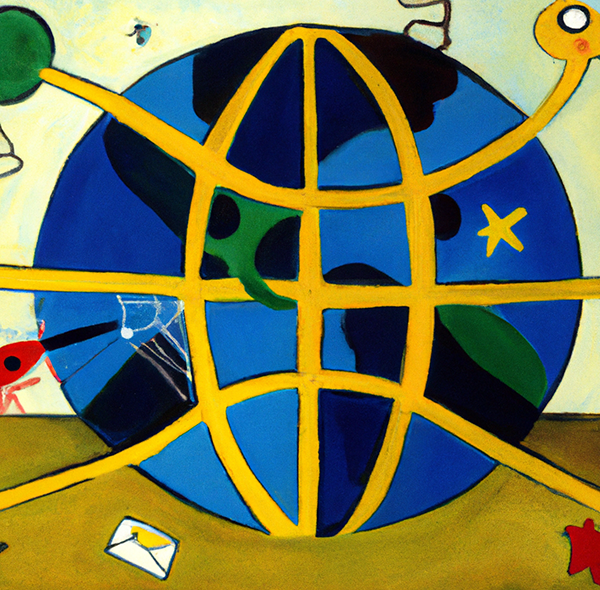
Back in April, we linked to Part 1 of Ars Technica’s three-part “History of the Internet,” which ended with the cliffhanger “The world was changed forever by the actions of one man. He was a mild-mannered computer scientist, born in England and working for a physics research institute in Switzerland.” Now, part 2 is up, and we can reveal that the individual in question was Tim Berners-Lee, “inventor” of what came to be called the World Wide Web.
But first we have to back up 30 years. In 1965, information technology pioneer Ted Nelson wrote a paper in which he wrote: “Let me introduce the word ‘hypertext’ to mean a body of written or pictorial material interconnected in such a complex way that it could not conveniently be presented or represented on paper.” The paper was part of an ongoing project he called “Project Xanadu,” named after the poem by Samuel Taylor Coleridge or perhaps the stately home of Charles Foster Kane in Orson Welles’ Citizen Kane.
Over the decades, the Internet grew, but one basic problem remained into the 1990s: despite the fact that there were tons of stuff on the ’net, it was impossible to find anything. But people came up with potential solutions. Remember “Archie”?
Alan Emtage at McGill University in Montreal wrote a tool called Archie. It searched a list of public file transfer protocol (FTP) servers. You still had to know the file name you were looking for, but Archie would let you download it no matter what server it was on.
Or “Gopher”?
An improved search engine was Gopher, written by a team headed by Mark McCahill at the University of Minnesota. It used a text-based menu system so that users didn’t have to remember file names or locations. Gopher servers could display a customized collection of links inside nested menus, and they integrated with other services like Archie and Veronica to help users search for more resources.
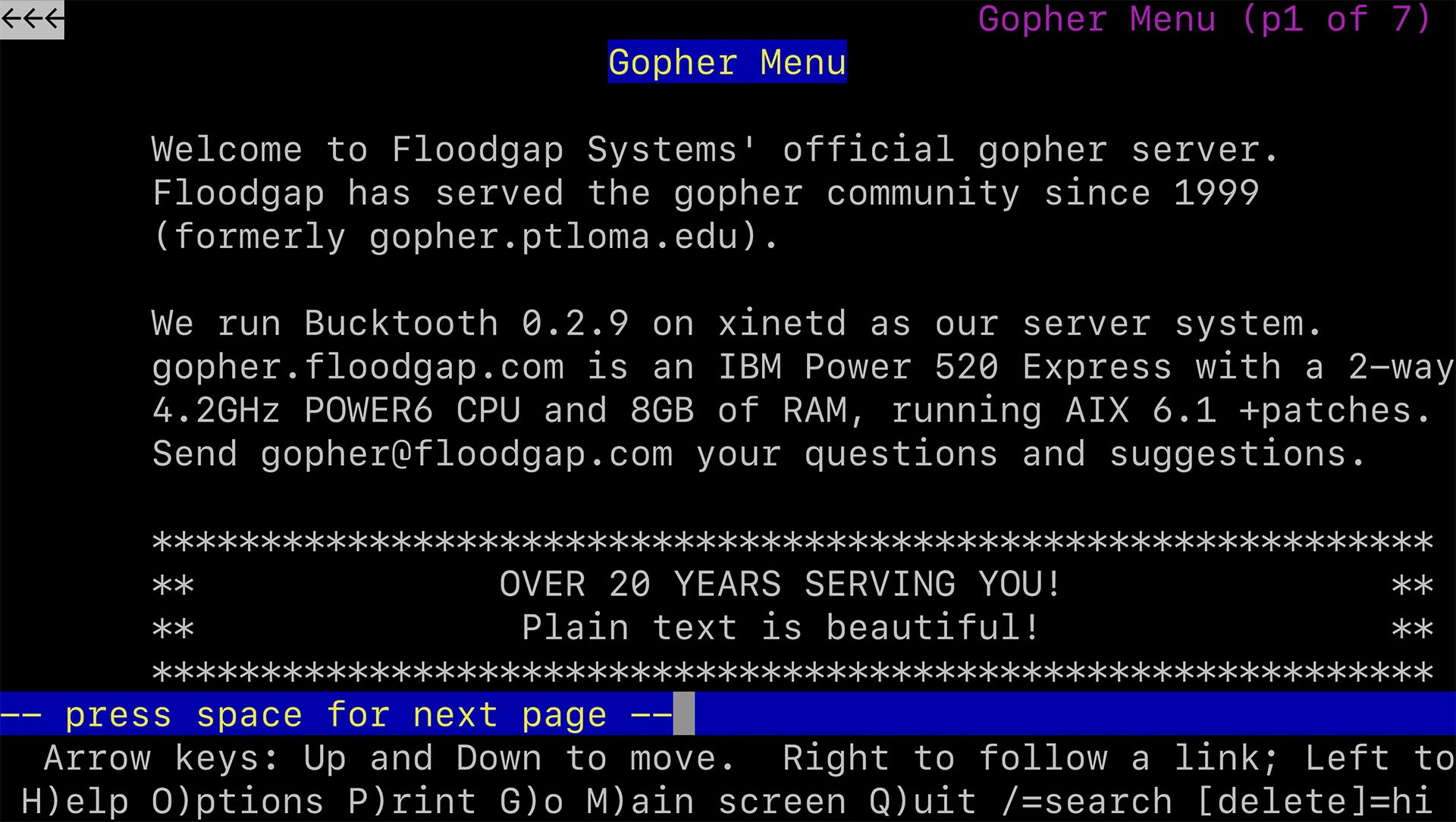
Well, that certainly was not going to capture the public’s imagination!
What led to the next step in the evolution of the Internet was Nelson’s concept: hypertext.
Bill Atkinson, a member of the original Macintosh development team, released HyperCard in 1987. It used the Mac’s graphical interface to let anyone develop “stacks,” collections of text, graphics, and sounds that could be connected together with clickable links. There was no networking, but stacks could be shared with other users by sending the files on a floppy disk.
Atkinson, by the way, passed away earlier this week. Some of us used HyperCard at the time and it was pretty cool. The idea of hypertext was all the rage in the late 1980s and in March 1989, CERN fellow Tim Berners-Lee wrote a proposal for a hypertext environment.
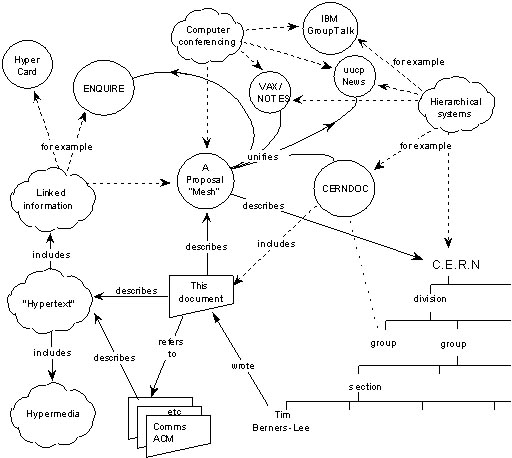
From so simple a beginning…
Initially called “Mesh,” Berners-Lee’s basic raison d’être was to make file-sharing between and among different computers and operating systems seamless.
Berners-Lee called his application “WorldWideWeb.” The software consisted of a server, which delivered pages of text over a new protocol called “Hypertext Transport Protocol,” or HTTP, and a browser that rendered the text. The browser translated markup code like “h1” to indicate a larger header font or “a” to indicate a link. There was also a graphical webpage editor, but it didn’t work very well and was abandoned.
The very first website was published on December 20, 1990. The only problem was that it had been created on a NeXT computer (NeXT was the company Steve Jobs founded when he was ousted from Apple) and it could only be read by another NeXT computer.
Back during the 2000 Presidential campaign, the media had a feeding frenzy repeating the spurious claim that “Al Gore invented the Internet.” Gore never actually said such a thing, but he did create the High Performance Computing Act, also known as the Gore Bill, which was signed into law on December 9, 1991, by President George H.W. Bush. The bill, among other things, funded the National Center for Supercomputing Applications (NCSA)—a hotbed of computer research where a lot of work was done by grad students.
One of those students was Marc Andreessen, who joined NCSA as a part-time programmer for $6.85 an hour. Andreessen was fascinated by the World Wide Web, especially browsers. A new browser for Unix computers, ViolaWWW, was making the rounds at NCSA. No longer confined to the NeXT workstation, the web had caught the attention of the Unix community. But that community was still too small for Andreessen.
Working on the Unix platform, Andreessen and colleagues released version 0.5 of what they called “NCSA X Mosaic,” which worked with Unix’s X Window System and, shortly, Macintosh and Windows computers. Mosaic would become Netscape, and we were off to the races.
Anyway, click through to read the whole story. Part 2 ends with the browser wars, Bill Gates coining the phrase “information superhighway,” the dot-com bubble, and the inevitable crash.
The exuberance couldn’t last forever. The NASDAQ peaked at 8,843.87 in February 2000 and started to go down. In one month, it lost 34 percent of its value, and by August 2001, it was down to 3,253.38. Web companies laid off employees or went out of business completely. The party was over.
No more pets.com. Some of us recall the mania over dot.com portals like Noosh.com specific to the printing industry. And one enduring memory is a Seybold Seminars Boston in 1999 where a company called Sprockets.com hired the then-retired B-52s to play at a press event (which was awesome), and Fred Schneider kept repeatedly saying (in his inimitable style) “What’s a Sprocket?!” We never really knew and we suspect the VC money ran out and the company went under before the concert ended.
But while some companies quietly celebrated the end of the whole Internet thing, others would rise from the ashes of the dot-com collapse. That’s the subject of our third and final article.
Poster Children
Founded in 1879, Nashville’s Hatch Show Print is the “oldest continuously running print shop.” A letterpress-based shop, they have what Boing Boing calls a “huge-format” relief press. Gotta say, we have never heard of a wide-format letterpress printer! The company is hosting an event it calls “Big Tuna” in which participants can bring in their own huge woodcut blocks (up to 96 in.)—because who among us doesn’t have a giant woodcut block hanging around?—and get them printed. Says Boing Boing:
What's cool about Hatch Show Print letterpress and relief printing? In a time of digital graphics and slick AI imagery, the old school process of ink-hits-paper has an authentic look, feel and smell. Hatch Show Print has created eye-catching posters and bold show bills since 1879 with their hand set, chunky and distressed wooden type and vintage printing blocks. The intentional imperfections from chipped type, nearly straight and spaced interchangeable blocks, and split "rainbow" fonts of bold ink colors are printed slowly on old presses. No phony Photoshop filters.
Or A-fking-I, for that matter. For this event, Hatch is partnering with Big Ink, which “helps artists tackle large-scale woodblock printmaking through a combination of at-home carving and collaborative printing sessions.”
Big Ink's hybrid workshop model reflects post-pandemic adaptability — participants learn carving techniques through online classes and work independently at home before coming together for communal printing sessions. "Big Ink is about encouraging people to carve on a grand scale and creating a community through public printing demonstrations," explains Castonguay in the workshop video.
The event takes place October 25–26 and costs $340 plus materials to print. Register by August 8th. All the details can be found at the Big Ink website.
I, Spider
Well, here’s a headline that will haunt your dreams: “‘Necrobotics’ Turns Dead Spider Corpses Into Biohybrid Robots.” From IFLScience:
The necrobots are featured in a 2022 paper published in Advanced Science, which includes videos showing how these dead wolf spider necrobots can be used. In one video, a necrobot is shown disrupting an electrical circuit; in another, it picks up an object. There's even a demonstration of a wolf spider necrobot lifting another dead spider.
And why would they do this?
Transforming a spider’s corpse into a robot involves understanding how these creatures move. Unlike animals that use muscles, spiders rely on hydraulic pressure to control their eight legs. A specialized structure called the prosoma chamber allows them to channel bodily fluids into their limbs, causing them to extend. When the fluid volume decreases, the legs retract to their natural, clawed position.
Using a needle and some superglue,
Superglue?!
the researchers created a seal in the prosoma chamber so they could effectively inject air into the spider’s limbs, causing them to inflate and extend. Reducing that air pressure then allowed the legs to close in again, creating a mechanical gripper made of biotic materials, even if they are a bit dead.
And, again, why would they do this?
the biotic mechanical grabbers were found to be quite hardy, lasting around 1,000 trials before starting to crumble. With the help of a little coating, Preston suspects they could be useful in pick-and-place tasks, such as in the assembly of microelectronics.
So wide-format printer board-loading systems could someday be based on necrobiotic spiders. That’ll help attract employees!
If you have a problem with spiders, please do not click this link.
Phone Home
If you want an example of high-quality engineering, consider the payphone. Obsolete now, it was designed to survive all sorts of adverse conditions, from bad weather, to extreme temperatures, to vandalism, to Superman changing clothes. Your iPhone would literally cry if it had to endure for 30 seconds what payphones had to endure for decades. (Well, maybe not literally.) We have reported in this space the gradual decline and obsolescence of the payphone, but via Core77, electrical engineer Patrick Schlott has an unusual hobby:
he buys secondhand payphones
There probably aren’t that many firsthand ones anymore.
rewires them, then asks local businesses in rural Vermont if they'd let him install them. His goal is to offer, for free, public telephone service. (Schlott foots the bill himself.)
Schlott’s company RandTel operates three phones in his native Vermont and one of them is even 100% solar-powered.
“It’s assumed most folks own cell phones,” writes Schlott. “Well, not everyone does, sometimes they don’t work out on dirt roads, sometimes you forget your charger, and sometimes you just really need to make a phone call. We aim to provide a valuable public service to the community while teaching people about the US telephone system that has over a century of history behind it.”
Pretty neat.
Key Lime
Are you a fan of the great 1949 film noir thriller The Third Man? And Vienna, Austria, where the movie is set? Well, when in Vienna, be sure to visit The Third Man Museum, a labor of love by über-fan Gerhard Strassgschwandtner and his partner, Karin Höfler. Via Boing Boing:
The museum spans multiple floors — 400 square meters of real estate — and not an iota of it is wasted on frivolity. Two decades of constant collecting with only two people to catalog means some items might go unrecorded. But when I spoke to him a few years ago, Strassgschwandtner estimated that the museum housed around 3,000 items associated with The Third Man and the decade after the war when Vienna was occupied by the Allies.
He has also resisted any attempt at outside funding, not wanting to relinquish any control over the museum’s operations.
There's a fire of joyful intelligence in his eyes as he talks about Anton Karas' zither (used to score the film's music) and shares tidbits about Trevor Howard, Orson Welles, Herbert Halbik, and the rest of the cast. Letters from the film's writer, Graham Greene, and director Carol Reed? He's got those, and he'll tell you all about them. Chat with Strassgschwandtner for a few minutes and you'll feel like you've made a new friend.
What? You’ve never seen The Third Man? Well, then get thee to...somewhere online that streams it, since video stores no longer exist making it harder to find classic movies. It’s worth it alone for Orson Welles’ cuckoo-clock speech which, even if historically inaccurate (Switzerland did not invent the cuckoo clock), still has a point.
No Strings Attached
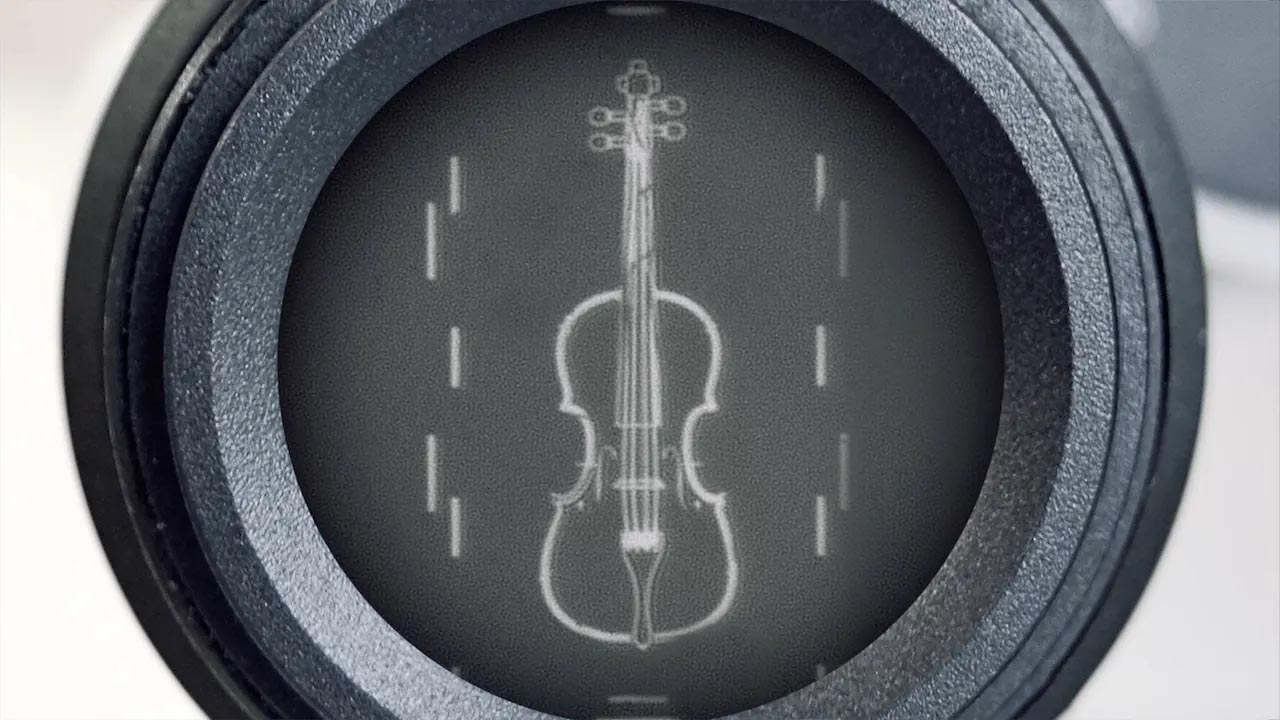
You may have heard (or been on the receiving end) of the phrase “I’m playing the world’s smallest violin,” a sarcastic term used by someone faking sympathy for a other’s problems. But, via Laughing Squid, Dr. Kelly Morrison and a team of physicists at Loughborough University in Leicestershire, England used nanotechnology—specifically nanolithography—to create the world’s smallest violin.
Measuring just 35 microns long and 13 microns wide, this miniature marvel is smaller than a human hair and smaller than many tardigrades (aka water bears).
OK, that’s a pretty random metaphor.
Crafted using the University’s state-of-the-art nanolithography system, the violin was part of a playful test project to showcase the power of this groundbreaking technology.
Loughborough University
Graphene Cells Out
Was it a good week for graphene news? It’s always a good week for graphene news! Graphene foam communicates with cells to help induce cartilage formation. From (who else?) Graphene-Info:
Researchers from Boise State University and University of Idaho have developed a technique that leverages biocompatible graphene foam to communicate with cells and help induce cartilage formation.
And why would they do this?
In this work, the researchers aimed to develop new techniques and materials that can hopefully lead to new treatments for osteoarthritis through tissue engineering. Osteoarthritis is driven by the irreversible degradation of hyaline cartilage in the joints which eventually leads to pain and disability with complete joint replacement being the standard clinical treatment. Using custom designed and 3D printed bioreactors with electrical feedthroughs, they delivered brief daily electrical impulses to cells being cultured on 3D graphene foam.
The Unbelievable Tooth
Want to make oral hygiene an agonizing experience? Sure, we all do. Well, then, behold the Feno, a “toothbrush” that supposedly brushes all your teeth simultaneously. Via Gizmodo:
Feno, the “smart electric toothbrush,” promised to take a two-minute toothbrushing routine and bring it down to 30 or even 20 seconds by swabbing each of my teeth at once. The Feno Smartbrush makes brushing faster, but in exchange it requires you to shove an entire mouthpiece in your piehole twice a day just to cut down on a total of three minutes of brushing time. If there is one thing to take away from this review, it’s that even if tech works, it doesn’t necessarily mean it’s better than what we already have.
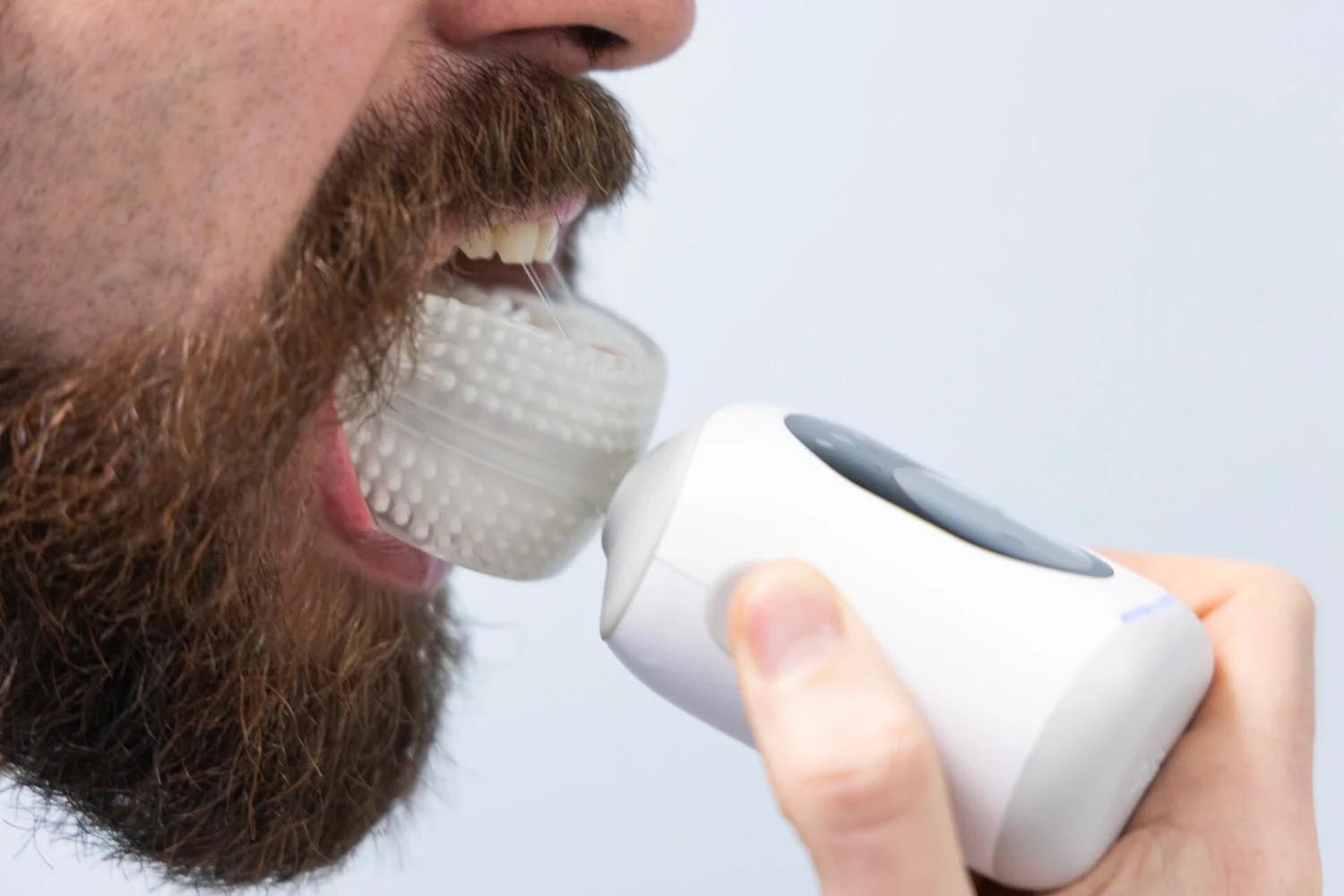
This is a device that costs $300 for the “Founder’s Edition” bundle. The company recently said it would increase the price to $400, blaming tariffs for the rising cost. As the time of this publishing, that new price hasn’t yet materialized. The box comes with three canisters of brand-specific Feno Foam toothpaste. After you run out, you’ll need to spend $30 to get an extra three canisters. Feno also recommends replacing the mouthpiece every three months, costing another $30.
It's always interesting when companies develop a product to address non-existent problems. Honestly, if we ever get to the point that we can’t spend—what?—two minutes brushing our teeth, it’s time to retire.
Rock ’Em Sock ’Em Robots
Remember that old kid’s toy, whereby two players have plastic robots box until one of them ends up conceding, saying “you knocked my block off!”? (Blimey, it still exists!) Well, now, via Gizmodo, there is such a thing as actual robot boxing. Or, specifically, kickboxing via the China Media Group World Robot Tournament.
In one corner, we have Unitree’s G1 robot, and in the other corner, we have… another Unitree G1 robot! Watch them as they perform feats of kicking and punching and wobbling around after being kicked and punched! It’s almost as exciting as human violence! Especially if you’re a nerd who’s really into engineering.

The event, outside of entertaining us with the spectacle of robot-on-robot fisticuffs, is obviously supposed to showcase the agility and humanness of Unitree’s G1 robots and China’s acumen and advancement on that front. But I’m not sure—technically speaking—there’s much to fawn over here. Kicking is cool, don’t get me wrong, but robots have been astounding us with feats of agility for a while now, and to be honest, I’ll be more impressed when I see a robot that can adeptly fold laundry.
Now there’s a competition we’d be into.
Under Pressure
Pressure washing. Those of us who own houses probably should avail ourselves of a good pressure washing service more often than we do. But once hired, they could also be put to work…slicing fruit. Via Boing Boing, TQT Hacks has a video whereby they use a 10,000-psi pressure washer to slice various kinds of fruit.
Not only does the pressure washer slice the fruit into pieces, but it does it almost as smoothly as a knife would. If you can't find a knife and need to make a fruit salad, this is a pretty good alternate fruit-chopping method.
We’re pretty certain that the average home is more likely to have a knife of some kind than a pressure washer.
If Gallagher were alive today, this would almost certainly be part of his act.
Also consider this video to be a PSA.
Many people end up in the ER every year due to pressure washer accidents. Don't end up like the apples and melon in this video, and make sure to stay away from the stream of any high pressure washer.
Tippi Point
Are you a fan of Sesame Street? The Alfred Hitchcock classic The Birds? If so, then enjoy this clever mashup of Big Bird inserted into iconic scenes from The Birds.
It’s almost as good as “Darth by Darthwest,” the mashup of Star Wars and North By Northwest.
Bringing Home the Baconator
Speaking of mashups, the latest snack food-based mashup is the “Baconator Cheez-It,” combining the Cheez-It cracker with Wendy’s “Baconator” bacon cheeseburger. Says (who else?) Food & Wine:
the two companies confirm that the savory snack — which brings a “ real cheese taste” that’s “amplified with savory Applewood smoked bacon flavor” — will be available in July. (And while Cheez-Its’ original bacon flavor is ironically meatless, it remains unclear whether this one will be vegetarian-friendly.) Nonetheless, the two brands did their best to recreate the massive burger, which first appeared on Wendy’s menus in 2007.
If you’ve found yourself on the high protein side of TikTok
What?
we have some unfortunate news for you: These collaborative crackers aren’t as protein-packed as Wendy’s original Baconator, which boasts a whopping 57 grams of protein.
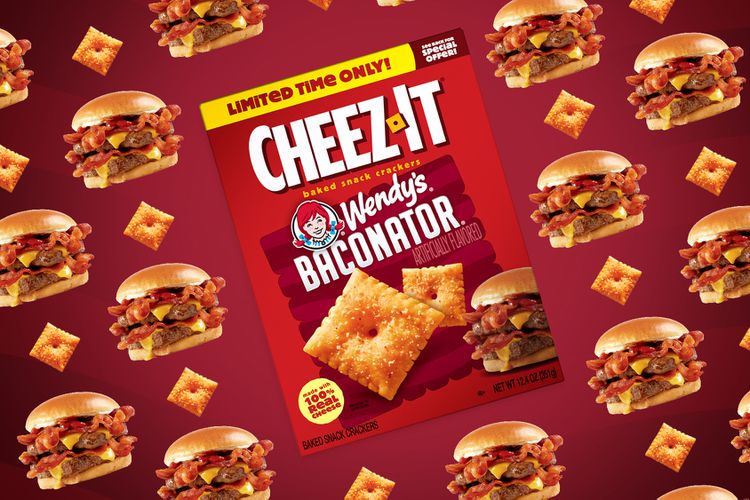
We suspect people do not order the Baconator for the protein, although we do wonder if it comes with a defibrillator. If you do want to throw some extra work your cardiologist’s way:
Cheez-Its is offering fans a flavorful alternative, though: Folks can scan the QR code on the back of the cracker box to unlock a $2 coupon for the actual bacon-topped burger.
Consider yourselves warned.
This Week in Printing, Publishing, and Media History
June 9
1523: The Parisian Faculty of Theology fines Simon de Colines for publishing the Biblical commentary Commentarii initiatorii in quatuor Evangelia by Jacques Lefèvre d’Étaples.
1870: English novelist and critic Charles Dickens dies (b. 1812).
1891: American composer and songwriter Cole Porter born.
1930: A Chicago Tribune reporter, Jake Lingle, is killed during rush hour at the Illinois Central train station by Leo Vincent Brothers, allegedly over a $100,000 gambling debt owed to Al Capone.
1934: Donald Duck makes his debut in The Wise Little Hen.
1961: American screenwriter, producer, and playwright Aaron Sorkin born, and walking and talking in no time.
1973: Secretariat wins the U.S. Triple Crown.
June 10
1793: The Jardin des Plantes museum opens in Paris. A year later, it becomes the first public zoo.
June 11
1572: English poet, playwright, and critic Ben Jonson born.
1892: The Limelight Department, one of the world’s first film studios, is officially established in Melbourne, Australia.
1910: French biologist, author, inventor, and co-developer of the aqua-lung Jacques Cousteau born.
1935: Edwin Armstrong gives the first public demonstration of FM broadcasting in the United States.
1936: The London International Surrealist Exhibition opens. Fish.
1998: Compaq Computer pays US$9 billion for Digital Equipment Corporation in the largest high-tech acquisition.
2002: Antonio Meucci is acknowledged as the first inventor of the telephone by the United States Congress.
June 12
1817: The earliest form of bicycle, the dandy horse, is driven by Karl von Drais.
1916: American director and producer Irwin Allen born.
1920: American cartoonist Dave Berg born.
1939: Shooting begins on Paramount Pictures’ Dr. Cyclops, the first horror film photographed in three-strip Technicolor.
1939: The Baseball Hall of Fame opens in Cooperstown, N.Y.
1949: English singer-songwriter, bass player, and producer John Wetton born.
1959: American singer-songwriter and musician John Linnell born.
1985: American computer programmer and co-creator of Mozilla Firefox Blake Ross born.
June 13
1865: Irish poet and playwright W. B. Yeats born.
1971: The New York Times begins publication of The Pentagon Papers.
1983: Pioneer 10 becomes the first man-made object to leave the central Solar System when it passes beyond the orbit of Neptune.
June 14
1618: Joris Veseler prints the first Dutch newspaper Courante uyt Italien, Duytslandt, &c. in Amsterdam (approximate date).
1822: Charles Babbage proposes a difference engine in a paper to the Royal Astronomical Society.
1933: Polish-American novelist and screenwriter Jerzy Kosi?ski born.
1936: English essayist, poet, playwright, and novelist G. K. Chesterton dies (b. 1874).
1951: UNIVAC I is dedicated by the U.S. Census Bureau.
1966: The Vatican announces the abolition of the Index Librorum Prohibitorum (“index of prohibited books”), which was originally instituted in 1557.
June 15
1752: Benjamin Franklin proves that lightning is electricity.
1878: To settle a bet, Eadweard Muybridge takes a series of photographs to prove that all four of a horse’s hooves leave the ground when it runs. The results become the basis of motion pictures.