Now you see it, now you don’t. Some of your workflow processes are obvious, but in many shops, there is a shadow government hiding below the surface. Let’s talk about how to find the hidden processes that may be adding risk and inefficiency to your inkjet production ecosystem.
[caption id="attachment_6921" align="aligncenter" width="459"]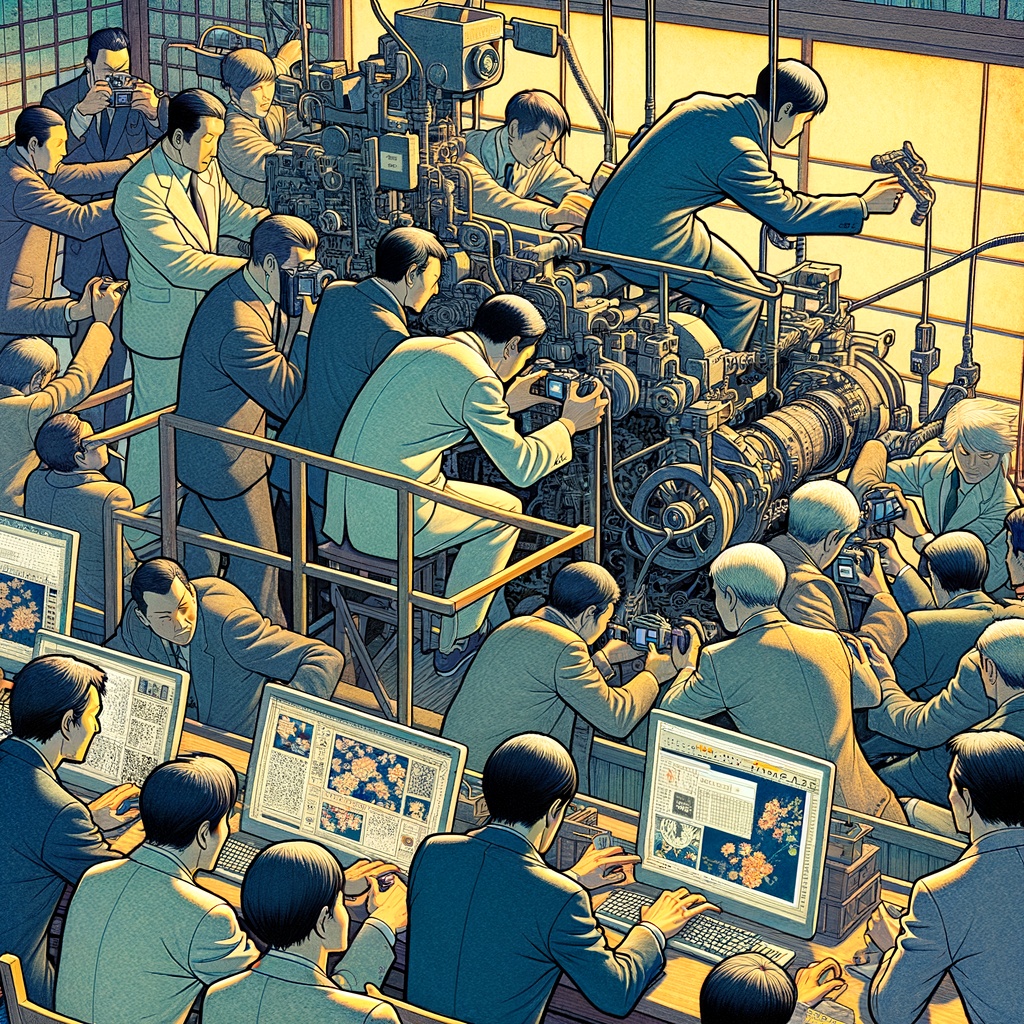 Licensed from Shutterstock – AI Generated[/caption]
There are a thousand workflow stories in the inkjet print world. Some evolved from existing print architectures as inkjet technology entered the shop, while others started with a blank page. Over time, every workflow expands and contracts to solve problems and gain efficiencies. New processes may replace old ones, but sometimes the old ones remain in play out of sight, owned by folks who just can’t let them go. And sometimes the new processes fail to address all requirements, so covert processes hide in the background filling the gaps, with their proprietors believing they are helping ensure that work gets out the door.
A tale of two workflows
It creates duplicate workflows. The workflow we see and the workflow(s) hidden in spreadsheets, sticky notes, chats over coffee, and instant messaging. To be clear, it’s not the difference between the observable elements, like how customer service operates or how orders are processed, and those that happen in the back office, like estimating and invoicing. It’s the difference between the primary workflow environment, both its automated and manual elements, and the shadow workflow.
Your primary workflow is where you have been adding automation to standardize touchpoints, optimize files, and normalize handoffs from process to process. Everyone knows the tools you use. Many may have been involved in projects to implement those tools and use them daily. Stable workflows that are well-documented and supported reduce business risk. That doesn’t mean you don’t have a shadow workflow.
See if this sounds familiar: you bring in a new tool that everyone agrees will make the workflow more efficient. It might be a Print MIS, ERP, or an end-to-end ecosystem that integrates across the front office, back office, production, and fulfillment. To be successful, the team must believe that the tool will work as advertised, and that requires the correct data capture, handoffs, and reporting.
But not everyone is a believer. Some team members are suspicious that the new tool makes mistakes or that it may not be integrated to capture the needed data correctly, or that the configurations are just not correct. Some may believe that they know better than the software. Their response is to keep their own spreadsheets, notes, and private chat groups to maintain the real information on every job.
Meeting of the Minds
How do you find these hidden information sources? Start with your regular meetings. Many shops do a morning or start of shift meeting where the critical jobs of the day are identified, and there is some horse trading to move jobs around to meet evolving deadlines. To be fair, in a well-run automated shop where the workflow is trusted, these meetings may not happen. At the most, they may be called on an ad hoc basis. When the workflow is a trusted partner, the dashboards, reports, and alerts eliminate the need to sit across a table and haggle. Data drives production.
If you have these meetings, take a hard look at the time spent and the cost of the team members participating. Then, consider what happens in these meetings and what people bring to them. Do you see spreadsheets – printed or on a screen? If you do, you have a covert, shadow workflow element.
Move beyond the meetings and do a bit of eavesdropping on breakroom conversations. Hang out during shift changes. Do a casual tour of the work areas to look for sticky notes or whiteboards with notes. You are looking for those unofficial points of information transfer. They may be online in private chatrooms, text message groups, or messaging apps.
Ask the team how they usually resolve issues and which issues typically occupy their time. Which jobs always come in broken and need care. You may hear that specific people are the problem solvers. Check with those team members to see what tools and processes they use. Look for signs that your problem solvers are also perpetuators of shadow workflows.
Ask these two questions to dig deeply under the covers:
- How many jobs come in that everyone knows will not run without some effort?
- How many jobs come in that always drag multiple change requests behind them?
Now, ask how those issues are tackled daily. It is likely that you will find a series of processes that the team knows but which bypass the documented and approved systems. These are the jobs that require attention to mitigate the covert workflows in your shop. Whether you have already executed automation projects or you are just beginning the journey, pay attention to what you can see and what you cannot see.
As you add new inkjet equipment, or as the equipment you have goes through changes in heads, ink sets, drying, and firmware, don’t forget to revisit your overt and covert workflow analysis.