Are you a printer with a strategy for handling recycling and liquid waste from print processes? Do you have a strategy for managing your supply chain and searching for raw materials that meet earth-friendly criteria? Have you built a workforce plan to add new employees and provide growth for existing employees? Have you added renewable energy to your power infrastructure or looked at your options?
If you say yes to any of these questions, your company has the building blocks for your sustainability message to the market you serve. The UN Global Compact Sustainability Goals were established to allow companies of all sizes and in all markets to build a sustainability strategy using a common language. The message from the UN Global Compact team to all industries is that if they adopt the defined language, they can become part of a global conversation that lifts their visibility. By using common terms, printers can target messaging about their strategies and work processes to their clients in ways that link to what those customers are doing in their businesses.
Start by looking at this chart. Think about your business and the elements that apply to you. You aren’t required to have a statement for every box! Find the ones that apply to you and work them into your conversations with clients and vendors. For example, if you are an inkjet printing operation that has:
- added solar panels to your roof
- a paper recycling contract to handle your production waste
- a liquids recycling contract to handle waste ink and other chemicals
- an employee management plan that includes:
- education goals
- family and medical leave programs
- a hiring plan to develop a representative workforce
Then you have ticked the boxes for seven of the goals.
[caption id="attachment_6327" align="aligncenter" width="620"]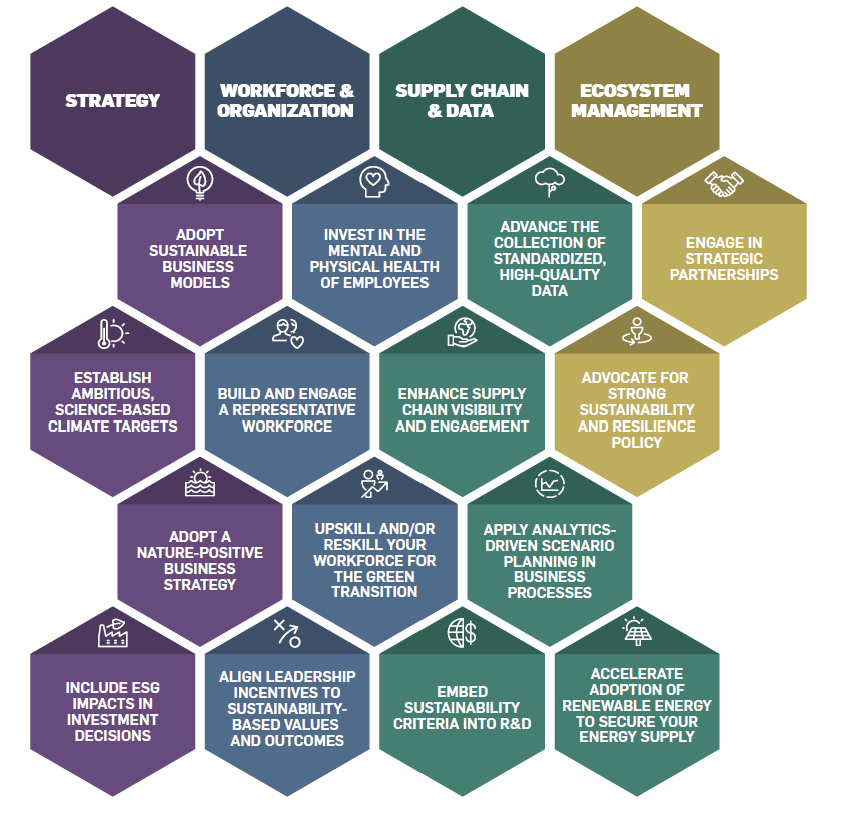 UN Global Compact Sustainable Development Goals[/caption]
Is it work to pivot your sustainability talk track toward this global conversation? It is. Not a lot of work, but it takes mindfulness to rethink how you tell your sustainability story. In discussions with printers at a recent meeting, they were surprised at how much of a sustainability framework they had in place. They were calling it different things, and many said the framework you see in the chart allowed them to build a bigger story. Those working for companies with a strong sustainability story said this framework enables them to reset how they have their conversations. Come back next time for more specific examples of how you can add sustainability components to your conversation with the market you serve.