Production Inkjet technology is undoubtedly revolutionizing print and packaging production. However, the real benefit of any technology really should be how it helps you revolutionize your business.
Mercury Printing in Rochester, N.Y., was founded in 1969 by Valerie Mannix as a typesetter and forms printer in the basement of her house. Today, 50 years later, her son John Place is the CEO and she is a valued advisor. When the business was founded, John was just a kid and really not interested in printing. Today, along with his partner and president Christian Schamberger, who joined Mercury in 1999, they have created one of the most interesting and exciting printing companies I have seen. And they have made it a practice to leverage new technologies throughout the life of the company to revolutionize their business.
 © Mercury Printing
When the business started, Mercury was running Multilith duplicators and A.B. Dick presses. The company continued to operate out of the basement for 10 years until they moved to a “really cool-looking old building,” as John describes it. At that point, his mother convinced him to join the company, they purchased a 29-inch Miele offset press and they were on their way. They started by doing a lot of black-and-white book printing, and the business growth and press purchasing continued. Mercury made the initial move to digital with toner presses around 1991, initially with a few Xerox DocuTechs. Being in Rochester, in the proximity of Xerox and Kodak, they were in a great position to become beta sites and work through any new product start-up issues. They decided to approach the educational market with the new equipment and show them what digital printing could offer them.
This new business created some great opportunities, so they purchased an HP Indigo 3200 and then a few more Indigo presses, which brought them to a variety of web and sheetfed presses, a couple of Xerox iGens, and three Kodak Nexpresses to give them the horsepower they needed to produce and compete. Ultimately, they were given an opportunity to take on even more of the educational book business. But this meant competing in in the big league and printing on 45-lb. lightweight stock. So, they needed to rethink their equipment mix again.
The introduction of production inkjet interested them, and they saw the potential it could bring to their book production business. All of the “big guys” were competing with HP T Series presses, so they wanted to find a different solution that would give them a competitive advantage. They reached out to Kodak and were invited to look at the new Prosper 5000, which uses stream technology instead of drop on demand. They felt that this would give them higher quality and the competitive edge they were looking for. In April 2012, they took delivery of their first Prosper press. It was new technology and a little rocky at first, but Mercury and Kodak stayed at it, and it became a great high-quality production book press. It has been so good for them, that recently they installed their fifth Prosper press.
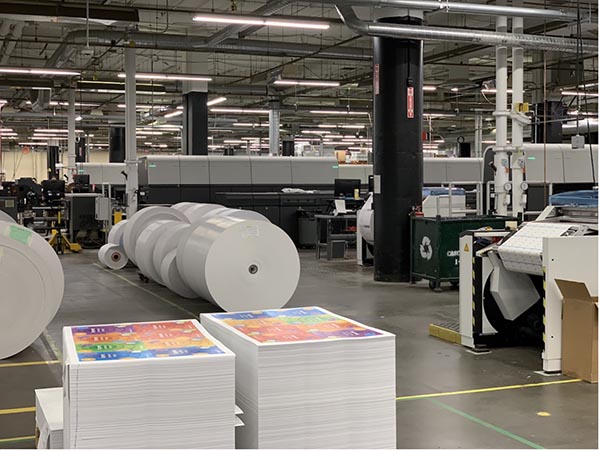
The benefits of moving from toner to production inkjet presses was quickly evident. In addition to becoming more price competitive, being able to handle 35 to 40 million pages in a month on an inkjet press compared to a million pages on a toner device further opened up the doors to more business opportunities. There are other benefits as well. Moving to production inkjet has allowed them to not only reduce the number of presses they have, but correspondingly the number of operators as well. Having a complement of the same presses helps in manning and training as they found early on with their Heidelberg offset and Prosper presses. They also both agreed that while working with new technology is always a challenge, it’s not just the equipment, but also the workflow and integrating it into the whole business mix.
 © Xerox
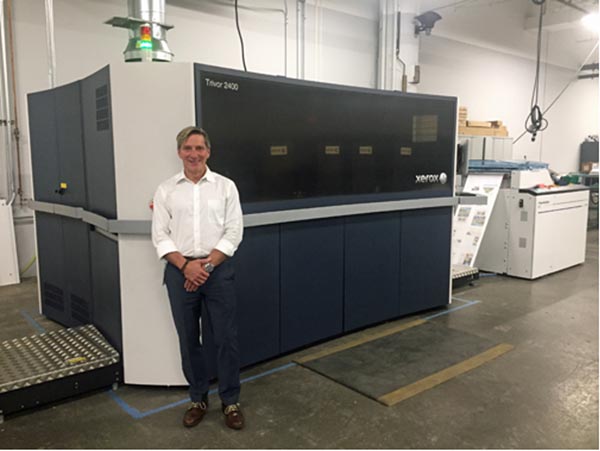
In addition to the Prospers, Mercury purchased a
Xerox Trivor press that supports their print-on-demand business, and that was selected for its footprint, quality, and speed. They also purchased and installed the first
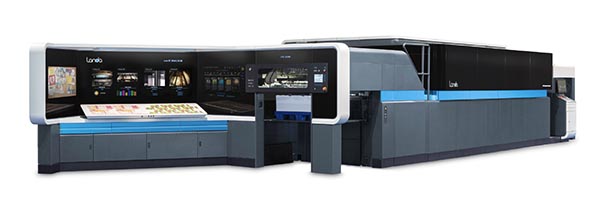
Landa S10 P (perfecting) press in the world. The Landa press is being used to further expand their offerings to the educational market with cards and boxes. They also see it as a great way to replace the toner devices and offer additional advantages for some of their offset work. All of these production inkjet devices are in addition to their Heidelberg offset presses.
 © Landa
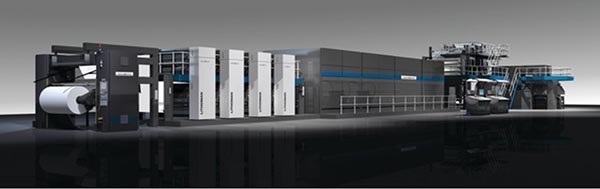
Their continued growth is not only dependent on production inkjet. In fact, they are putting in an additional Heidelberg conventional offset press and a 48-page manroland LITHOMAN web press shortly. Ultimately, while production inkjet is an exciting and “cool” technology, they continue to focus on selecting the right press for the right application at the right time, which is one of the keys to their continued success.
 © manroland Goss
Mercury Printing started in the basement and has moved six times to be able to support their continued growth. They have been in their current building for almost six years, and this latest building should offer them the ability to expand their space and continue to grow without moving again. John and Christian are strong believers in the partnership relationships they have with their press vendors. While selecting the right equipment with good productivity and operating costs is important, the vendor relationship is one of the major factors in their equipment selection process.
Editor's Note: Also see David's
interview with Mercury Printing president Christian Schamberger on WhatTheyThink.com and read his previous deep dive into Landa on Throwback Thursday.
This article originally appeared on WhatTheyThink.
Production Inkjet: Welcome to the Revolution—Front Line Report from Rochester’s Mercury Printing.
About WhatTheyThink
WhatTheyThink is the global printing industry's go-to information source with both print and digital offerings, including WhatTheyThink.com, WhatTheyThink Email Newsletters, and the WhatTheyThink magazine. Our mission is to inform, educate, and inspire the industry. We provide cogent news and analysis about trends, technologies, operations, and events in all the markets that comprise today's printing and sign industries including commercial, in-plant, mailing, finishing, sign, display, textile, industrial, finishing, labels, packaging, marketing technology, software and workflow.