Last Class Mail
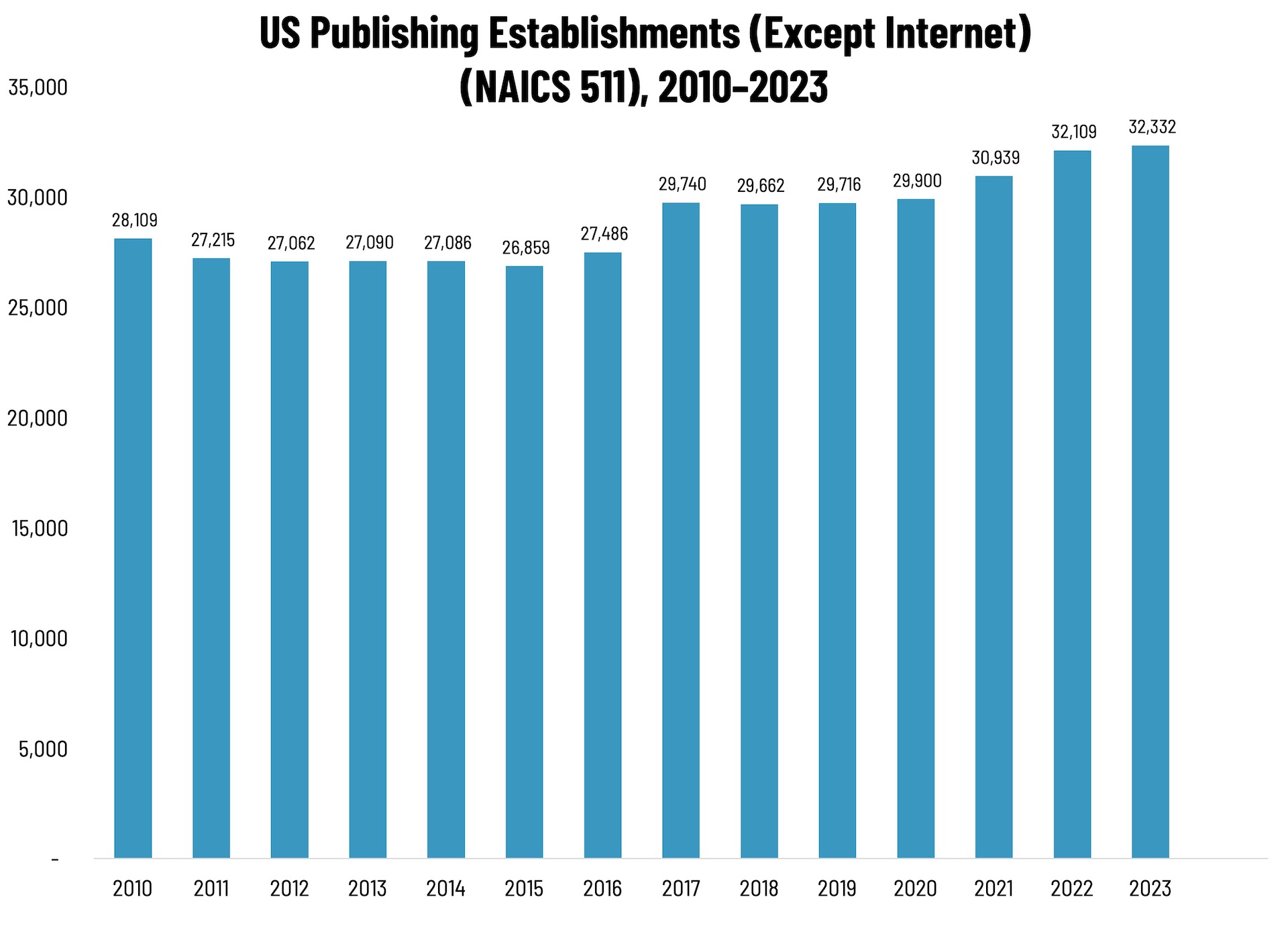
In Denmark, 2025 will mark the end of an era—a 400-year-old era, but an era nonetheless. NordPost, the country’s state-run postal service, will be discontinuing its letter delivery service, citing a 90% drop in letter volumes since 2000. Says the BBC:
Transport Minister Thomas Danielsen sought to reassure Danes, saying letters would still be sent and received as “there is a free market for both letters and parcels”.
It’s not just Denmark. All over Europe, letter volumes have dropped. Germany’s Deutsche Post said it was eliminating 8,000 jobs.
PostNord says it will switch its focus to parcel deliveries and that any postage stamps bought this year or in 2024 can be refunded for a limited period in 2026.
… There's an app for almost everything: few people use cash, and Danes even carry drivers' licences and health cards on their smartphones.
Bank statements, bills, and correspondence from local authorities are all sent electronically.
Not sure that is entirely desirable… And it’s obvious who will be the most impacted:
The decision will affect elderly people most. Although 95% of Danes use the Digital Post service, a reported 271,000 people still rely on physical mail.
As a result, letter delivery will still be available by private firms.
The introduction of a new Postal Act in 2024 opened up the letter market to competition from private firms and mail is no longer exempted from VAT, resulting in higher postage costs.
"When a letter costs 29 Danish krone (£3.35; $4.20) there will be fewer letters," PostNord Denmark's Managing Director, Kim Pedersen, told local media.
Truth of Consequences
One really good book we recall reading back in the 1990s was Edward Tenner’s 1997 book Why Things Bite Back: Technology and the Revenge of Unintended Consequences—a look at how technology and culture interact in unpredictable and not always positive ways.
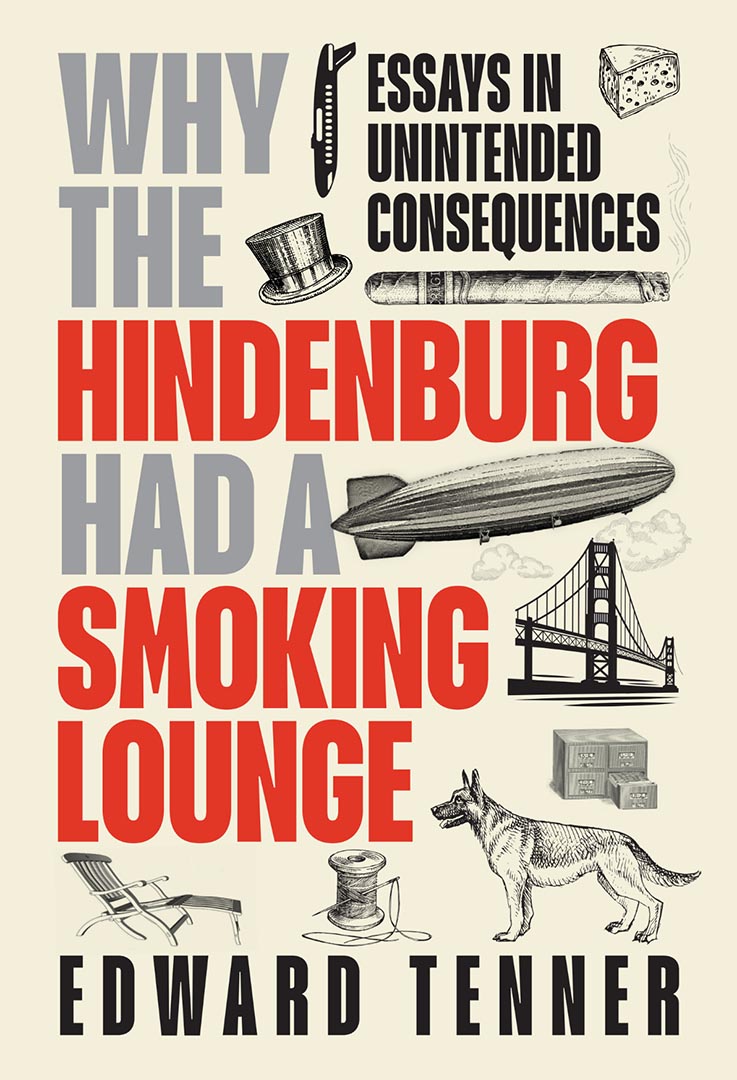
Now, via Print magazine, Tenner is back with a new book with the fantastic title of Why the Hindenburg Had a Smoking Lounge: Essays in Unintended Consequences. We’ve got to pick this one up. From the book’s official site:
How did the addition of lifeboats after the Titanic shipwreck contribute to another tragedy in Chicago harbor three years later? How efficient are wild animals as investors, and how do dog breeds become national symbols? Why have scientific breakthroughs so often originated in the study of shadows? How did the file card prepare scholarship and commerce for the rise of electronic data processing, and why did the visual metaphor of the tab survive into today’s graphic interfaces? Why have Amish artisans played an important role in manufacturing advanced technology? Why was United Shoe Machinery the Microsoft of the 1890s? Surprises like these, Edward Tenner believes, can help us deal with the technological issues that confront us now.
Print’s Steven Heller spoke with Tenner.
Some of the examples in Bite Back emerged from my experience. For instance the TEX programming language, widely used for books with equations, was not designed to drive publishers’ typesetting systems, and it was often more economical for typesetting contractors to (discretely) discard the TEX file and set conventionally with lower-paid human operators than to retain programming specialists to fix the inevitable bugs, for example in making a proper hairline rule. I also saw the growth of PUP’s computer network filled our recycling bins, and they were huge at the time, the size of commercial laundry baskets. My most frequently reprinted essay of the 1990s, included in [the latest book] Hindenburg, was “The Paradoxical Proliferation of Paper.” I enjoyed selling reprint rights to paper companies.
So why did the Hindenburg have a smoking lounge?
It was pure economics. The Zeppelins were the Concordes of the 1930s, trading the luxury of first class on the Normandie for speed at the cost of relatively spartan quarters. Few people could afford tickets, and up to half of them smoked. … We have largely forgotten the ritual aspect of smoking.
Key Ball
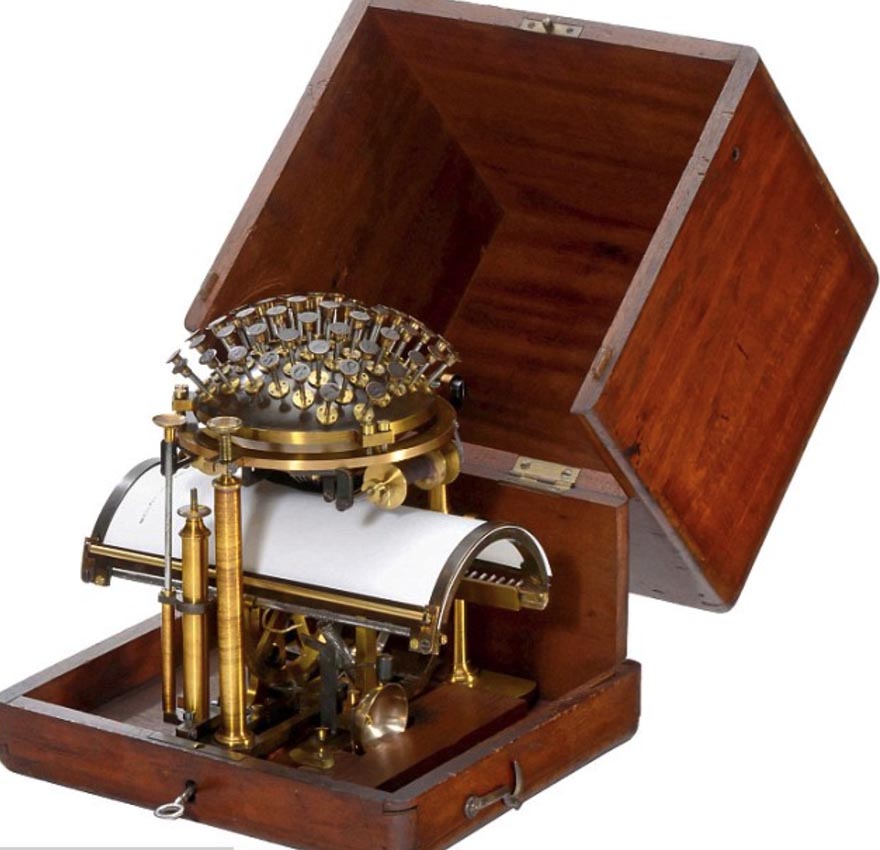
The keyboard. We all have one, we all use one, we are all slaves to (at least) one. But what was the first keyboard? Sure, our modern keyboard evolved from the typewriter. But was the original typewriter the first keyboard as well? It turns out, no. The keyboard—and its version of a typewriter (but not called that)—was invented in 1865 for people who were hard of hearing, preceding Christopher Latham Sholes by a couple of years. (It bears mentioning that, as music historian Andrew Hickey has said very often in his excellent podcast “A History of Rock Music in 500 Songs,” “there is no first anything”—variations of a typewriter-like device have been tracked back to the early 18th century, and there were probably others going back even further.) Anyway, whilst we may quibble with the phrase “first developed,” says Core 77:
the typewriter was first developed by a pastor at the Royal Institute for the Deaf-Mute in Copenhagen, around 1865. Rasmus Malling-Hansen, the Institute's principal, observed that his students could communicate in sign language more quickly than they could write. He set out to invent a machine that would allow students to "speak with their fingers," quickly getting words down on paper.
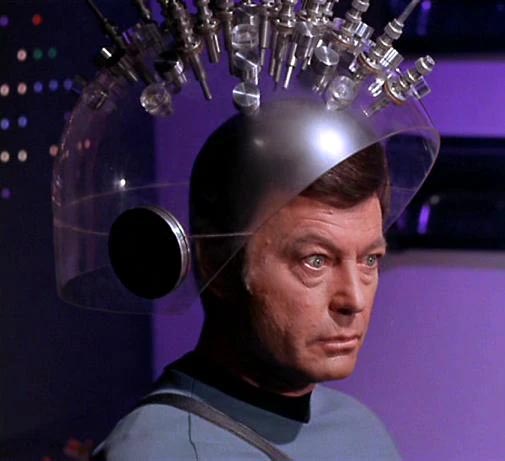
Not to be confused with The Teacher, from the Star Trek: TOS episode “Spock’s Brain”:
Anyway, not having any other machine to emulate, he had to come up with his own design, or interface. According to the Malling-Hansen Society:
"Its distinctive feature was an arrangement of 52 keys on a large brass hemisphere, causing the machine to resemble a giant pin cushion…. Malling-Hansen made experiments with a model of his writing ball made out of porcelain. He tried out different placements of the letters on the keys, to work out the placement that lead to the fastest writing speed. He ended up placing the most frequently used letters to be touched by the fastest writing fingers, and also placed most of the vocals to the left and the consonants to the right. This together with the short pistons which went directly through the ball, made the writing speed of the writing ball very fast."
He managed to start production on the machine—the Malling Hansen Writing Ball—in 1870—but, alas, he was beaten to the punch by our old friend Sholes.
Two years earlier in 1868, American printer Christopher Latham Sholes and inventor/lawyer Carlos S. Glidden had invented their own typewriter design. They licensed their Sholes & Glidden model, which featured the QWERTY keyboard layout we all know, to firearms manufacturer E. Remington and Sons. Their machines went into production in 1874.
Malling-Hansen was outgunned by Remington, as it were, and in the end fewer than 200 Writing Balls were ever manufactured, compared to the 5,000 typewriters Remington produced in the first four years.
Today, less than 40 Malling Hansen Writing Balls still exist, the bulk of them in museums. One of them is being auctioned off by Auction Team Breker, a German auction house. The last time they sold a Writing Ball, in 2019, it fetched $140,643.
It Is a Puzzlement
Do you like puzzles? Whether it be a good crossword, Wordle, Connections, a trivia game, a jigsaw, or even a detective novel/TV show, the love of puzzling has been in humans’ DNA since day 1. Indeed, says Discover magazine, as soon as there was a historical record, there were puzzles. Discover highlights six puzzles from the history of human civilization.
The oldest known puzzle is the Ishango Bone, which was discovered in 1950 in what is now the Democratic Republic of the Congo. Originating from the 11,000-year-old fishing village of Ishango, it’s a bone with some marks on it that seem random. Or are they?
They’re separated into three columns, each unified by what looks like a mathematical theme. One revolves around the idea of doubling numbers: A cluster of 3 lines followed by a cluster of 6, 4 followed by 8, 10 followed by two sets of 5. Another column dances around multiples of 10, the all-important core of our modern decimal system: 11, 21, 19, 9. The third column lists four numbers which, incredibly, all happen to be prime: 11, 13, 17, 19.
Coincidence? Jean de Heinzelin, the Belgian geologist who found the bone, thought not.
In his view, these marks represented “an arithmetical game of some sort,” and one that would have been surprisingly advanced for the Paleolithic period. If he was correct, popular mathematics writer Dominic Olivastro notes in his book Ancient Puzzles, “this is certainly the most ancient puzzle.”
Greek scientist Archimedes is believed to have invented the Stomachion, which sounds like a kind of ab workout device, but was a highly complicated tangram (a puzzle “made up of seven polygons that together form a square and can also be arranged into all sorts of shapes, from birds to houses to sailboats”).
With twice the number of geometric figures, it could be scrambled and reassembled into more complex shapes, like intricate gladiators and warships and elephants.
Alpha Males (and Females)
Well, Millennials, your time has come. Gen Z? Step aside. Here comes Generation Alpha, defined as those born between the early 2010s and the mid-2020s. So the oldest are tweens, maybe early teens. What do we know about them so far? According to Print magazine, they apparently love packaging.
Where previous generations saw the pack as a mere vessel and marketers often relegated it to only an afterthought, Gen Alpha engages with it as part of the product experience itself. It’s about performance, a shareable moment, and a key factor in their purchasing decisions. Their expectations of packaging are so much more heightened. So, what can we learn from this generation’s clear passion for packaging?
Firstly, brand managers and owners need to truly appreciate Gen Alpha’s status as the digital-first generation. For Alphas, the divide between the digital and physical realms is almost non-existent. At the same time, Alphas are overall more socially aware at a young age and become consumers more quickly (according to research by GWI).
We’re so many generations older that we can recall that the last two generational cohorts were deemed “digital-first”—how many articles said of the Millennials way back when that they were the first generation never to know life before the Internet? Plus ça change, plus c’est la même chose. Anyway, continue.
This means they don’t just buy a product; they buy the experience. Every purchase is an opportunity for wider connection. They don’t necessarily aspire to North West-level influence, but they’re sharing with far flung grandparents, say, or a tight circle of friends.
Also, they’re 12. Some of us used to play in old appliance boxes when we were kids. We get weird looks and restraining orders when we try that now.
Making sure that the packaging doesn’t fall flat should always be a priority for brands no matter what age the consumer. But watching how a discerning Alpha kid interacts with packaging is a timely reminder that it’s more important than ever to consider more potential layers of engagement.
It this enthusiasm survives the teen years, then we have an enduring trend.
I Am Pointing a Gub at You
Here’s a tip: if you are going to rob a bank, practice your penmanship. From Sussex World:
Man’s handwriting was so bad Eastbourne bank staff didn’t know he was trying to rob them
Sixty-seven-year-old Alan Slattery attempted to rob three banks in Eastbourne and Hastings in the UK and attempted to rob them by handing written notes to the cashiers. But:
According to police, his first attempt was at the Nationwide Building Society in Terminus Road, Eastbourne, at 10.45am on March 18, 2021, but due to ‘poor’ handwriting, the employee was unable to read the note and Slattery left empty-handed.
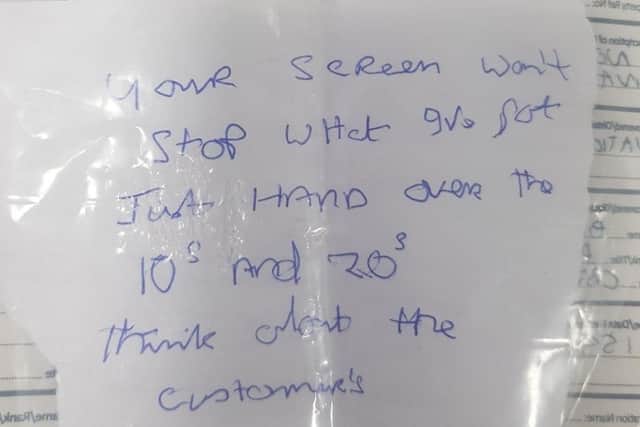
It reminds us of a classic scene from Woody Allen’s Take the Money and Run:
Time Was…
If you’ve got the time, be sure to check out this interesting documentary about timekeeping devices from The Historian (via Laughing Squid), from sundials, to water clocks (clepsydra), to mechanical clocks, to today’s smart watch.
The first true watches emerged in the 16th century thanks to advancements in watchmaking techniques. Early watches were often bulky and primarily worn as pendants or attached to clothing. They were luxurious items …Watches were once worn like jewelry yes they were symbols of status and wealth.
…The early 20th century brought us significant shift in watch design. The wrist watch, originally considered feminine, gained popularity among men during World War I for their practicality soldiers found it easier to check time on their wrists than to dig into pockets for a pocket watches.
Wristwatches fell out of fashion after the advent of the smartphone—why wear a watch when you can just check your phone? But that did not last long.
Today we stand at the forefront of the smart watch revolution ,combining traditional timekeeping with modern technology. Smart watches track fitness, monitor health, and connect to smartphones. They represent the next evolution in how we perceive time.
Iron Graphene Chef
Was it a good week for graphene news? It’s always a good week for graphene news! An AI-controlled 3D printer cooks food using graphene. From (who else?) Graphene-Info:
Researchers at the Hong Kong University of Science and Technology have used graphene to develop a new 3D printer that can make food layer by layer as it prints, using artificial intelligence (AI) to design complex edible structures. This integrated system combines precision infrared heating with AI-driven design tools to address key limitations in automated food production: maintaining food safety during printing and creating intricate shapes without requiring technical expertise.
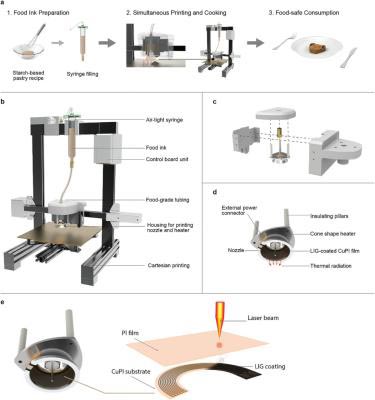
Caption from Graphene-Info: a). The step-by-step food 3D food fabrication process of the printing and in-line cooking device. b). Design features of the integrative 3D food printer. c) The print head unit has an extrusion tubing inlet, extrusion nozzle, and heater holder. d) The external shell of the infrared heater has a cone-shaped design to converge heat transmission to the targeted printing area. e) The schematic diagram of the fabrication of the LIG infrared heater. Image from: Advanced Materials
The researchers demonstrated their printer using starch-based cookie dough. As each layer of dough emerges from the printing nozzle, the infrared heater immediately cooks it, maintaining the exact printed shape while killing harmful bacteria. This immediate cooking prevents the slumping and deformation that typically occurs when printed food items wait to be baked.
Afterward, the researchers fought over who got to lick the bowl.
In Spite of All That
Have you ever heard of a “spite house”? Via Atlas Obscura, it is a building constructed solely to annoy the neighbors. One of the most famous—the Gaylordsville Spite House—is located in Connecticut and was built to be a “monument to injustice.” In the late 1950s, a Gaylordsville, Conn., junk dealer named Jan Pol and his wife adopted a baby daughter who was subsequently taken away from then by the state for unknown “bureaucratic reasons.” To get revenge, in 1961, he built what was at the time an architectural monstrosity, designed to be an eyesore among the quaint New England homes surrounding it. (Ah, those were simpler times, eh?)

Originally painted pink, the current owner is apparently in the process of restoring it to its former…glory?
Legends and rumors began to crop up—the walls are made of old bottles, a body is buried in the foundation, Pol was actually the father of the child, etc. So if you are in Gaylordsville (part of New Milford, 20 miles north of Danbury) it can be seen at the corner of South Kent and Riverview Roads.
It is not the only spite house in Connecticut. The other one is located in Mystic. According to the Mystic River Historic Society, it was built by John Fellows (ostensibly the spiteful one) in a neighborhood of seafarers and positioned in such a way so as to block the neighbor’s view of the Mystic River. No one quite knows why he felt he needed to do that, but sometimes spite has no logic.
You can also check out this gallery of eight other spite houses around the country, if you’re looking for ideas…
Mushroom Art
A couple of weeks ago, we linked to a clip of an apple tree playing the guitar, and now, via Laughing Squid, we have a cluster of plants and mushrooms with bionic arms playing several musical instruments.
They are the fruits (as it were) of the band Bionic and the Wires, a British collective that seeks to make music using the natural world. Says the band:
All plants and mushrooms create electrical bio-signals from natural processes like photosynthesis, growth and communication. Bionic and the Wires attach sensors to them to capture these pulses which are transformed by music making equipment into electricity to power robotic plant ‘arms’. The machine builds on inventions such as the MIDI Sprout device that have been around for a few years, but they’ve taken it to a new level so the plant or mushroom can physically play a live instrument. They’ve enabled the plant to control a steel handpan drum and even a violin as part of their performances. Bionic and the Wires consists of Andy Kidd on the keyboard and synthesizer and Jon Ross on the plants and the mushrooms!
Here’s a mushroom playing the violin:
Ooh, Isaac would be very stern indeed.
And a Peace Lily (not a stage name) jamming with a pianist:
Could we call this roots music?
No Snow
Parts of Japan get an awful lot of snow. Niigata, Japan, in particular, gets around 85 inches a year, on average. And they don’t rely entirely on snowplows to make the roads passable—and it’s a system they developed in the 1960s! Via Core 77, it’s a system called shosetsu.
Groundwater warmed by geothermal heat is pumped through a network of pipes below the road surface, and sprayed onto the asphalt using sprinklers:

One concern you may have is, what happens when it freezes?
Because the warmed water flows along the grade of the roads, it doesn't freeze and turn into ice—at least in Niigata, where the temperatures don't often dip below the freezing point. (Icy Hokkaido, where the system is not in use, would be a different story.)
So it has limited uses. Even so, Niigata has about 355 miles of roadways that use shosetsu. Hmm…how much to install that in one’s driveway?
Créme de la Kreme
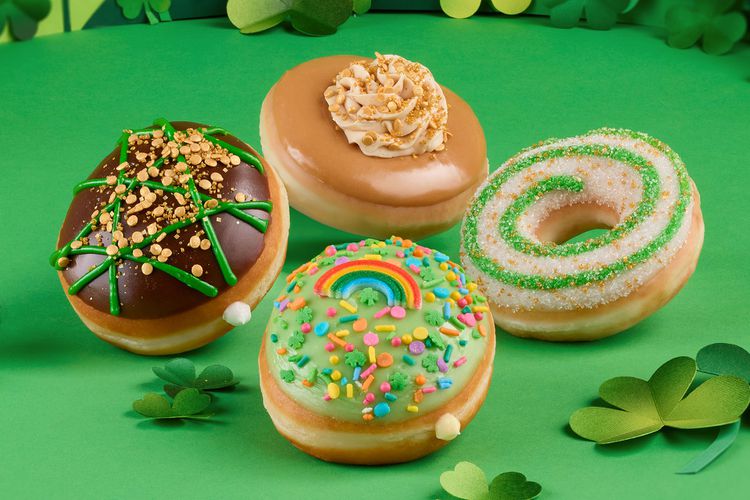
Monday is St. Patrick’s Day and for those who celebrate—and for those who celebrate with doughnuts—Krispy Kreme has unveiled its St. Patrick’s Day collection. Says (who else?) Food & Wine:
The St. Patrick’s Day Collection features the Pot of Gold doughnut, which is an Original Glazed doughnut dipped in golden caramel-flavored icing and topped with caramel-flavored buttercreme and gold coin glitter sprinkles. It also includes the Over the Rainbow doughnut, an unglazed shell doughnut filled with cake batter-flavored Kreme, dipped in green icing, and topped with shamrock rainbow sprinkles and a rainbow sugar piece. Additionally, there’s the Choco-Shenanigans doughnut, made with an unglazed shell doughnut filled with white Kreme, dipped in chocolate icing, and topped with green icing drizzles and gold coin glitter sprinkles. Finally, there’s the St. Patty’s Swirl doughnut — an Original Glazed doughnut dipped in white icing with a green icing swirl and sprinkled with white and gold sanding sugar.
Sanding sugar?

If you’re a really big fan of Krispy Kreme:
On March 17, aka St. Patrick’s Day, thousands of lucky Krispy Kreme fans across the U.S. will receive their Pot of Gold Pass, granting them access to a dozen free Original Glazed doughnuts for an entire year. They can start enjoying these winnings from April 2025 through March 2026. (The brand noted that multiple guests will be “randomly selected to win a Pot of Gold Pass each day at every participating shop.)
And participating dispensaries will also be giving out their Gold of Pot Pass.
This Week in Printing, Publishing, and Media History
March 10
1876: The first successful test of a telephone is made by Alexander Graham Bell.
1903: American author, playwright, and diplomat, United States Ambassador to Italy Clare Boothe Luce born.
March 11
222: Roman emperor Elagabalus dies (b. 203).
1702: The Daily Courant, England’s first national daily newspaper is published for the first time.
1851: The first performance of Rigoletto by Giuseppe Verdi takes place in Venice.
1952: English author and playwright Douglas Adams born. Don’t panic!
1970: American lawyer and author Erle Stanley Gardner dies (b. 1889).
1989: Sir Tim Berners-Lee submitted his proposal to CERN for an information management system which would be developed into the world wide web.
2020: The World Health Organization (WHO) declares COVID-19 virus a pandemic.
March 12
1838: English chemist and academic William Henry Perkin born. Whilst trying to synthesize artificial quinine to help battle malaria, Perkin accidentally invented the first synthetic organic dye, mauveine, made from aniline.
1858: American newspaper publisher Adolph Ochs born.
1894: Coca-Cola is bottled and sold for the first time in Vicksburg, Mississippi, by local soda fountain operator Joseph A. Biedenharn.
1922: American author and poet Jack Kerouac born.
1928: American director and playwright Edward Albee born.
March 13
1781: William Herschel discovers Uranus. (Careful with that pronunciation.)
1921: American cartoonist Al Jaffee born.
1930: The news of the discovery of Pluto is telegraphed to the Harvard College Observatory.
1943: American poet, short story writer, and novelist Stephen Vincent Benét dies (b. 1898).
March 14
1663: Otto von Guericke completes Nature of Space and the Possibility of the Void, which postulated the existence of a vacuum.
1836: English author of Mrs Beeton’s Book of Household Management Isabella Beeton born.
1874: Dutch businessman and co-founder of Philips Electronics Anton Philips born.
1879: German-American physicist, engineer, academic, and Nobel Prize laureate Albert Einstein born.
1885: The Mikado, a light opera by W. S. Gilbert and Arthur Sullivan, receives its first public performance in London.
1931: Alam Ara, India’s first talking film, is released.
1936: The first all-sound film version of Show Boat opens at Radio City Music Hall.
1994: Linux kernel version 1.0.0 is released.
2018: English physicist and author Stephen Hawking dies (b. 1942).
March 15
44 BC: Et tu, Brute? Roman general and statesman Julius Caesar dies (b. 100 BC).
1918: American author, critic, and biographer (James Joyce, Oscar Wilde) Richard Ellmann born.
1937: American short story writer, editor, and novelist H. P. Lovecraft dies (b. 1890).
March 16
1870: The first version of the overture fantasy Romeo and Juliet by Tchaikovsky receives its première performance.
1894: Jules Massenet's opera Thaïs is first performed.
1906: English-American violinist and comedian Henny Youngman born. Take his wife...please!
1926: Robert Goddard launches the first liquid-fueled rocket, at Auburn, Massachusetts.
2020: The Dow Jones Industrial Average falls by 2,997.10, the single largest point drop in history and the second-largest percentage drop ever at 12.93%, an even greater crash than Black Monday (1929).