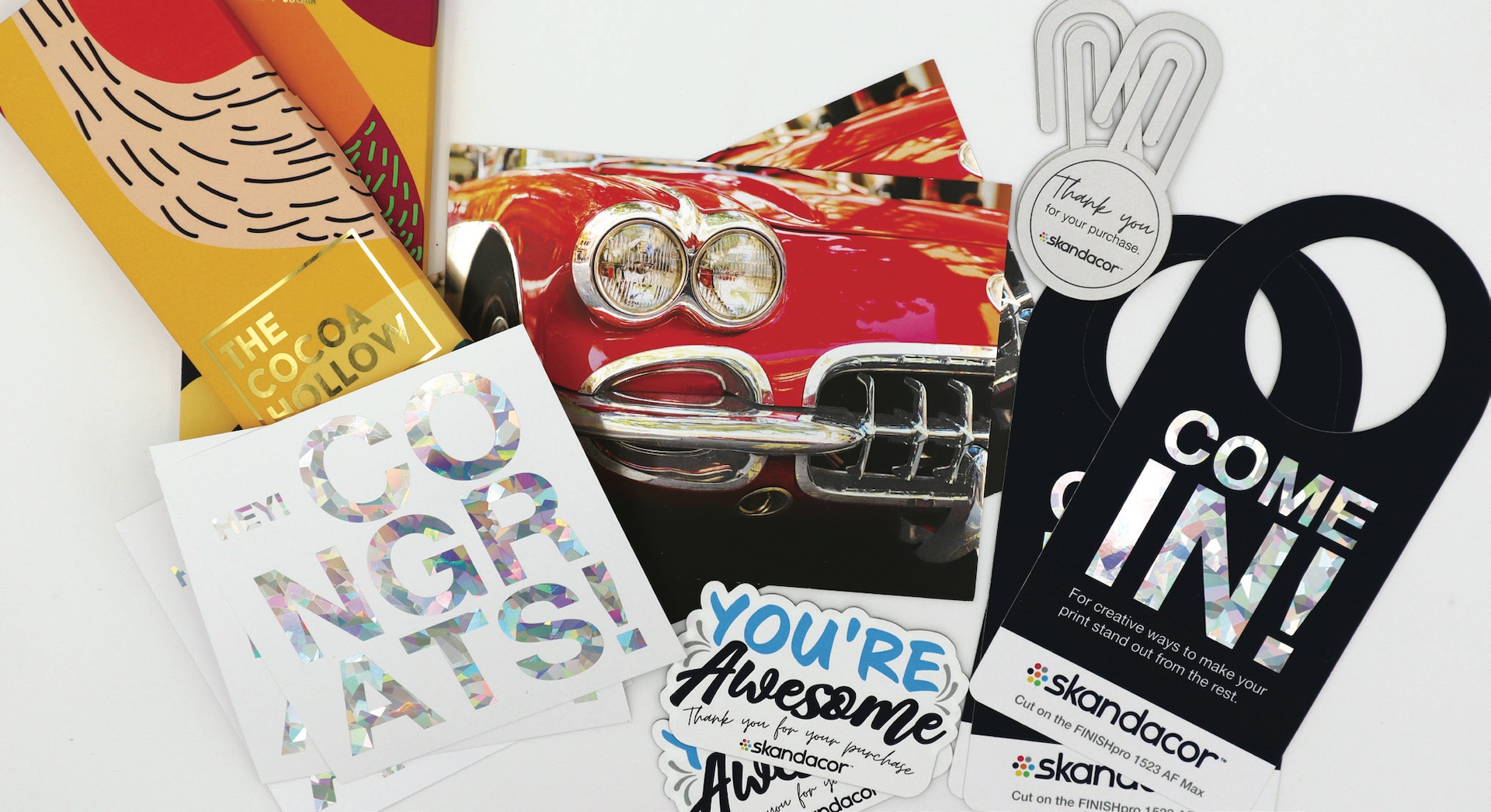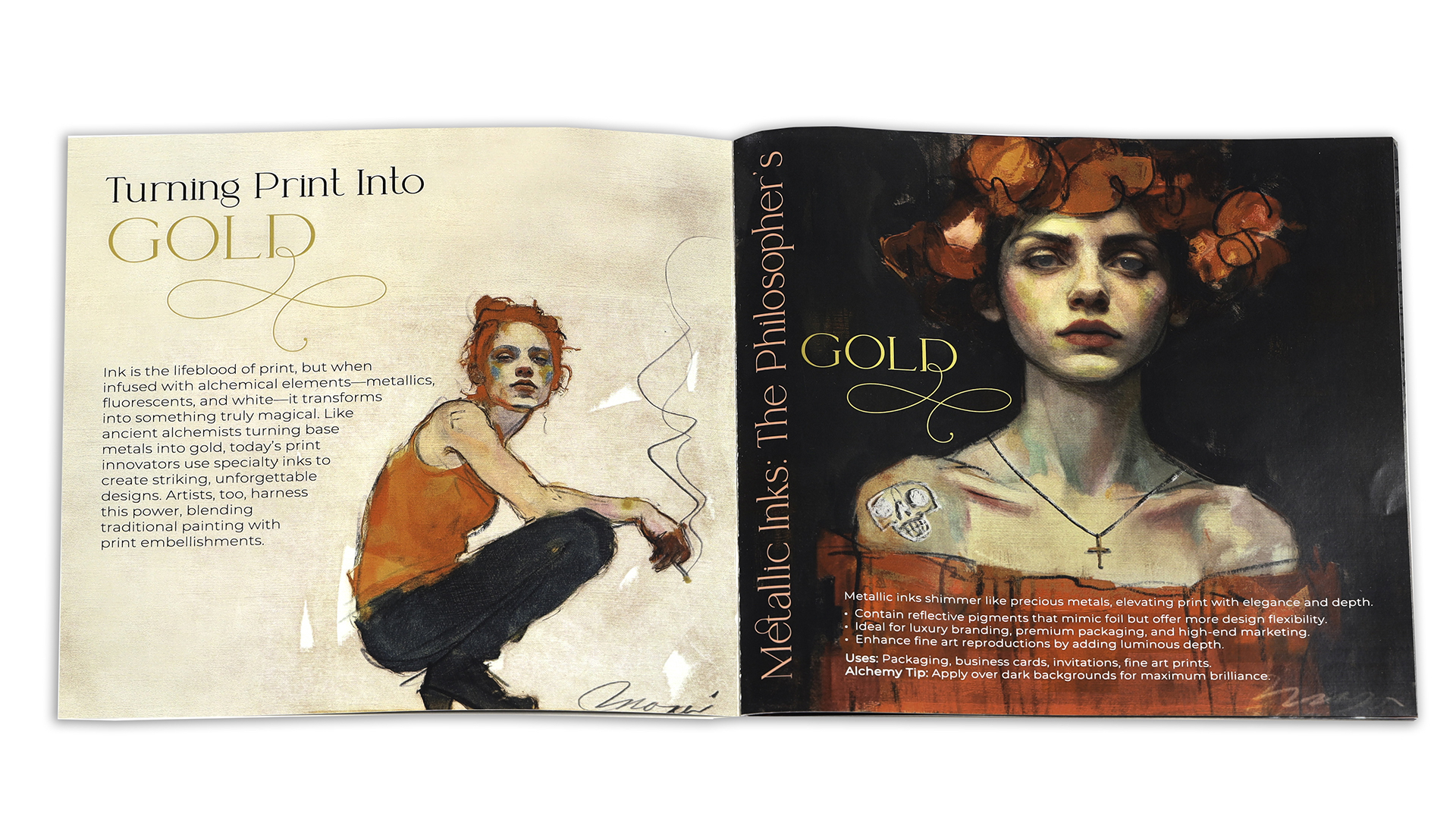

This article was previously published on WhatTheyThink, and also appears as an appendix in the annual WhatTheyThink/Taktiful Embellishment Study.
Analog Embellishments
Foil and Metallic Effects
These are effects that mainly create reflectance and shimmer, through the application of special layers. Although metallic and diffraction effects are what most people think of first when it comes to foiling, there are all sorts of effects possible, that would be difficult or impossible to procreate with normally printed inks.
As the FSEA (Foil Stamping and Embossing Association) points out in its Designers Guide:
Stamping foil is available in a wide range of colors, finishes and effects, from marble, snakeskin, imitation leather, pearls, wood grains, and geometric patterns to holograms, pigments, metallics, and subtle tints, in matte and gloss finishes.
Aluminum-based foils are also particularly suited to recycling processes, as the metal is easy to separate, unlike some foiled boards that have a PET plastic layer as well.
What’s so nice about it is that you don’t have to spend big dollars to get into the game. Though you can, if you can justify the outlay to get higher throughput and larger formats.
There are many ways to achieve foiling effects. A lot of it depends on your requirements. Do you want it on millions and millions of boxes, say for something that's going to be distributed through Walmart? Or something that will be one-off/personalized, or for ten-, a hundred-, a thousand-off?
There are different applications for different types of technologies, and different finishes for different types of applications. You need to find out what your customers really want, what you can sell them, and how you can really monetize that with high levels of value.
Traditional Analog Hot Foil Stamping
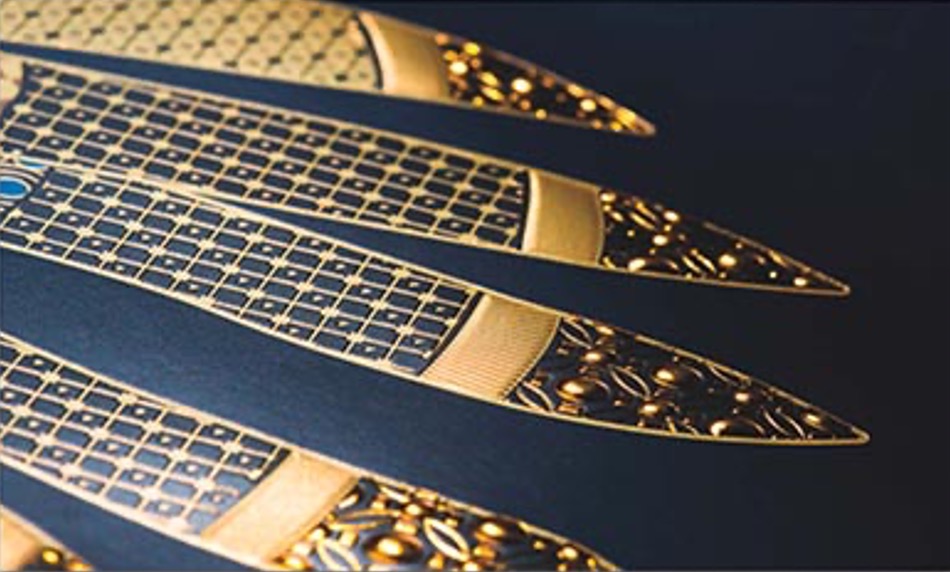
Image courtesy Flexible Packaging Magazine
Suppliers: Bobst, Brausse, Heidelberg, Gietz, Kama, Kluge, Saroglia, SPM Steuer, Therm-O-Type
Foil is really one of the original embellishments, dating back to precious materials, including gold leaf applied to illuminated manuscripts. In its analog form, it needs metal die stamps, made from either etched magnesium alloy, brass or copper, which can also give beautiful, embossed effects at the same time.
The process was mechanized and sped up with the development of hot foil stamping presses, using heated dies and ribbons of foil material on a carrier film with a heat-activated adhesive layer. Without the foil, you can use the same die stamps to get blind embossing, either for decorations or for the wonderfully functional Braille information.
Originally foil stamping machines were usually modified platen presses, typically the little Heidelberg windmill platens found pretty well everywhere, or the larger format types used for die cutting and creasing. Letterpress flatbed cylinder presses are also often still used for both foiling/embossing and cutting and creasing.
There are also some big, new-build, dedicated high-end foiling presses, such as the Bobst MasterFoil and ExpertFoil.
Cold Foil, Cast & Cure
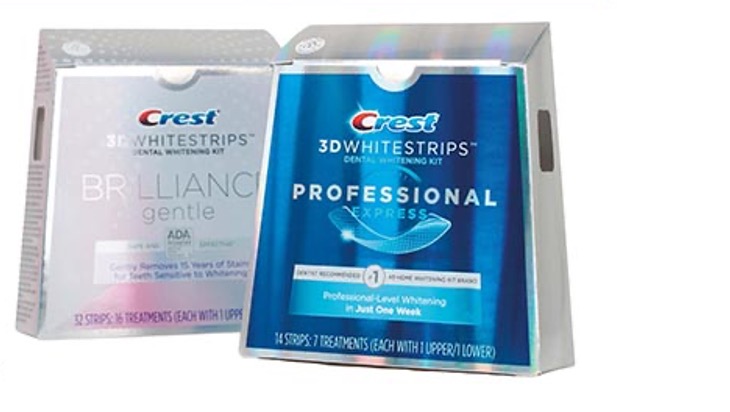
Image courtesy of Diamond Packaging
Suppliers: Compact Foilers, Eagle Systems, Heidelberg, Sakurai, Vinfoil
A comparatively recent introduction is cold foil, where an analog litho or flexo printing unit applies an adhesive fluid rather than colored ink, and a foil-carrying film is brought into contact with it. The foil peels off the carrier and adheres to the substrate. Cold foiling can be run in line with very high-speed presses if needed.
There’s no raised die and no heat, but no embossing either. It’s particularly popular for packaging, and all the big press manufacturers offer cold foiling units, either bought in or developed in-house.
If the cold foil unit is first in line and you apply a silver foil, then you can overprint it with color to get pretty much any metallic color in the palette—gold, emerald, ruby, sapphire, and all shades in between.
Some cold foilers can also create Cast and Cure, a popular effect in luxury packaging where a microtextured film is pressed into temporary contact with just-cured UV varnish, to emboss it with a diffracting surface effect.
Sakurai has a relatively new screen printing process that lays down an adhesive on which foil is applied.
Analog Metallic Inks
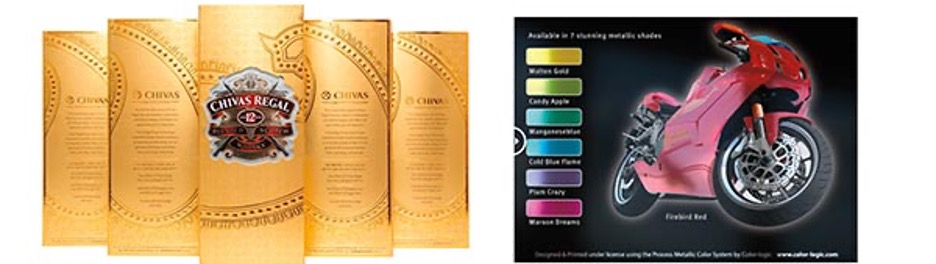
Image courtesy of Color Logic
Suppliers: Wide choice of press makers and in manufacturers
Metallic inks that give a shimmer finish are available for many analog print processes. Litho and flexo are the most common, but there are also screen process metallic inks.
Laminates
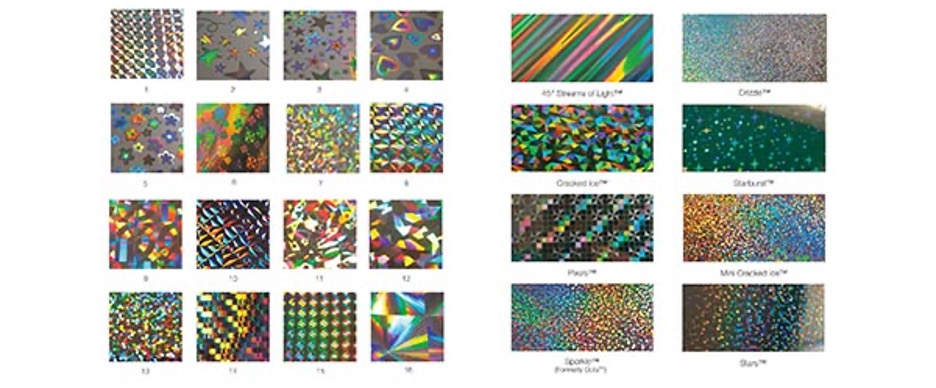
Image courtesy of Nobelus
Suppliers: Wide range of thermal laminators
Film lamination can be used to apply a variety of finishes and effects, either on top of printed substrates with some degree of transparency, show-through, or as a base layer that can be printed on by compatible inks.
Over-lamination film effects include leather, linen, grit or soft touch textures, Fresnel lens, diffraction, holographic, scuff-proof or dry erase. Base layer laminates might include metallics, soft touch, diffraction, textures, fluorescents etc.
Digital Embellishments
Digital technologies have opened up the really exciting potential of instant short run or variable-image foiling, with no waiting time or outlay for metal dies to be made.
Foil-on-Toner and Laminators
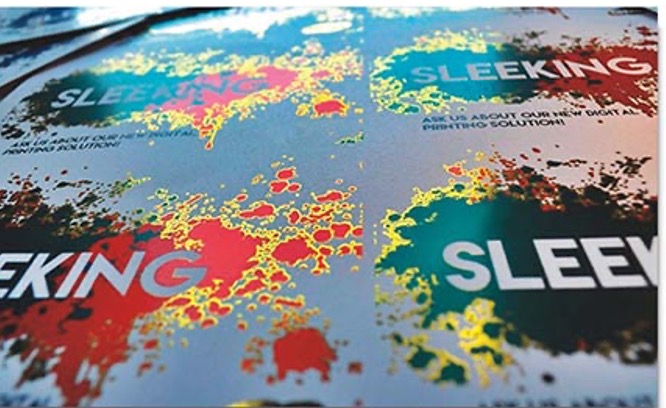
Image courtesy of Nobelus
Suppliers: Kurz, Konica Minolta, Nobelus, Foiltech, most other laminator makers. Images can be printed on most digital dry toner presses, MFPs, copiers or HP Indigos.
The first, simplest and cheapest of these digital processes date back to the 1980s, when dry toner photocopiers were becoming common. Putting a toner-printed sheet into an oven heated up the toner far more than the underlying paper, so if you then pressed a hot foil film onto it, the printed toner image activated the adhesive, and the foil transferred.
Even with a copier you could create one-offs, or with a bit more effort, personalized foiling for certificates. If you want normal print alongside the foiling, you add that with a second pass through the toner printer.
Toner transfer systems are still available at modest prices right down to entry level, though there are also some faster, larger format machines at higher prices. For instance, Kurz supplies high-end sheetfed machines called DM Smartliner to do this on dry toner, or HP ElectroInk, running at up to 3,100 SRA3 sheets per hour (max sheet size is 390x660mm), or the B2 LuxLiner running at over 2,000 sph.
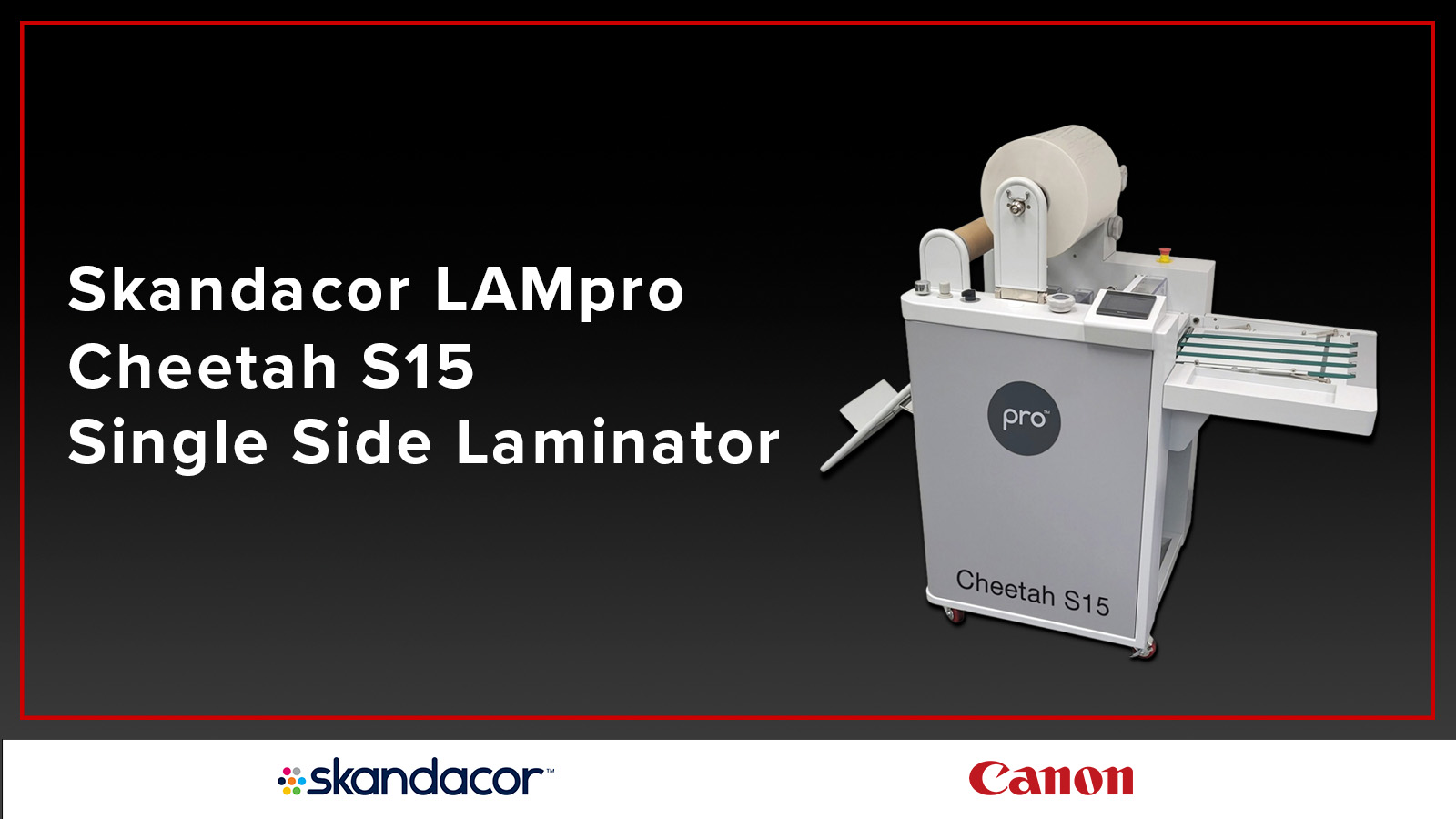
The same principle is used by foil-adapted thermal laminators. Today most laminator makes have a foil film feeding and rewinding option, with one or multiple ribbons that can be positioned across the width of the machine. The toner-printed sheets and the film ribbon are brought into contact in the heated rollers of the laminator, and the adhesive on the foil is activated and transfers on top of the toner image.
This process is sometimes called Sleeking, which is actually a trade name of Nobelus for its range of foils with adhesive that’s activated by heated toner in a thermal laminator.
Some suppliers have developed clear laminate film that can accept toner on top (check that your digital press is compatible however – a relatively low fusing temperature is normally needed). This means that you can print a sheet in full color, then apply the clear laminate as a protective coating, then run it through the printer again for the embellishment image, and finally run it through the foil-equipped laminator.
If you look in the back of your shop right now, you could probably do this toner-foiling off the bat. It’s like low-hanging fruit that lets you get a taste for the embellishment world with stuff that you probably already have.
Inkjet Spot Gloss, Foiling, and High Build
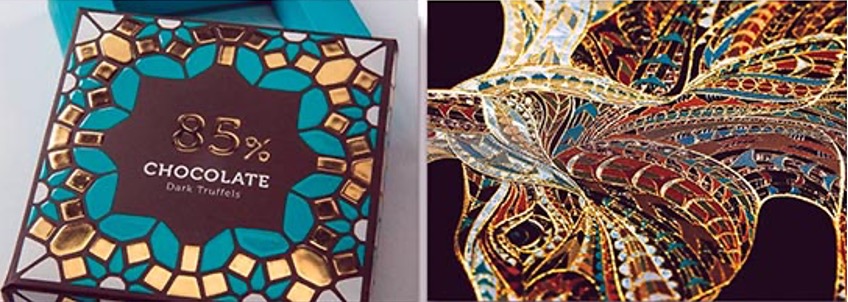
Images courtesy of (left) Scodix and (right) Konica Minolta
Suppliers: Autobond, Duplo, Konica Minolta, Kurz, MGI, Mimaki/i-Sub Digital, Scodix
Inkjet foilers are something of a cross between hot and foiling. The way the tech works is to use an inkjet head to print a UV-cured polymer varnish. This might be used as a high gloss embellishment in its own right.
Additionally, some inkjet varnishers also offer inline foiling on top. Generally they use a UV-cured polymer varnish that is then heated so the surface becomes sticky enough for foil to stick to it. So it's not necessarily hot foil or cold foil.
Advantages of the inkjet technology include being able to do variable imaging and also to do high-build 3D effects for embossing and textures, with multiple different builds on the same sheet. The result can look like embossing (and can still be foiled over), but can also create textures, or Braille to international standard heights.
The current entry level is Duplo, with the B3 DuSense. A pricier B2 model was announced at PRINTING United in 2022. Konica Minolta’s entry level is the AccurioShine 3600, which uses MGI’s JetVarnish technology. MGI has its JetVarnish range in sheet fed B3, B2, B1 and narrow web label configurations, in mid- to high-end performance and pricing brackets, plus the very high-end B1 AlphaJet that color prints then varnish/foil embellishes in the same pass.
Scodix is another powerful contender in the mid to high end of inkjet embellishment. Its current range of Ultra machines handle B2 or B1 formats, with up to nine functions possible on some configurations: foiling, “sense," spot gloss, metallic, glitter, Braille, crystal, and cast and cure. The final option is variable data supported.
Leonhard Kurz, the German foil maker, acquired Swiss-based Steinemann and sells them with its own foils under the Digital Metal (DM) brand. It makes sheet-fed inkjet foilers, including the B1 format DM MaxLiner 3D. It also has narrow web equivalents for 2D or 3D foiling.
EcoLeaf Filmless Metallic
Supplier: Actega Metal Print
EcoLeaf is a unique filmless digital metallization technology. Originally invented by Landa (which called it Nano-Metallography), the process was sold to French coatings specialist Actega, which productionized and launched it in 2020. Initially, it is available for narrow web label presses (at about $110,000), but Actega plans to produce units in future for larger format sheetfed or web presses and possibly screen printing, either inline or standalone.
An inkjet print bar applies a special UV-cured “trigger fluid” with the desired image. The substrate is then passed through the EcoLeaf application unit, where a nano-scale metal pigment suspended in water is applied by a roller. The pigment reacts with the trigger image to bond and form a very smooth surface layer, comparable to conventional hot or cold foils. The effect is silver, but can be overprinted in color. Unused pigment is removed and returned to the Eco-Leaf tank, contributing to estimated costs that are 30% lower than conventional foilers, with no film waste to dispose of. A degree of raised or tactile effect is possible.
Metallic Toners
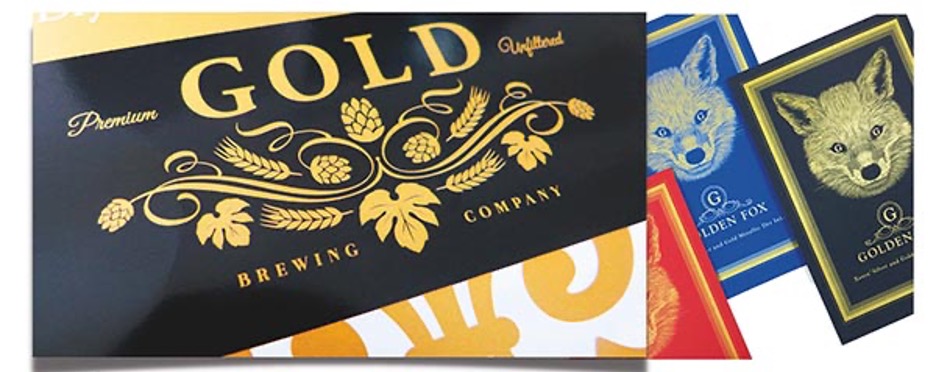
Image courtesy of Xerox
Press suppliers: Heidelberg, HP Indigo, Kodak, Ricoh, Xerox
Some dry toner digital presses have extra fifth or sixth print units that can apply either special colors, clear gloss or metallic silver (a few offer gold too). These metallic toners give a shimmer finish, rather than the high gloss mirror effect that metal foil can achieve.
Kodak pioneered this in 2008 with a fifth color unit for its NexPress, and carries this on with the current NexFinity and the relatively new Ascend (for heavyweight stocks). Kodak has a still-unique heat-expanding clear toner called Dimensional, for embossed effects.
Xerox has fifth and sometimes six units on presses from entry level MFPs up to its top iGen5. Ricoh has a fifth unit option on the Pro C7200sx (and so does the closely related Heidelberg Versafire EV).
Some of HP’s Indigo liquid toner digital presses can have up to seven color stations, with white, silver and clear as “embellishment” options alongside a wide choice of specials. Colors can be printed over the metallic silver. High builds are possible with multiple rotations within the press, but each rotation costs a click, so this is expensive.
Print Over Foiled or Laminated Media
Suppliers: HP Indigo, some low temperature fusing dry toner presses, Ricoh, Konica Minolta, Xerox, most UV-cured inkjets.
An easy way to get really attractive metallic effects without special equipment is to buy the substrate ready-foiled and print on top of that. Metalized board is common, but there are also metallized papers suited to sheet-fed presses. You could also laminate foil onto your own media.
A variation of this is soft touch, which is a color laminated board with a very matt surface that feels velvety to the touch. If you print onto this with a glossy spot varnish, raised or not, the effect is striking. Some soft touch materials are metallic, and clear varnish turns this into a mirror-bright effect.
Whatever the material, a white ink base layer image can act as an undercoat for full color printing on top, with “holes” to let the metallic or other foil effect show through, or you can print with the transparent inks onto the foil to get other color effects.
This is relatively easy for analog printing, where litho or screen process inks can be used. Digital UV-cured inkjets, especially flatbeds, work well with foil boards.
HP Indigo’s liquid toner ElectroInks can reliably print on metallized flexible media, and there’s an opaque white ink that works as a base layer.
Dry toners can be more problematic – high fuser temperatures can distort the PET plastics often used on metallized boards, and there may be an issue with conductivity and electrostatic imaging (which might be solved by experimenting with corona treatment).
Suppliers of metallized media recommend testing, and usually say that the newer low-temperature fusing presses are most likely to work.
Flood Coating
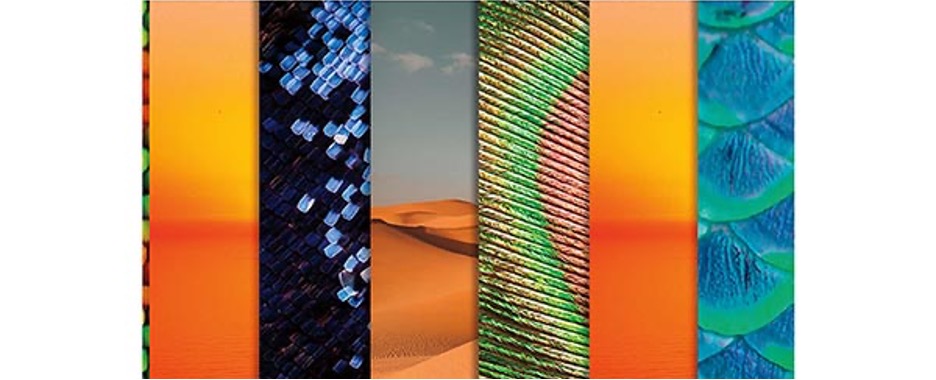
Image courtesy of Harris & Bruno
Suppliers: Duplo, Graphic Wizard, Morgana, Harris & Bruno, Tec Lighting, Kompac, Tresu
This analog process works with any other process to give an overall clear coating to a printed sheet or web. There are various reasons to do this – commonly an aqueous coating is applied that is practically invisible on the finished work, but it dries quickly and so allows work to be finished sooner. It may also protect the print against scuffing after delivery.
UV-cured polymers give a very high gloss finish that is also protective, so this is popular for book and magazine covers. Embellishment is possible too - texture rollers can be built into varnishing units to give tactile finishes such as canvass or linen.
Doming
Suppliers: Chemline, Epoxies Etc, HB Fuller, Logo3Doming
This is a labor-intensive manual process that applies liquid polymer resin from a syringe or pipette over a defined shape (typically a decal sticker or badge or phone case). Surface tension causes the viscous resin to build up a “dome effect” rather than overflow. Two-part curing or UV/heat hardens it into an attractive clear raised lens over the print item.
There are some suppliers of pre-formed dome shapes that can be applied to matching printed shapes, though getting the alignment precisely right might be tricky.