WhatTheyThink

Premium Commentary & Analysis

drupa Preview: Re-Automating Automation—The Next Wave

On the 20th anniversary of Enfocus PitStop Server, one of the earliest of the automated workflow tools, there is a broader movement to bring automation tools to the next level in order to support the new business and production requirements of today and tomorrow.

Tuesday, March 03, 2020

I have been designing and implementing production workflows since the beginning of process digitization in the late 1980s. Although back then it was more centered around proprietary solutions, when the mainstream adoption of PDF as the de facto exchange format started to take hold in the mid 1990s, unique workflow solution tools started to emerge that could provide process automation in an increasingly disparate and agnostic production environment. 

One of the first solutions introduced to meet those requirements was introduced exactly 20 years ago in March of 2000. That solution was Enfocus Pitstop Server, a standalone agnostic hot folder-based preflight automation application. At the time of its release, PitStop Pro 4.05, a “mostly” manual editing application hosted within Adobe Acrobat had already garnered an important role in many prepress departments, but “Server” brought PDF checking and editing to a whole new level. Server uses PitStop “profiles” to check/fix and “actions” to edit PDF files based on rules, automatically, through a “hot folder” process. Over the years, as new PitStop Pro profile and action tools were introduced, they were also available for use in Server, so it has become even more powerful over time. Fast forward to today, 20 years later, and the landscape has changed quite a bit. Automation is no longer a unique idea; it is a requirement of today’s business and production processes. 

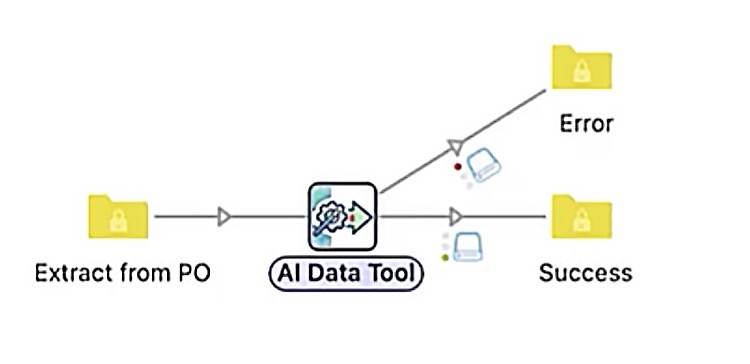
Around the same time as the release of PitStop Server, CaslonSoft was founded in Denmark, which developed CaslonFlow, an automation platform which is now known after a few acquisitions as Enfocus Switch. Switch is an agnostic rule-based pipeline automation workflow platform that has become the model for many other workflow system designs. Now Enfocus has decided that with the introduction of PitStop Server 2020, all current PitStop Server customers with an active maintenance contract will be entitled to receive a Switch Core 2020 license when it releases in June. This will bring rule-based pipeline workflows to PitStop Server, a significant upgrade from hot folders. It also adds many (but not all) of the Switch functions, including browser-based job tracking and overview, automatic file receiving via FTP and email, file sorting, naming and archiving based on document variables, amongst many other features. It also provides access to the Enfocus Appstore where many unique third-party workflow tools are available for free or for licensing. This is the beginning of a longer-term transition to expand PitStop Server functionality to include new Switch capabilities when the user is ready, providing them with future-proof automation capabilities.


Continue reading your article
with a WhatTheyThink membership.

WhatTheyThink Annual Membership

Less than $4/week.

Get unlimited access to in-depth commentary and analysis covering the latest trends, emerging technologies, operational strategies, and key events across every segment of today's printing industry.

Stay informed. Stay competitive. Stay ahead.
WhatTheyThink Day Pass

$5 for 24 hours

Unlimited access to all of WhatTheyThink. Get your Day Pass

Already a member?
Sign In

About David Zwang

David Zwang travels around the globe helping companies increase their productivity, margins and market reach. He specializes in production optimization, strategic business planning, market analysis, and related services to companies in the vertical media communications market. Clients have included printers, manufacturers, retailers, publishers, premedia and US Government agencies. He can be reached at [email protected].

Recent Articles from David Zwang

Canon: Continued Production Inkjet Development and Growth

Canon: Continued Production Inkjet Development and Growth

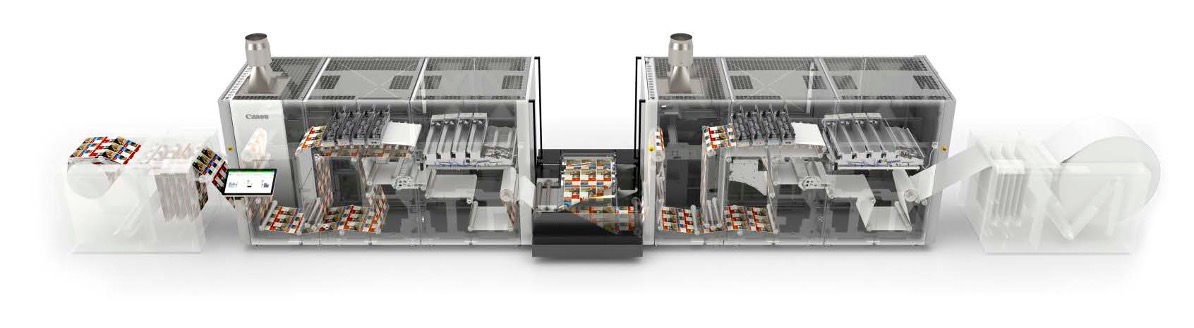
With more than 2,000 ColorStream units delivered worldwide, Canon has introduced the new 7000 series for mid-range production. To say that Canon has been broadening their portfolio of production printers is probably an understatement. There are new developments in the ProStream platform and the new iV7 B2+ cut sheet press is about to hit the street. Read More
Kodak Keeps on Growing!

Kodak Keeps on Growing!

Coming out of three consecutive quarters of year-over-year growth, Kodak has been delivering on their promise to rebuild and transform the company. In this Business Update video, David Zwang talks with Jim Continenza, Eastman Kodak Chairman and CEO. Read More

The Start-Up Chronicles: dappas—Next Level E-Commerce Packaging Intelligence

The Start-Up Chronicles: dappas—Next Level E-Commerce Packaging Intelligence

The ultimate goal of dappas is to help facilitate design and eliminate the entire prepress production, so all the converters who are working with them get a stream of work that is ready to go to press and converting. Read More
Labels and the Connected Supply Chain

Labels and the Connected Supply Chain

You can think of this very competitive connected supply chain landscape in four layers: material suppliers, label converters/printers, hardware OEMs, and software/platform players. The connected supply chain has changed from moving things hand-to-hand or through email to more full-featured automated systems. The good news is that, as a converter, after you decide where you would like to start, there are so many options for you to select from. Read More

Direct-to-Object: Challenging Labels and Tags or Offering New Opportunities?

Direct-to-Object: Challenging Labels and Tags or Offering New Opportunities?

Print is a very adaptive technology and direct-to-object (DTO) is another area where it can offer new opportunities for PSPs and product manufacturers. Today, most of the product and packaging decoration (i.e., labels and tags) that exists is handled by a label converter. It is a well-established process that probably won’t disappear. However, it can and will be challenged by inline DTO printing solutions, offering new opportunities. Read More