WhatTheyThink

Premium Commentary & Analysis

Bespoke Processes and Manufacturing: The New Reality?

In this new series, David Zwang will look at how the new requirements of print and packaging manufacturing, and how the demands and opportunities of Industry 4.0, are being facilitated by new bespoke production and workflow methods. These new methods are becoming available as a result of the evolution of current and emerging digital technologies. He will look at the requirements, technologies, methods and the educational processes necessary to bring it all together. In this first article in the series, he takes a look at the changing landscape to lay the groundwork for future discussion.

Tuesday, January 30, 2018

Bespoke is a term very familiar to our British friends. It describes the process of made-to-order goods. Initially it was a term relegated to clothing, but it has since expanded to include made-to-order goods and services in general. As is the case in many areas today, as we become a more global and interconnected society, we find local customs, practices, and languages being adopted globally. The term bespoke is one of the words that has found its way into the global lexicon. Of course, the concept of custom manufacturing is not new, and in fact print has always been custom manufacturing. However, other than transactional and certain limited applications, the available tools for print workflows and manufacturing equipment have been fairly generic, actually limiting the available levels of customization.

This is changing. The introduction of new digital print manufacturing technologies along with changing market requirements are feeding off each other to create new demands, and new tools and processes to satisfy those new demands. The new drive to Industry 4.0, in which digital technologies connect devices and requirements across disparate disciplines, is driving this even faster and further. This is creating the potential for almost innumerable opportunities for new products, services, and new bespoke production methods. It is a very exciting time for those who are looking for new ways to use print, and those who develop and supply these new bespoke technologies and processes.

The new landscape of bespoke processes affects all sorts of print applications from omnichannel marketing to new burgeoning functional printing applications and everything in between. Bespoke manufacturing already has a foothold in label and packaging production. It should come as no surprise that label production was one of the first to embrace these new opportunities for bespoke manufacturing processes, since the flexography process has a history of using hybrid printing, finishing, and embellishment technologies in a single connected production line. I recall the first time I saw the combination of flexo, gravure, silkscreen, and offset printing technologies, along with die cutting, in one line, and how fascinating it was. However, the new enhancements in flexographic printing and the addition of inkjet and digital embellishment are taking this to a whole new level.


Continue reading your article
with a WhatTheyThink membership.

WhatTheyThink Annual Membership

Less than $4/week.

Get unlimited access to in-depth commentary and analysis covering the latest trends, emerging technologies, operational strategies, and key events across every segment of today's printing industry.

Stay informed. Stay competitive. Stay ahead.
WhatTheyThink Day Pass

$5 for 24 hours

Unlimited access to all of WhatTheyThink. Get your Day Pass

Already a member?
Sign In

About David Zwang

David Zwang travels around the globe helping companies increase their productivity, margins and market reach. He specializes in production optimization, strategic business planning, market analysis, and related services to companies in the vertical media communications market. Clients have included printers, manufacturers, retailers, publishers, premedia and US Government agencies. He can be reached at [email protected].

Recent Articles from David Zwang

Canon: Continued Production Inkjet Development and Growth

Canon: Continued Production Inkjet Development and Growth

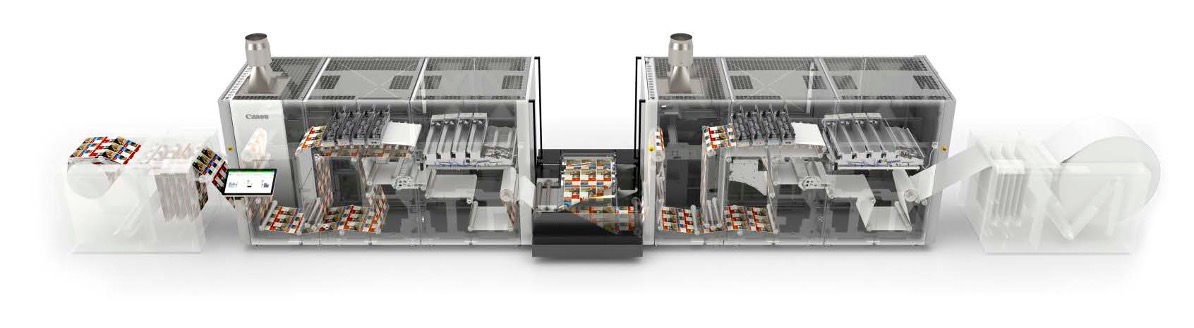
With more than 2,000 ColorStream units delivered worldwide, Canon has introduced the new 7000 series for mid-range production. To say that Canon has been broadening their portfolio of production printers is probably an understatement. There are new developments in the ProStream platform and the new iV7 B2+ cut sheet press is about to hit the street. Read More
Kodak Keeps on Growing!

Kodak Keeps on Growing!

Coming out of three consecutive quarters of year-over-year growth, Kodak has been delivering on their promise to rebuild and transform the company. In this Business Update video, David Zwang talks with Jim Continenza, Eastman Kodak Chairman and CEO. Read More

The Start-Up Chronicles: dappas—Next Level E-Commerce Packaging Intelligence

The Start-Up Chronicles: dappas—Next Level E-Commerce Packaging Intelligence

The ultimate goal of dappas is to help facilitate design and eliminate the entire prepress production, so all the converters who are working with them get a stream of work that is ready to go to press and converting. Read More
Labels and the Connected Supply Chain

Labels and the Connected Supply Chain

You can think of this very competitive connected supply chain landscape in four layers: material suppliers, label converters/printers, hardware OEMs, and software/platform players. The connected supply chain has changed from moving things hand-to-hand or through email to more full-featured automated systems. The good news is that, as a converter, after you decide where you would like to start, there are so many options for you to select from. Read More
Direct-to-Object: Challenging Labels and Tags or Offering New Opportunities?

Direct-to-Object: Challenging Labels and Tags or Offering New Opportunities?

Print is a very adaptive technology and direct-to-object (DTO) is another area where it can offer new opportunities for PSPs and product manufacturers. Today, most of the product and packaging decoration (i.e., labels and tags) that exists is handled by a label converter. It is a well-established process that probably won’t disappear. However, it can and will be challenged by inline DTO printing solutions, offering new opportunities. Read More