WhatTheyThink

Premium Commentary & Analysis

Inside SkinnyScript Technology, The Real Deal?

There has been considerable interest of late on this SkinnyScript technology.

Sunday, September 30, 2001

There has been considerable interest of late on this SkinnyScript technology. When you say that file sizes were reduced 45 times smaller, that will usually get a little attention. When you speak as if it smoothly goes into any workflow, that gets even more attention. What is it? Does it really work? Who are these people? Canada based Consolidated Magna Ventures and PODbook.com, Magna’s wholly owned subsidiary announced on September 25 the launch of their proprietary technology, SkinnyScript. SkinnyScript is an encoding process that significantly reduces the size of graphic image files used in publishing, “without compromising image quality.” How much smaller? Company executives say publishers and printers can expect much smaller file sizes, which in turn create increased throughput, lower storage requirements and faster communication. Moreover, this is all based on Adobe's PDF file format. Case Study #1: PODbook formed an alliance with Copydot Prepress, a color service bureau that specializes in preparing publications for print. Testing was extensive and took many months to complete. Upon completion, CopyDot and PODbook.com convinced the San Jose Magazine to utilize the technology for their October issue. Apparently, all went well. The October issue of San Jose Magazine, "the Magazine for Silicon Valley", is a four-color, 180 page city and regional magazine and is on stands now. Gilbert Sangari, Publisher of the magazine said this about SkinnyScript. "Imagine someone coming to you with what sounds like a publisher’s dream and wants you to be the guinea pig. Well, this wasn’t a dream but a dream come true. It took us literally half the normal time to do our October issue. Not to mention handling the files back and forth between the magazine and pre-press via e-mail, not jazz disks. You can now have your cake and eat it too." Specifically, the 180 pages of the magazine originally comprised 18 gigabytes of data, all of which were processed using SkinnyScript to yield a final product totaling only 400 megabytes, roughly 45 times smaller. The files were delivered on a single CD to the printers for Computer-to-Plate printing. The bulk of the magazine was printed at Quebecor World Vancouver. The covers were printed at Teldon International of Richmond, B.C. A True Revolutionary Product? Magna certainly is acting like they have something no one else does. The company announced a week later that they would acquire their partner, Copydot Prepress. The company signed a Letter of Intent to purchase 100% of the issued and outstanding shares of Copydot. The President of Copydot, Rick Gagner, will be appointed to Magna's Board of Directors and both he and Peter Field, V.P. Marketing for Copydot will be offered management contracts. Both companies now conclude that SkinnyScript technology is a significant advancement in this industry, making the production and delivery cycles quicker and less costly than any other competitor can offer at this time. Magna President, Robert Archer stated "The events of the last few weeks have ushered in a new era for Magna. Our CTO, Daniel Walters has done an exemplary job in developing SkinnyScript for the prepress market and the team at Copydot has demonstrated a great deal of technical ability, professionalism and business acumen throughout the testing period. Through the last few months of our relationship we came to realize that we shared a common vision for the implementation of SkinnyScript in the prepress market and we are extremely pleased to join forces with them to build a significant presence in the printing industry.'' Case Study #2 Last week, the companies announced that another publication had successfully gone to press with SkinnyScript technology. "AIRLINES'', the in-flight magazine for Westjet Airlines, is published by Zulu Publications. Quebecor World again produced most of the publication. Rick Gagner, President of Copydot stated, "this is further support for the technology and workflow, and indicates that publishers can rely on this workflow to improve their productivity and costs. As a first time client, Zulu was quick to understand the importance of this process and is reaping the rewards immediately.'' The Companies are already working on the next issue of San Jose Magazine and contracts are being pursued with other publishers. The Skinny on SkinnyScript Executives have been very “tight lipped” about the process and understandably so. Here’s what we have learned so far. The SkinnyScript name was developed by Daniel Walters, but was originally supposed to be called Skinny Postscript. However, Adobe didn't allow this because Postscript is one of their trademarks. Rick Gagner said that Adobe is fully aware of the technology and supports it’s use. Apparently, SkinnyScript is a method of filtering the PostScript stream from applications and en-coding the PostScript before it is distilled by a standard PDF distiller to reduce file size. It reduces prepress quality PDF files small enough to be e-mailed by the pages or easily download a full 8up imposition in minutes. This process would normally “take hours and eat up the bandwidth.” Executives at Copydot and PODbook.com say after the November issue of the San Jose Magazine is completed, “it will show that SkinnyScript is a viable workflow.” The companies do not really see viable competitors to their product on the horizon. Says Daniel Walters, “With this amount of size reduction and quality level I don't of any others that would compete here.” Fractal algorithms are being used by others to further reduce file size. Is SkinnyScript simply more aggressive with the process? Walters says, “Fractals and mandibles use big words. Encoding means a reduction of verbosity. No fractals please, the programming for that stuff gives me a headache. Seamless yes, as simple as any other PostScript device or software application. Remember Postscript is device independent. SkinnyScript is still the same PostScript just encoded. It's Skinny, get it?” Got it. More to come!


Continue reading your article
with a WhatTheyThink membership.

WhatTheyThink Annual Membership

Less than $4/week.

Get unlimited access to in-depth commentary and analysis covering the latest trends, emerging technologies, operational strategies, and key events across every segment of today's printing industry.

Stay informed. Stay competitive. Stay ahead.
WhatTheyThink Day Pass

$5 for 24 hours

Unlimited access to all of WhatTheyThink. Get your Day Pass

Already a member?
Sign In

About WhatTheyThink

WhatTheyThink is the global printing industry's go-to information source with both print and digital offerings, including WhatTheyThink.com, WhatTheyThink Email Newsletters, and the WhatTheyThink magazine. Our mission is to inform, educate, and inspire the industry. We provide cogent news and analysis about trends, technologies, operations, and events in all the markets that comprise today's printing and sign industries including commercial, in-plant, mailing, finishing, sign, display, textile, industrial, finishing, labels, packaging, marketing technology, software and workflow.

Recent Articles from WhatTheyThink

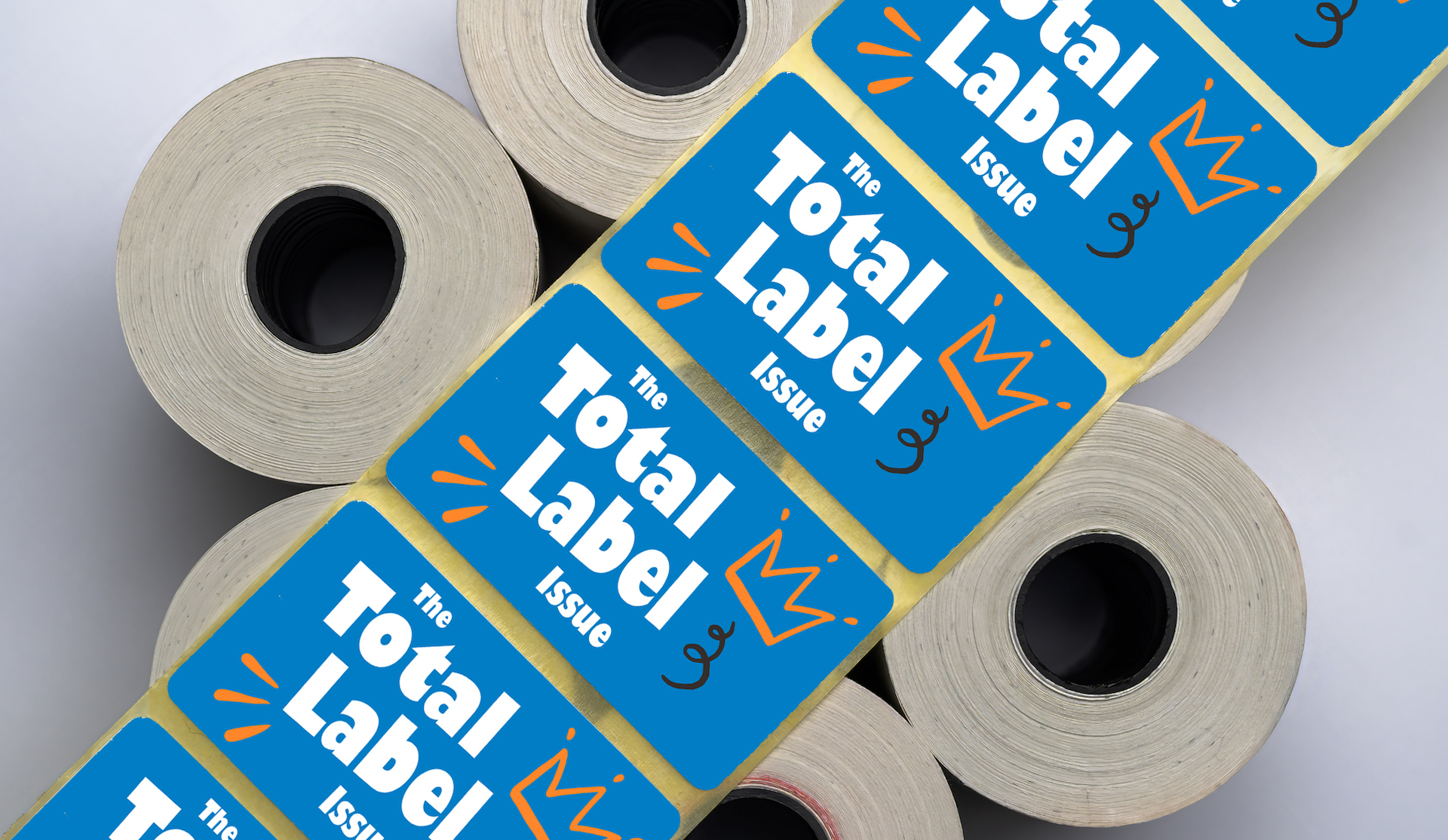
The Total Label Issue

The Total Label Issue

This issue of the WhatTheyThink Quarterly is all about labels, which are seen as a high-growth part of commercial printing, driven by e-commerce, food/beverage demand, and regulations. The market has surpassed 1.2 trillion square meters of label production volume per year, and is moving toward high-mix, low-waste production rather than only high-volume throughput. While flexo is still used for high-volume label production, digital label printing often complements it—or in some cases replaces it. But labels are about more than printing technology. Read More
The Unified Platform for Packaging Manufacturing Excellence

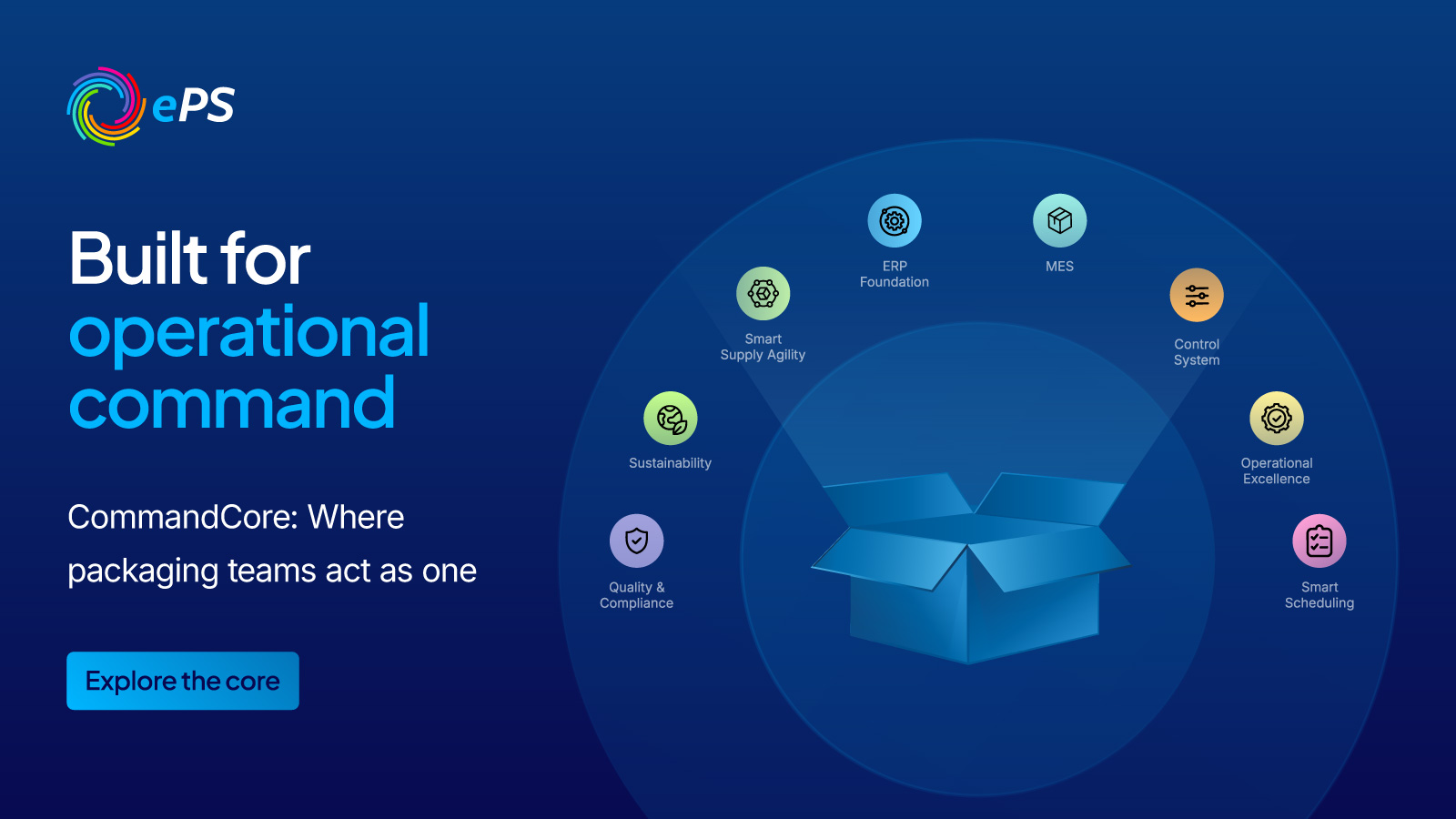
The Unified Platform for Packaging Manufacturing Excellence

Leverage 30+ years of plant-floor expertise. Trusted by 700+ packaging manufacturers globally to reduce waste, optimize scheduling, and drive digital transformation. One unified foundation. Eight packaging-native pillars. Zero fragmentation. Read More
Expand Your Opportunities with the Truepress JET 560HDX from SCREEN

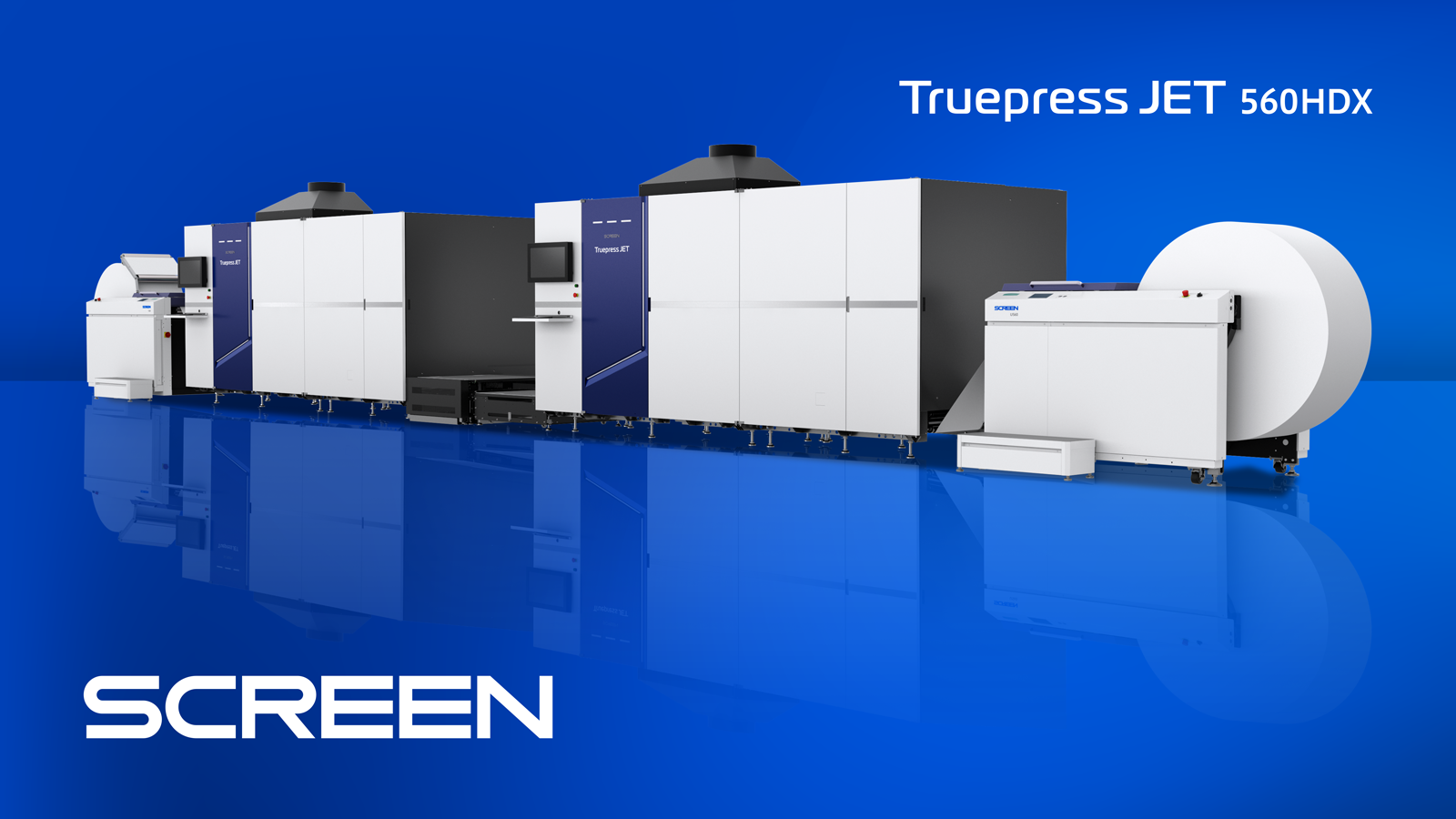
Expand Your Opportunities with the Truepress JET 560HDX from SCREEN

Commercial, direct mail, and publishing printers accustomed to producing jobs over several weeks can now print them in days with the SCREEN Truepress JET 560HDX. The press can accommodate 120 lb. coated or uncoated paper up to 560 mm wide. Read More

Around the Web: Of Water and Winners

Around the Web: Of Water and Winners

A sign-writer created the visual style of music festivals. The “2026 Milky Way Photographer of the Year” winners. AI appears to be catching on among the Amish. Sony has upgraded its wearable air conditioner. How to easily reuse produce bags. A complex digital water clock. A Nobel Prize–winning technology is able to extract water from dry air. Yes, it is possible to be allergic to water. Laser-induced graphene on Kevlar enables multifunctional structural composites. The “most desired” place in each of the 50 states. “The rise in plastic surgeons asked to create ‘AI face.’” K-pop band BTS has teamed with Oreo to release limited edition OREO x BTS Cookies. Welcome to WhatTheyThink’s weekly miscellany. Read More
Graphic Arts Employment in April Down Overall—Substantially Among Non-Production

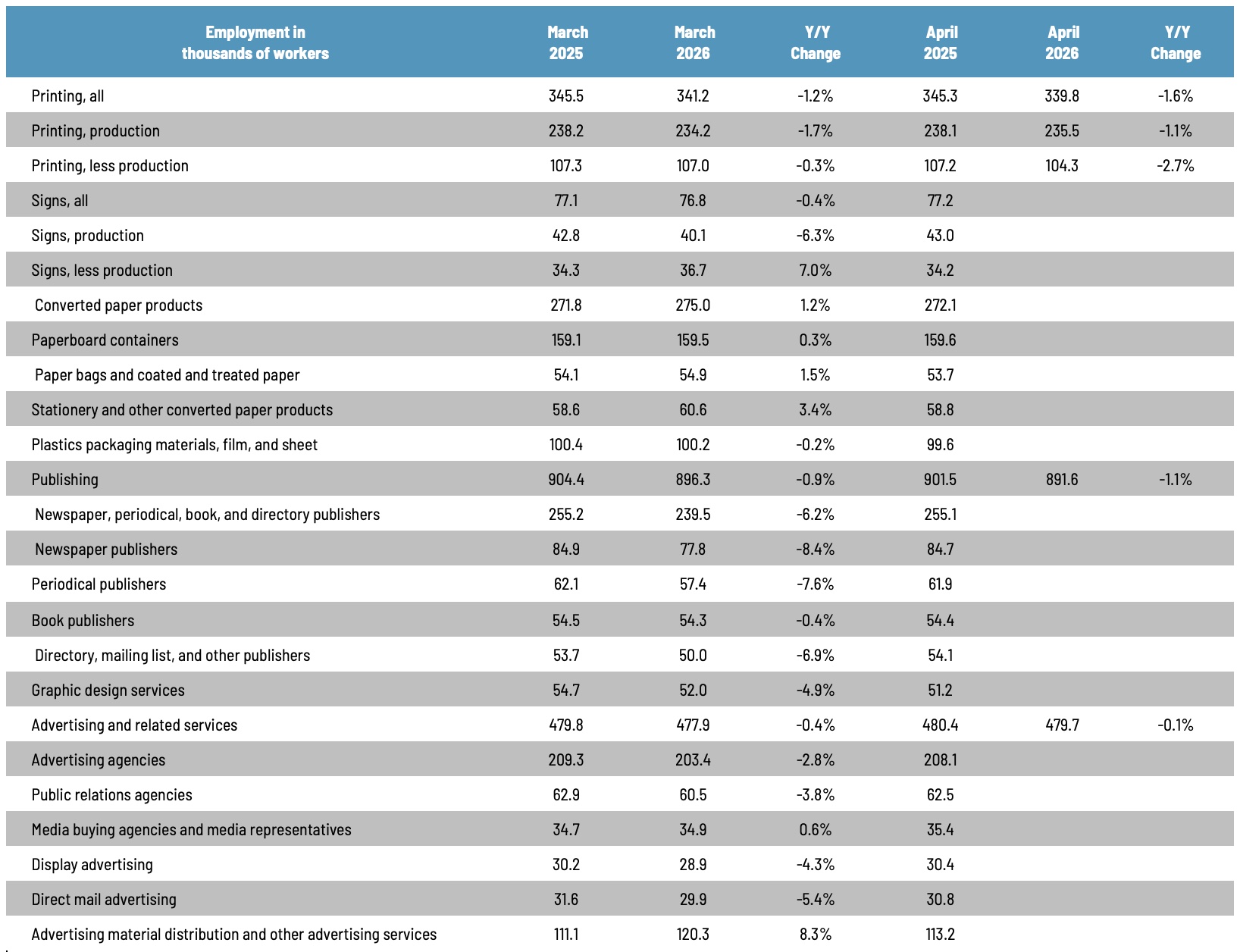
Graphic Arts Employment in April Down Overall—Substantially Among Non-Production

April 2026 saw printing industry employment overall generally flat, down 0.4% from March. And while production employment was up 0.6%, non-production employment was down by 2.5%—basically the reverse of what we saw in March. Read More

Recent Printing Industry News

Wednesday, June 03, 2026