WhatTheyThink

Premium Commentary & Analysis

The Path to Profitable Diversification - Part 2

By David Dodd April 15,

Thursday, April 15, 2004

By David Dodd April 15, 2004 -- This is the second of two articles that are describing the steps that printing company managers should take to improve the odds of achieving real success when diversifying their business operations through the addition of one or more value added services. In Part 1 , we made the point that printers should first develop a sound diversification strategy, and we explained how to decide which value added service or services to offer. We also contended that printing company managers must think in terms of “value added solutions” rather than individual value added services in order to avoid the growing commoditization of value added services. And finally, we observed that printers must design and implement an operating model that embodies and supports the strategy of providing true value added solutions. This article will discuss one of the core business processes that value added solution providers must be able to perform effectively and efficiently if they want to be successful—the process of selling solutions. The first and most important key to success in selling value added solutions is recognizing that solution selling differs in fundamental ways from selling traditional printing services. Some industry pundits contend that the secret to increasing value added services sales is simply to identify the right “customer.” While identifying the right buyer is clearly important, the reality is that successfully selling value added services requires more than simply finding the right person to “pitch.” And, successfully selling value added solutions demands an even greater change in printers' sales methodology than selling individual value added services. What printing company managers must recognize is that successfully selling value added solutions requires an entirely different sales strategy and process from the one used for selling traditional printing services. A sound value added solution sales strategy contains five key elements—buyer identification, seller strengths and weaknesses, business results and personal victories, need analysis, and value justification. The first three of these strategy elements exist because of the underlying structure of value added solutions sales. The last two elements are made necessary because of the inherent characteristics of value added solutions—a focus on broad customer outcomes, the requirement for a high level of customization and integration, and the necessity of gaining in-depth knowledge regarding the customer's business operations. In our book, Making Value Added Services Work , we describe all five key elements of an effective value added solution sales strategy in detail. In this article, we will focus on the structure of value added solution sales and explain how that structure differs from the structure of traditional printing sales. Sales structure is one of the major differences between a traditional commercial printing business and a value added solutions business. Sales of conventional print jobs are, for the most part, simple sales from a structural perspective. By simple, we mean that the print salesperson typically deals with one individual “buyer” throughout the sales process and that individual makes the ultimate purchase decision. In contrast, sales of value added solutions will almost always be complex sales. A complex sale can be defined as a sale in which two or more individuals must give their approval or input before the purchase decision can be made. Because of their breadth and scope, value added solutions will usually involve several areas of the customer's business. It is not uncommon, for example, for a value added solution to affect a customer's marketing department, sales department, and IT department. In this situation, individuals from all three of these departments are likely to be involved in the purchase decision. And, because of the costs involved, it is not unusual for the purchase of a value added solution to require the approval of the customer's finance department and perhaps its legal department as well. The number and variety of individuals involved in sales of value added solutions and the necessity of obtaining multiple approvals before a sale can be closed mean that a salesperson involved in such sales must use a selling process that is more strategic and more analytical than the process used for selling conventional print jobs. By “strategic,” we mean that the sales process must place at least as much importance on what occurs before the sales call as what occurs during the sales call. The sale of a value added solution requires the salesperson to gather and digest a huge volume of information. The salesperson is facing multiple “buyers” who have different personalities, different interests, and different (and perhaps conflicting) objectives and agendas. When you add the formal approval process that exists in many corporate environments, it's easy to understand why selling value added solutions is a complicated job. In a complex sale environment, the salesperson needs a strategy and a system for organizing and analyzing the huge amount of information that is involved in value added solution selling. Successfully managing a complex sale involves identifying all of the individuals who will be participating in the approval process, understanding the specific role that each person is playing, and establishing a position with each of these buyers. Then the salesperson must demonstrate why the proposed value added solution will benefit not only the “customer”—the business enterprise as a whole—but also each of the individual buyers. Mastering the art of making complex sales is not the only selling skill that is needed for success with value added solutions, but it is a necessary element of success.


Continue reading your article
with a WhatTheyThink membership.

WhatTheyThink Annual Membership

Less than $4/week.

Get unlimited access to in-depth commentary and analysis covering the latest trends, emerging technologies, operational strategies, and key events across every segment of today's printing industry.

Stay informed. Stay competitive. Stay ahead.
WhatTheyThink Day Pass

$5 for 24 hours

Unlimited access to all of WhatTheyThink. Get your Day Pass

Already a member?
Sign In

About WhatTheyThink

WhatTheyThink is the global printing industry's go-to information source with both print and digital offerings, including WhatTheyThink.com, WhatTheyThink Email Newsletters, and the WhatTheyThink magazine. Our mission is to inform, educate, and inspire the industry. We provide cogent news and analysis about trends, technologies, operations, and events in all the markets that comprise today's printing and sign industries including commercial, in-plant, mailing, finishing, sign, display, textile, industrial, finishing, labels, packaging, marketing technology, software and workflow.

Recent Articles from WhatTheyThink

The Total Label Issue

The Total Label Issue

This issue of the WhatTheyThink Quarterly is all about labels, which are seen as a high-growth part of commercial printing, driven by e-commerce, food/beverage demand, and regulations. The market has surpassed 1.2 trillion square meters of label production volume per year, and is moving toward high-mix, low-waste production rather than only high-volume throughput. While flexo is still used for high-volume label production, digital label printing often complements it—or in some cases replaces it. But labels are about more than printing technology. Read More

The Unified Platform for Packaging Manufacturing Excellence

The Unified Platform for Packaging Manufacturing Excellence

Leverage 30+ years of plant-floor expertise. Trusted by 700+ packaging manufacturers globally to reduce waste, optimize scheduling, and drive digital transformation. One unified foundation. Eight packaging-native pillars. Zero fragmentation. Read More

Expand Your Opportunities with the Truepress JET 560HDX from SCREEN

Expand Your Opportunities with the Truepress JET 560HDX from SCREEN

Commercial, direct mail, and publishing printers accustomed to producing jobs over several weeks can now print them in days with the SCREEN Truepress JET 560HDX. The press can accommodate 120 lb. coated or uncoated paper up to 560 mm wide. Read More

Around the Web: Of Water and Winners

Around the Web: Of Water and Winners

A sign-writer created the visual style of music festivals. The “2026 Milky Way Photographer of the Year” winners. AI appears to be catching on among the Amish. Sony has upgraded its wearable air conditioner. How to easily reuse produce bags. A complex digital water clock. A Nobel Prize–winning technology is able to extract water from dry air. Yes, it is possible to be allergic to water. Laser-induced graphene on Kevlar enables multifunctional structural composites. The “most desired” place in each of the 50 states. “The rise in plastic surgeons asked to create ‘AI face.’” K-pop band BTS has teamed with Oreo to release limited edition OREO x BTS Cookies. Welcome to WhatTheyThink’s weekly miscellany. Read More
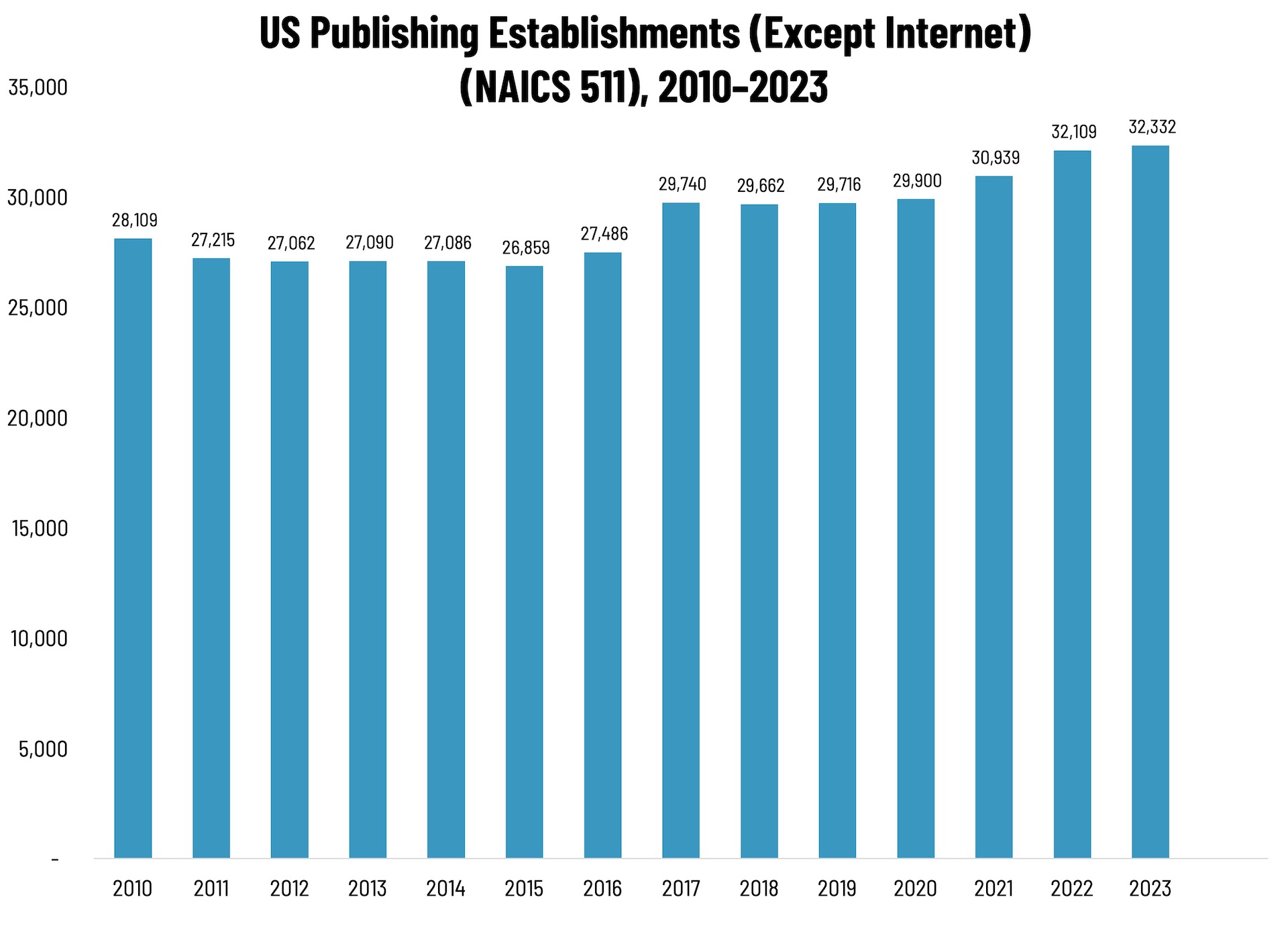
Graphic Arts Employment in April Down Overall—Substantially Among Non-Production

Graphic Arts Employment in April Down Overall—Substantially Among Non-Production

April 2026 saw printing industry employment overall generally flat, down 0.4% from March. And while production employment was up 0.6%, non-production employment was down by 2.5%—basically the reverse of what we saw in March. Read More

Recent Printing Industry News

Wednesday, June 03, 2026