WhatTheyThink

Premium Commentary & Analysis

Mail-Well reports their Sixth Consecutive Quarter of year over year improvement: Summary of Q4 Earnings Call

By Ann Levine February 11,

Wednesday, February 11, 2004

By Ann Levine February 11, 2004 – Mail-Well, Inc. (NYSE: MWL) today announced fourth quarter net income of $5.7 million or $0.12 per diluted share compared to a net loss of $2.6 million or $0.05 per diluted share for the same period last year. For the full year, Mail-Well reported net income of $8.4 million of $0.17 per diluted share. Full year 2002 figures were a net loss of $202 million or $4.24 per diluted share. Fourth quarter EBITDA was $39.5 million with full year EBITDA at $131.6 million representing a 9% improvement over 2002 EBITDA of $121 million. Topics of this summary: Commercial Segment Results Resale Segment Results 2003 Achievements 2004 Strategy and Guidance Q & A Commercial Segment Results The Commercial Segment, serving the needs of direct customers, makes up approximately 75% of Mail-Well's sales. This segment is made up of the commercial printing operation and envelope operation serving commercial direct and transactional customers. The fourth quarter resulted in improved performance with an increase in EBITDA margins of 8.5%. Sales on a same-store basis were flat during the quarter compared with last year. For the full year, sales were up 2.2%. Mail-Well has increased activity in fulfillment type services and has expanded market share with local businesses. Resale Segment Results The Resale segment is made up of printed office products and resale envelope operations. Sales were down 6.2% from $103.9 to $97.5 million. The Office Products sector continues to demand lower pricing leading to a decrease in sales to $19 million of 4.5%. EBITA increased by $2.1 million to $14.8 million. 2003 Achievements Mail-Well reported the sixth consecutive quarter of year over year improvement during today's earnings call. The pricing pressures faced during the year cost the company $40 million. Company President and CEO, Paul Reilly, stated that the company achieved 1.7% real sales growth while the composite market declined by 3.6%. Mail-Well reported on progress in changing its culture through the implementation of significant employee training in supervisory skills, quality and sales. Additionally the company has implemented a mobilization program to achieve a higher level of productivity with processes. This program includes employee and customer surveys to determine a greater level of responsiveness customer needs. Last quarter's reorganization along customer-centric lines, as opposed to product lines, has shown results with recent wins of three clients with multi-year contracts. 2004 Strategy and Guidance As part of its 2004 strategy, Mail-Well will follow the tenants of its SOAR program and its related mobilization and investment of employees. The company will also focus on customer communication needs and apply solutions for customized messages and solutions. The company expects sustained growth due to positive economic indicators. At the same time, CEO Reilly stated negative indicators include overcapacity in the envelope industry with capacity utilization at 52%, soft pricing and “irrational” paper pricing increases. Among the positive and negative indicators, Mail-Well expected EBITDA in the $135-$142 million range for 2004. The recent announcement on subnotes will result in $18 million in charges in the first quarter and will impact EPS by about $0.22 per share. Q & A Although the envelope division has been a tough area for Mail-Well, fourth quarter results were strong and the expectation is for continued strength and sustainability. Mail-Well's capacity utilization is in the plus or minus 60% range across each of the lines. Sales are getting a bit better in units, but the 1.7% real growth is not making a dent in utilization. Capital expenditures for 2004 are expected in the $20-25 million range. When advantageous, the company takes on additional capital expenditures financed through operating leases. The actual capital expenditures will be in the mid $30 million range. Capital expenditures allow the company to acquire new equipment and allow the shut down of older equipment. The benefits of the national “Do Not Call List” has seen an increase in direct mail that was stronger during the fourth quarter than the previous quarter. Mail-Well was non-committal on an increase in M & A activity in the printing sector. The corporate expense at $3 million is not a reasonable run rate going forward. $20-25 million a year is more normalized. In order to regain a hold on pricing, Mail-Well's capacity utilization rate would need to increase 5 points. Volume increases of 10% would have a significant impact. Volume increases have been across the board in both lines, with real growth in the commercial segment. Given the company's current plans, the last 6 months of 2004 is expected to generate the numbers to reach the company's growth target. Assumptions underlying Mail-Well's future growth is 0-1% market growth or $18-20 million in market share growth on top of that is $100 million in additional sales. Mail-Well's experience with customer trends cited in today's conference call were a) a reduction in the number of venders and b) customers seeking more services from one vendor. Mail-Well does not disclose its customer churn rate but admitted today customer churn is an important part of the company's business. With larger customers there is less churn. Churn is typically in the medium to small customers. With the recently announced direct mail wins, Mail-Well's contracts include fixed pricing in the first year with an opener after that. Margins on the contracts are dependent upon company performance. In the pricing arena and the ability to pass on costs to the customer, in the commercial segment, new pricing is part of every quote. In the transactional arena, pricing is negotiable. Within the resale segment, Mail-Well typically commits to a price one year out due to products appearance in a customer's catalog. Increases in raw materials have been roughly 10%. Mail-Well's Reilly stated that trends indicate television ads will decrease due to trends of marketers using a combination of direct mail and cable and with the onset of TIVO, more ad dollars will be spent on direct mail.


Continue reading your article
with a WhatTheyThink membership.

WhatTheyThink Annual Membership

Less than $4/week.

Get unlimited access to in-depth commentary and analysis covering the latest trends, emerging technologies, operational strategies, and key events across every segment of today's printing industry.

Stay informed. Stay competitive. Stay ahead.
WhatTheyThink Day Pass

$5 for 24 hours

Unlimited access to all of WhatTheyThink. Get your Day Pass

Already a member?
Sign In

About WhatTheyThink

WhatTheyThink is the global printing industry's go-to information source with both print and digital offerings, including WhatTheyThink.com, WhatTheyThink Email Newsletters, and the WhatTheyThink magazine. Our mission is to inform, educate, and inspire the industry. We provide cogent news and analysis about trends, technologies, operations, and events in all the markets that comprise today's printing and sign industries including commercial, in-plant, mailing, finishing, sign, display, textile, industrial, finishing, labels, packaging, marketing technology, software and workflow.

Recent Articles from WhatTheyThink

Around the Web: Of Books and Bots

Around the Web: Of Books and Bots

New book “Empire of Ink” is a look at the history and mythology of the American newspaper. A hacked smart lightbulb provides access to banned books. A digital archive reassembles Leonardo da Vinci’s long-cut-apart notebooks. Michelangelo’s secret underground hiding place—complete with the artist’s graffiti. Marie Antoinette may have been history’s first influencer. A worn copy of a 1912 pulp magazine featuring Tarzan sold at auction for $58,560. New book, “The Graphene Handbook - Making Sense of Graphene at Its Inflection Point.” Visa is integrating its payment network into ChatGPT, which should be fun. A humanoid robot plans to climb Everest. A designer who specializes in chairs without legs. Did a flying monk see Halley’s Comet…twice? The British geologist whose goal was to eat as many different animals as he possibly could. Welcome to WhatTheyThink’s weekly miscellany. Read More
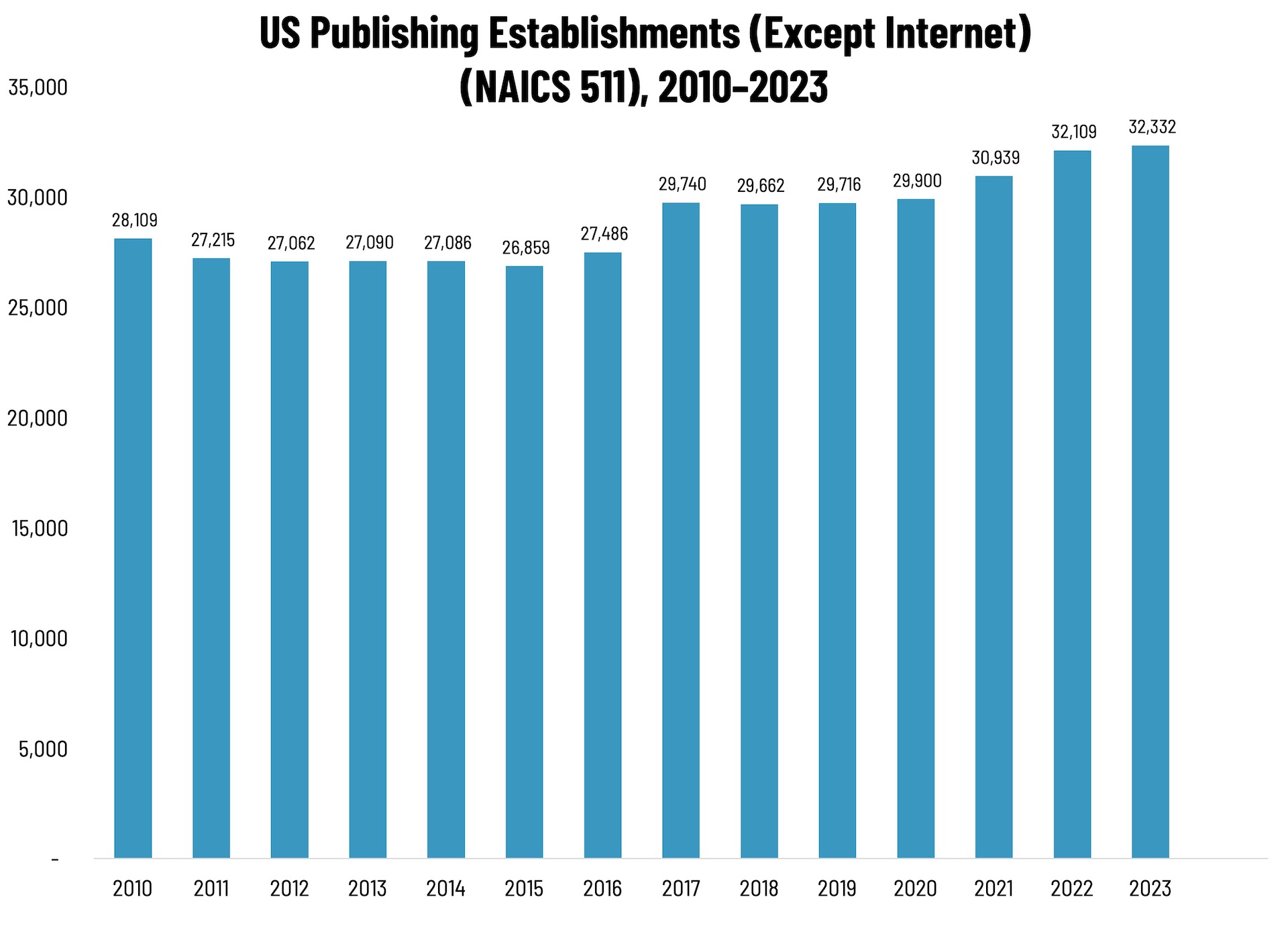
Publishing Establishments—2010–2023

Publishing Establishments—2010–2023

According to the latest, recently released edition of County Business Patterns, in 2023 there were 32,332 establishments in NAICS 511 (Publishing Industries [except Internet]). This represents an increase of 15% since 2010. In macro news, the University of Michigan’s Consumer Sentiment Index is at record lows. Read More

Finishing: Production Inkjet's Next Frontier

Finishing: Production Inkjet's Next Frontier

As production inkjet has advanced, a new primary factor limiting productivity has emerged: finishing. How are PSPs adapting their investment and automation strategies? New research shows many can gain a competitive advantage by focusing on finishing. Read More

HanGlobal Launches New LabStar 330mini at Flexo & Labels Expo 2026

HanGlobal Launches New LabStar 330mini at Flexo & Labels Expo 2026

Discover HanGlobal's newly launched LabStar 330mini digital label press! Get the full show roundup to see how this ultra-integrated, high-performance inkjet solution captured the crowd's attention and redefined narrow-web printing. Read More
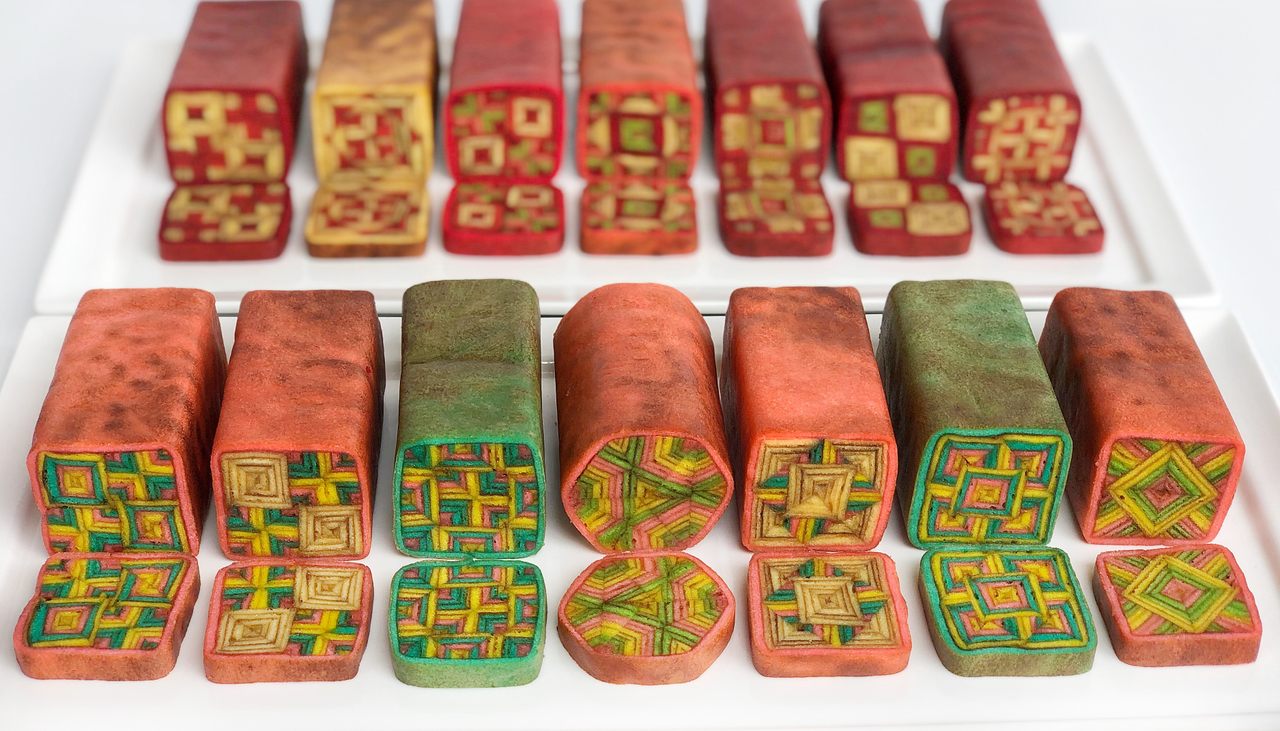
Around the Web: Of Food and Feynman

Around the Web: Of Food and Feynman

A book designer who specializes in spine design. The Chinese postal service is using humanoid robots to sort packages. An amusingly overproduced Day Display. Allen Ginsberg’s spoken-word poetry recitation album is being reissued. The winners of this year’s World Food Photography Awards. A retired geneticist launched the online Museum of Plugs & Sockets. A viral warning about a new gas station scam is actually a hoax. What is the world’s longest domestic flight? Aw, et tu, graphene: Skeleton Technologies launches graphene-based GrapheneUPS for AI data centers. What is the quietest spot in the U.S.? Researchers finally cracked Richard Feynman’s “Restaurant Problem.” Malaysia’s kek lapis Sarawak is perhaps the world’s most complex cake. Welcome to WhatTheyThink’s weekly miscellany. Read More