WhatTheyThink

Premium Commentary & Analysis

Acquisition of REA Complete, Expected to Prop up Specialty Books in 2004: Summary of Courier Corporation's Q1 Earnings Call

By Ann Levine January 20,

Tuesday, January 20, 2004

By Ann Levine January 20, 2004– Courier Corporation (NASDAQ: CRCC) announced first quarter earnings per diluted share of $0.48, up 4% over $0.46 from the same period last year. Income from continuing operations was $3.9 million compared to $3.7 million for the first quarter of 2003. Sales for the first quarter were down at $46.8 million compared to 2003 first quarter results of $48.8 million. The overall softness in the book market was cited as the reason for the decline. Topics of this summary: Segment Performance Initiatives to Increase Revenues Outlook 2004 Q & A Segment Performance The Book Manufacturing segment sales overall were down in the first quarter at $39.7 million, reflecting a decrease of 5% from the same period last year. The religious market showed a 1% increase in the first quarter with sales to religious organizations showing growth and sales in religious trade showing a decline. In the education sector there was a 3% decline in sales with decreases in all sectors. Specialty trade publishing sales were down 9%. The Specialty Book Publication segment showed first quarter sales of $9.1 million or an 8% increase over the same period last year. International sales were up 29% and direct consumer sales up 2%. The acquisition of Research & Education Association has been added to Courier's specialty portfolio and is expected to add $6 million in revenues. REA owns its own content, has a devoted customer base, minimal product overlap with Dover publications, minimal competition, and is perceived as a good strategic fit with Courier. REA did not impact overall first quarter results. Initiatives to Increase Revenues Courier officials reiterated their commitment to shareholders for growth in EPS and growth in revenues. Looking forward, recent wins in the educational printing market has resulted in committed forward press hours scheduled for the second quarter running far ahead of those run last year; increased share with religious trade customers and 5 new customers since September, the launch of 337 new titles slated for Spring publication; the acquisition of Research & Education Association completed on 1/6/04 and the associated synergies with Dover Publications; and, the new 4-color press that will increases market share in 4-color book publishing. Outlook 2004 Courier's expectation for 2004 includes a gradual improvement in the economic market. Even with some improvement, Courier has reduced its guidance in the Book Manufacturing segment to a 3-5% sales growth. In the Specialty Book segment, growth is expected in the low double digits. REA is expected to add approximately $4 million in sales to Courier as a whole. For the fiscal year, sales are expected in the ranges of $216-$221 million, reflecting a 7-9% increase over the previous year. EPS are expected in the range of $2.57-$2.67, an 8-13% increase over the last year. Q & A In the first year, the acquisition of REA will depress the cost of sale and depress margins as a result. Selling off REA's old inventory will have a significant impact. Courier officials were noncommittal with regard to the recent stock action concerning Thomas Nelson and any subsequent impact on the religious publishing market. The company's tax rate is 35% in the first quarter and a modest reduction is expected for upcoming quarters. The company has not disclosed the price of the REA acquisition, but assured conference call participants the price would be evident on the 10Q filing next quarter. With the recentness of the REA acquisition, it is too soon to tell when the operations will show growth to Courier's bottom line on an EPS basis. Officials believe they will be better able to answer the question in the upcoming quarters. The new 4-color press is expected to come on line in late April to early May with a 6-8 week ramp-up time to get to full speed. Contrary to a competitor whose operations were delayed due to environmental approvals, Courier has received all pertinent and necessary permits at this time. The industry is still experiencing pricing pressure, however, as the economy improves, pressures will lessen. About 15% of Courier's book manufacturing is in the 4-color business. Typically, 4-color manufacturing has higher gross margins. The depreciation schedule for the new press in 10 years straight line. Ann Levine is an associate with Raine Consulting, Inc. and can be reached at [email protected]


Continue reading your article
with a WhatTheyThink membership.

WhatTheyThink Annual Membership

Less than $4/week.

Get unlimited access to in-depth commentary and analysis covering the latest trends, emerging technologies, operational strategies, and key events across every segment of today's printing industry.

Stay informed. Stay competitive. Stay ahead.
WhatTheyThink Day Pass

$5 for 24 hours

Unlimited access to all of WhatTheyThink. Get your Day Pass

Already a member?
Sign In

About WhatTheyThink

WhatTheyThink is the global printing industry's go-to information source with both print and digital offerings, including WhatTheyThink.com, WhatTheyThink Email Newsletters, and the WhatTheyThink magazine. Our mission is to inform, educate, and inspire the industry. We provide cogent news and analysis about trends, technologies, operations, and events in all the markets that comprise today's printing and sign industries including commercial, in-plant, mailing, finishing, sign, display, textile, industrial, finishing, labels, packaging, marketing technology, software and workflow.

Recent Articles from WhatTheyThink

The Total Label Issue

The Total Label Issue

This issue of the WhatTheyThink Quarterly is all about labels, which are seen as a high-growth part of commercial printing, driven by e-commerce, food/beverage demand, and regulations. The market has surpassed 1.2 trillion square meters of label production volume per year, and is moving toward high-mix, low-waste production rather than only high-volume throughput. While flexo is still used for high-volume label production, digital label printing often complements it—or in some cases replaces it. But labels are about more than printing technology. Read More

The Unified Platform for Packaging Manufacturing Excellence

The Unified Platform for Packaging Manufacturing Excellence

Leverage 30+ years of plant-floor expertise. Trusted by 700+ packaging manufacturers globally to reduce waste, optimize scheduling, and drive digital transformation. One unified foundation. Eight packaging-native pillars. Zero fragmentation. Read More

Expand Your Opportunities with the Truepress JET 560HDX from SCREEN

Expand Your Opportunities with the Truepress JET 560HDX from SCREEN

Commercial, direct mail, and publishing printers accustomed to producing jobs over several weeks can now print them in days with the SCREEN Truepress JET 560HDX. The press can accommodate 120 lb. coated or uncoated paper up to 560 mm wide. Read More

Around the Web: Of Water and Winners

Around the Web: Of Water and Winners

A sign-writer created the visual style of music festivals. The “2026 Milky Way Photographer of the Year” winners. AI appears to be catching on among the Amish. Sony has upgraded its wearable air conditioner. How to easily reuse produce bags. A complex digital water clock. A Nobel Prize–winning technology is able to extract water from dry air. Yes, it is possible to be allergic to water. Laser-induced graphene on Kevlar enables multifunctional structural composites. The “most desired” place in each of the 50 states. “The rise in plastic surgeons asked to create ‘AI face.’” K-pop band BTS has teamed with Oreo to release limited edition OREO x BTS Cookies. Welcome to WhatTheyThink’s weekly miscellany. Read More
Graphic Arts Employment in April Down Overall—Substantially Among Non-Production

Graphic Arts Employment in April Down Overall—Substantially Among Non-Production

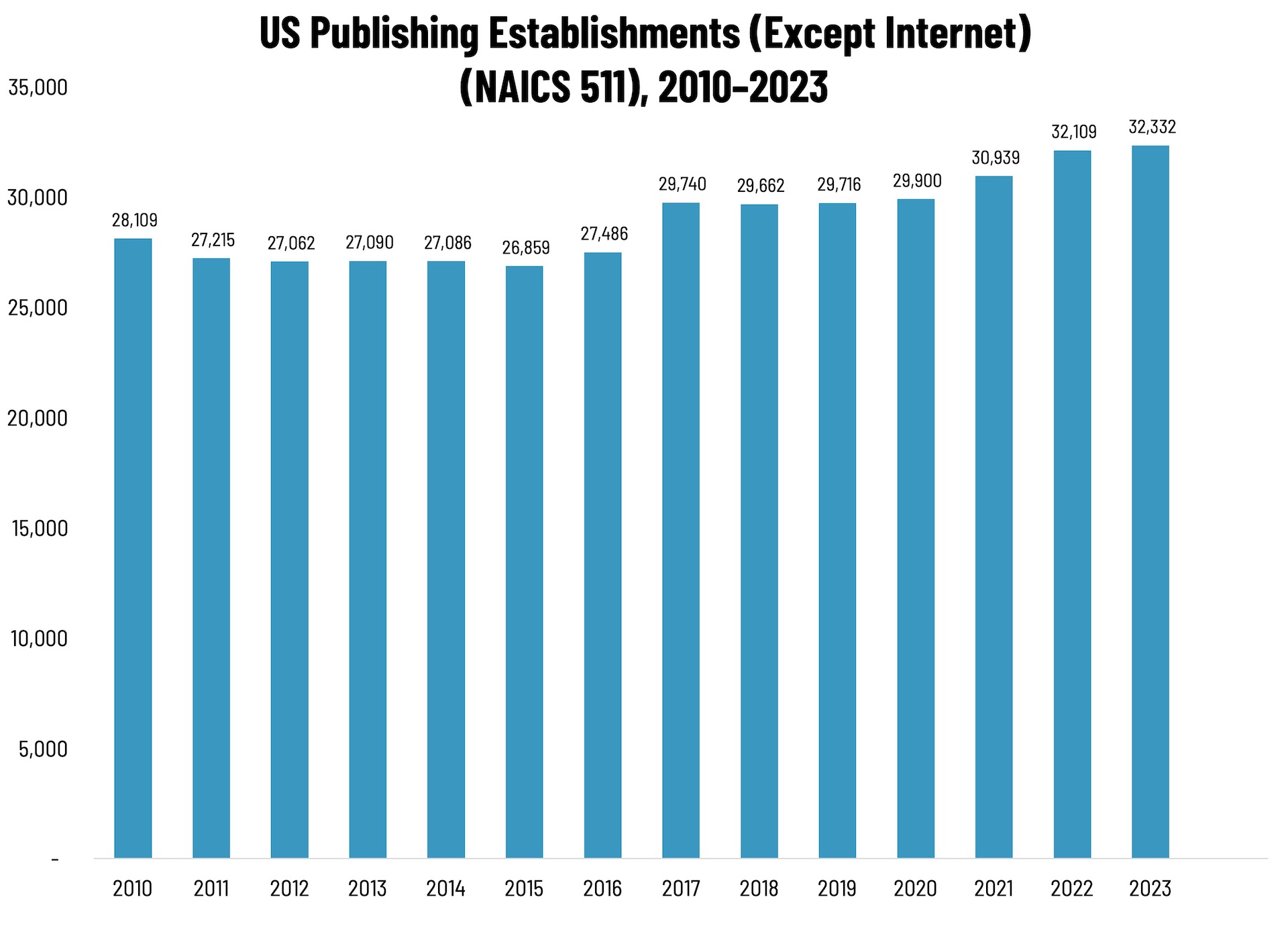
April 2026 saw printing industry employment overall generally flat, down 0.4% from March. And while production employment was up 0.6%, non-production employment was down by 2.5%—basically the reverse of what we saw in March. Read More

Recent Printing Industry News

Wednesday, June 03, 2026