WhatTheyThink

Premium Commentary & Analysis

FREE - Last Thoughts on On Demand

Last Thoughts On On Demand By Frank Romano April 20,

Friday, April 27, 2007

Last Thoughts On On Demand By Frank Romano April 20, 2007 -- The On Demand show has ended. Go in peace. They say that 25,000 people were there and I stopped counting at 12,000. But the memory lingers on and here are some musings on issues that may be of interest. 1. On Demand printing is not only about digital printing. The term has become a euphemism for digital but that is not true. The Presstek DI press was at the show as was the Screen TruePress and both produce plates on press and reduce makeready to 10 minutes or so. Newer offset presses with CTP can also get makeready down to 20 minutes or less. On demand printing means I get the printing when and where I want it. How it is produced is academic. They say that 25,000 people were there and I stopped counting at 12,000. Printing today is all about time. Print is the last domino that falls over in a process that begins with marketing goals and creative approaches and wends its way through production and proofing steps to the point at which a file is submitted to a printing company. If you do the arithmetic, the printing step is allotted the least amount of time. Thus, for jobs that are appropriate, digital printing, with a makeready of almost nothing, is applicable. This is why short run, quick turn jobs have pretty much moved to digital. 2. The myth of Web-To-Print. The message I was getting is that W2P is the panacea for the printing industry. I love the idea of web storefronts that allow customers to buy printing online but let us realize that Internet transfer of files is now routine. And many jobs do not lend themselves to a storefront; this is why most of the print bought on the web ends to be business cards, memo pads, presentation handouts, and simple brochures. We need a better term for linking originators and buyers over the Internet to printers. 3. Pre-pressless workflows. The dream of JDF is that a job is entered with sufficient macro data to run in what is called “lights out” mode. Now I hate to trash anyone’s dreams but we cannot get designers to make InDesign or Quark files that work correctly. Imagine what happens when their information is used to acquire paper and drive all processes automatically. Where this concept works is where there is a contract relationship with the customer. This means that the printer and the customer will wok together on defined projects over some span of time. Thus, the customer and printer establish standards, checks and balances, and procedures that work best for both of them. Print is the last domino that falls over in a process that begins with marketing goals and creative approaches and wends its way through production and proofing steps to the point at which a file is submitted to a printing company. But many jobs come in from strangers and he printer has no idea what problems lurk in the files provided. There will always be the need for someone to find and fix the typographic transgressions and image irregularities of files submitted for print. 4. Pressman to dataman. The press operator has long been among the elite of the printing workforce. But that is changing. The IT or MIS expert is now the key person. They are responsible for updating software, maintaining websites and networks, and dealing with databases. 5. The 24/7 global economy. Half the world is asleep at any moment. If you are, it means that our competitors are awake. At one time print was a local business; now it is global. We get more print from Canada and Mexico and the UK than we get from China. Well, maybe. Think of all the stuff made in China. It gets tags and labels and goes in a package and the packages go in a carton and the cartons go in a container and the containers go on ship. When customs checks it out, they count the stuff but not the tags and labels and packages and cartons. 6. There is more to documents than documents. Tags, labels, certain signage, and certain packaging are large and growing markets. Some of this was discussed, but we should expand our coverage of on demand printing to include all printed products. There is still the impression that printing is a single sheet of 8.5 x 11-inch paper. What do you think? Please send feedback to Frank by e-mailing him at [email protected] Video: See Frank deliver the keynote speech at the EDSF luncheon at On Demand Video: See Frank deliver the keynote speech at the EDSF luncheon at On Demand


Continue reading your article
with a WhatTheyThink membership.

WhatTheyThink Annual Membership

Less than $4/week.

Get unlimited access to in-depth commentary and analysis covering the latest trends, emerging technologies, operational strategies, and key events across every segment of today's printing industry.

Stay informed. Stay competitive. Stay ahead.
WhatTheyThink Day Pass

$5 for 24 hours

Unlimited access to all of WhatTheyThink. Get your Day Pass

Already a member?
Sign In

About WhatTheyThink

WhatTheyThink is the global printing industry's go-to information source with both print and digital offerings, including WhatTheyThink.com, WhatTheyThink Email Newsletters, and the WhatTheyThink magazine. Our mission is to inform, educate, and inspire the industry. We provide cogent news and analysis about trends, technologies, operations, and events in all the markets that comprise today's printing and sign industries including commercial, in-plant, mailing, finishing, sign, display, textile, industrial, finishing, labels, packaging, marketing technology, software and workflow.

Recent Articles from WhatTheyThink

Around the Web: Of Books and Bots

Around the Web: Of Books and Bots

New book “Empire of Ink” is a look at the history and mythology of the American newspaper. A hacked smart lightbulb provides access to banned books. A digital archive reassembles Leonardo da Vinci’s long-cut-apart notebooks. Michelangelo’s secret underground hiding place—complete with the artist’s graffiti. Marie Antoinette may have been history’s first influencer. A worn copy of a 1912 pulp magazine featuring Tarzan sold at auction for $58,560. New book, “The Graphene Handbook - Making Sense of Graphene at Its Inflection Point.” Visa is integrating its payment network into ChatGPT, which should be fun. A humanoid robot plans to climb Everest. A designer who specializes in chairs without legs. Did a flying monk see Halley’s Comet…twice? The British geologist whose goal was to eat as many different animals as he possibly could. Welcome to WhatTheyThink’s weekly miscellany. Read More
Publishing Establishments—2010–2023

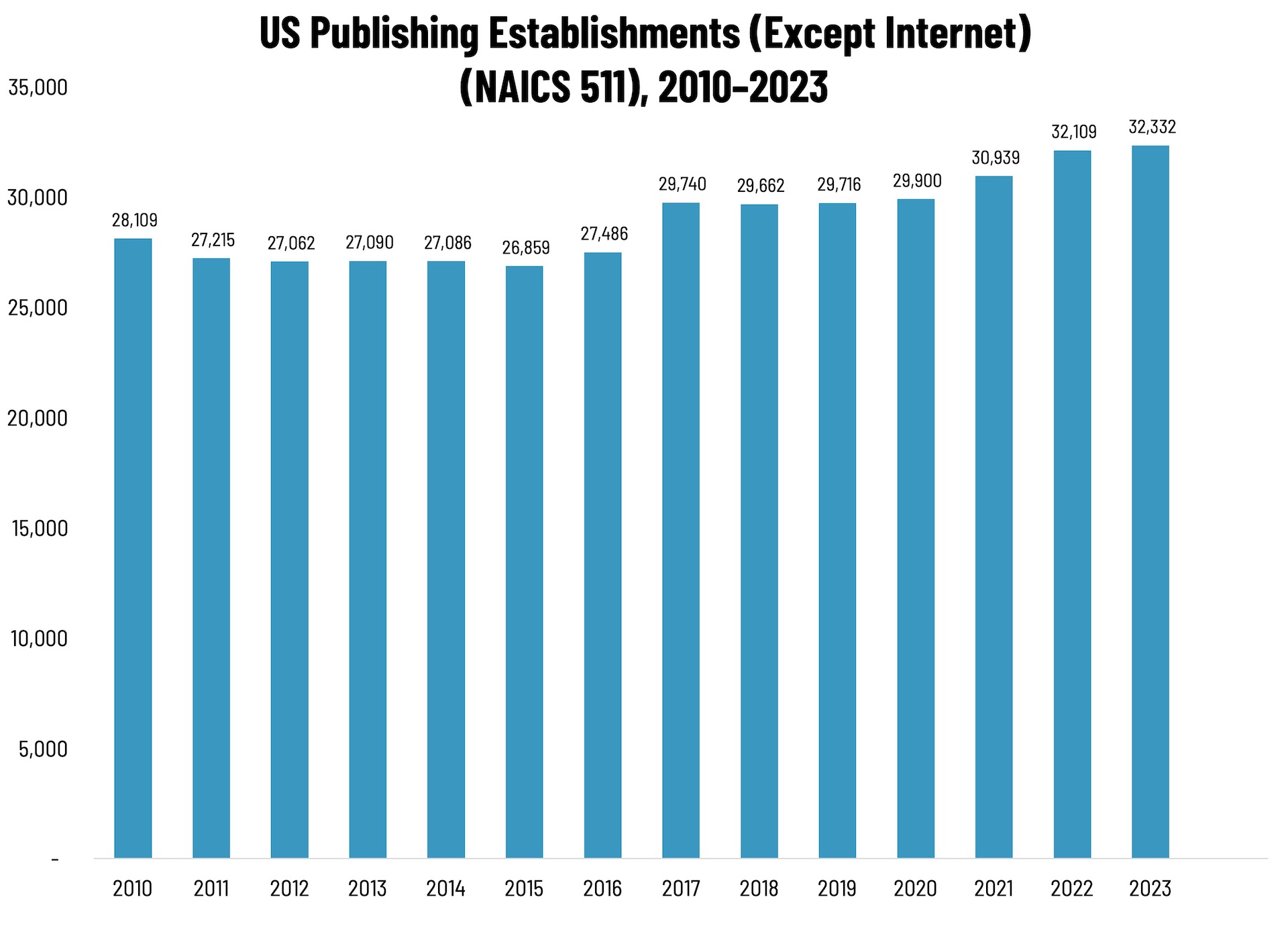
Publishing Establishments—2010–2023

According to the latest, recently released edition of County Business Patterns, in 2023 there were 32,332 establishments in NAICS 511 (Publishing Industries [except Internet]). This represents an increase of 15% since 2010. In macro news, the University of Michigan’s Consumer Sentiment Index is at record lows. Read More
Finishing: Production Inkjet's Next Frontier

Finishing: Production Inkjet's Next Frontier

As production inkjet has advanced, a new primary factor limiting productivity has emerged: finishing. How are PSPs adapting their investment and automation strategies? New research shows many can gain a competitive advantage by focusing on finishing. Read More

HanGlobal Launches New LabStar 330mini at Flexo & Labels Expo 2026

HanGlobal Launches New LabStar 330mini at Flexo & Labels Expo 2026

Discover HanGlobal's newly launched LabStar 330mini digital label press! Get the full show roundup to see how this ultra-integrated, high-performance inkjet solution captured the crowd's attention and redefined narrow-web printing. Read More
Around the Web: Of Food and Feynman

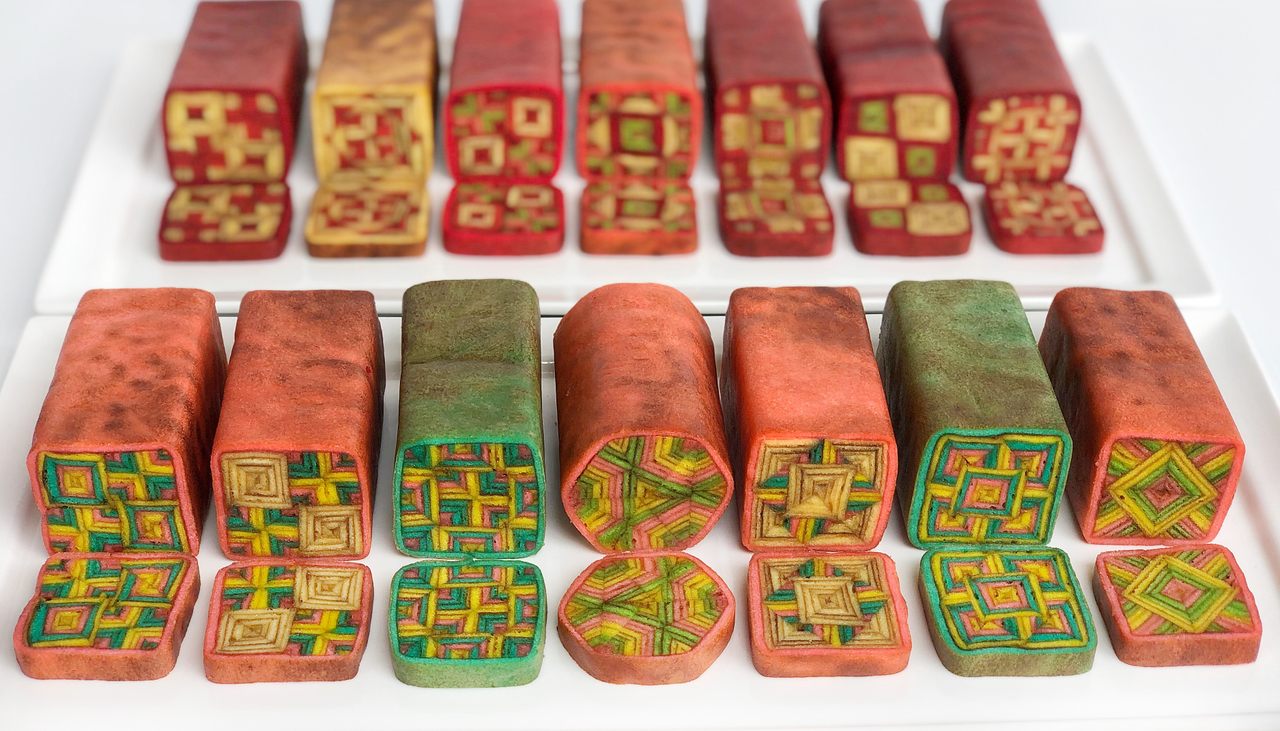
Around the Web: Of Food and Feynman

A book designer who specializes in spine design. The Chinese postal service is using humanoid robots to sort packages. An amusingly overproduced Day Display. Allen Ginsberg’s spoken-word poetry recitation album is being reissued. The winners of this year’s World Food Photography Awards. A retired geneticist launched the online Museum of Plugs & Sockets. A viral warning about a new gas station scam is actually a hoax. What is the world’s longest domestic flight? Aw, et tu, graphene: Skeleton Technologies launches graphene-based GrapheneUPS for AI data centers. What is the quietest spot in the U.S.? Researchers finally cracked Richard Feynman’s “Restaurant Problem.” Malaysia’s kek lapis Sarawak is perhaps the world’s most complex cake. Welcome to WhatTheyThink’s weekly miscellany. Read More