WhatTheyThink

Premium Commentary & Analysis

FREE: Moving to Another Level in Flatbed UV Printing

Is the Virtual Trade Show Coming?

Tuesday, May 01, 2007

Is the Virtual Trade Show Coming? Commentary by Andrew Tribute May 1, 2007 -- I have just attended the Xerox Forum in Rome, Italy. This was a three-day event encompassing four separate conferences and around 1,200 people of which almost over 800 attending were Xerox customers and 150 were customers of other suppliers of digital printing systems. Xerox is not the only supplier running such events. Last year HP ran an even larger event in Barcelona for its large and very large format display graphics divisions, and it will be running another customer event in Rome in a couple of weeks time. Such events allow companies like Xerox and HP to spend real quality time with their customers, and their customers have the opportunity to learn more about building their businesses and also to network with similar customers from around the world. Such events allow companies like Xerox and HP to spend real quality time with their customers, and their customers have the opportunity to learn more about building their businesses and also to network with similar customers from around the world. These events are becoming popular with vendors at a time when many industry vendors are having doubts about the value of large trade shows. Such trade shows cost a huge amount of money for vendors and many don’t see such expense as being worthwhile. Xerox told me that the Rome event, which included all the costs of accommodating the guests, was a fraction of the cost of exhibiting at a major trade show. These doubts about the commercial viability of exhibiting at trade shows are not new. I remember about ten years ago having a discussion with the CEO of Scitex who told me that he would have liked to withdraw from the drupa show as it was so expensive and which the company hardly found any new customers. One problem for vendors at a trade show is they get very little time with customers and prospects. Visitors to a show today spend very little time there because of the constraints of time and cost, and they will try to see as much as they possibly can in the time. Few attend for more than a day. After trade shows the organizers will put out releases saying how much equipment had been sold at the event. In most cases orders taken at trade shows are all carefully stage-managed and would have taken place if the event had not taken place. Few customers turn up at a trade show and sign up for an expensive piece of capital equipment on a whim. Discussions will have been taking place in most cases for months before. In the past trade shows were used by vendors for announcements of new equipment. Today the sales window of opportunity for a new piece of equipment is relatively short and vendors cannot afford to wait for a show to announce it. Many announcements that do take place are for equipment that is not ready to sell, but where the vendor wants to make the announcement to stop potential customers from buying other suppliers’ equipment. Few customers turn up at a trade show and sign up for an expensive piece of capital equipment on a whim. Discussions will have been taking place in most cases for months before. For the major equipment vendors there are today real alternatives to the traditional trade show. We have the large-scale customer events such as those of HP and Xerox described above. Many vendors put on customer road shows where equipment is taken around a country and customers and prospects visit the event. As these will be close to their businesses visitors don’t have the high-cost and loss of time of attending a trade show a long distance away. Today the use of webinars, such as those run by whattheythink are becoming popular to communicate with customers and prospects. At the Xerox Rome event there was an interesting presentation by IBM on the 3D Internet. This showed how a number of new web sites such as secondlife.com allowed for virtual events to take place. This allows the potential of virtual meetings over the Internet, as a development of the video conference or webinar. How long will it be before we have the virtual trade show using such technology? Now I have to say I love trade shows and for me they are great for networking. Trade shows are also ideal for small suppliers who don’t have the marketing strength to find and meet all their potential prospects. However, for the larger suppliers that almost certainly are already in touch with most of their future prospects there are real doubts about where trade shows will fit within their future plans. This does not mean that next year’s drupa will not be a success and the major suppliers will not be there. drupa 2008 is already assured of being the biggest drupa ever. What may be at doubt are all the minor trade shows that take place as well as some of the major trade shows in the next decade. What do you think of Andy's view? Please offer your feedback to Andy via email: [email protected]. Attributes Associates is an internationally oriented consulting company specializing in marketing and technology issues for the printing, publishing and media markets. The Managing Partner of Attributes Associates is Andrew Tribute, who is recognized internationally as one of the world's leading authorities on these industries and subjects. Attributes' client base comprises a large number of publishers and printers as well as a significant number of industry vendors. In most cases consulting is carried out at high level to assist such organizations in the selection and adoption of technology, or to define ongoing business strategies covering the likely future directions of the markets. Attributes have been in the forefront of technology changes and market developments from the time it started in 1984. It has been involved in assisting both users and vendors through the changes in these industries since then. This has included desktop publishing; PostScript imaging; changes in working practices in newspaper and magazine publishing; adoption of digital printing and computer to plate imaging in commercial printing; and more recently the impact of the Internet on publishing and printing markets. Andrew Tribute is a visiting Professor at University of the Arts London.


Continue reading your article
with a WhatTheyThink membership.

WhatTheyThink Annual Membership

Less than $4/week.

Get unlimited access to in-depth commentary and analysis covering the latest trends, emerging technologies, operational strategies, and key events across every segment of today's printing industry.

Stay informed. Stay competitive. Stay ahead.
WhatTheyThink Day Pass

$5 for 24 hours

Unlimited access to all of WhatTheyThink. Get your Day Pass

Already a member?
Sign In

About WhatTheyThink

WhatTheyThink is the global printing industry's go-to information source with both print and digital offerings, including WhatTheyThink.com, WhatTheyThink Email Newsletters, and the WhatTheyThink magazine. Our mission is to inform, educate, and inspire the industry. We provide cogent news and analysis about trends, technologies, operations, and events in all the markets that comprise today's printing and sign industries including commercial, in-plant, mailing, finishing, sign, display, textile, industrial, finishing, labels, packaging, marketing technology, software and workflow.

Recent Articles from WhatTheyThink

Around the Web: Of Books and Bots

Around the Web: Of Books and Bots

New book “Empire of Ink” is a look at the history and mythology of the American newspaper. A hacked smart lightbulb provides access to banned books. A digital archive reassembles Leonardo da Vinci’s long-cut-apart notebooks. Michelangelo’s secret underground hiding place—complete with the artist’s graffiti. Marie Antoinette may have been history’s first influencer. A worn copy of a 1912 pulp magazine featuring Tarzan sold at auction for $58,560. New book, “The Graphene Handbook - Making Sense of Graphene at Its Inflection Point.” Visa is integrating its payment network into ChatGPT, which should be fun. A humanoid robot plans to climb Everest. A designer who specializes in chairs without legs. Did a flying monk see Halley’s Comet…twice? The British geologist whose goal was to eat as many different animals as he possibly could. Welcome to WhatTheyThink’s weekly miscellany. Read More
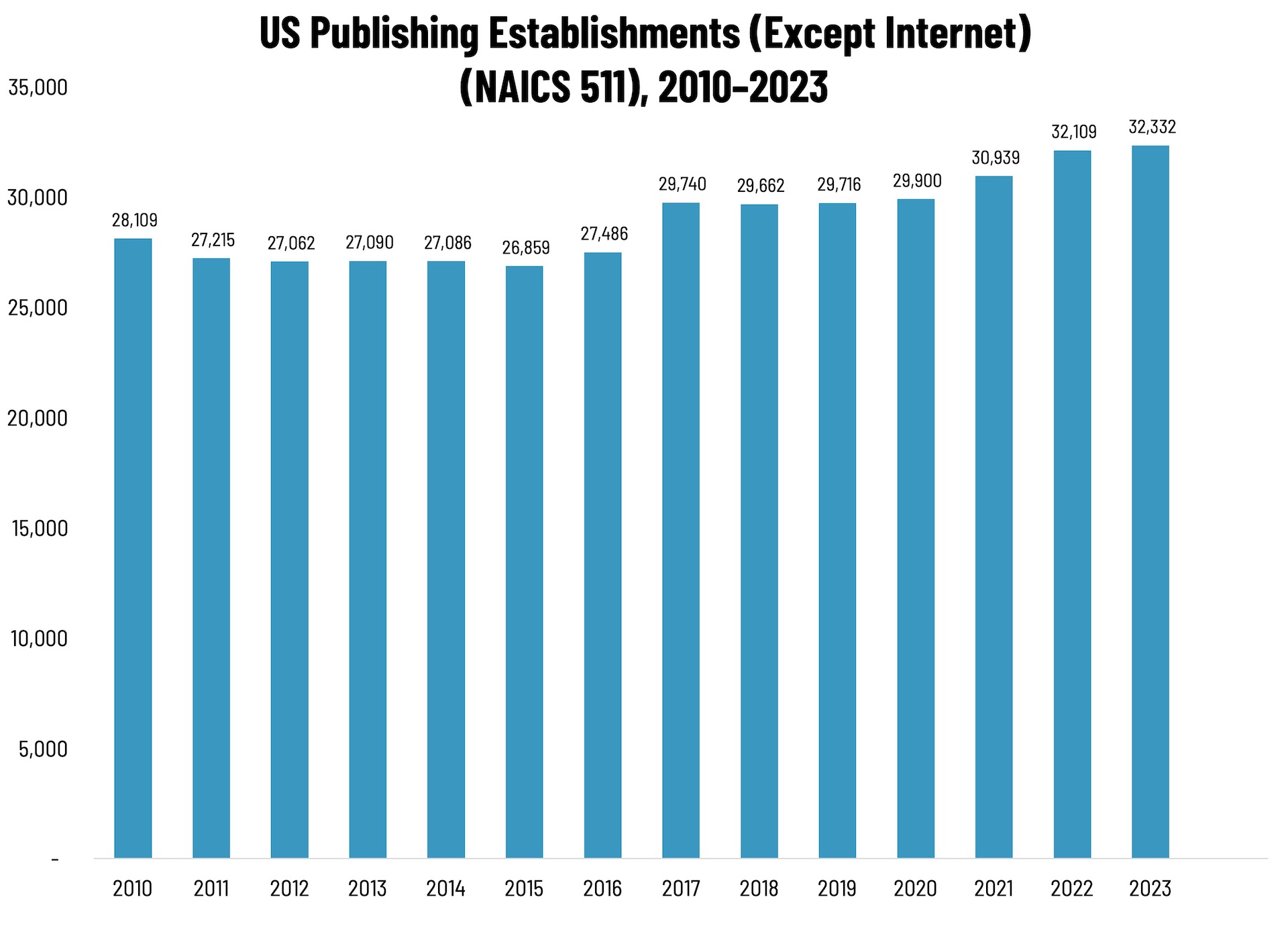
Publishing Establishments—2010–2023

Publishing Establishments—2010–2023

According to the latest, recently released edition of County Business Patterns, in 2023 there were 32,332 establishments in NAICS 511 (Publishing Industries [except Internet]). This represents an increase of 15% since 2010. In macro news, the University of Michigan’s Consumer Sentiment Index is at record lows. Read More

Finishing: Production Inkjet's Next Frontier

Finishing: Production Inkjet's Next Frontier

As production inkjet has advanced, a new primary factor limiting productivity has emerged: finishing. How are PSPs adapting their investment and automation strategies? New research shows many can gain a competitive advantage by focusing on finishing. Read More

HanGlobal Launches New LabStar 330mini at Flexo & Labels Expo 2026

HanGlobal Launches New LabStar 330mini at Flexo & Labels Expo 2026

Discover HanGlobal's newly launched LabStar 330mini digital label press! Get the full show roundup to see how this ultra-integrated, high-performance inkjet solution captured the crowd's attention and redefined narrow-web printing. Read More
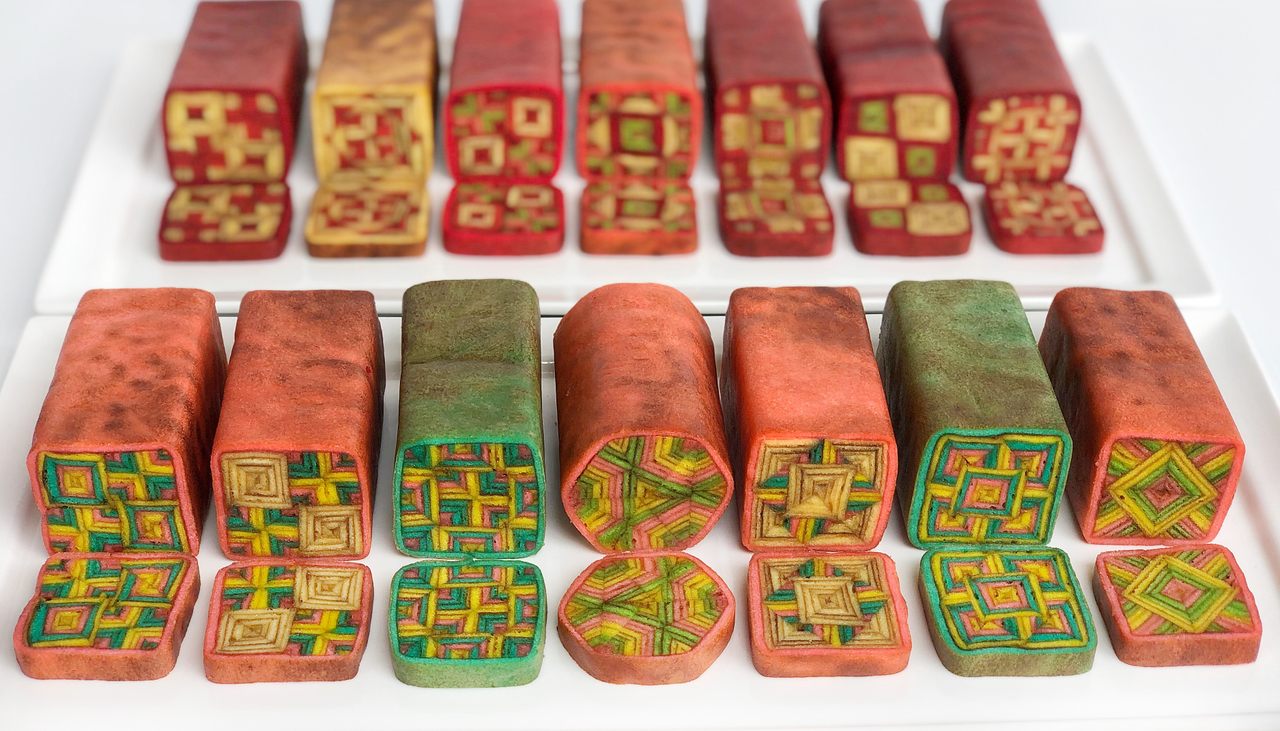
Around the Web: Of Food and Feynman

Around the Web: Of Food and Feynman

A book designer who specializes in spine design. The Chinese postal service is using humanoid robots to sort packages. An amusingly overproduced Day Display. Allen Ginsberg’s spoken-word poetry recitation album is being reissued. The winners of this year’s World Food Photography Awards. A retired geneticist launched the online Museum of Plugs & Sockets. A viral warning about a new gas station scam is actually a hoax. What is the world’s longest domestic flight? Aw, et tu, graphene: Skeleton Technologies launches graphene-based GrapheneUPS for AI data centers. What is the quietest spot in the U.S.? Researchers finally cracked Richard Feynman’s “Restaurant Problem.” Malaysia’s kek lapis Sarawak is perhaps the world’s most complex cake. Welcome to WhatTheyThink’s weekly miscellany. Read More