WhatTheyThink

Premium Commentary & Analysis

Kodak Increases Job Cuts another 10,000 and Shrinks Traditional Manufacturing by 65%: Summary of Q2 Earnings Call

By Susan Kelly July 26,

Tuesday, July 26, 2005

By Susan Kelly July 26, 2005 -- Kodak (NYSE: EK) held their second quarter earnings call today. Following on the heels of HP’s major restructuring announcement, Kodak has announced that it will increase the cuts it announced in January by as many as 10,000 to a total reduction of as many as 25,000 by the middle of 2007. Included in the updated restructuring are plans to cut traditional manufacturing infrastructure from $2.9 billion to $1 billion, cementing Kodak’s move to a digital structure. Second quarter revenue for the company was $3.686 billion, up 6% from the same period last year. The company posted a net loss for the quarter of $146 million, or $0.51 per share. Last year the company’s net income was $119 million, or $0.40 per share. Kodak CEO Antonio Perez said that the demand for the company’s traditional products was declining faster than expected, forcing the company to more aggressively make the transition to digital and streamline its cost structure. Topics of this Summary Quarter Highlights Segment Performance Guidance Raine Radar Q & A Quarter Highlights January restructuring plan updated to include the shrinking of traditional manufacturing and an additional 10,000 positions cut. Debt increased $1.4 billion to $3.721 billion from six months ago due to acquisitions. Cash levels were down from $1.255 billion to $533 million. Acquisitions of KPG and Creo completed. According to the company, the integration of those businesses is going according to plan. Gross profit was 29%, down from 31.8%. Selling, general, and administrative expenses were down slightly to 17.6% from 17.8%. Segment Performance Digital and Film Imaging Sales for the group during the second quarter were $2.151 billion, down 12%. Operating earnings were $193 million, down from $229 million last year. Sales of digital equipment for home printing were up 63%, digital capture equipment saw a 25% increase, and the use of Kodak picture maker kiosks was up 24%. The sale of analog equipment and related media continues to see a precipitous decline. Graphic Communications Sales for this segment were $794 million, up 144%, due mostly to the acquisition of Kodak Polychrome Graphics. Increased sales at Versamark and NexPress were also cited for the increase. Operating loss was $33 million. Health Group Sales for the group were $694 million, up 3%. Operating earnings were $113 million, down from $124 million last year. Digital growth in this group was less than expected, although this was offset by better than expected analog sales. Other Sales All other sales in the company were $47 million, with an operating loss of $43 million. Guidance Perez announced during the call that due to the nature of the business and industry during its shift to a digital structure, the company would no longer provide earnings per share guidance information. Instead, the company will rely only on net cash from operating activities, and digital revenue and earnings. For the 2005 fiscal year, Kodak expects net cash from operations of $1.0 billion - $1.2 billion. The company also expects approximately 36% growth in digital revenues with digital earnings of between $275 million - $325 million. Raine Radar The coincidences are too great to be explained any other way. Both HP and Kodak announce huge reductions in force within 24 hours of each other. Both companies have significant strategic and financial investments in the digital print world. Could it be a case of a maturing market that is looking for consolidation? Maybe it’s time for HP to sell off Indigo to Kodak, get out of the production digital print markets, and focus on the office and consumer markets. Maybe it’s time for Kodak to consolidate all its acquisitions and restructure all their hardware, software, workflow, and consumables to reinvent the end-to-end supply chain and dominate the production market to give Xerox a run for their money? Kodak will have to move much faster and more aggressively if they hope to fill the widening gap of the accelerated decline of the yellow box. So maybe with the Perez-HP connection there’s an opportunity to think even bigger; which is Kodak and HP working together on end-to-end consumer solutions for digital photography. Q & A Kodak plans to continue to monetize the IP coming out of R&D primarily through licensing and partnerships. The mix of equipment and consumables for the kiosks has reached about 50-50, and as the install base grows, the annuity stream associated with consumables is expected to become the larger portion of revenues. Retailers are beginning to look to reduce the space used for film, including removing film brands from shelves. Kodak sees this as a benefit as their brand leadership will keep them on the shelves while competition is stripped away. Analog infrastructure will be reduced globally. Film decline is happening faster than anyone expected and is affecting the company’s ability to measure and therefore predict future traditional revenues and earnings. Digital camera sales will be profitable in 2005, but margins are expected to be low. Perez noted that this strategy was a key enabler to promoting higher margins through kiosks, and home digital printing equipment and consumables. For the Versamark product line, approximately 1/3 of profits come from equipment sales, 1/3 comes from ink, and 1/3 comes from service. For 2005, Kodak is expecting to spend $600 million – $650 million in cash on restructuring. This should be the peak year for restructuring costs. During restructuring, Kodak expects to more closely align manufacturing to its business units. Photo finishing revenues are significantly less, but the loss figure should be dramatically better in 2005 over 2004. Approximately 20,000 employees are currently in traditional Kodak analog production. Kodak hopes to create a manufacturing structure that is more flexible between products than it is today.


Continue reading your article
with a WhatTheyThink membership.

WhatTheyThink Annual Membership

Less than $4/week.

Get unlimited access to in-depth commentary and analysis covering the latest trends, emerging technologies, operational strategies, and key events across every segment of today's printing industry.

Stay informed. Stay competitive. Stay ahead.
WhatTheyThink Day Pass

$5 for 24 hours

Unlimited access to all of WhatTheyThink. Get your Day Pass

Already a member?
Sign In

About WhatTheyThink

WhatTheyThink is the global printing industry's go-to information source with both print and digital offerings, including WhatTheyThink.com, WhatTheyThink Email Newsletters, and the WhatTheyThink magazine. Our mission is to inform, educate, and inspire the industry. We provide cogent news and analysis about trends, technologies, operations, and events in all the markets that comprise today's printing and sign industries including commercial, in-plant, mailing, finishing, sign, display, textile, industrial, finishing, labels, packaging, marketing technology, software and workflow.

Recent Articles from WhatTheyThink

Around the Web: Of Books and Bots

Around the Web: Of Books and Bots

New book “Empire of Ink” is a look at the history and mythology of the American newspaper. A hacked smart lightbulb provides access to banned books. A digital archive reassembles Leonardo da Vinci’s long-cut-apart notebooks. Michelangelo’s secret underground hiding place—complete with the artist’s graffiti. Marie Antoinette may have been history’s first influencer. A worn copy of a 1912 pulp magazine featuring Tarzan sold at auction for $58,560. New book, “The Graphene Handbook - Making Sense of Graphene at Its Inflection Point.” Visa is integrating its payment network into ChatGPT, which should be fun. A humanoid robot plans to climb Everest. A designer who specializes in chairs without legs. Did a flying monk see Halley’s Comet…twice? The British geologist whose goal was to eat as many different animals as he possibly could. Welcome to WhatTheyThink’s weekly miscellany. Read More
Publishing Establishments—2010–2023

Publishing Establishments—2010–2023

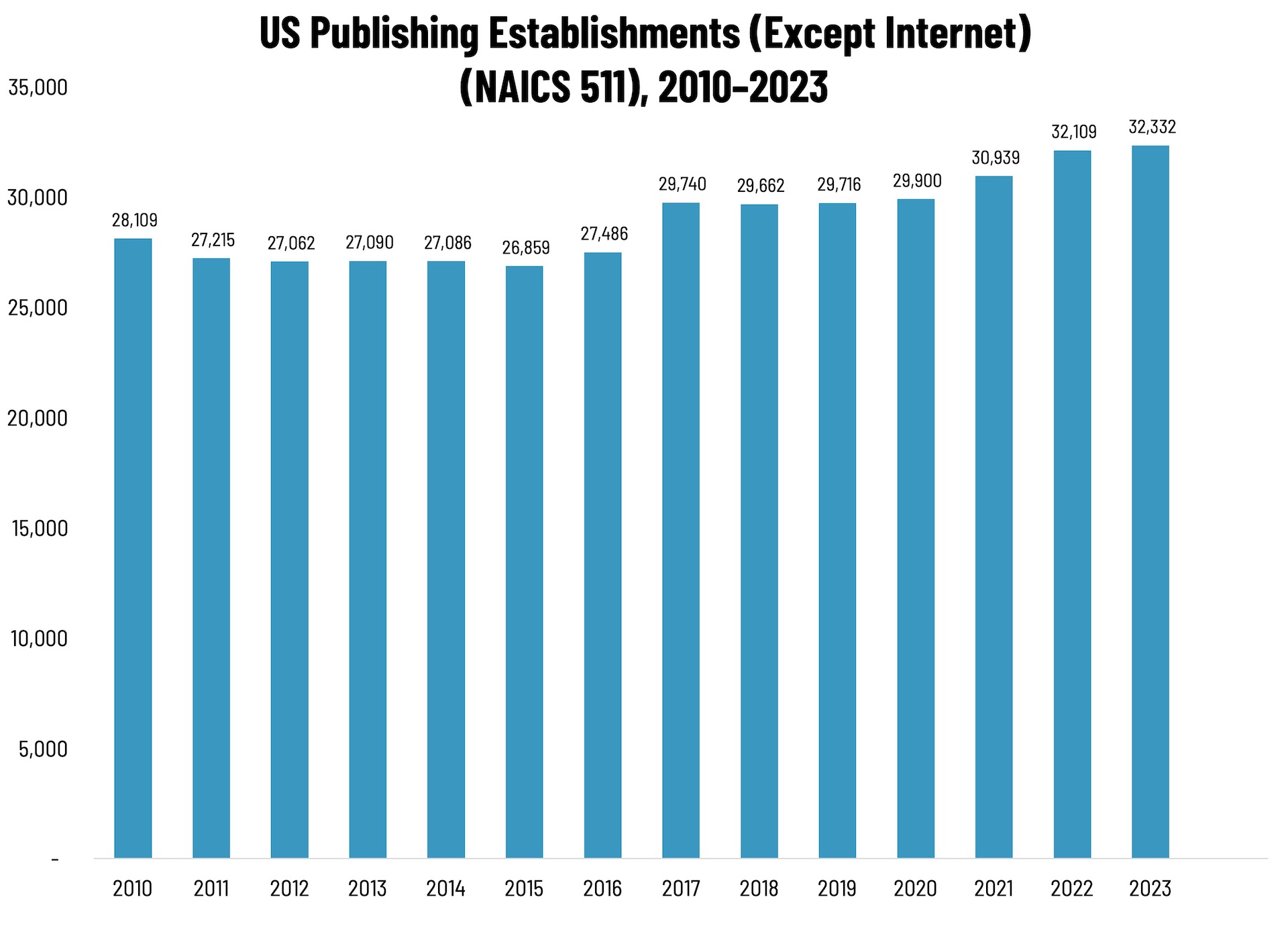
According to the latest, recently released edition of County Business Patterns, in 2023 there were 32,332 establishments in NAICS 511 (Publishing Industries [except Internet]). This represents an increase of 15% since 2010. In macro news, the University of Michigan’s Consumer Sentiment Index is at record lows. Read More
Finishing: Production Inkjet's Next Frontier

Finishing: Production Inkjet's Next Frontier

As production inkjet has advanced, a new primary factor limiting productivity has emerged: finishing. How are PSPs adapting their investment and automation strategies? New research shows many can gain a competitive advantage by focusing on finishing. Read More

HanGlobal Launches New LabStar 330mini at Flexo & Labels Expo 2026

HanGlobal Launches New LabStar 330mini at Flexo & Labels Expo 2026

Discover HanGlobal's newly launched LabStar 330mini digital label press! Get the full show roundup to see how this ultra-integrated, high-performance inkjet solution captured the crowd's attention and redefined narrow-web printing. Read More
Around the Web: Of Food and Feynman

Around the Web: Of Food and Feynman

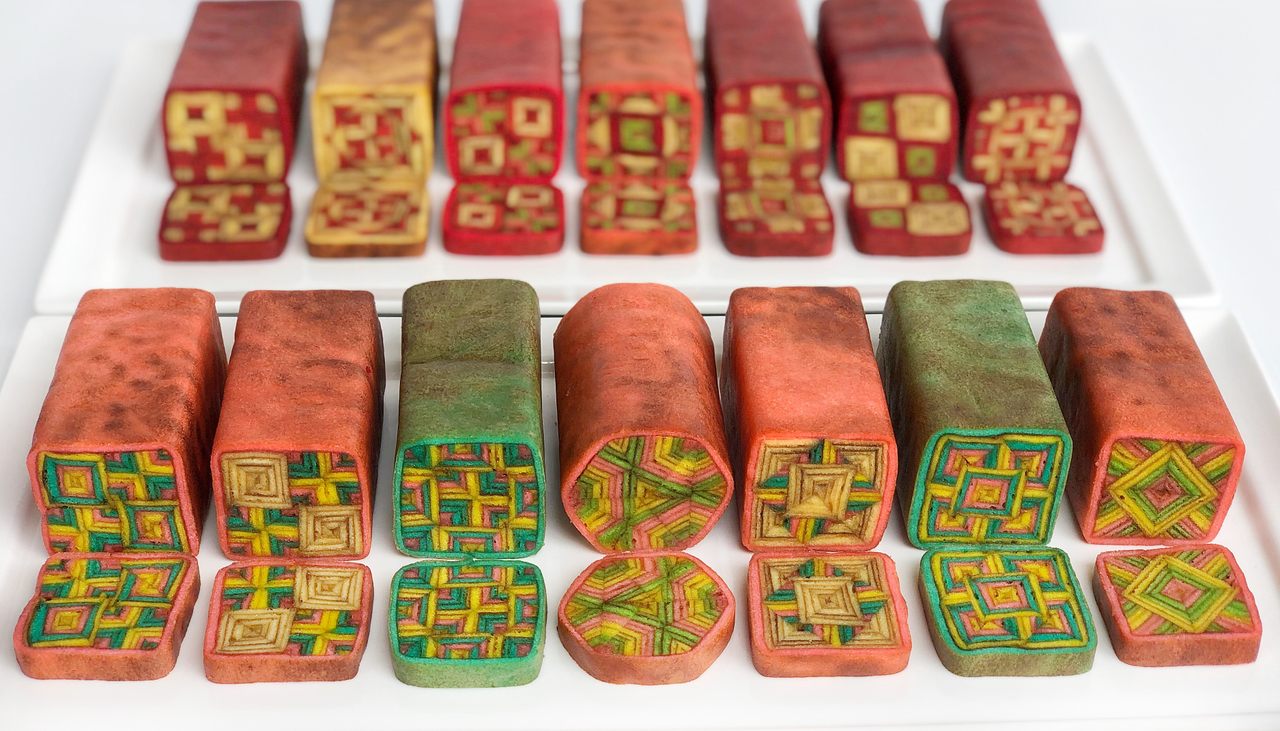
A book designer who specializes in spine design. The Chinese postal service is using humanoid robots to sort packages. An amusingly overproduced Day Display. Allen Ginsberg’s spoken-word poetry recitation album is being reissued. The winners of this year’s World Food Photography Awards. A retired geneticist launched the online Museum of Plugs & Sockets. A viral warning about a new gas station scam is actually a hoax. What is the world’s longest domestic flight? Aw, et tu, graphene: Skeleton Technologies launches graphene-based GrapheneUPS for AI data centers. What is the quietest spot in the U.S.? Researchers finally cracked Richard Feynman’s “Restaurant Problem.” Malaysia’s kek lapis Sarawak is perhaps the world’s most complex cake. Welcome to WhatTheyThink’s weekly miscellany. Read More