WhatTheyThink

Premium Commentary & Analysis

NAPL and PII Merger

By Frank Romano March 4,

Monday, April 04, 2005

By Frank Romano March 4, 2005 -- Very soon, NAPL and PII will announce a merger. Both the National Association for Printing Leadership and Print Image International (formerly the National Association for Quick Printers) will come under one administration. This is a good thing. We suggested and predicted this two years ago. In a time of declining membership among all trade associations, we must question the need for duplicated organizations and events. Take the February top management events for all three organizations. NAPL was in Arizona , PII and PIA/GATF were in Florida . Sponsors paid about $60,000 to influence 256 printing companies. Look at the numbers: Registrants All Printing Companies Board Attendees Members (Printers) NAPL 275 81 29 of 34 1,600? PIA 273 82 22 of 37 9,000? PII 140 93 10 of 13 1,000? Total 688 256 61 of 84 11,600? The PIA and PII numbers are based on direct observation and the printed registration lists. The NAPL data is based on the printed registration list and a spreadsheet produced by one of the attendees. Registrants include all attendees, including spouses, children, staff, and speakers. Printing Companies includes only printing companies--not suppliers--a more important number in terms of relevance to the industry. There was virtually no overlap of printing companies among the three events. NAPL companies include 5 “inplant” operations; all others are commercial printers. Board attendees are counted in “Printing Companies” unless they are suppliers (very few). In all cases, the printed registration list may not be accurate because of no-shows or changes. There were 24 sponsoring companies. 13 of them sponsored NAPL; 12 sponsored PIA/GATF; and 5 sponsored PII. Only 5 companies sponsored more than one event and only two sponsored all three of them. Suppliers can no longer afford to pay these amounts for such a small return. There are some notable examples of association cooperation--the NAPL and PIA/GATF Sheetfed Conference, and the NAPL and PIA/GATF Management Leadership Institute. Suppliers have asked that the two top management events find a common location and common ground. Over the course of a week, one association could meet at the start of the week and one at the end of the week, with one fantastic day of overlap. Suppliers would pay a fortune to sponsor that day. But there is recalcitrance. At a recent event there was a table with publications from NAPL and PIA/GATF. I could not determine where one began and the other ended. NAPL has the Blue Books on BHRs and PIA/GATF has the Ratio Studies. NAPL has excellent economic surveying of the commercial printing market while PIA/GATF surveys a broader definition of the printing industry. NAPL is direct membership; PIA/GATF is through local affiliates. PIA/GATF spends a lot of money on government relations; NAPL spends none. All else is overlap. Both associations are kept alive by their respective shares of the profits from the Graph Expo and PRINT shows. With supplier consolidations, this subsidy will decline (for example, KPG was once 11 different companies, all of whom exhibited in 1997; today, it is one exhibitor). A press manufacturer told me that the annual cost of moving presses in and out of the hall was exorbitant--they would play twice as much for the booth space if the show only ran every two years. One needs only to look at all the associations that depended on exhibition income to survive and you will see, in the long term, it does not work. Ask representatives from any of the associations about membership and there is evasion. Let’s admit it--membership is down for all associations. NAPL is half of what it used to be and PIA/GATF is 60 percent of its high point . Spin this any way you want, but the facts are inescapable--the industry is not supporting its own trade associations. Most of the very large printers and very small printers do not belong to any of the groups. Trade association membership in the U.S. is mostly printing firms between $1 million and $20 million in revenues. When membership dues do not cover costs, you must cut overhead; and all of our associations are now at their leanest staffs in years. Publications and educational sessions are used to generate income and the market is now saturated, with attendance at the lowest levels in years. In addition, they offer consulting and technical services. PIA/GATF has a good cash reserve because it sold the building in Virginia . NAPL has a tenant in its NJ headquarters. PII had a rented office in Chicago . What is unfortunate is that people are taking sides. Pundits, consultants, even publications, are in one camp or another. We are barraged with misleading information and strong opinions. We are losing sight of what we must be doing--helping printing companies prosper in challenging times. Are we saying that it can be done better separately rather than in combination? Do you all need to take sides? Who is representing the printer in all this? There was once an association of printing consultants and it died because it could not manage itself. This is the question for associations--how can they help industry firms manage change if they themselves cannot manage change? Where are the new ideas? Are the Board members stuck in the past? The members of the Boards of Directors of all associations have a responsibility to look beyond the club-like atmosphere and status quo and think in terms of our industry. I remember the year of acrimony and debate when the PIA and NAPL separate trade shows finally merged to become one annual event. Although I believe that competition is usually good, we gain nothing with duplication. The time has come to think and act for the benefit of the entire industry.


Continue reading your article
with a WhatTheyThink membership.

WhatTheyThink Annual Membership

Less than $4/week.

Get unlimited access to in-depth commentary and analysis covering the latest trends, emerging technologies, operational strategies, and key events across every segment of today's printing industry.

Stay informed. Stay competitive. Stay ahead.
WhatTheyThink Day Pass

$5 for 24 hours

Unlimited access to all of WhatTheyThink. Get your Day Pass

Already a member?
Sign In

About WhatTheyThink

WhatTheyThink is the global printing industry's go-to information source with both print and digital offerings, including WhatTheyThink.com, WhatTheyThink Email Newsletters, and the WhatTheyThink magazine. Our mission is to inform, educate, and inspire the industry. We provide cogent news and analysis about trends, technologies, operations, and events in all the markets that comprise today's printing and sign industries including commercial, in-plant, mailing, finishing, sign, display, textile, industrial, finishing, labels, packaging, marketing technology, software and workflow.

Recent Articles from WhatTheyThink

Around the Web: Of Books and Bots

Around the Web: Of Books and Bots

New book “Empire of Ink” is a look at the history and mythology of the American newspaper. A hacked smart lightbulb provides access to banned books. A digital archive reassembles Leonardo da Vinci’s long-cut-apart notebooks. Michelangelo’s secret underground hiding place—complete with the artist’s graffiti. Marie Antoinette may have been history’s first influencer. A worn copy of a 1912 pulp magazine featuring Tarzan sold at auction for $58,560. New book, “The Graphene Handbook - Making Sense of Graphene at Its Inflection Point.” Visa is integrating its payment network into ChatGPT, which should be fun. A humanoid robot plans to climb Everest. A designer who specializes in chairs without legs. Did a flying monk see Halley’s Comet…twice? The British geologist whose goal was to eat as many different animals as he possibly could. Welcome to WhatTheyThink’s weekly miscellany. Read More
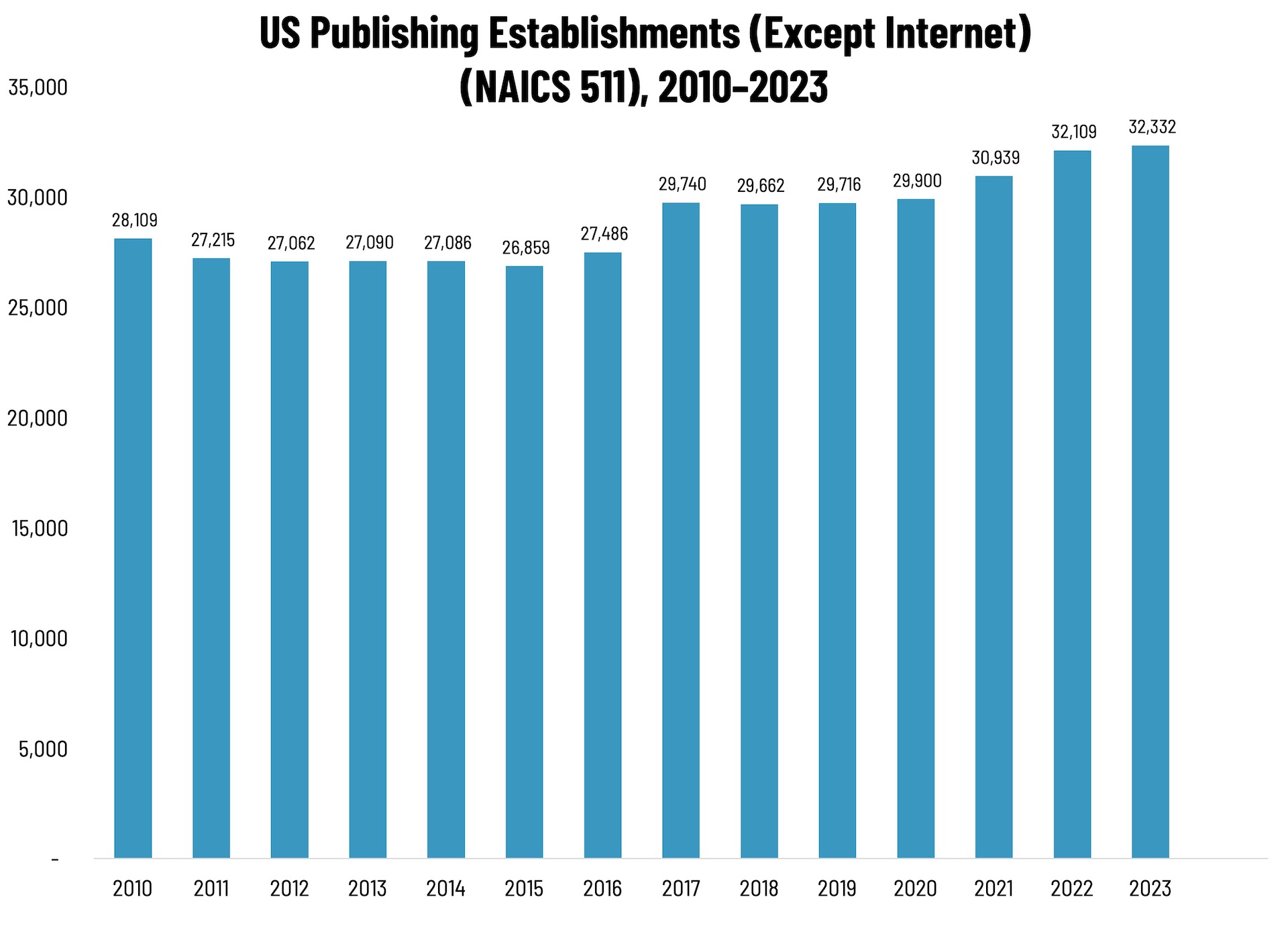
Publishing Establishments—2010–2023

Publishing Establishments—2010–2023

According to the latest, recently released edition of County Business Patterns, in 2023 there were 32,332 establishments in NAICS 511 (Publishing Industries [except Internet]). This represents an increase of 15% since 2010. In macro news, the University of Michigan’s Consumer Sentiment Index is at record lows. Read More
Finishing: Production Inkjet's Next Frontier

Finishing: Production Inkjet's Next Frontier

As production inkjet has advanced, a new primary factor limiting productivity has emerged: finishing. How are PSPs adapting their investment and automation strategies? New research shows many can gain a competitive advantage by focusing on finishing. Read More

HanGlobal Launches New LabStar 330mini at Flexo & Labels Expo 2026

HanGlobal Launches New LabStar 330mini at Flexo & Labels Expo 2026

Discover HanGlobal's newly launched LabStar 330mini digital label press! Get the full show roundup to see how this ultra-integrated, high-performance inkjet solution captured the crowd's attention and redefined narrow-web printing. Read More
Around the Web: Of Food and Feynman

Around the Web: Of Food and Feynman

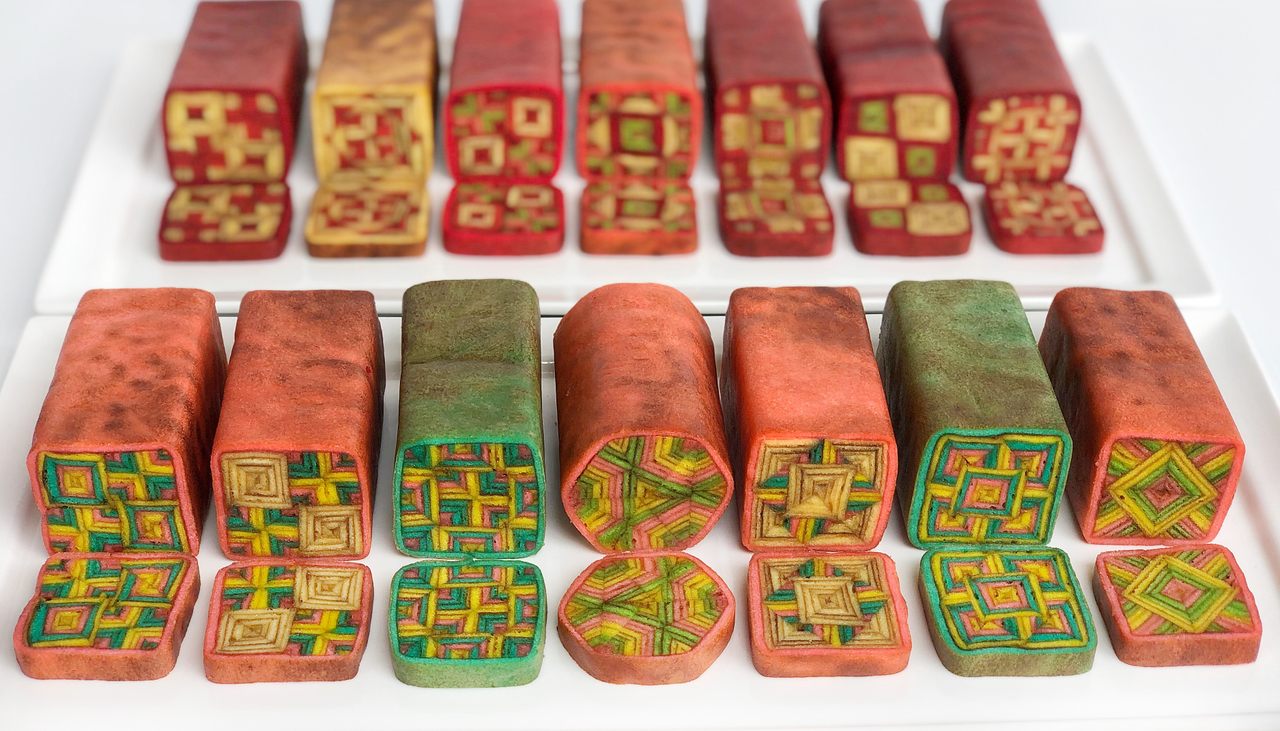
A book designer who specializes in spine design. The Chinese postal service is using humanoid robots to sort packages. An amusingly overproduced Day Display. Allen Ginsberg’s spoken-word poetry recitation album is being reissued. The winners of this year’s World Food Photography Awards. A retired geneticist launched the online Museum of Plugs & Sockets. A viral warning about a new gas station scam is actually a hoax. What is the world’s longest domestic flight? Aw, et tu, graphene: Skeleton Technologies launches graphene-based GrapheneUPS for AI data centers. What is the quietest spot in the U.S.? Researchers finally cracked Richard Feynman’s “Restaurant Problem.” Malaysia’s kek lapis Sarawak is perhaps the world’s most complex cake. Welcome to WhatTheyThink’s weekly miscellany. Read More