WhatTheyThink

Premium Commentary & Analysis

Specifying Paper: The Customers Role (Survey with Print Buyers)

March 13,

Thursday, March 13, 2003

March 13, 2003 -- Recently, we asked print customers about their role in specifying paper for their jobs. Paper is an important part of any print job because of the impact on look and feel, as well as the costs. The research indicated that roughly 60% of print customers usually or always specify the paper for their print jobs. Only 18.2% of respondents seldom or never specify the paper. Many of the print customers that seldom or never specify the paper for their jobs are companies with small print budgets (under $50,000 per year). These print customers may not have the expertise or special requirements for paper that are more commonly found with companies that have larger annual budgets.  While it may seem strange that print customers do not specify the type of paper for a print job, many times print customers have repeat jobs or jobs that are very similar. In these cases they may use a standard type of paper (e.g. “house” grade) or simply indicate that the job should be run on the same type of paper as an earlier run. Of those print customers that do specify paper, the most common attributes they specify include the grade, weight and color. Over 75% of these print customers stated they usually or always specify these attributes. Only 55% to 60% of these print customers indicated they usually or always specify other factors such as coating, surface texture and brightness. Print customers do have some influence on the brand of paper with 37% indicating they usually or always specify brand. However, this decision appears to be primarily in the hands of the print provider. The most influential sources affecting what type of paper a print customer specifies are personal experience and the print provider’s recommendations. Over 60% of print customers indicated they rely on these sources for information about paper. There is not a significant difference in sources for information on paper based on the annual print budget of print customers. Print customers also indicated they generally do not rely on other sources such as paper merchants, paper manufacturers, printing equipment manufacturers and publications to provide information on what types of paper to specify. The research suggests that paper manufacturers and merchants need to continue their marketing activities with print buyers and print providers. The focus with print buyers should be on the brand as it relates to key product attributes (grade, weight, color). Sample packs and other incentives for trying new brands and other methods for raising brand awareness could be very useful. Many print customers may not realize that their print providers can easily get a specific brand of a grade of paper, even if it is not the house brand. Paper manufacturers and distributors need to continually market to print providers as well. The print provider is often the primary source for information and can have a strong influence on which grade, weight, color and brand of paper is used. Print providers can often upsell a print customer to a premium grade or easily move them to another brand that they may have in stock or are familiar with. The last area the research looked into was on potential paper problems print customers may have when running digital color jobs. In general, print customers reported having relatively minor paper problems. Only 15% to 20% of the respondents reported having problems that precluded running a job on a digital color printer. The most commonly cited problem (22% indicating it often prohibits running the job) was the “price or cost of paper is much higher than comparable offset grades”. However, even this percentage was relatively low and not much higher than other technical factors such as cracking of toner when folding and ability to print on heavy weight or glossy stocks. All the research CAP Ventures has done relative to digital color printing continually indicates that print quality and appearance of the final document are not inhibitors to printing jobs digitally. The primary inhibitor to printing more jobs on digital color printers and presses remains the cost per page.


Continue reading your article
with a WhatTheyThink membership.

WhatTheyThink Annual Membership

Less than $4/week.

Get unlimited access to in-depth commentary and analysis covering the latest trends, emerging technologies, operational strategies, and key events across every segment of today's printing industry.

Stay informed. Stay competitive. Stay ahead.
WhatTheyThink Day Pass

$5 for 24 hours

Unlimited access to all of WhatTheyThink. Get your Day Pass

Already a member?
Sign In

About WhatTheyThink

WhatTheyThink is the global printing industry's go-to information source with both print and digital offerings, including WhatTheyThink.com, WhatTheyThink Email Newsletters, and the WhatTheyThink magazine. Our mission is to inform, educate, and inspire the industry. We provide cogent news and analysis about trends, technologies, operations, and events in all the markets that comprise today's printing and sign industries including commercial, in-plant, mailing, finishing, sign, display, textile, industrial, finishing, labels, packaging, marketing technology, software and workflow.

Recent Articles from WhatTheyThink

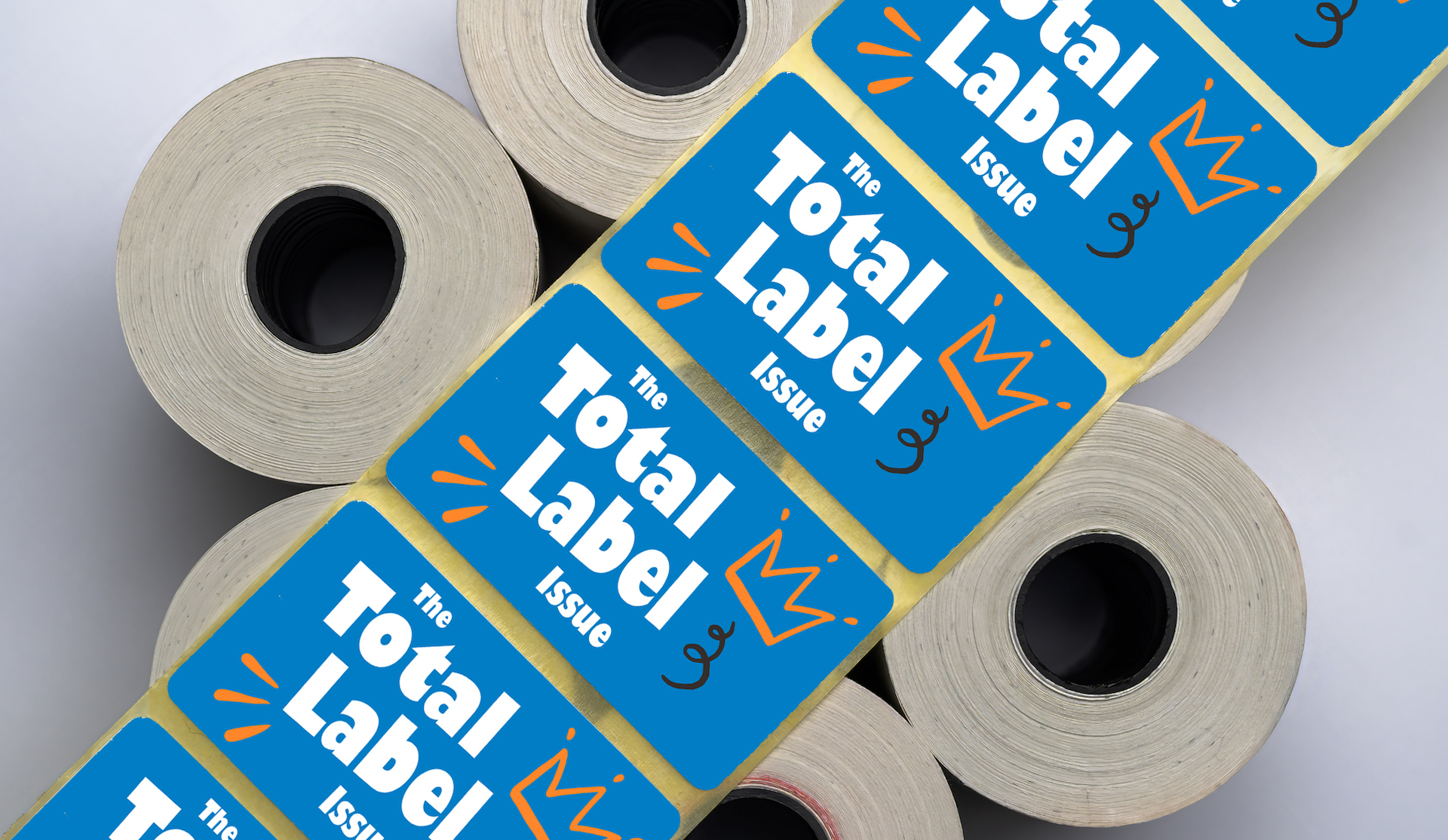
The Total Label Issue

The Total Label Issue

This issue of the WhatTheyThink Quarterly is all about labels, which are seen as a high-growth part of commercial printing, driven by e-commerce, food/beverage demand, and regulations. The market has surpassed 1.2 trillion square meters of label production volume per year, and is moving toward high-mix, low-waste production rather than only high-volume throughput. While flexo is still used for high-volume label production, digital label printing often complements it—or in some cases replaces it. But labels are about more than printing technology. Read More
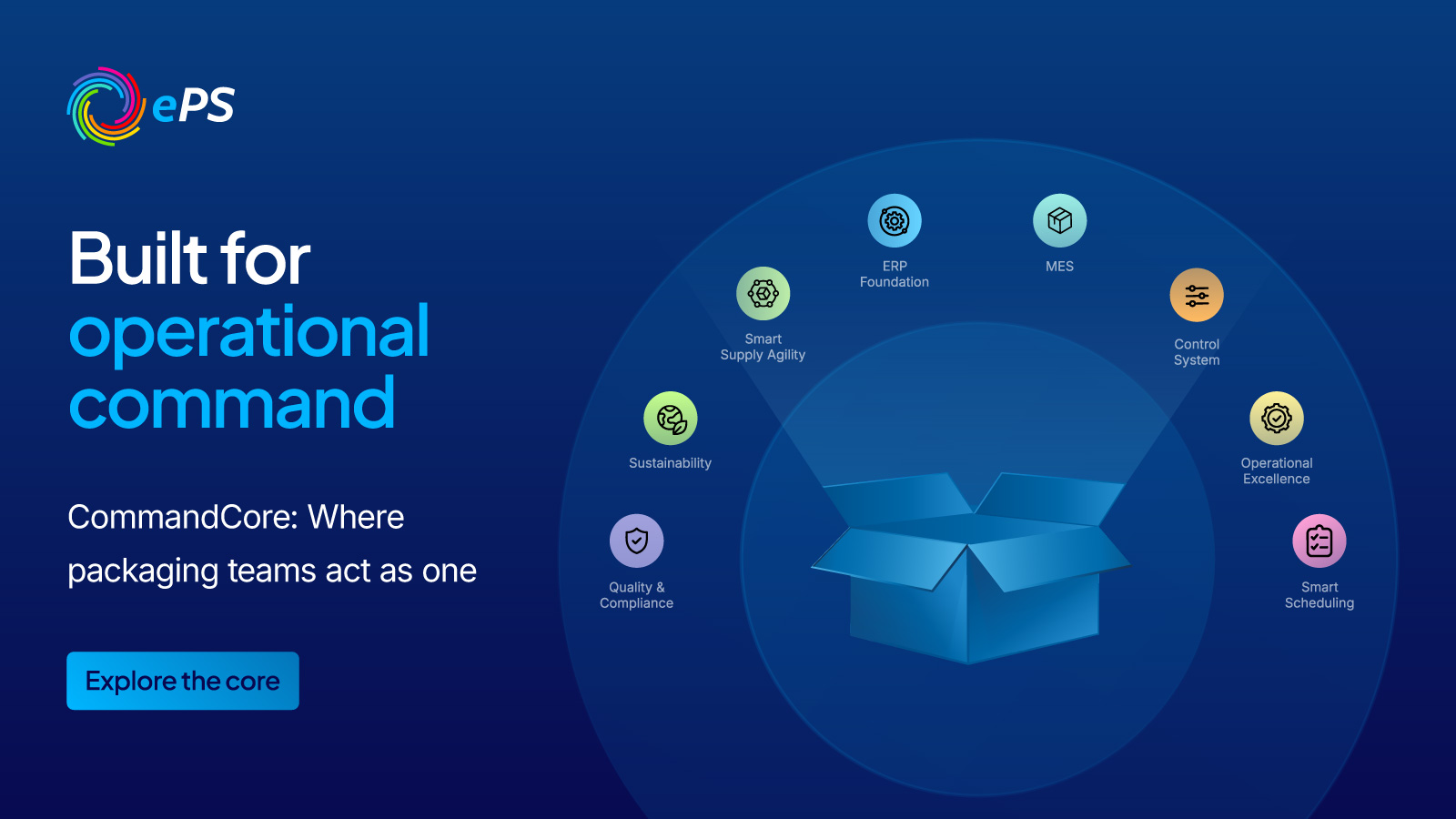
The Unified Platform for Packaging Manufacturing Excellence

The Unified Platform for Packaging Manufacturing Excellence

Leverage 30+ years of plant-floor expertise. Trusted by 700+ packaging manufacturers globally to reduce waste, optimize scheduling, and drive digital transformation. One unified foundation. Eight packaging-native pillars. Zero fragmentation. Read More
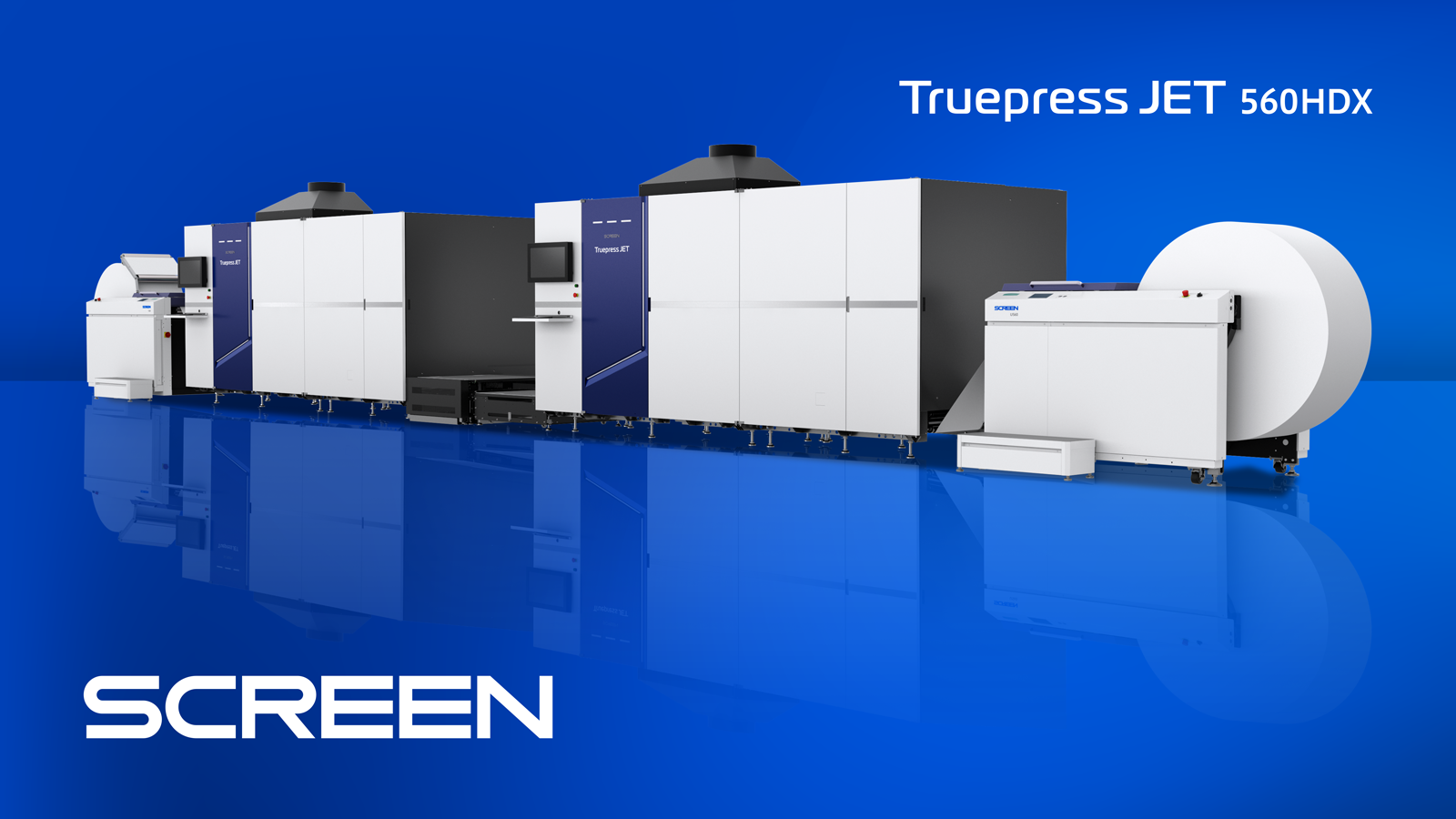
Expand Your Opportunities with the Truepress JET 560HDX from SCREEN

Expand Your Opportunities with the Truepress JET 560HDX from SCREEN

Commercial, direct mail, and publishing printers accustomed to producing jobs over several weeks can now print them in days with the SCREEN Truepress JET 560HDX. The press can accommodate 120 lb. coated or uncoated paper up to 560 mm wide. Read More

Around the Web: Of Water and Winners

Around the Web: Of Water and Winners

A sign-writer created the visual style of music festivals. The “2026 Milky Way Photographer of the Year” winners. AI appears to be catching on among the Amish. Sony has upgraded its wearable air conditioner. How to easily reuse produce bags. A complex digital water clock. A Nobel Prize–winning technology is able to extract water from dry air. Yes, it is possible to be allergic to water. Laser-induced graphene on Kevlar enables multifunctional structural composites. The “most desired” place in each of the 50 states. “The rise in plastic surgeons asked to create ‘AI face.’” K-pop band BTS has teamed with Oreo to release limited edition OREO x BTS Cookies. Welcome to WhatTheyThink’s weekly miscellany. Read More
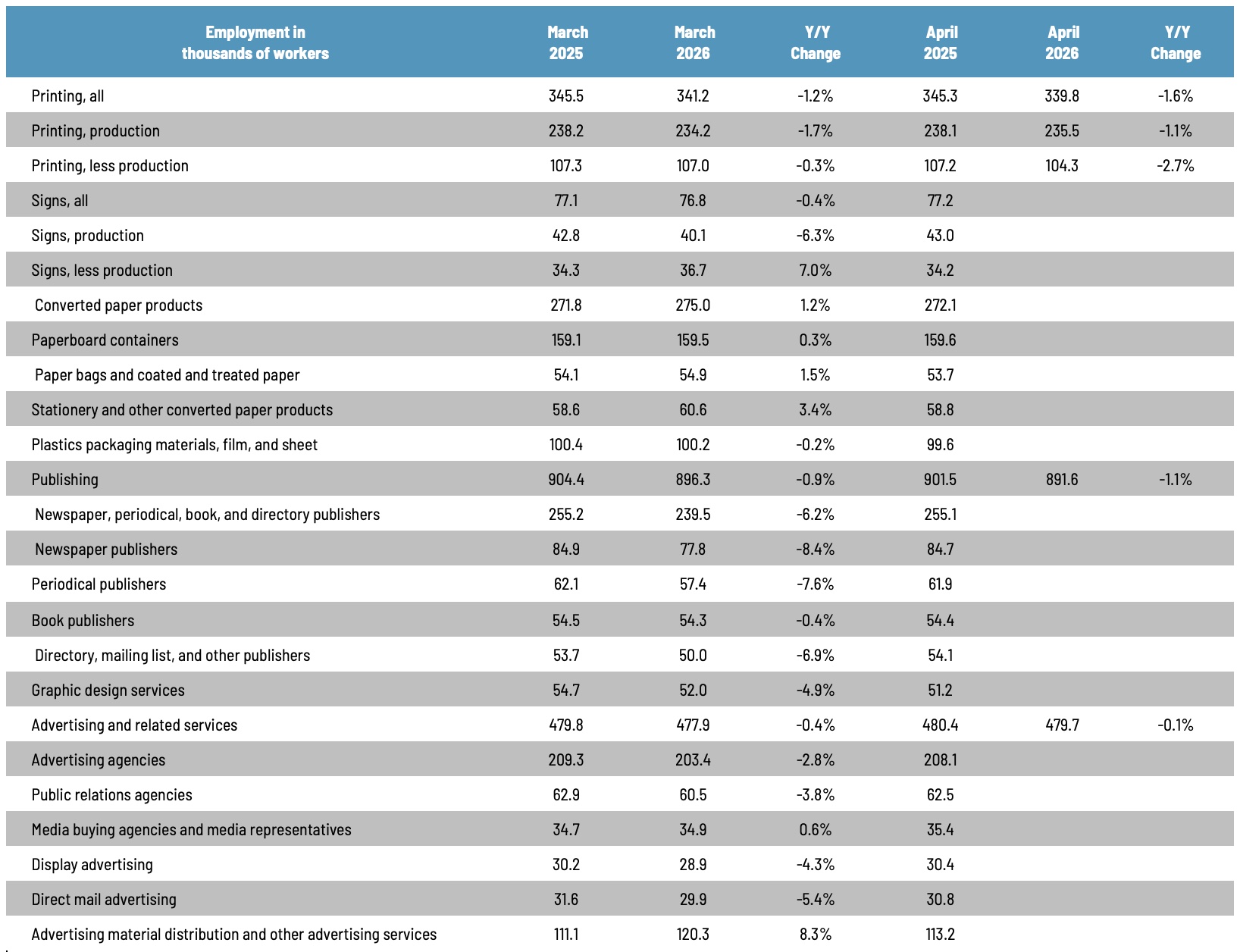
Graphic Arts Employment in April Down Overall—Substantially Among Non-Production

Graphic Arts Employment in April Down Overall—Substantially Among Non-Production

April 2026 saw printing industry employment overall generally flat, down 0.4% from March. And while production employment was up 0.6%, non-production employment was down by 2.5%—basically the reverse of what we saw in March. Read More

Recent Printing Industry News

Wednesday, June 03, 2026