WhatTheyThink

Premium Commentary & Analysis

The Coming of Age of Digital Presses and the Graphic Arts Channel

At Graph Expo last year,

Thursday, February 27, 2003

At Graph Expo last year, for the first time, a major trade show featured digital printing as mainstream production, not a future oriented curiosity, an "add-on" to " real" printing. In the Heidelberg booth, the most intense presentation and the biggest draw was not around the traditional Heidelberg heavy iron, but around their Digital Press capabilities. The industry has been talking about the move to digital printing for some time, but this was the first time it seemed to be shown and understood as the future of print and at the annual GA Showcase Event, Graph Expo!

With digital printing now recognized as mainstream production and the dominant technology for the future, the rest of the industry from pre-press to bindery and all other elements along the way are fundamentally altered. These shock wave changes throughout the rest of the business were also apparent at the show.

Digital imaging, along with overcapacity in conventional printing, hastens the commoditization of graphic arts consumable products such as film, conventional plates and analog proofing. As these technologies decline, so to do their famous brand names. Reflecting this reality, consumable suppliers had nary a supply in their booths, but they did have lots of equipment made by others. The new "mature model" of bundling, adding value (as the core product is seen as less valuable) and offering "solutions" dominated the traditional suppliers' offerings at Graph Expo.

As part of this same pattern, Computer to Plate technologies overshadowed consumables. Yet, though CtP appeared at Graph Expo as a dynamic and still brand worthy technology, it must be recognized for what it is – the final vestige of "efficiency" and cost reduction necessary to make offset printing price competitive for a few more years.

CtP, Offset's Last Stand

All current digital proofing and workflow technologies fit smoothly into the digital print world, except for CtP itself, which freezes the image on a disposable plate before the image is transferred onto media. Perhaps it is no wonder that the most public of the CtP companies, Creo, has purchased a workflow software company and invested in Printcafe to beef up its efforts in surviving the future decline in their CtP fortunes. (Printcafe plans to be acquired by EFI.)

As the vast majority of B&W print of reasonable length is now produced on digital presses/copiers, so too will the Color world be moving more and more swiftly in that direction. It’s only a matter of time and maturity. There are already an estimated 16,500 establishments that provide digital production printing services (for pay) without including wide format, or desktop/office printing sites.)

Color quality for all but the top 5% - 15% of the work is sufficient and declining print runs, to the point where 66% of all jobs are now below 5000 pages, is the reality of the times. Additionally, 53% of the print runs are less than 2,500 impressions (CAP Ventures.) In fact, recent headlines further claim that "toner" produces more consistent results than offset! Yet, at the recent Print Outlook Conference, most traditional industry experts still don’t include digital presses in their "print" analysis.

Inkjet "Presses"

High-speed, wide format printers are also proliferating. Wider and wider, and faster and faster, we now even see flatbed printers, and many other wide format units are capable to print on thicker materials, like cardboard and foam core mountings, can use outdoor certified inks, produce backlit products, and even print on plastic/PVC. Besides paper, "all" other manner of material can now be printed efficiently at very small quantities.

While the technology is not yet sufficient for large quantities of packaging and Point of Purchase (POP) materials, these printers can clearly provide shorter runs of the most sophisticated marketing and packaging materials imaginable. These new wide format inkjet "presses" add to the range of materials that can be printed in the new manner and begin to take away jobs from the one area where old-fashioned print is still growing - packaging.

Printing large format pages to these devices takes sophisticated front-end systems. All of the prepress and workflow products that have become necessary to efficiently go to CtP are necessary here. Yet, as we’ve mentioned for a number of years, the traditional graphic arts channel makes very little wide format and digital press sales.


Continue reading your article
with a WhatTheyThink membership.

WhatTheyThink Annual Membership

Less than $4/week.

Get unlimited access to in-depth commentary and analysis covering the latest trends, emerging technologies, operational strategies, and key events across every segment of today's printing industry.

Stay informed. Stay competitive. Stay ahead.
WhatTheyThink Day Pass

$5 for 24 hours

Unlimited access to all of WhatTheyThink. Get your Day Pass

Already a member?
Sign In

About WhatTheyThink

WhatTheyThink is the global printing industry's go-to information source with both print and digital offerings, including WhatTheyThink.com, WhatTheyThink Email Newsletters, and the WhatTheyThink magazine. Our mission is to inform, educate, and inspire the industry. We provide cogent news and analysis about trends, technologies, operations, and events in all the markets that comprise today's printing and sign industries including commercial, in-plant, mailing, finishing, sign, display, textile, industrial, finishing, labels, packaging, marketing technology, software and workflow.

Recent Articles from WhatTheyThink

The Total Label Issue

The Total Label Issue

This issue of the WhatTheyThink Quarterly is all about labels, which are seen as a high-growth part of commercial printing, driven by e-commerce, food/beverage demand, and regulations. The market has surpassed 1.2 trillion square meters of label production volume per year, and is moving toward high-mix, low-waste production rather than only high-volume throughput. While flexo is still used for high-volume label production, digital label printing often complements it—or in some cases replaces it. But labels are about more than printing technology. Read More
The Unified Platform for Packaging Manufacturing Excellence

The Unified Platform for Packaging Manufacturing Excellence

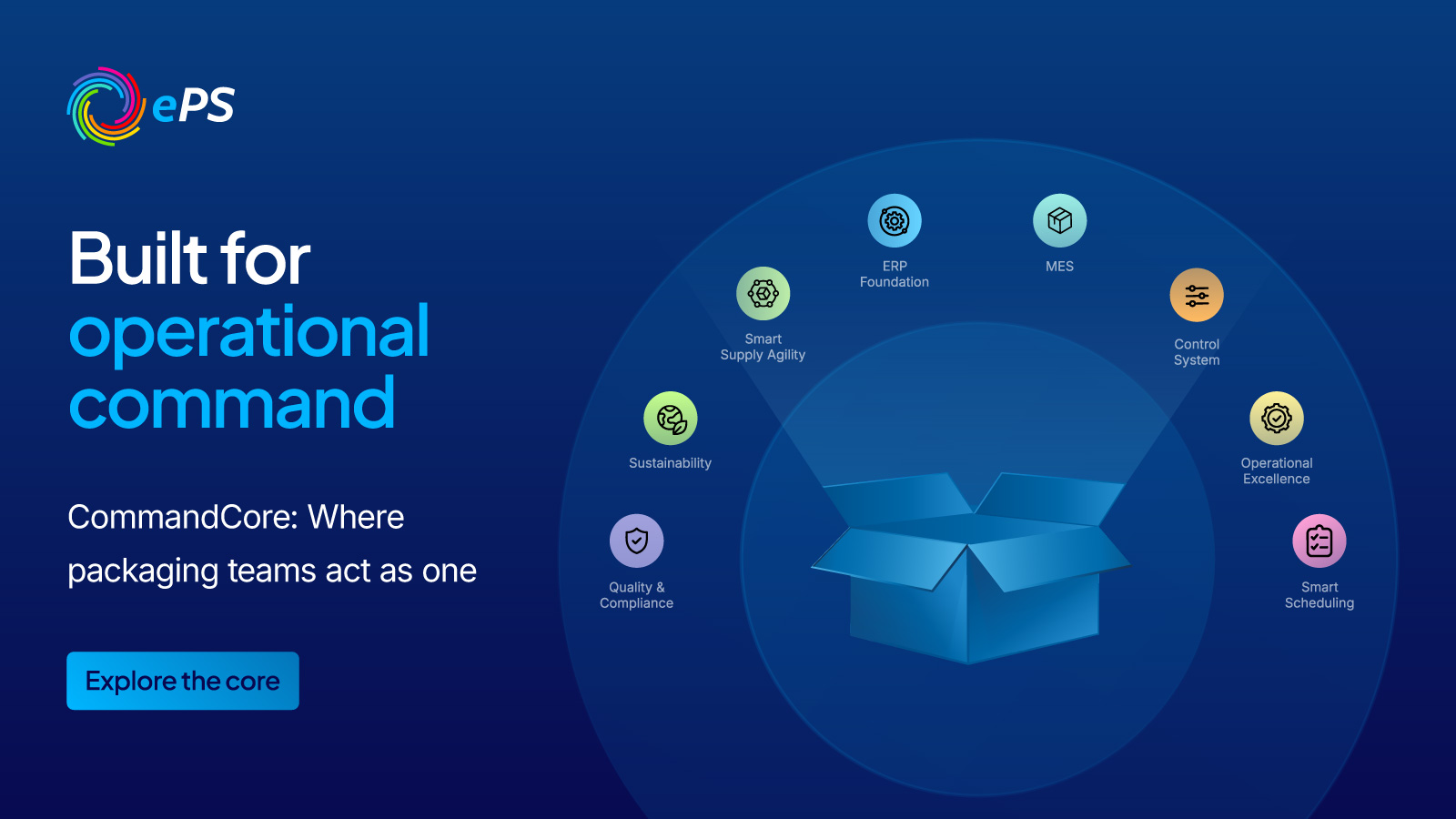
Leverage 30+ years of plant-floor expertise. Trusted by 700+ packaging manufacturers globally to reduce waste, optimize scheduling, and drive digital transformation. One unified foundation. Eight packaging-native pillars. Zero fragmentation. Read More
Expand Your Opportunities with the Truepress JET 560HDX from SCREEN

Expand Your Opportunities with the Truepress JET 560HDX from SCREEN

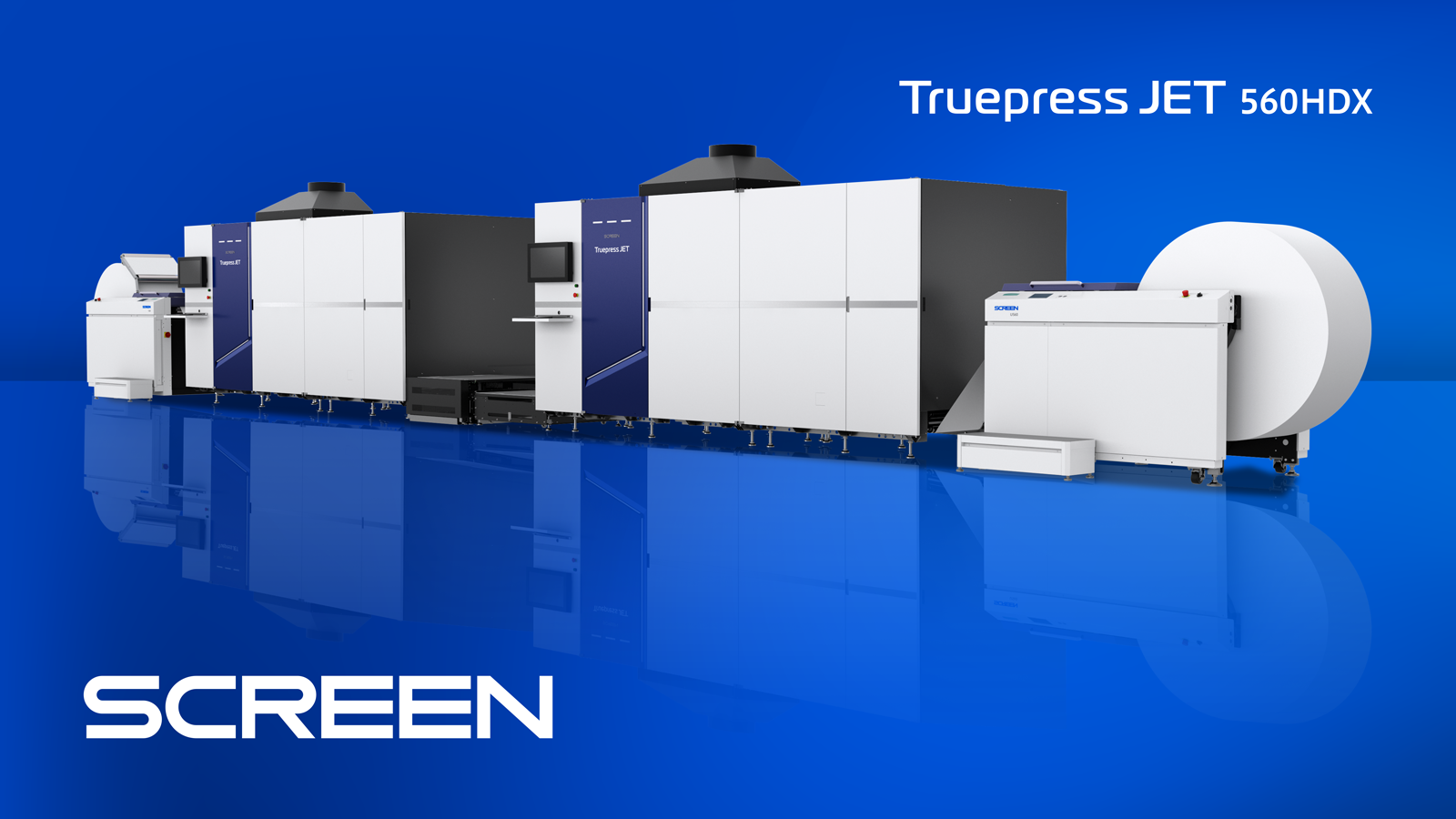
Commercial, direct mail, and publishing printers accustomed to producing jobs over several weeks can now print them in days with the SCREEN Truepress JET 560HDX. The press can accommodate 120 lb. coated or uncoated paper up to 560 mm wide. Read More

Around the Web: Of Water and Winners

Around the Web: Of Water and Winners

A sign-writer created the visual style of music festivals. The “2026 Milky Way Photographer of the Year” winners. AI appears to be catching on among the Amish. Sony has upgraded its wearable air conditioner. How to easily reuse produce bags. A complex digital water clock. A Nobel Prize–winning technology is able to extract water from dry air. Yes, it is possible to be allergic to water. Laser-induced graphene on Kevlar enables multifunctional structural composites. The “most desired” place in each of the 50 states. “The rise in plastic surgeons asked to create ‘AI face.’” K-pop band BTS has teamed with Oreo to release limited edition OREO x BTS Cookies. Welcome to WhatTheyThink’s weekly miscellany. Read More
Graphic Arts Employment in April Down Overall—Substantially Among Non-Production

Graphic Arts Employment in April Down Overall—Substantially Among Non-Production

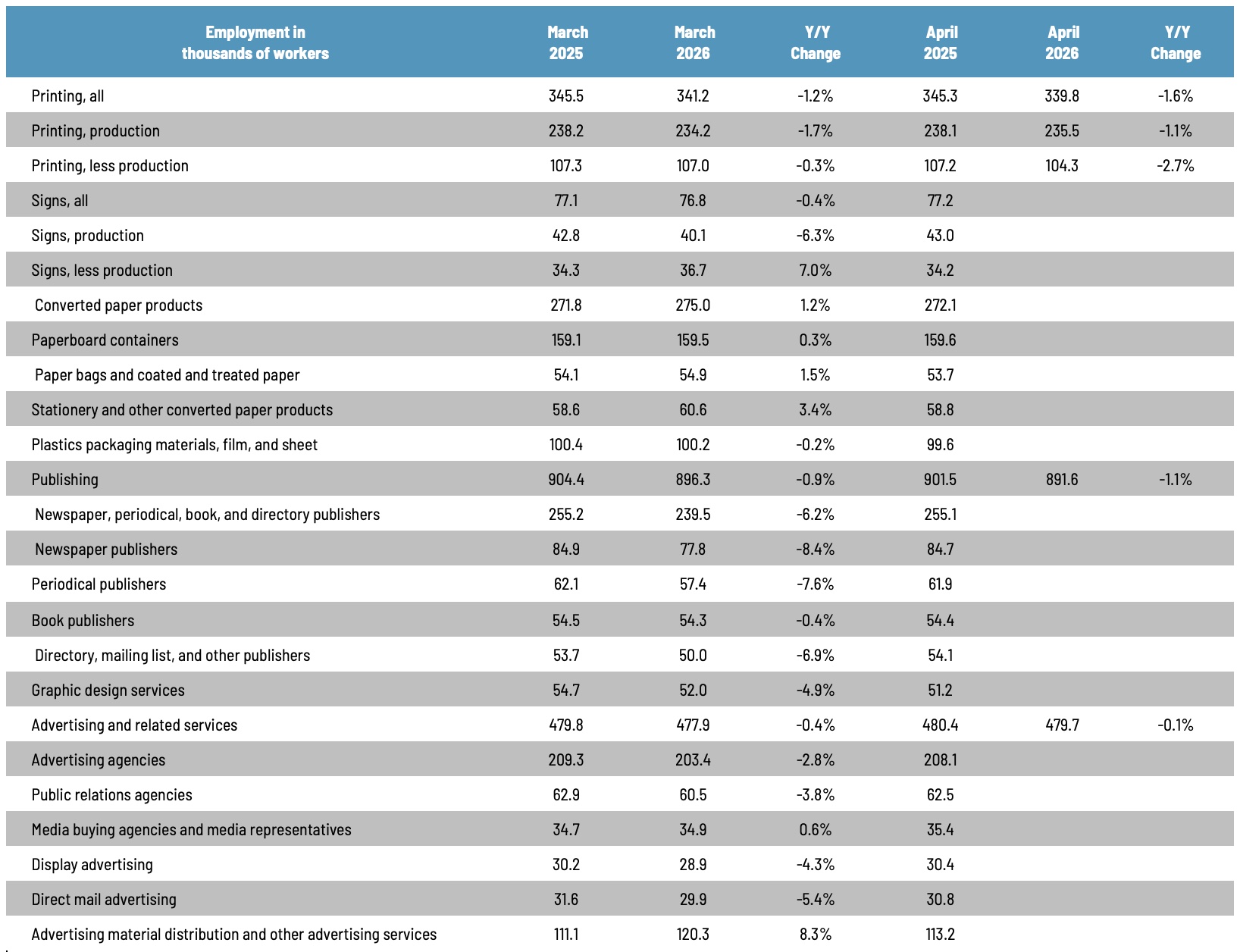
April 2026 saw printing industry employment overall generally flat, down 0.4% from March. And while production employment was up 0.6%, non-production employment was down by 2.5%—basically the reverse of what we saw in March. Read More

Recent Printing Industry News

Wednesday, June 03, 2026