WhatTheyThink

Premium Commentary & Analysis

The New Print Buyer: Print buying is art and science ... plus a little magic

By Frank Romano February 24,

Monday, February 24, 2003

By Frank Romano February 24, 2003 -- Print buying is art and science . . . plus a little magic. The major change in print buying is that more and more un-knowledgeable people are the buyers. At one time companies had purchasing departments with specialists in various areas; today, purchasing agents are generalists. Marketing and communications departments try to buy direct where they can, or lump the printing in with the design purchase. As a result, more creative professionals buy printing than ever before. *Sales and marketing generate the most need for print. Of all print jobs: - 61% Sales/Marketing - 8% Management/Administration - 8% Communications/PR - 8% Training/Human Resources - 6% Manufacturing - 2% Legal/Engineering/R&D - 7% Other The number of printing firms that print buyers deal with depends on how much print they buy. On average, print buyers deal with 7.3 printing companies. The larger the print buy, the more printers that the company deals with. A poll showed that a sales or customer service rep’s knowledge of the printing industry ranked as the second most important factor in a print buyer's purchasing decision. Price was third; yeah, third. What was number one: the ability to meet the deadline. Not all jobs go through the purchasing department and not all jobs are competitively bid: - 45% Purchasing (Bid) - 20% Purchasing (No bid) - 35% Department direct They say that 1% to as much as 15% of most companies’ revenues involve print. That sort of makes sense, since companies need print to communicate with their customers and potential customers. Most printing comes from the business community--43%. Publishing (where the printing is the final product) is now down to 30% of all print purchasing, but it tends to be purchased differently than business-related print. Publishers have annual and multi-year contracts with their printers and this is not common in most other print buying. Most print passes through the mind of a creative person, but some goes through amateurs: - 71% Designer - 29% No designer The early dotcoms tried to "automate" print buying by insinuating themselves between buyer and seller. Some are still trying this intermediary approach. We think that such automation only works for relatively simple jobs. After that, you need a real human being. Information about print buying is still scant. The reason is that print buyers, like designers, do not congregate. It is hard to find them because there is no publication or association that a mass of them use. Those that can be found tend to be really large print buyers and their data may not be representative of the entire market. Our guess is that there are about 22,000 major print buyers in the U.S. But there are another 90,000 occasional print buyers. Differentiating them is the challenge. What do print buyers really want? They want print for almost nothing, printed and bound in one hour, submitted as files that require reading the designer’s mind, and free lunches as well. Here is our list of what print buyers want: 1. Instant quotes and re-quotes. Print buyers work for others in the organization who are tied to budgets and deadlines. Print decisions are based on the cost of the print relative to the budget. The decision making process requires quotes on various iterations of a print job. 2. Instant contact. I met this printer with two cellphones and two pagers on their belt. When the customer calls, you want to reply quickly and get the information even faster. This means voice and e-mail communication with everyone in the loop: sales, customer service, and others. 3. Instant job status. This is always on the list of "must have" by print buyers. Some printers link job status into their Web site. 4. Instant proofs. Some printers use PDF "bluelines" and many printers are experimenting with remote proofs or soft proofing. The object is to get the job’s approval as soon as possible and cut the production cycle. 5. Instant repeat jobs. "Just re-run that last job" means finding the old name or job number and making sure the file is the final version that was print. 6. Free preflighting and file repair. Most designers design jobs that cannot print so every file has to be preflighted to find and correct potential production problems. 7. Constant hand-holding. Anticipate questions on file preparation, have Frequently Asked Questions on the Web site, provide tips and other information—help them help themselves. 8. Instant job submission. FTP and other links are helpful in getting the job from the client faster than FedEx. We can no longer wait until the "next day." 9. No charge for AAs and free overs. Hey, it was only a simple change, so what if you had to make new plates. I only ordered 5,000, but I’ll take any extras you want to get rid of. 10. Free printing. What do print buyers want? Everything. Frank Romano is the Fawcett Professor at the RIT School of Print Media and a commentator on the printing industry. Please offer your feedback - [email protected]. *All data -- Source: Frank Romano research


Continue reading your article
with a WhatTheyThink membership.

WhatTheyThink Annual Membership

Less than $4/week.

Get unlimited access to in-depth commentary and analysis covering the latest trends, emerging technologies, operational strategies, and key events across every segment of today's printing industry.

Stay informed. Stay competitive. Stay ahead.
WhatTheyThink Day Pass

$5 for 24 hours

Unlimited access to all of WhatTheyThink. Get your Day Pass

Already a member?
Sign In

About WhatTheyThink

WhatTheyThink is the global printing industry's go-to information source with both print and digital offerings, including WhatTheyThink.com, WhatTheyThink Email Newsletters, and the WhatTheyThink magazine. Our mission is to inform, educate, and inspire the industry. We provide cogent news and analysis about trends, technologies, operations, and events in all the markets that comprise today's printing and sign industries including commercial, in-plant, mailing, finishing, sign, display, textile, industrial, finishing, labels, packaging, marketing technology, software and workflow.

Recent Articles from WhatTheyThink

The Total Label Issue

The Total Label Issue

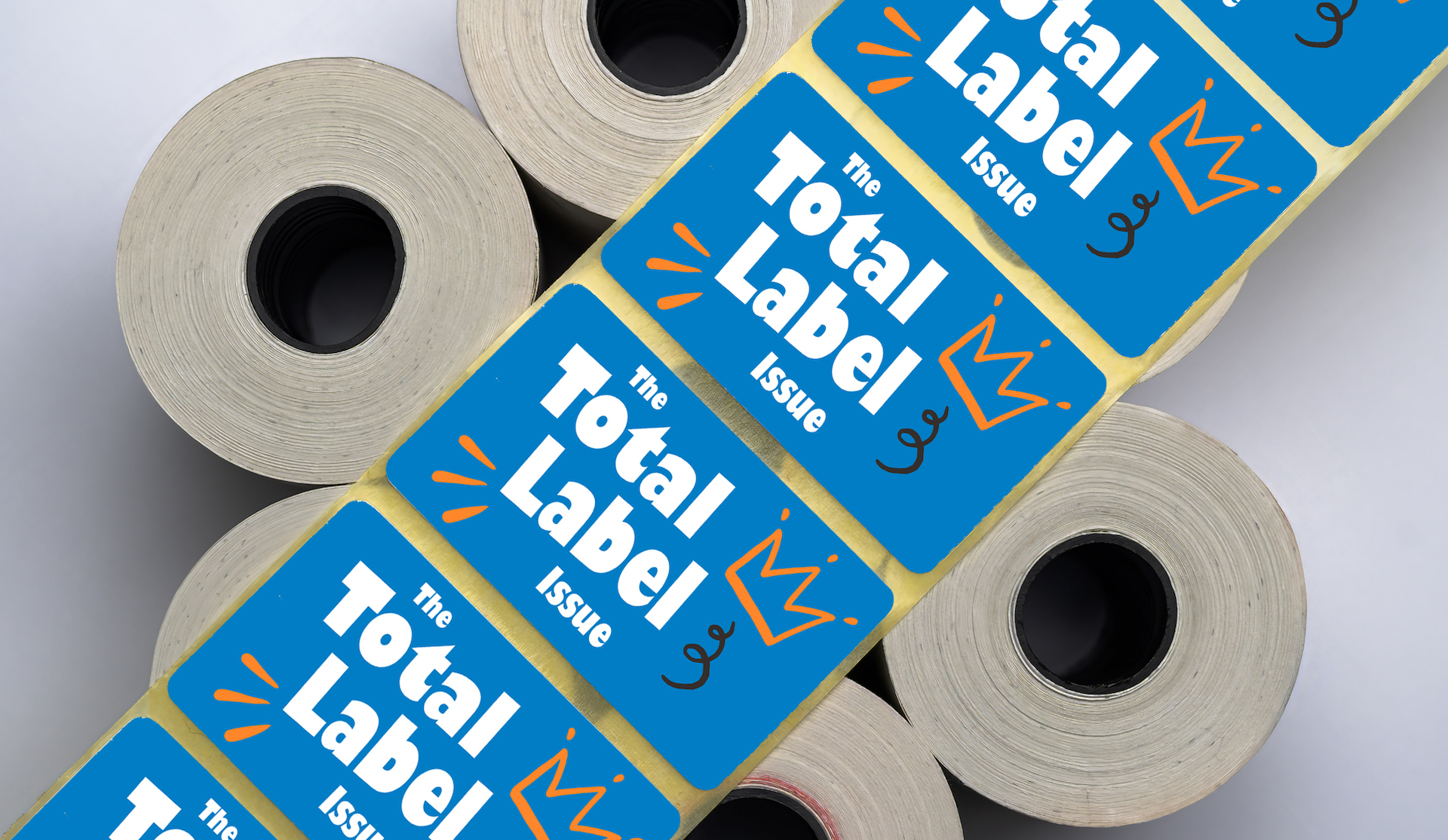
This issue of the WhatTheyThink Quarterly is all about labels, which are seen as a high-growth part of commercial printing, driven by e-commerce, food/beverage demand, and regulations. The market has surpassed 1.2 trillion square meters of label production volume per year, and is moving toward high-mix, low-waste production rather than only high-volume throughput. While flexo is still used for high-volume label production, digital label printing often complements it—or in some cases replaces it. But labels are about more than printing technology. Read More
The Unified Platform for Packaging Manufacturing Excellence

The Unified Platform for Packaging Manufacturing Excellence

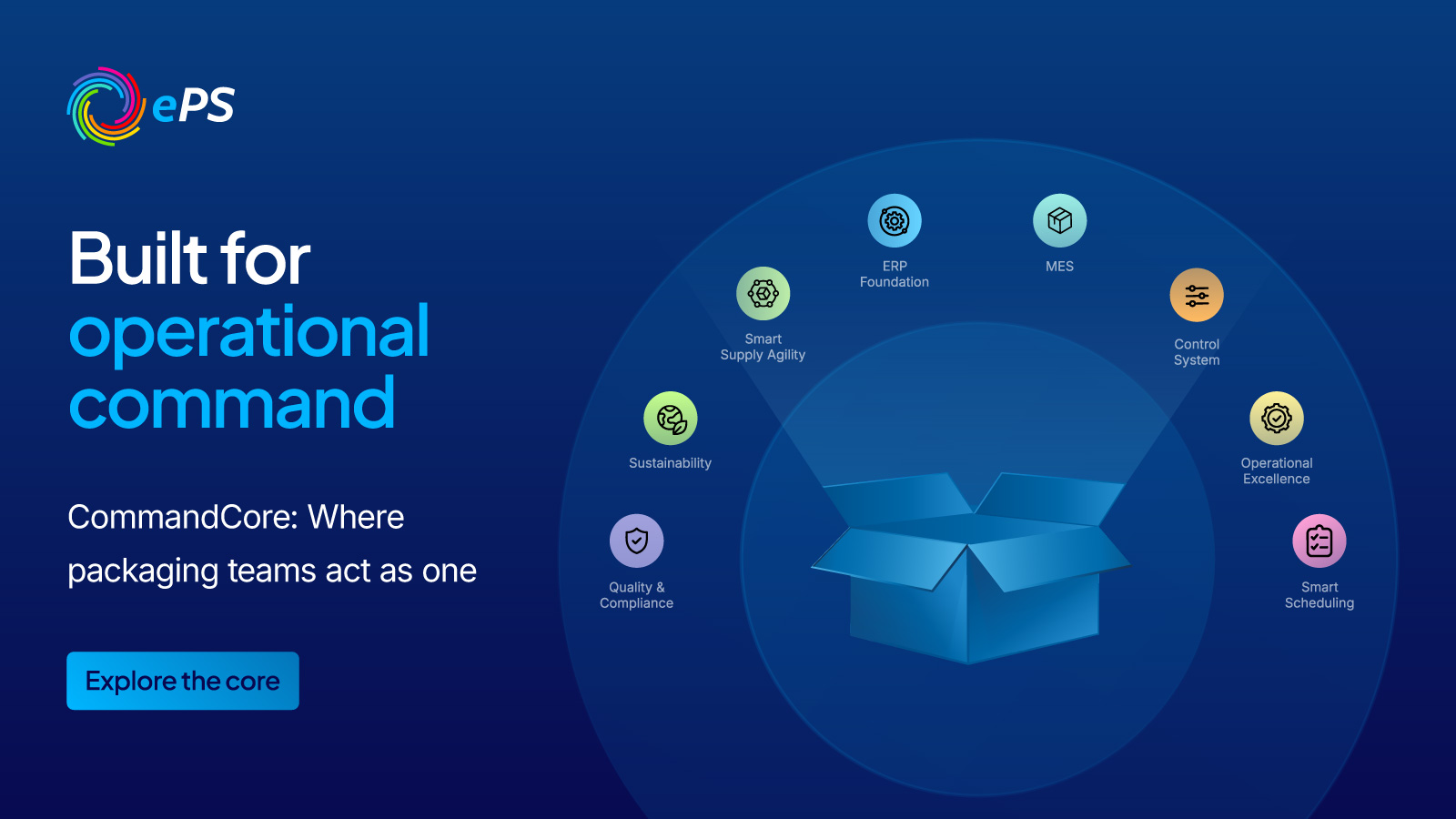
Leverage 30+ years of plant-floor expertise. Trusted by 700+ packaging manufacturers globally to reduce waste, optimize scheduling, and drive digital transformation. One unified foundation. Eight packaging-native pillars. Zero fragmentation. Read More
Expand Your Opportunities with the Truepress JET 560HDX from SCREEN

Expand Your Opportunities with the Truepress JET 560HDX from SCREEN

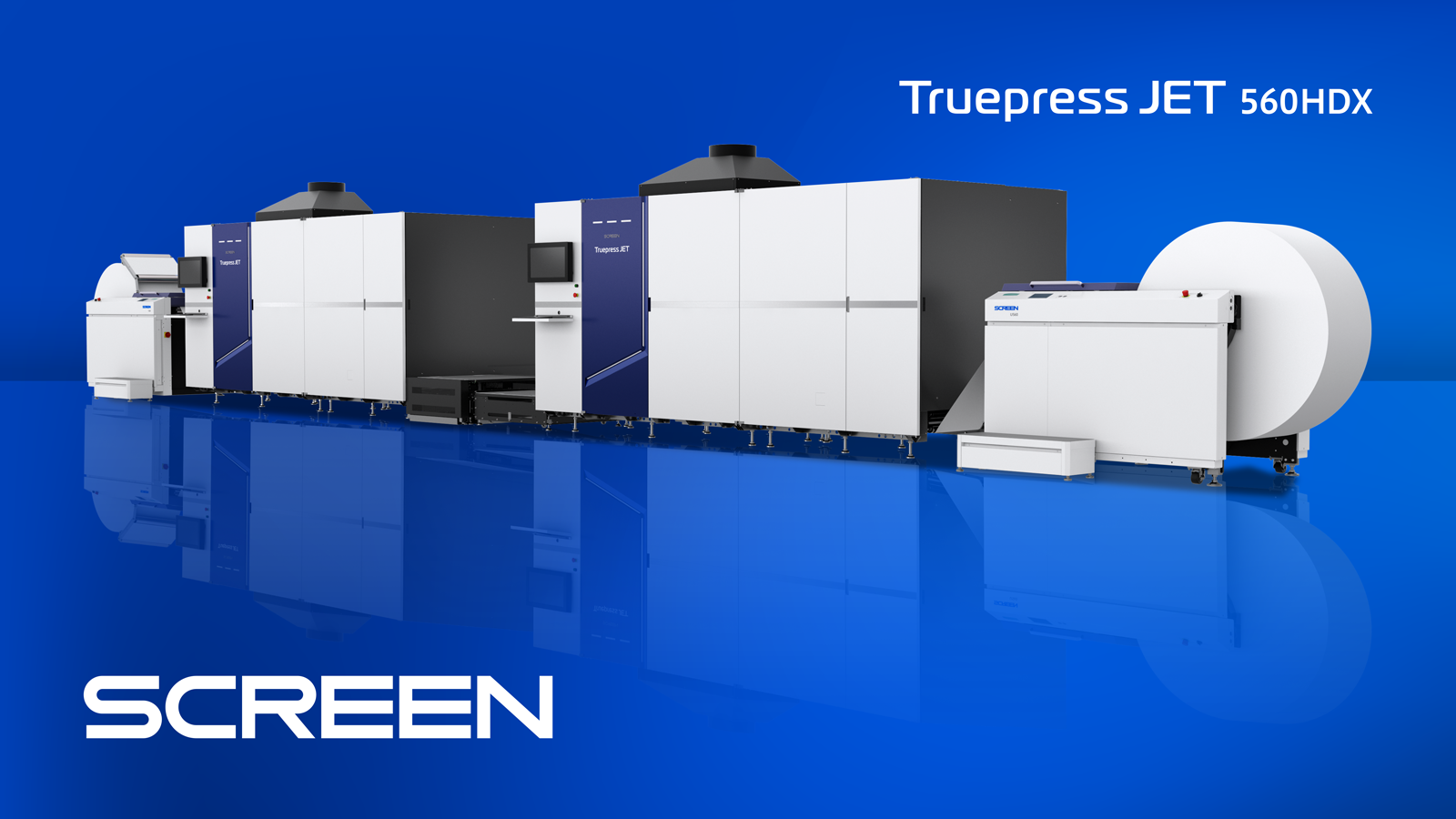
Commercial, direct mail, and publishing printers accustomed to producing jobs over several weeks can now print them in days with the SCREEN Truepress JET 560HDX. The press can accommodate 120 lb. coated or uncoated paper up to 560 mm wide. Read More

Around the Web: Of Water and Winners

Around the Web: Of Water and Winners

A sign-writer created the visual style of music festivals. The “2026 Milky Way Photographer of the Year” winners. AI appears to be catching on among the Amish. Sony has upgraded its wearable air conditioner. How to easily reuse produce bags. A complex digital water clock. A Nobel Prize–winning technology is able to extract water from dry air. Yes, it is possible to be allergic to water. Laser-induced graphene on Kevlar enables multifunctional structural composites. The “most desired” place in each of the 50 states. “The rise in plastic surgeons asked to create ‘AI face.’” K-pop band BTS has teamed with Oreo to release limited edition OREO x BTS Cookies. Welcome to WhatTheyThink’s weekly miscellany. Read More
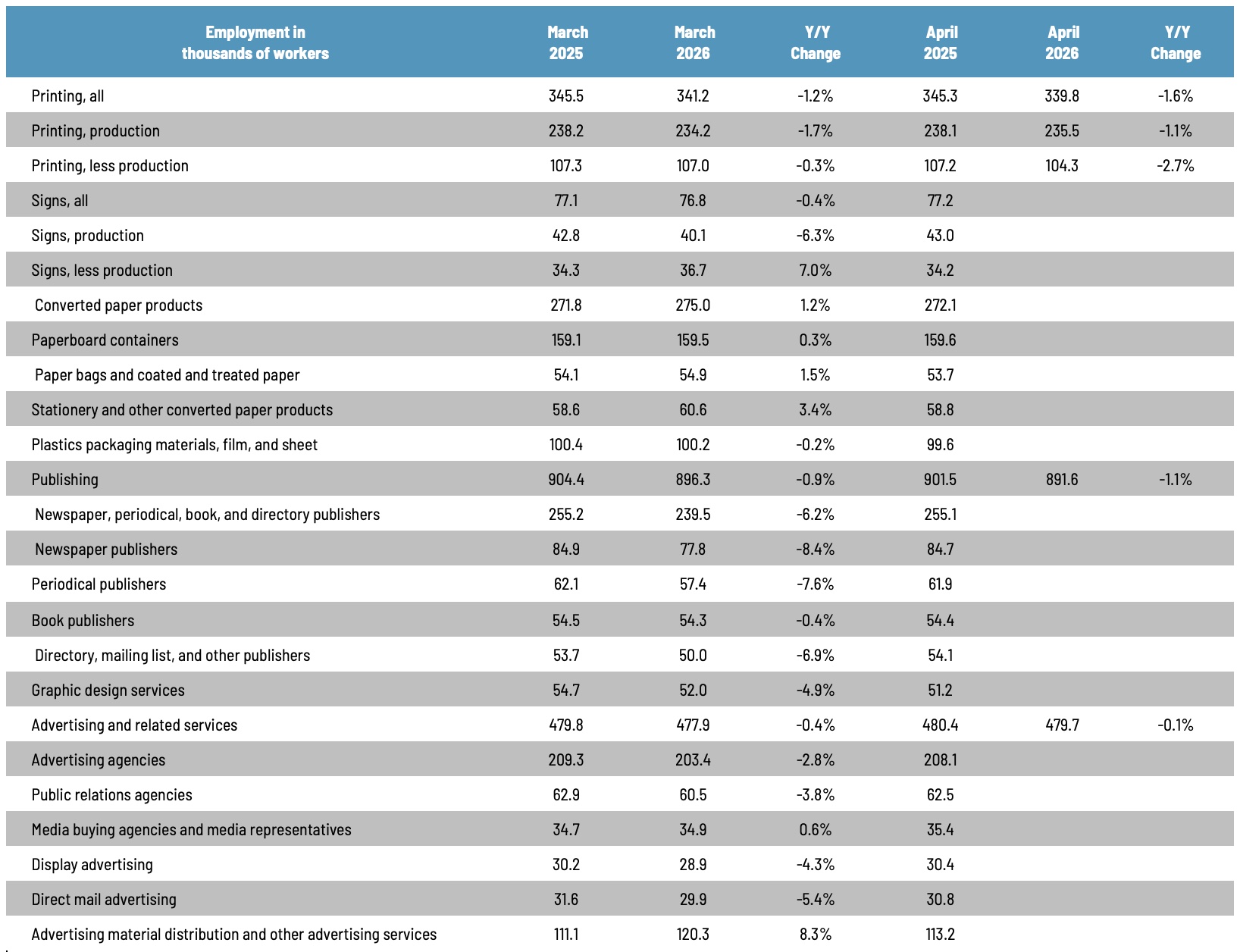
Graphic Arts Employment in April Down Overall—Substantially Among Non-Production

Graphic Arts Employment in April Down Overall—Substantially Among Non-Production

April 2026 saw printing industry employment overall generally flat, down 0.4% from March. And while production employment was up 0.6%, non-production employment was down by 2.5%—basically the reverse of what we saw in March. Read More

Recent Printing Industry News

Wednesday, June 03, 2026