WhatTheyThink

Premium Commentary & Analysis

Inventory vs. Print On Demand: How Print Buyers Use Print

February 20,

Thursday, February 20, 2003

February 20, 2003 -- In January, we asked print customers about how they inventory and use print. Inventory vs. Print On Demand These print buyers indicated that approximately 39.4% of the print they purchased is used immediately with no inventory. The remaining 60% is either partly or completely stored in inventory. The research suggests there may be an opportunity for print customers to implement print on demand solutions to minimize inventory and waste. Of those jobs that print customers put some or most into inventory, customers inventory approximately 54% of the job. In other words, roughly half is used immediately and half is stored. The average run length of jobs that are partly or mostly stored in inventory is 10,920 pieces. This means that customers typically store around 5,900 pieces of a job that has some or all in inventory. Customers also indicated they keep a job in storage for an average of 15 months before it is either discarded or reprinted. However, nearly 70% of print customers indicated they keep jobs in storage for 12 months or less. Print customers appear to be doing a decent job at using printed material from inventory, but there clearly is room for improvement. Customers indicated that of the material in inventory 64.3% of it is ultimately used up with no excess pieces. However, 20.8% is somewhat out of date but still used, and another 14.9% is completely out of date and must be thrown away. CAP Ventures believes there are opportunities for print customers to be more efficient with their printed material by reducing inventory and waste. Print customers can have an initial run done on offset (depending on the run length) for material that will be used within a couple months. The customer could then have subsequent runs done on digital printing systems (again depending on run length) that could be updated or simply done less expensively than traditional offset printing. It appears print customers are starting to employ this strategy. Over 60% of print customers indicated they produce some or all of their printed material with digital print on demand. Only 26.6% indicated they virtually always use offset. Another 15.6% indicated the mostly use offset. The use of print on demand may be overstated compared with the entire universe of print customers since the source of our sample (WhatTheyThink.com) is weighted towards people interested in digital printing. However, other CAP Ventures research suggests that the use of print on demand continues to grow and is widespread. Printers and print customers need to think through the life cycle of a document and determine what is the optimal print/inventory strategy. Cost saving, reduction in inventory space, and improvements in content may be achieved by using the right print technologies. Respondent Profile * Sample size: Between 75 and 100 print customers respond every month. * Primary business: Distributed across key industries including advertising, financial, government, professional services, manufacturing, retail and other. * Size of company: The sample is weighted towards medium to large print customers compared with the overall population of companies. Approximately 25% of the companies have annual print budgets in excess of $1 million; another 20% have revenues under $50,000. * Geographic region: There is representation from all major regions in the United States but slightly smaller sample sizes from the Northeast and South regions relative to the overall business population. * Title: The respondents are consistently from purchasing, creative, marketing and administration. * The mix of respondents by industry, size of company, geography and title has been very consistent throughout the year. This consistent sample profile is important when comparing results over time. Request more data about this survey by contacting Jeff Hayes, Research Director at CAP Ventures. [email protected] CAP Ventures is a strategic consulting firm for providers and users of business communication technologies and services. They deliver key research, analysis, forecasting, benchmarking, and strategy recommendations to make a competitive difference in their clients’ businesses. Send your comments about this report or request further information from CAP Ventures or WhatTheyThink.com by clicking here.


Continue reading your article
with a WhatTheyThink membership.

WhatTheyThink Annual Membership

Less than $4/week.

Get unlimited access to in-depth commentary and analysis covering the latest trends, emerging technologies, operational strategies, and key events across every segment of today's printing industry.

Stay informed. Stay competitive. Stay ahead.
WhatTheyThink Day Pass

$5 for 24 hours

Unlimited access to all of WhatTheyThink. Get your Day Pass

Already a member?
Sign In

About WhatTheyThink

WhatTheyThink is the global printing industry's go-to information source with both print and digital offerings, including WhatTheyThink.com, WhatTheyThink Email Newsletters, and the WhatTheyThink magazine. Our mission is to inform, educate, and inspire the industry. We provide cogent news and analysis about trends, technologies, operations, and events in all the markets that comprise today's printing and sign industries including commercial, in-plant, mailing, finishing, sign, display, textile, industrial, finishing, labels, packaging, marketing technology, software and workflow.

Recent Articles from WhatTheyThink

The Total Label Issue

The Total Label Issue

This issue of the WhatTheyThink Quarterly is all about labels, which are seen as a high-growth part of commercial printing, driven by e-commerce, food/beverage demand, and regulations. The market has surpassed 1.2 trillion square meters of label production volume per year, and is moving toward high-mix, low-waste production rather than only high-volume throughput. While flexo is still used for high-volume label production, digital label printing often complements it—or in some cases replaces it. But labels are about more than printing technology. Read More
The Unified Platform for Packaging Manufacturing Excellence

The Unified Platform for Packaging Manufacturing Excellence

Leverage 30+ years of plant-floor expertise. Trusted by 700+ packaging manufacturers globally to reduce waste, optimize scheduling, and drive digital transformation. One unified foundation. Eight packaging-native pillars. Zero fragmentation. Read More
Expand Your Opportunities with the Truepress JET 560HDX from SCREEN

Expand Your Opportunities with the Truepress JET 560HDX from SCREEN

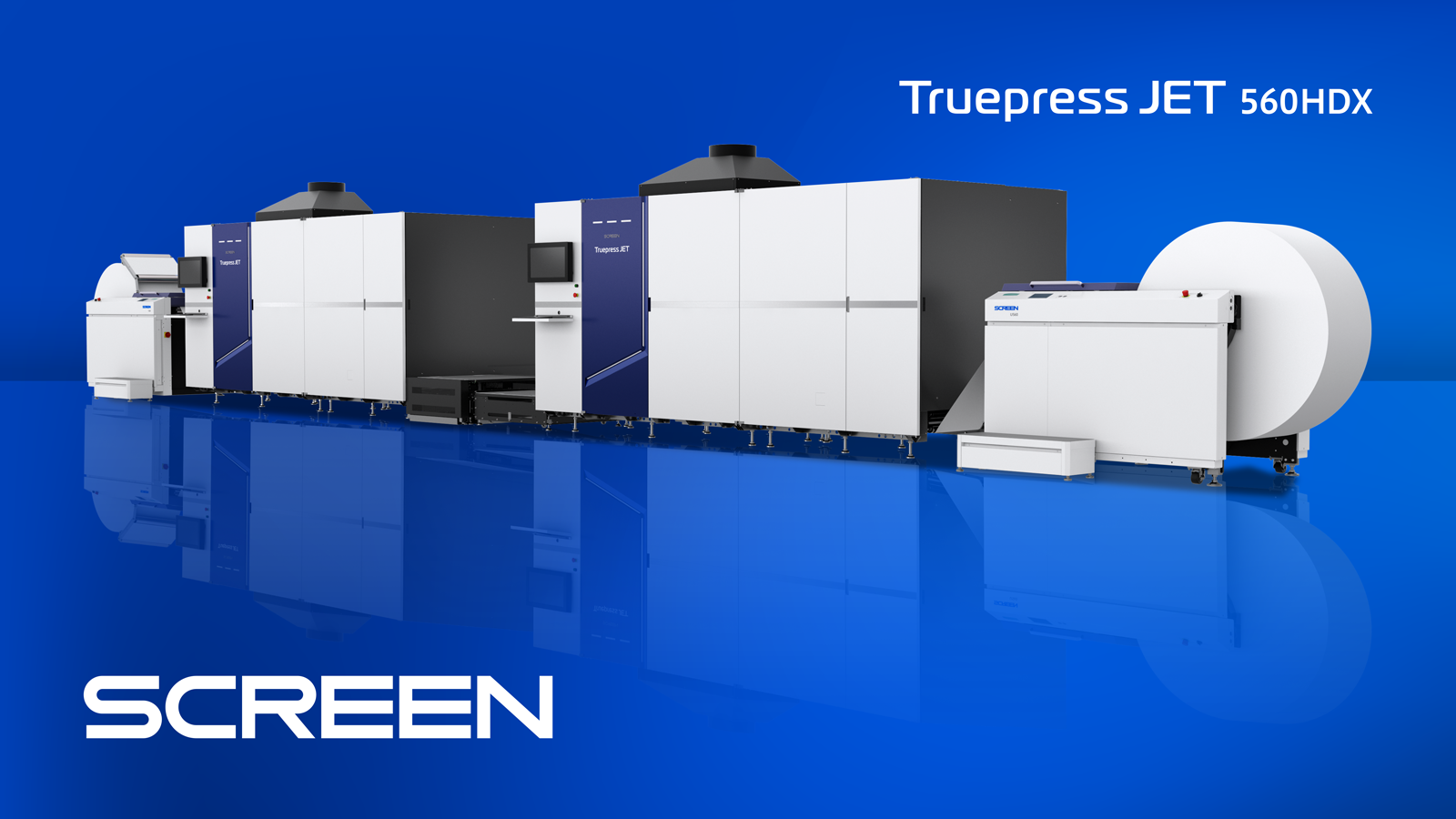
Commercial, direct mail, and publishing printers accustomed to producing jobs over several weeks can now print them in days with the SCREEN Truepress JET 560HDX. The press can accommodate 120 lb. coated or uncoated paper up to 560 mm wide. Read More

Around the Web: Of Water and Winners

Around the Web: Of Water and Winners

A sign-writer created the visual style of music festivals. The “2026 Milky Way Photographer of the Year” winners. AI appears to be catching on among the Amish. Sony has upgraded its wearable air conditioner. How to easily reuse produce bags. A complex digital water clock. A Nobel Prize–winning technology is able to extract water from dry air. Yes, it is possible to be allergic to water. Laser-induced graphene on Kevlar enables multifunctional structural composites. The “most desired” place in each of the 50 states. “The rise in plastic surgeons asked to create ‘AI face.’” K-pop band BTS has teamed with Oreo to release limited edition OREO x BTS Cookies. Welcome to WhatTheyThink’s weekly miscellany. Read More
Graphic Arts Employment in April Down Overall—Substantially Among Non-Production

Graphic Arts Employment in April Down Overall—Substantially Among Non-Production

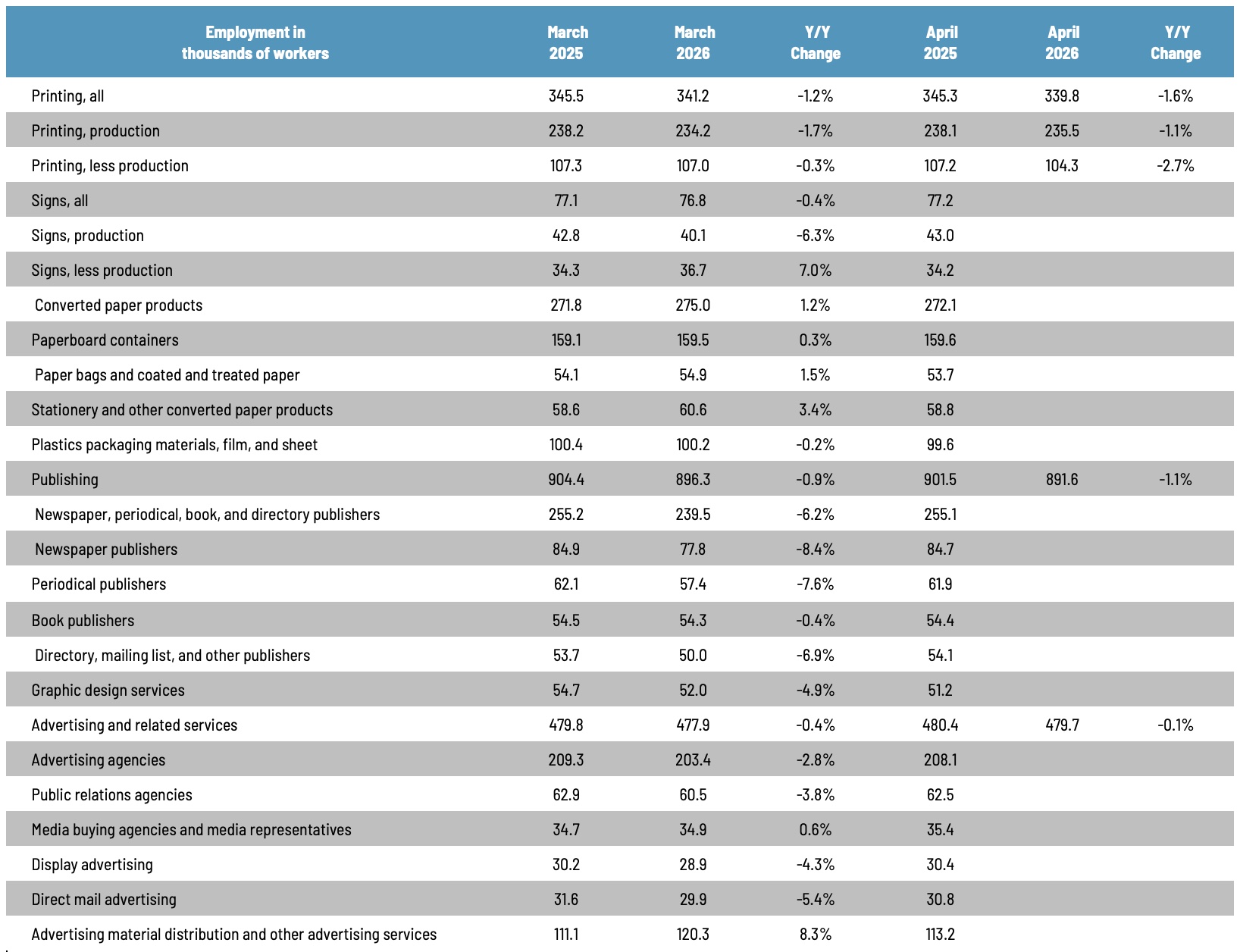
April 2026 saw printing industry employment overall generally flat, down 0.4% from March. And while production employment was up 0.6%, non-production employment was down by 2.5%—basically the reverse of what we saw in March. Read More

Recent Printing Industry News

Wednesday, June 03, 2026