WhatTheyThink

Premium Commentary & Analysis

Part One - A New Cost Cutting Strategy: Consulting

Editor&

Monday, November 25, 2002

Editor’s Note: On Wednesday, November 20th, IBM announced a change in priorities to spend more on services. In fact IBM is diverting $1 billion from R&D to Consulting Services. Some of this is because of the Homeland Security push and the Government's need to outsource for help. The other reason is IBM's push to go to verticals (not unlike SAP) AND they know that there is more technology out there than people can use today. Now we're entering the era where companies need variable help to get the most out of technology to drive ROI faster. Susan Kelly of Raine takes a look at Consulting and what it means for the Graphic Arts industries....and how they can get the benefits that other industries already receive. A New Cost Cutting Strategy: Consulting By Susan Kelly November 25, 2002 -- It’s a fact: value is leaving the industry. We inch our way up by taking two steps forward in a good year and give it all back in the next year. Graphic arts businesses can no longer cut costs or generate revenues fast enough to keep the bottom line from slowly but surely sliding in the wrong direction. Do the math. The economics of the industry combined with accelerating print buyer price-cuts quickly quantifies the need for a new cost reduction model. Here’s a new twist to cutting costs…it’s called contingency services…..or what we have known as Consulting. Consulting is the new way to cut costs. Other industries outside of graphic media have embraced this model as a way to manage their business better. Variable cost management goes beyond the shop floor and right into support services such as sales and marketing. A systematic examination of this model was conducted by Lehigh University and University of Oklahoma to conclude "that the practice of using contingent workers improves gross margins." In fact, the study quantified the benefits and stated that on average, those companies engaging a regular practice of contingent labor across multiple functions were 10% more profitable than their competitors. The Graphic Arts industry is moving so fast through its maturity phase that heads are spinning. Shifting customer needs, new competitors, poor economic conditions, and the need for technology investments are overwhelming. To single-handedly understand, plan, and implement a smart company response is extremely difficult. There are times when it makes perfect sense to contract "spot help" to solve problems using a variable cost approach. Lessons learned from other industries shows that it is too expensive to retain top talent fulltime. Contingent workers are the best way to get more out of what you already have and get what you need only when you need it. Michael Weissel, VP of Mercer Management, said "Unlike the 1990’s craze of spending millions in armies of consultants who worked on extended contracts, the trend now is toward shorter, less expensive deals that make the most use out of existing capital and IT resources. For consultants schooled in turning regrets into revenues, there’s no time like the present." Consulting expertise provided in the right way can be invaluable when it gives clarity, confidence, and cohesiveness to a management team. Peer groups and industry associations can fulfill some of these needs however adding dedicated and well-disciplined consultants who know your business can provide the extra edge a company needs today. Expert versus Process Consulting: Three kinds of consultants Like everything else, there is no "one size fits all" approach to consultants. There should be a very close fit between your business and your prospective consultant in terms of what you are trying to accomplish. A good consultant can help craft the scope of the engagement with you, provide clarity around specific deliverables, and indicate where value is being realized during and after the engagement is complete. IT Consultants: They do the real work of installing software and systems into companies due to the complexity or customization of implementations. They either work directly for the software company or a systems integrator who has been certified by the software manufacturer. Management Consultants: These are established organizations that have service offerings, infrastructure, tools and methodologies. Like IT Consultants, they work with clients of various sizes and can either be generalists (e.g. Strategy, Operations, HR) or specialists (e.g. CRM, E-Commerce). Many are involved with research practices and lead with their methodologies or client case studies to establish their brand and expertise. Unit-of-One Consultants: These tend to be self-employed individuals who operate assignment-by-assignment making the most out of past working relationships to find independent contracting projects. These subject matter experts often have a deep expertise in a narrow, specific slice of manufacturing or sales. General rule of thumb: When expertise really matters, use Management Consultants to help your company analyze, visualize, and mobilize. Use IT Consultants for technology implementations and development services. And use Units-of-One to pinch-hit as resource extensions, matching their individual expertise to the needs of a short-term project or a specific business improvement target.


Continue reading your article
with a WhatTheyThink membership.

WhatTheyThink Annual Membership

Less than $4/week.

Get unlimited access to in-depth commentary and analysis covering the latest trends, emerging technologies, operational strategies, and key events across every segment of today's printing industry.

Stay informed. Stay competitive. Stay ahead.
WhatTheyThink Day Pass

$5 for 24 hours

Unlimited access to all of WhatTheyThink. Get your Day Pass

Already a member?
Sign In

About WhatTheyThink

WhatTheyThink is the global printing industry's go-to information source with both print and digital offerings, including WhatTheyThink.com, WhatTheyThink Email Newsletters, and the WhatTheyThink magazine. Our mission is to inform, educate, and inspire the industry. We provide cogent news and analysis about trends, technologies, operations, and events in all the markets that comprise today's printing and sign industries including commercial, in-plant, mailing, finishing, sign, display, textile, industrial, finishing, labels, packaging, marketing technology, software and workflow.

Recent Articles from WhatTheyThink

The Total Label Issue

The Total Label Issue

This issue of the WhatTheyThink Quarterly is all about labels, which are seen as a high-growth part of commercial printing, driven by e-commerce, food/beverage demand, and regulations. The market has surpassed 1.2 trillion square meters of label production volume per year, and is moving toward high-mix, low-waste production rather than only high-volume throughput. While flexo is still used for high-volume label production, digital label printing often complements it—or in some cases replaces it. But labels are about more than printing technology. Read More
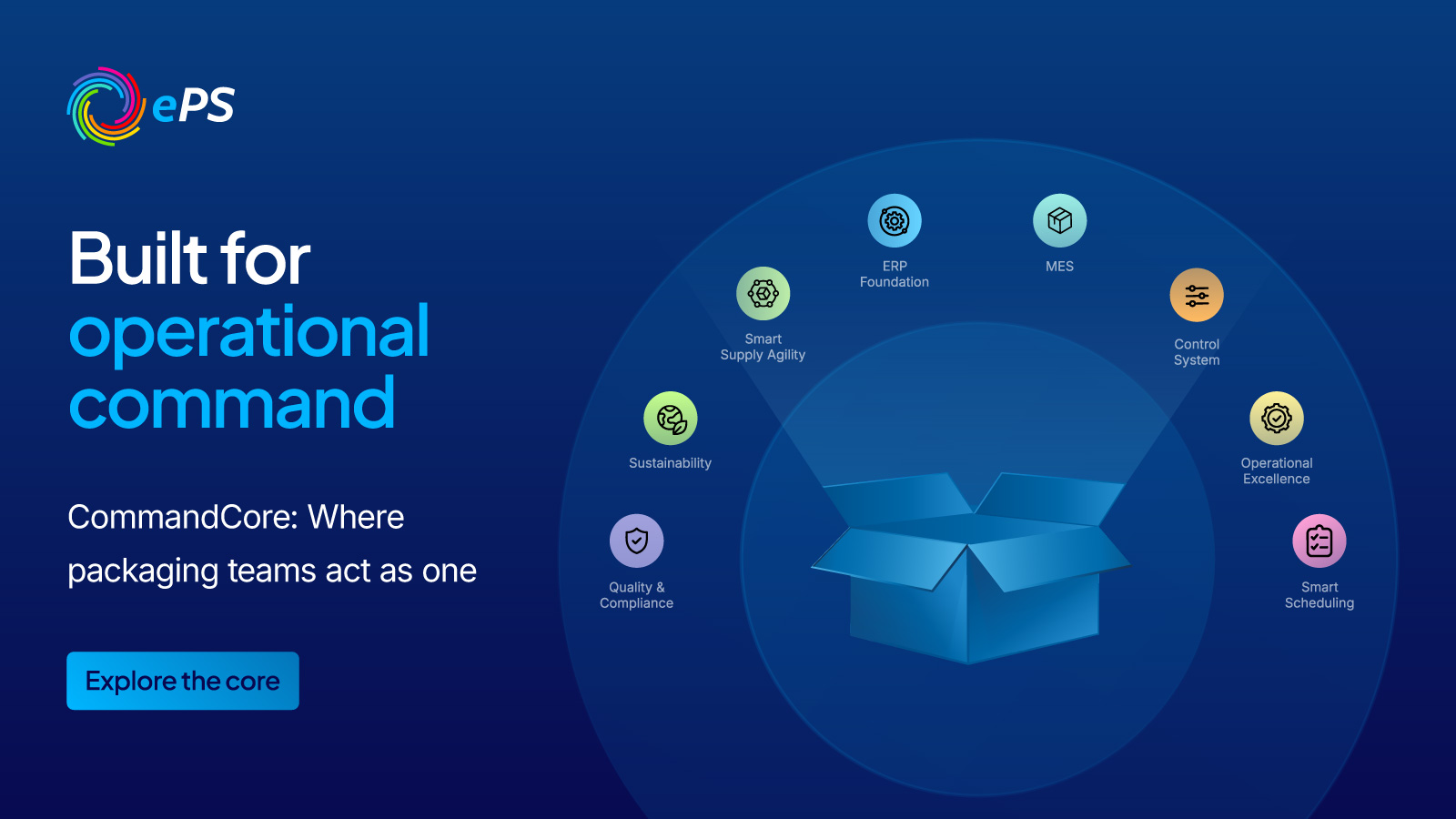
The Unified Platform for Packaging Manufacturing Excellence

The Unified Platform for Packaging Manufacturing Excellence

Leverage 30+ years of plant-floor expertise. Trusted by 700+ packaging manufacturers globally to reduce waste, optimize scheduling, and drive digital transformation. One unified foundation. Eight packaging-native pillars. Zero fragmentation. Read More
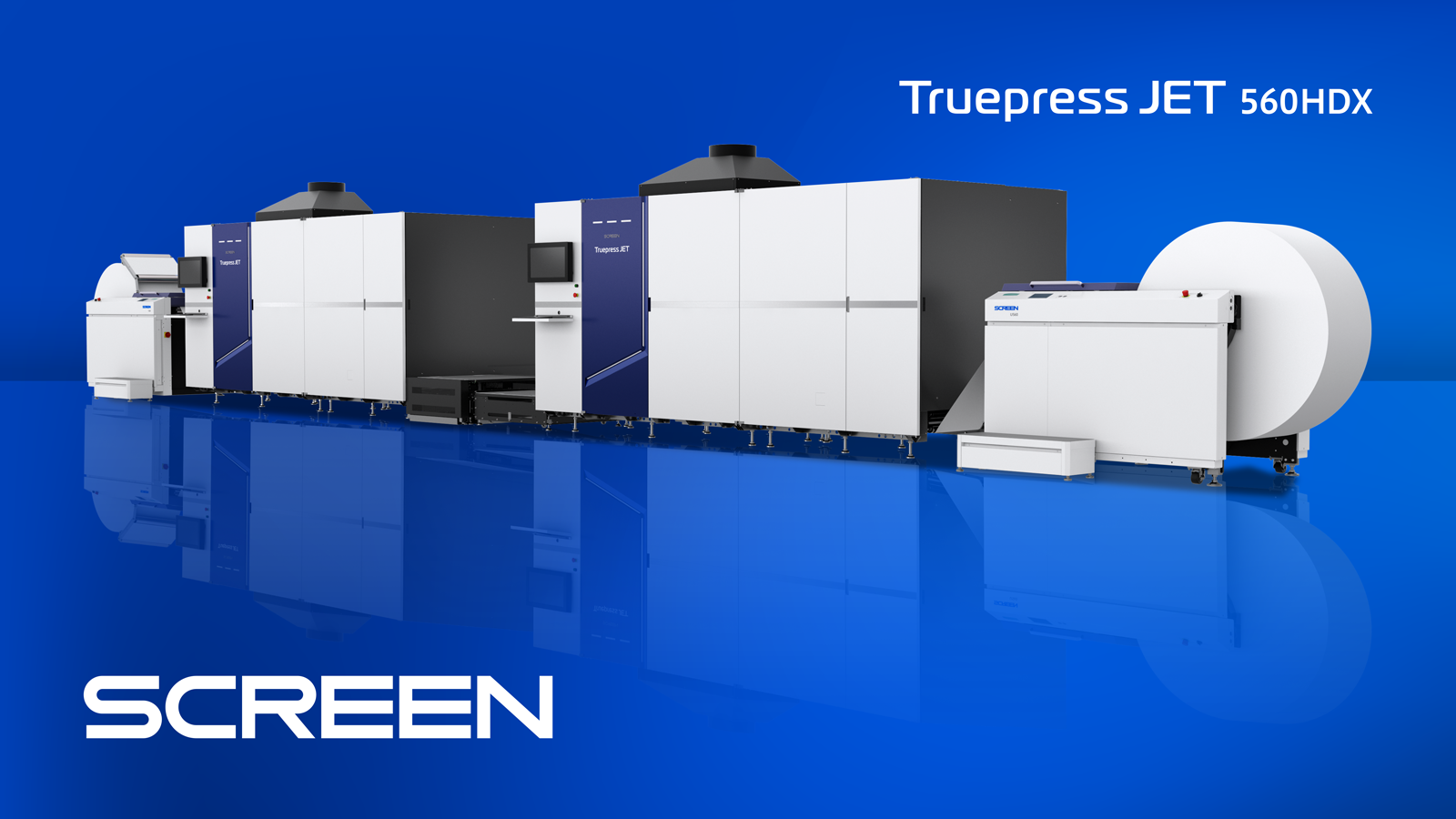
Expand Your Opportunities with the Truepress JET 560HDX from SCREEN

Expand Your Opportunities with the Truepress JET 560HDX from SCREEN

Commercial, direct mail, and publishing printers accustomed to producing jobs over several weeks can now print them in days with the SCREEN Truepress JET 560HDX. The press can accommodate 120 lb. coated or uncoated paper up to 560 mm wide. Read More

Around the Web: Of Water and Winners

Around the Web: Of Water and Winners

A sign-writer created the visual style of music festivals. The “2026 Milky Way Photographer of the Year” winners. AI appears to be catching on among the Amish. Sony has upgraded its wearable air conditioner. How to easily reuse produce bags. A complex digital water clock. A Nobel Prize–winning technology is able to extract water from dry air. Yes, it is possible to be allergic to water. Laser-induced graphene on Kevlar enables multifunctional structural composites. The “most desired” place in each of the 50 states. “The rise in plastic surgeons asked to create ‘AI face.’” K-pop band BTS has teamed with Oreo to release limited edition OREO x BTS Cookies. Welcome to WhatTheyThink’s weekly miscellany. Read More
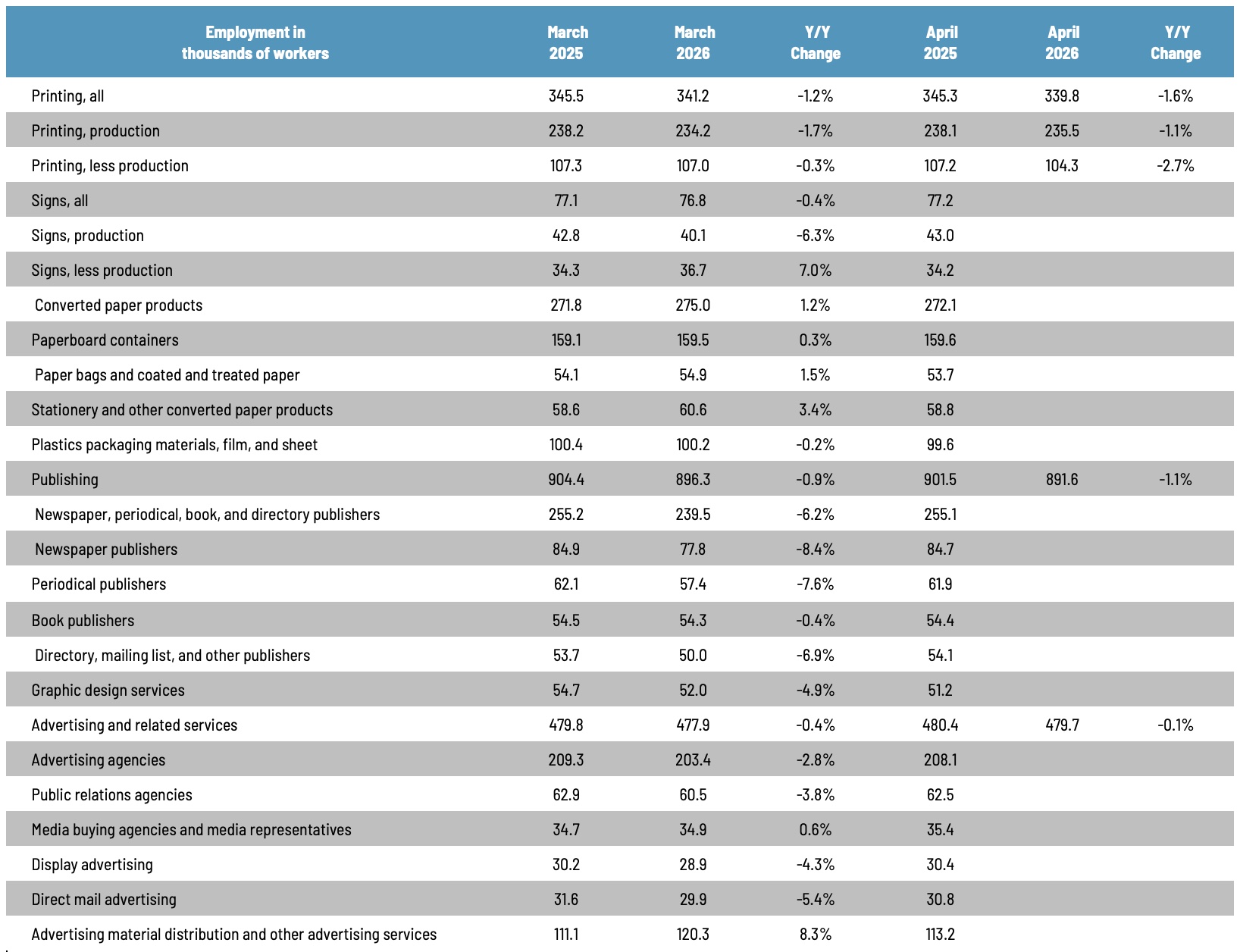
Graphic Arts Employment in April Down Overall—Substantially Among Non-Production

Graphic Arts Employment in April Down Overall—Substantially Among Non-Production

April 2026 saw printing industry employment overall generally flat, down 0.4% from March. And while production employment was up 0.6%, non-production employment was down by 2.5%—basically the reverse of what we saw in March. Read More

Recent Printing Industry News

Wednesday, June 03, 2026