WhatTheyThink

Premium Commentary & Analysis

Marc Gudema, President of Business Card Express

Business Card Express (

Wednesday, April 11, 2001

Business Card Express (BCE) is the largest trade printer of business cards and stationery in New England. A few years ago, the company decided that Internet ordering of these items offered so many advantages that it would be the preferred way to order these items for large corporations. BCE developed an E-PrintOrder system that is the premium application for ordering corporate business cards and stationery via the Internet. The firm continues to add features to the application and equipment to increase the types of printing they can offer.

After earning a BA and MBA degrees at the University of Michigan, Marc Gudema began his career in business. Prior to owning Business Card Express, he owned a distribution business for 15 years.


Interview Archive

Marc, tells us about your revenue and physical size of your company.

Our revenues are projected at $3 million this year. We employ 35 people. We process over 1,000 Internet based orders per month. Although our Internet ordering system is generating the majority of our growth, we also have a significant amount of business generated by conventional methods. We have focused on selling through distributors because we recognize that their relationship with the corporate customer is a key element in our obtaining the business.

Did you actually build your E-PrintOrder system or is it part of another ASP?

We developed our E-PrintOrder application, rather than use an ASP, because it allowed us to develop an application that is tightly integrated with our production process. This offered benefits to our users and us. For example, we offer UPS tracking information and masters inventory status. ASPs typically do not offer this because it requires an integration with the printer that they do not have.

Have you invested more in your on-line software or production ability?

We continue to invest in software development to enhance our E-PrintOrder application. This has paid off in an increase in sales plus a reduction in our costs. We have been direct-to-plate for several years in our pre-press department and recently upgraded our computers. We are on a high-speed DSL connection and are completely networked internally.

In addition to continuing to add features to the E-PrintOrder system, we plan to increase our ability to accept electronic orders from other Internet ordering systems. We are also going to add equipment, software, and more employees to increase our process color printing capabilities.

Our Internet-based orders are proofed before they are submitted. When a customer wants a proof of a conventional order, we use faxes. We would like to implement an Internet-based proofing system and are looking at options in this area.

Are you satisfied with the overall relationship you have with your suppliers?

We have excellent relationships with our vendors and service technicians and have used the same sources for several years.

With electronic communication on the rise, is the demand for corporate identity products decreasing?

Stationery (printing) is declining due to the increased use of e-mail. We have not seen any drop in business card orders due to any electronic substitute.

As a print firm who has examined e-production technology, what advice would you offer a printer?

There are substantial differences in the applications I have seen and many customers are not knowledgeable about the features they need. The leading print E-commerce application is ordering business cards. Our application is an easy, cost-effective solution. Many end-users are not looking for more than this. Before buying into an expensive system that will allow your customer to order many items, be sure that they want it and will use it. Don't assume that the companies with the biggest PR efforts have the best systems. Try the systems out. Ease of use is very important.

Does BCE's system work with other platforms that a printer may be using?

We have XML capabilities in our software that allows us to communicate electronically with a customer's accounting software.

For a company selling mostly to printers, what is the best way to reach them?

We have found regional trade shows to be an effective way to reach new customers. I find that they are most effective if you do the pre-selling as well as follow-up. We also use national trade shows, advertising, and direct sales contacts.

Do you have tips for print buyers ordering business cards?

Yes, put the design efforts into the master and keep the imprint simple - preferably black. Black imprints show off the design of the master better, are printed quickly, and are inexpensive. A fancy design can be done at a reasonable cost if it is mastered in large quantities.

Marc, thank you for detailing your business.


Continue reading your article
with a WhatTheyThink membership.

WhatTheyThink Annual Membership

Less than $4/week.

Get unlimited access to in-depth commentary and analysis covering the latest trends, emerging technologies, operational strategies, and key events across every segment of today's printing industry.

Stay informed. Stay competitive. Stay ahead.
WhatTheyThink Day Pass

$5 for 24 hours

Unlimited access to all of WhatTheyThink. Get your Day Pass

Already a member?
Sign In

About WhatTheyThink

WhatTheyThink is the global printing industry's go-to information source with both print and digital offerings, including WhatTheyThink.com, WhatTheyThink Email Newsletters, and the WhatTheyThink magazine. Our mission is to inform, educate, and inspire the industry. We provide cogent news and analysis about trends, technologies, operations, and events in all the markets that comprise today's printing and sign industries including commercial, in-plant, mailing, finishing, sign, display, textile, industrial, finishing, labels, packaging, marketing technology, software and workflow.

Recent Articles from WhatTheyThink

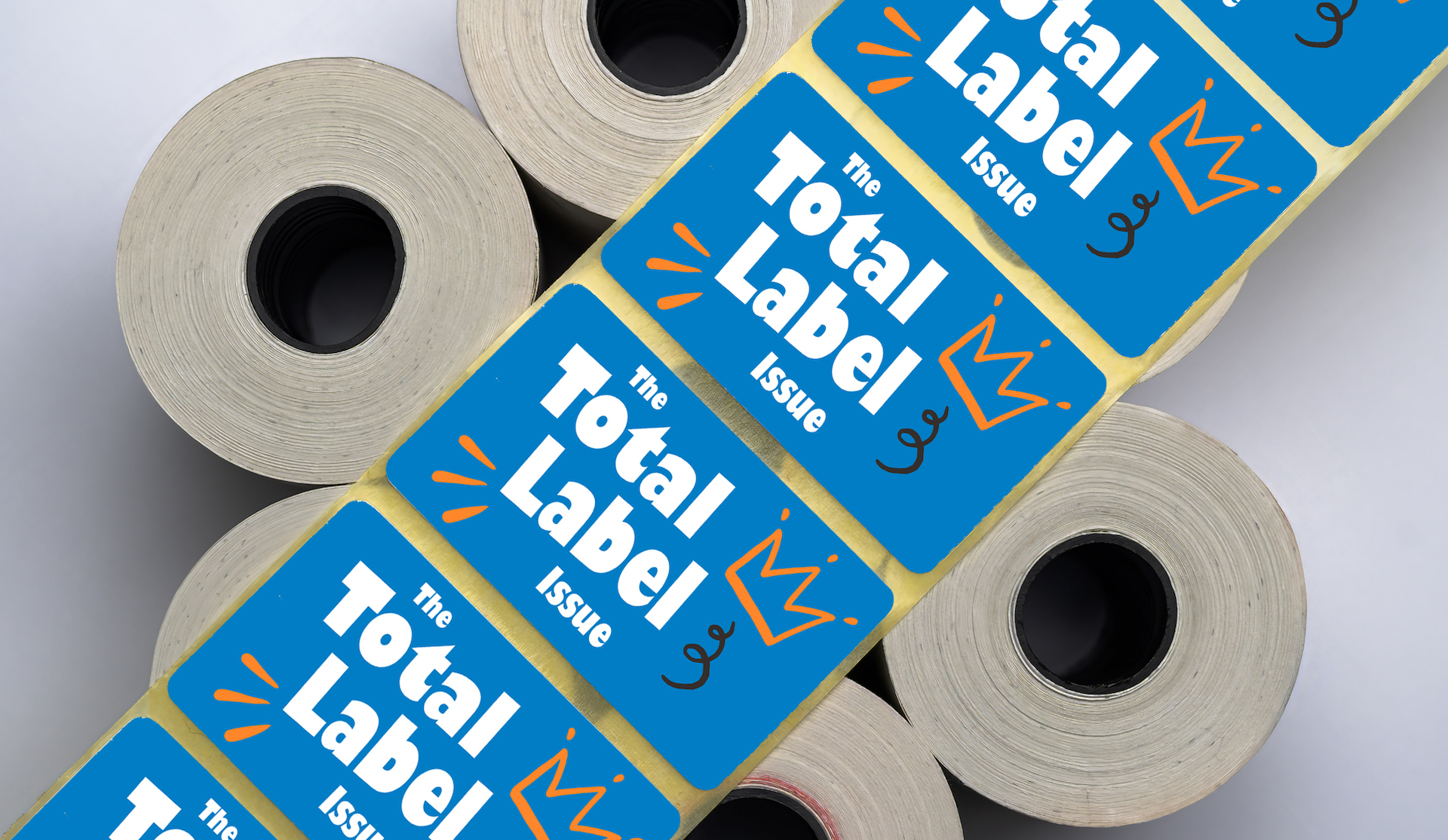
The Total Label Issue

The Total Label Issue

This issue of the WhatTheyThink Quarterly is all about labels, which are seen as a high-growth part of commercial printing, driven by e-commerce, food/beverage demand, and regulations. The market has surpassed 1.2 trillion square meters of label production volume per year, and is moving toward high-mix, low-waste production rather than only high-volume throughput. While flexo is still used for high-volume label production, digital label printing often complements it—or in some cases replaces it. But labels are about more than printing technology. Read More
The Unified Platform for Packaging Manufacturing Excellence

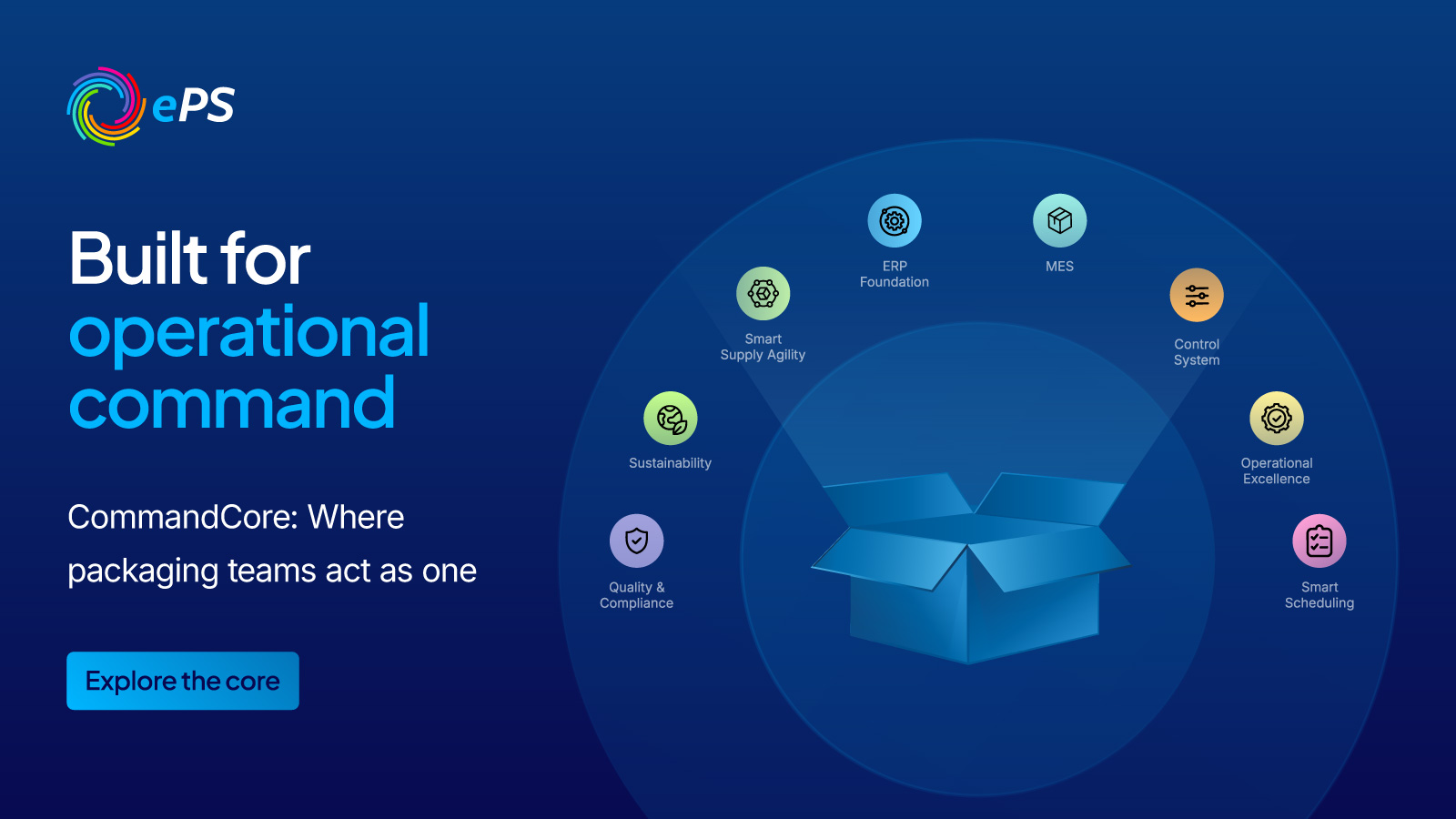
The Unified Platform for Packaging Manufacturing Excellence

Leverage 30+ years of plant-floor expertise. Trusted by 700+ packaging manufacturers globally to reduce waste, optimize scheduling, and drive digital transformation. One unified foundation. Eight packaging-native pillars. Zero fragmentation. Read More
Expand Your Opportunities with the Truepress JET 560HDX from SCREEN

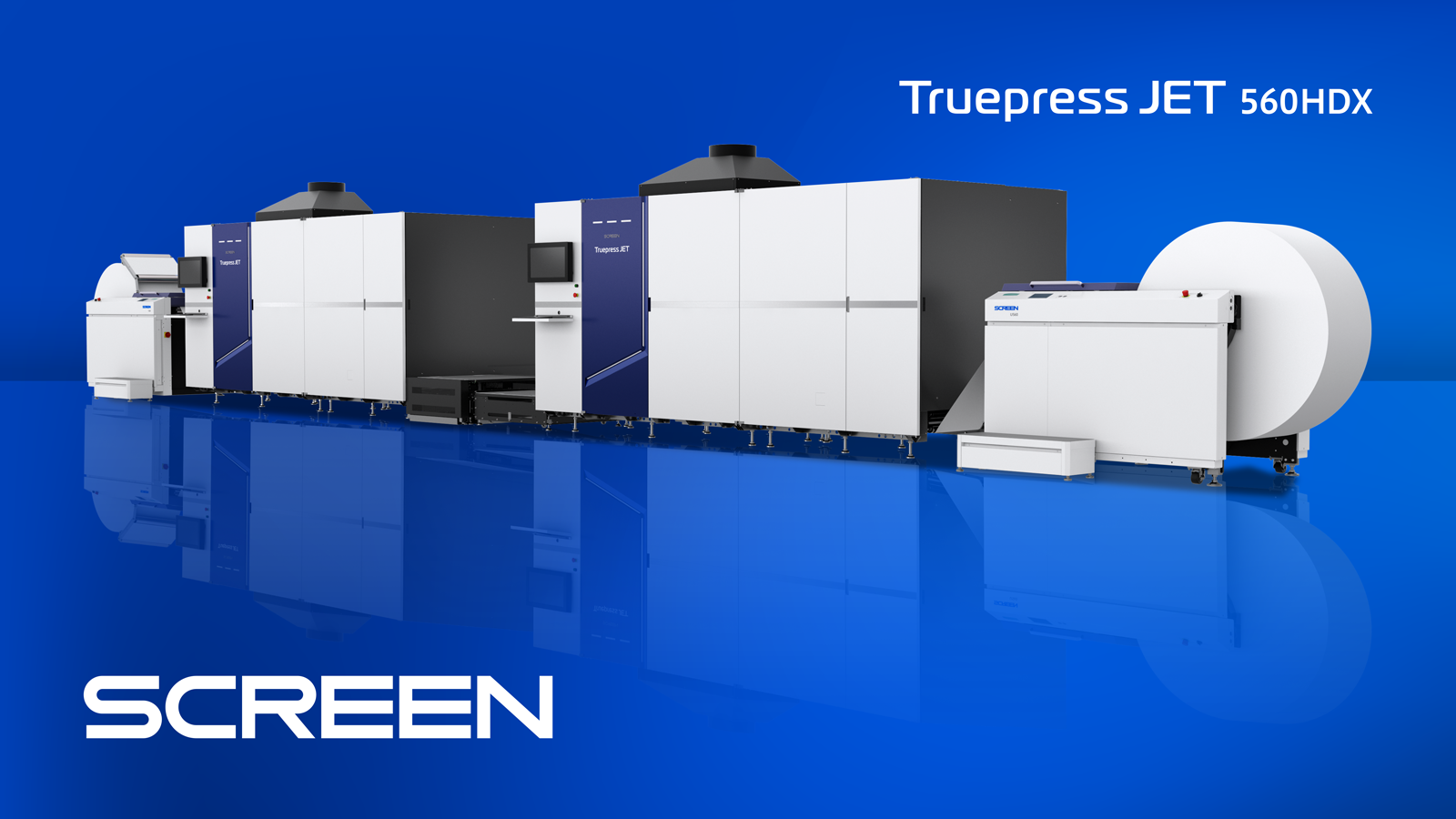
Expand Your Opportunities with the Truepress JET 560HDX from SCREEN

Commercial, direct mail, and publishing printers accustomed to producing jobs over several weeks can now print them in days with the SCREEN Truepress JET 560HDX. The press can accommodate 120 lb. coated or uncoated paper up to 560 mm wide. Read More

Around the Web: Of Water and Winners

Around the Web: Of Water and Winners

A sign-writer created the visual style of music festivals. The “2026 Milky Way Photographer of the Year” winners. AI appears to be catching on among the Amish. Sony has upgraded its wearable air conditioner. How to easily reuse produce bags. A complex digital water clock. A Nobel Prize–winning technology is able to extract water from dry air. Yes, it is possible to be allergic to water. Laser-induced graphene on Kevlar enables multifunctional structural composites. The “most desired” place in each of the 50 states. “The rise in plastic surgeons asked to create ‘AI face.’” K-pop band BTS has teamed with Oreo to release limited edition OREO x BTS Cookies. Welcome to WhatTheyThink’s weekly miscellany. Read More
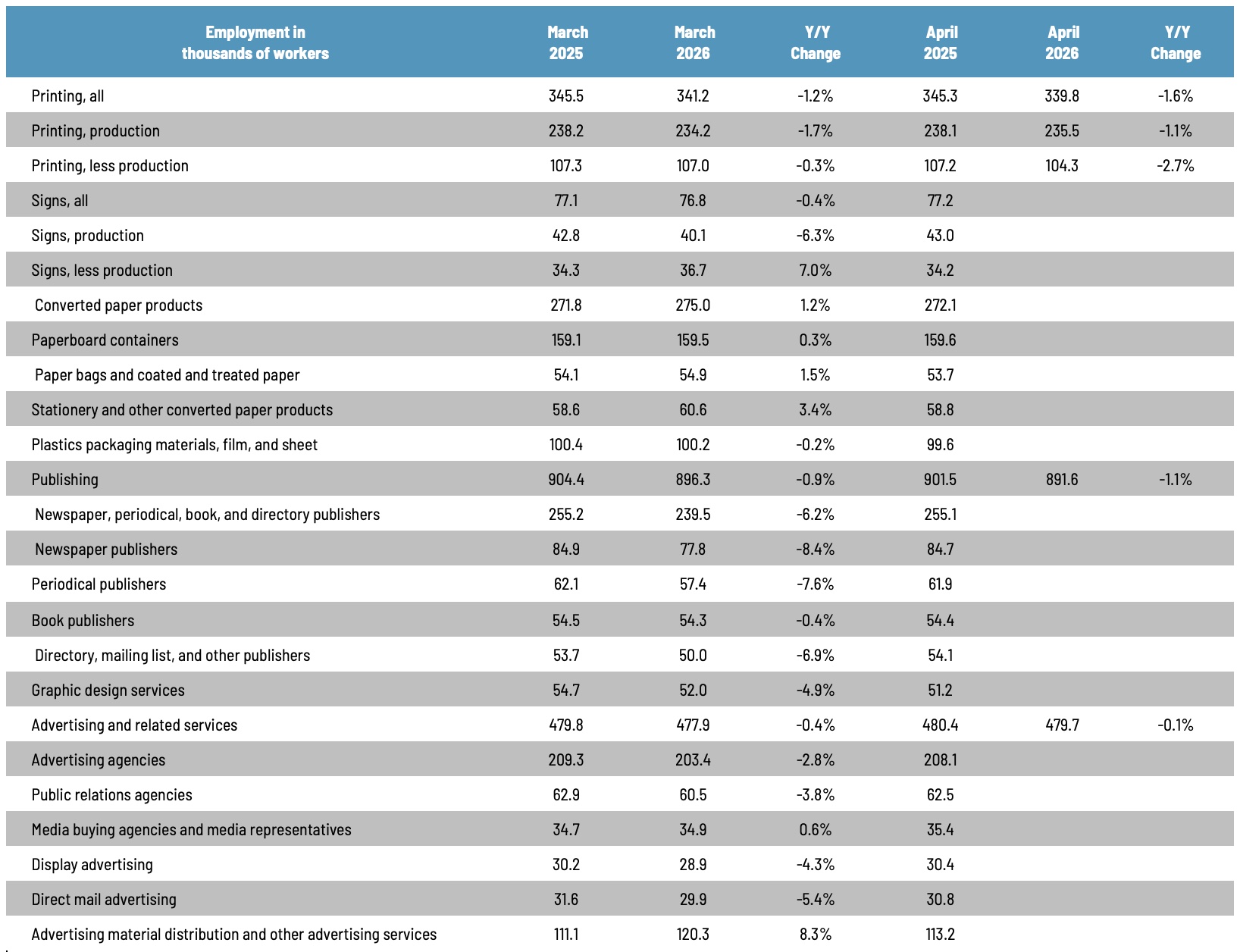
Graphic Arts Employment in April Down Overall—Substantially Among Non-Production

Graphic Arts Employment in April Down Overall—Substantially Among Non-Production

April 2026 saw printing industry employment overall generally flat, down 0.4% from March. And while production employment was up 0.6%, non-production employment was down by 2.5%—basically the reverse of what we saw in March. Read More


Recent Printing Industry News

Wednesday, June 03, 2026