WhatTheyThink

Premium Commentary & Analysis

Part Two: Baby Steps to Complex Applications: It’s for Small Printers, Too

(

Thursday, November 21, 2002

(From Yesterday: With today’s emphasis on powerful applications like e-commerce; online, on-demand customization; variable data printing; and Internet-based pick-n-pack solutions, getting on the bandwagon can seem overwhelming. Particularly for many small and mid-sized printers, "getting there" can seem a bit like trying to climb Mt. Everest. How do you even get started? See Part One)

There are many similar incremental steps that can be taken to gradually ramp up technology, skill sets, and customer education so that the leap to more complex technologies doesn’t have to be so great.

Start by doing an assessment of your current customer base. The best applications for most of the DAM solutions, as in the example we are discussing, start with your current clientele. Look at the process from the perspective of having discussion on additional services, tweaking workflows and applications to fit specific needs. Do an in-house assessment to see if you have most — or many — of the necessary capabilities so that you only have to "shore up" your infrastructure rather than investing in a whole new one.

When you are talking about very basic applications, this can be a matter of bridging a gap, not making a complete overall of systems and technology. You don't have to be an IT guru to make them happen. Start by finding out what the delta is between what you currently provide and where your customers are moving their businesses. Then fill in the gaps. Look into ASP solutions. Make use of the vendor and dealer expertise and consultative services before you get started. Consider offering very short-run variable data applications on devices you already have, like your digital color copier or desktop printer (yes, printers actually do this). Ask how you might be able to provide these services at a basic level that is affordable for you.

If you start off with entry-level applications, then, when and if you do feel comfortable adding the more complex solutions, it’s a smaller leap. You are already talking to the right person. You’ve already done the groundwork. Remember, even the "heavy hitters" grew their solutions over time. Although it might look like rocket science now, that’s not where the big players got started. And neither should you.

Ask Questions

Get to know your customers better. Ask a lot of questions. What do they ask you to print? Where else might they want to direct those applications? How can those applications be customized at a basic level (like versioning) to better target their customer base? Maybe they have dealerships, distributors, or others who might want the ability to get involved with online, on-demand customization (like DAM-driven ASP solutions). Open the discussions. Get the ideas flowing. And then talk with your vendors and incremental steps to get you there. Use trade magazine articles and seminar presentations as a springboard for ideas.

Especially if you are looking to get into variable data printing, don’t discount the DAM-driven customization as a springboard (check out TWGA’s most recent study on digital asset management called "Who’s Buying This Stuff?", a collection of 76 user stories from 11 vertical markets). When it comes to customization and personalization, too often it’s all variable data and all glory. Other methods of customization aren’t being talked about as much. VDP printing is what’s in. It’s hype. It’s now. But DAM-driven applications, which can be much less expensive, work too.

I’m not saying that, if want to be a player in the customization and personalization marketplace for the long term, you won’t have to ramp up with a more sophisticated infrastructure and more sophisticated skill sets eventually. You will. But not upfront.

Technology is moving fast, and these applications and technologies are getting more and more complex, and many companies are reluctant to take the leap because they don’t know where to start. But the first step to wider market adoption is more customer education and acceptance. And that requires baby steps that any printer, of any size, can take. Once your customers are on the bandwagon, where you go from there is up to you.

See Part One


Continue reading your article
with a WhatTheyThink membership.

WhatTheyThink Annual Membership

Less than $4/week.

Get unlimited access to in-depth commentary and analysis covering the latest trends, emerging technologies, operational strategies, and key events across every segment of today's printing industry.

Stay informed. Stay competitive. Stay ahead.
WhatTheyThink Day Pass

$5 for 24 hours

Unlimited access to all of WhatTheyThink. Get your Day Pass

Already a member?
Sign In

About WhatTheyThink

WhatTheyThink is the global printing industry's go-to information source with both print and digital offerings, including WhatTheyThink.com, WhatTheyThink Email Newsletters, and the WhatTheyThink magazine. Our mission is to inform, educate, and inspire the industry. We provide cogent news and analysis about trends, technologies, operations, and events in all the markets that comprise today's printing and sign industries including commercial, in-plant, mailing, finishing, sign, display, textile, industrial, finishing, labels, packaging, marketing technology, software and workflow.

Recent Articles from WhatTheyThink

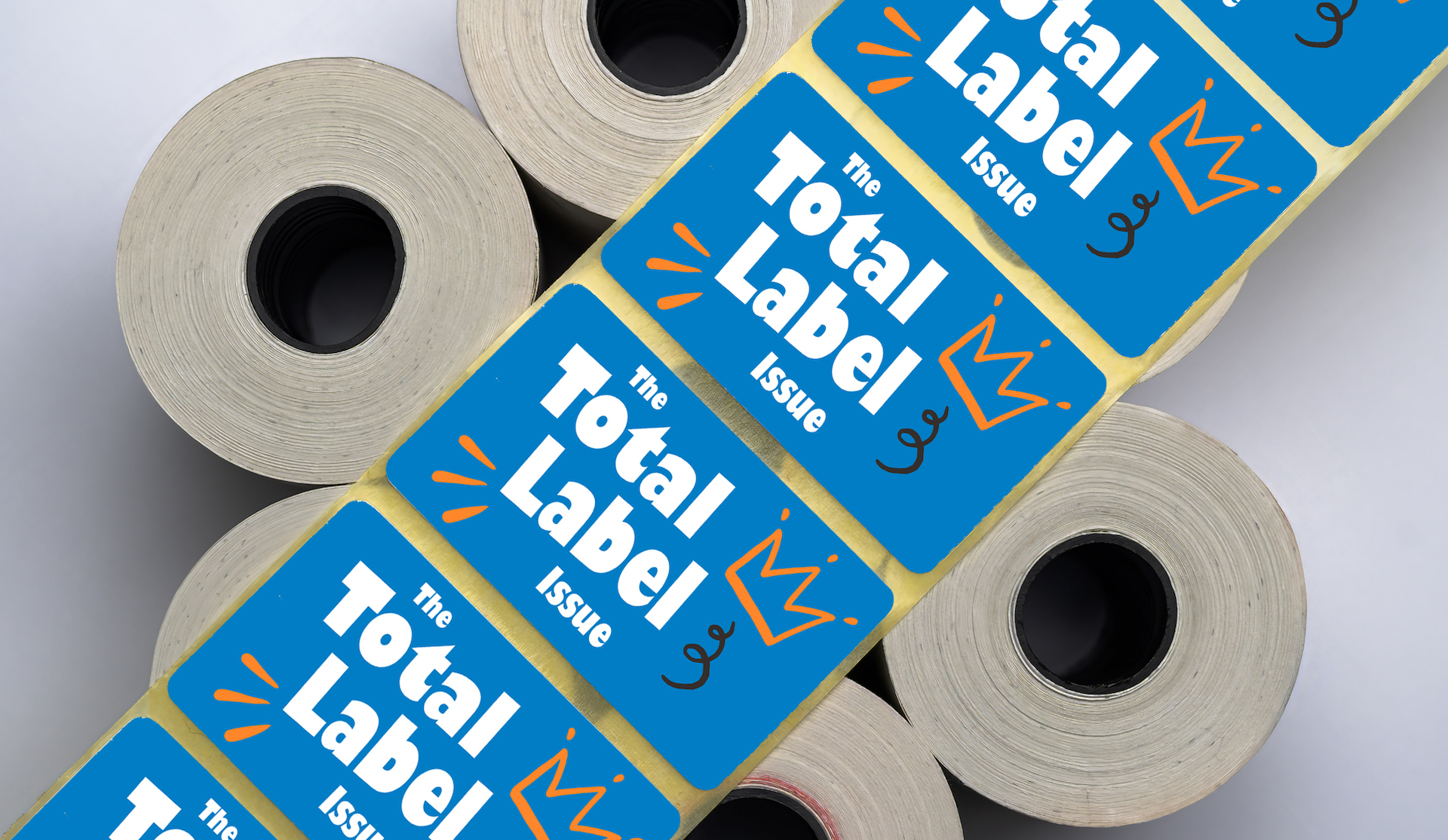
The Total Label Issue

The Total Label Issue

This issue of the WhatTheyThink Quarterly is all about labels, which are seen as a high-growth part of commercial printing, driven by e-commerce, food/beverage demand, and regulations. The market has surpassed 1.2 trillion square meters of label production volume per year, and is moving toward high-mix, low-waste production rather than only high-volume throughput. While flexo is still used for high-volume label production, digital label printing often complements it—or in some cases replaces it. But labels are about more than printing technology. Read More
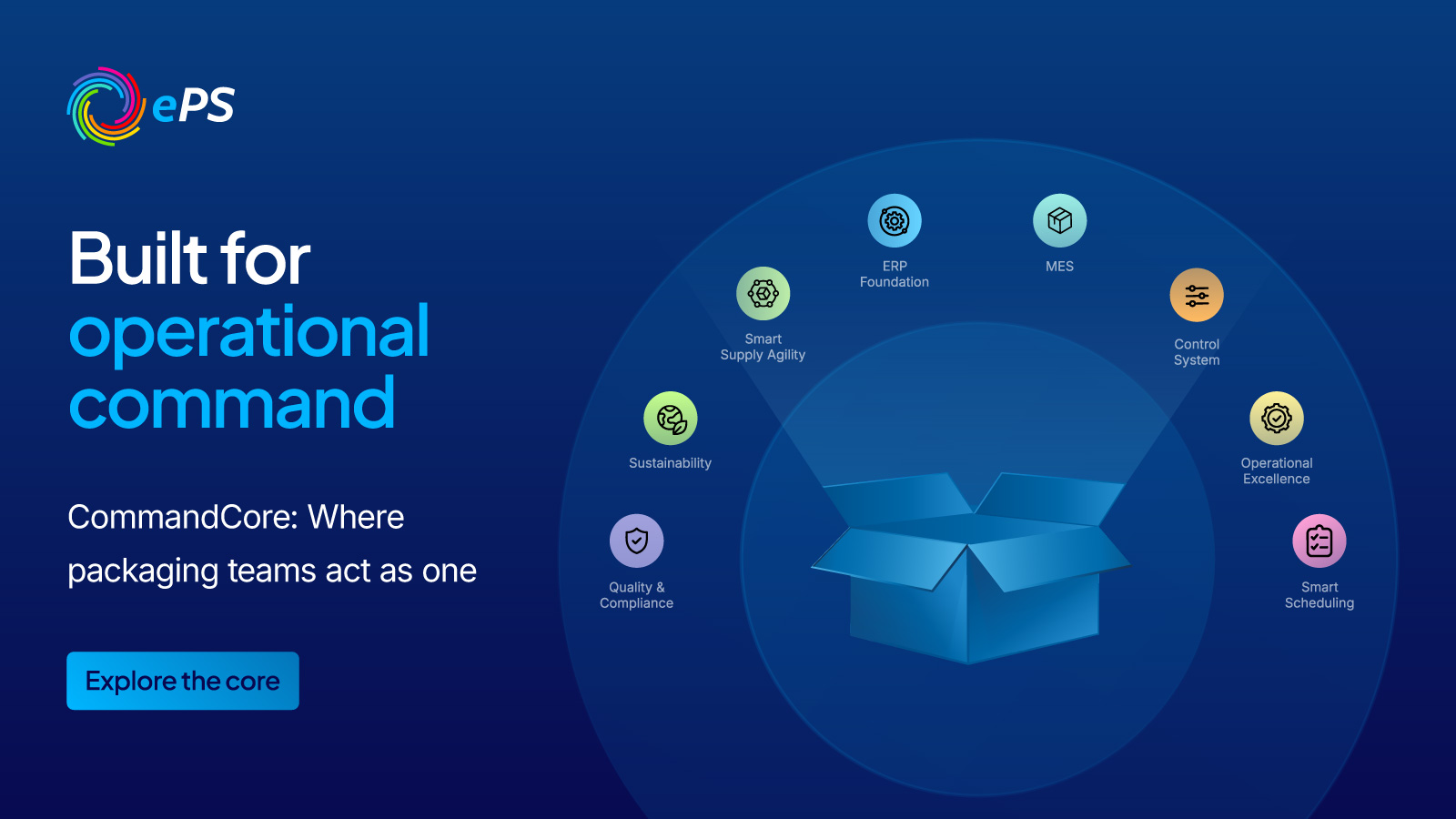
The Unified Platform for Packaging Manufacturing Excellence

The Unified Platform for Packaging Manufacturing Excellence

Leverage 30+ years of plant-floor expertise. Trusted by 700+ packaging manufacturers globally to reduce waste, optimize scheduling, and drive digital transformation. One unified foundation. Eight packaging-native pillars. Zero fragmentation. Read More
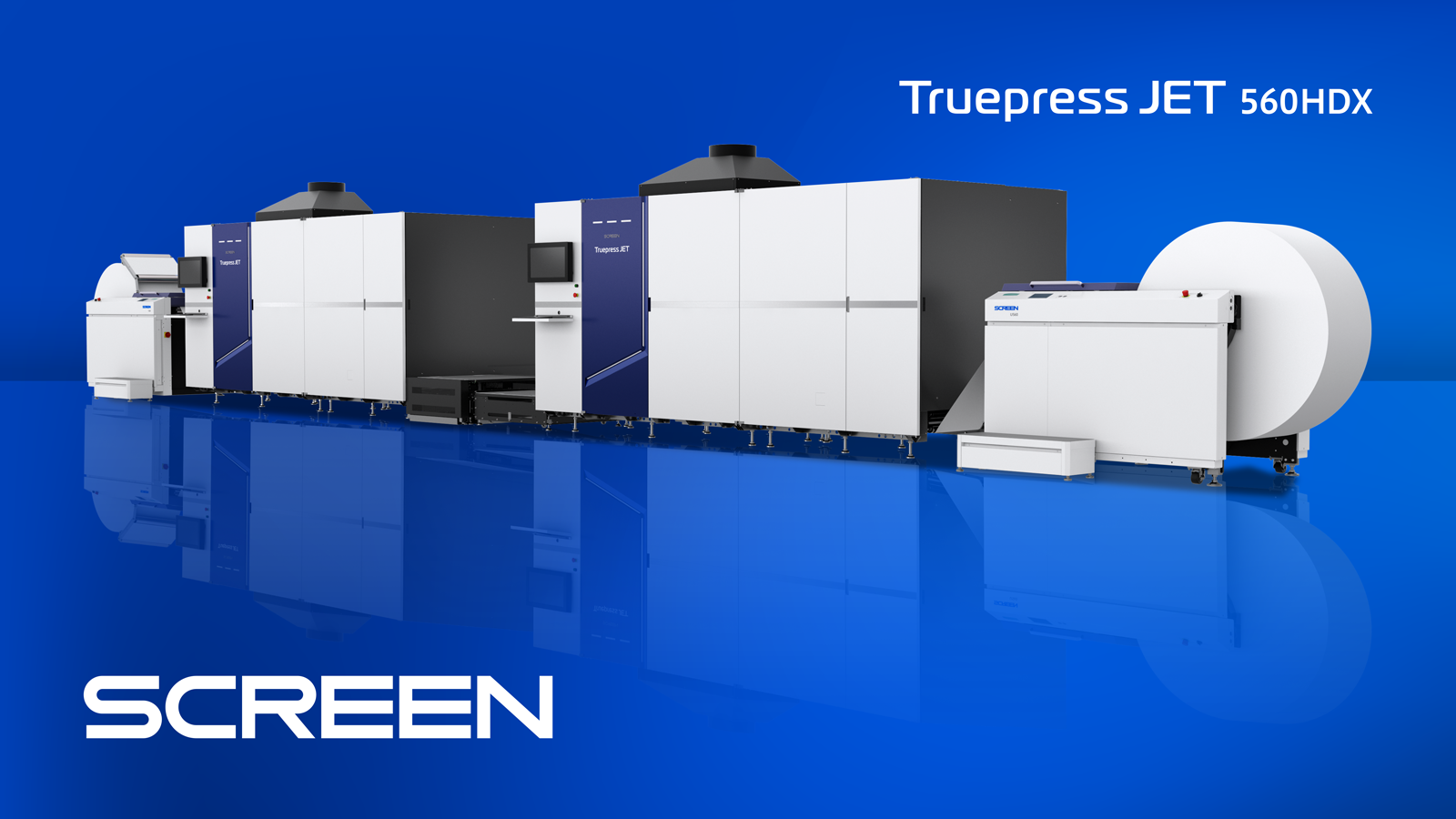
Expand Your Opportunities with the Truepress JET 560HDX from SCREEN

Expand Your Opportunities with the Truepress JET 560HDX from SCREEN

Commercial, direct mail, and publishing printers accustomed to producing jobs over several weeks can now print them in days with the SCREEN Truepress JET 560HDX. The press can accommodate 120 lb. coated or uncoated paper up to 560 mm wide. Read More

Around the Web: Of Water and Winners

Around the Web: Of Water and Winners

A sign-writer created the visual style of music festivals. The “2026 Milky Way Photographer of the Year” winners. AI appears to be catching on among the Amish. Sony has upgraded its wearable air conditioner. How to easily reuse produce bags. A complex digital water clock. A Nobel Prize–winning technology is able to extract water from dry air. Yes, it is possible to be allergic to water. Laser-induced graphene on Kevlar enables multifunctional structural composites. The “most desired” place in each of the 50 states. “The rise in plastic surgeons asked to create ‘AI face.’” K-pop band BTS has teamed with Oreo to release limited edition OREO x BTS Cookies. Welcome to WhatTheyThink’s weekly miscellany. Read More
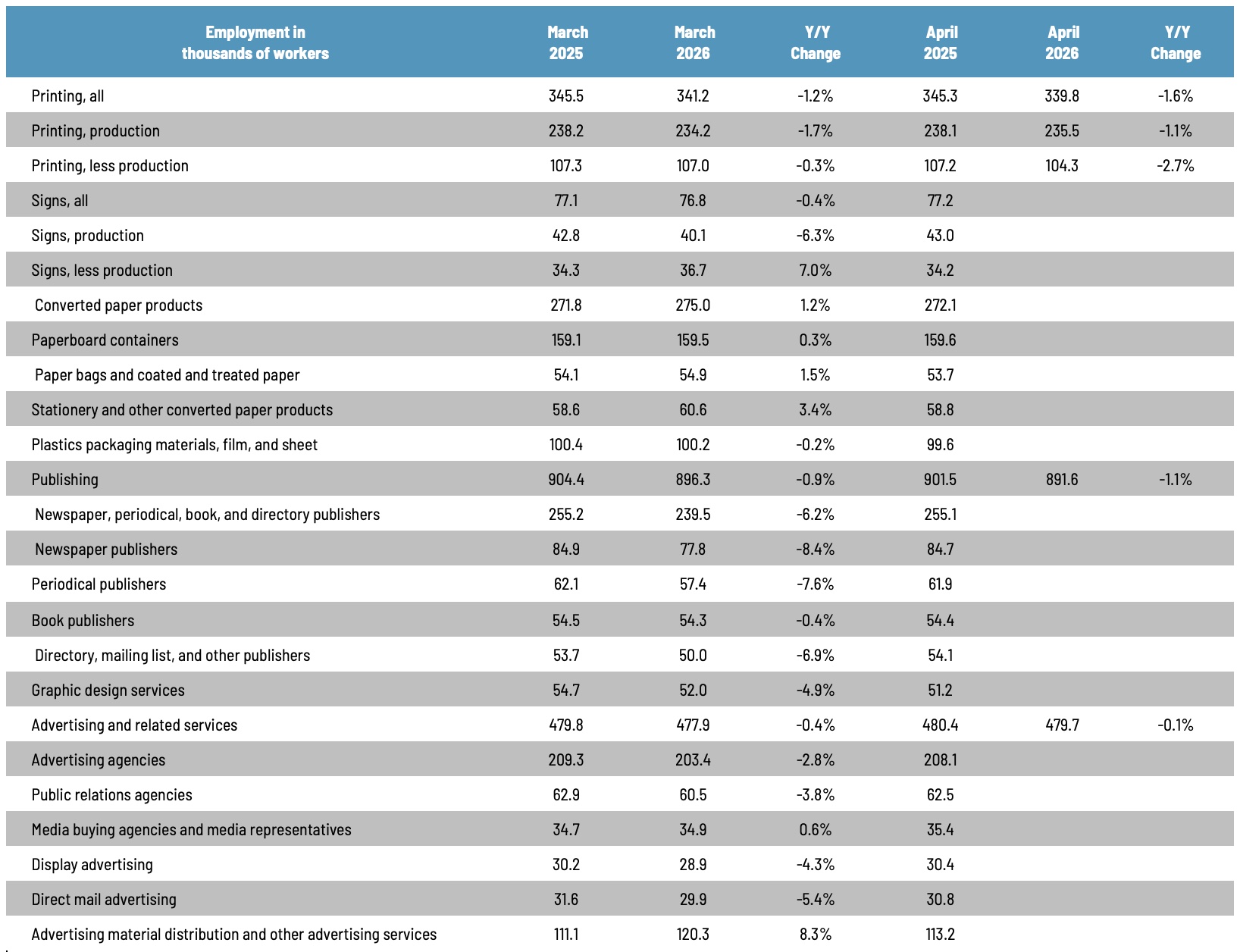
Graphic Arts Employment in April Down Overall—Substantially Among Non-Production

Graphic Arts Employment in April Down Overall—Substantially Among Non-Production

April 2026 saw printing industry employment overall generally flat, down 0.4% from March. And while production employment was up 0.6%, non-production employment was down by 2.5%—basically the reverse of what we saw in March. Read More

Recent Printing Industry News

Wednesday, June 03, 2026