WhatTheyThink

Premium Commentary & Analysis

Communication: The Formula For Success

What if twenty five percent of your business walked out the door,

Wednesday, March 20, 2002

What if twenty five percent of your business walked out the door, today? Would you know why? Could this exodus have been stopped? Did you see the warning signs? Do you have a plan to replace a loss? These are all good questions that a concerned business owner should ask. But, the timing of when to ask is crucial. This disaster can be avoided by having a clear strategy for relating to your customers and developing your business. If your company doesn't have a business development and customer retention strategy, then you need one.

We have all heard the term CRM, but what does it really mean? It certainly isn’t new, as companies have been catering to client needs for decades, but it is receiving considerable attention these days. CRM is the process of learning customer preferences and integrating customer satisfaction into all customer dealings for the purpose of building a corporate philosophy based on customer loyalty. Take special note of the word process. It doesn’t require the purchase of any special software, only the application of a corporate wide customer-centric attitude. The benefits of a clear CRM strategy are well worth your efforts. A clear strategy develops a mutually beneficial relationship between company and customer, fosters a mutual learning environment and focuses on the customer’s lifetime value. This is what business development is all about.

Your customer view must extend beyond the next print job. Your focus must be long-term and consider the amount of business a client brings throughout the lifetime of the relationship. Long relationships bring profit, while short relationships require you to look for new customers often. This is more costly than cultivating your existing clients. While most executives give lip service to having a cohesive company strategy, odds are that a poll of key individuals within an organization will yield divergent opinions about what is important and what is not. I have personally witnessed this lack of consensus in a wide range of companies and worked with management to develop a clear path forward. When management doesn't agree on the details, the strategy is "fuzzy". In sales, clear always beats fuzzy!

Getting your customer's mind share can be a significant challenge. The need to cut through information clutter is shared by most businesses. An excellent way to achieve this is through one-to-one communications. Nevertheless, in order to implement your plan, you must first capture customer-specific information. If your goals are cost-effective sales and JIT delivery, then you need to know if these objectives are shared by your clients. In order to know this, you need to have an interactive and on-going relationship with your customers. Post the following formula on the wall and encourage all employees to live by it:

Dialogue = Information
Information = Knowledge
Knowledge = Loyalty
Loyalty = Profit
Therefore: Dialogue = Profit.

Managing your customers requires capturing customer intelligence. Although this knowledge can be harnessed with enterprise software, a pencil and piece of paper works too. Whatever method you choose, the following steps will assist in managing this process. Group customers into categories, which are made up of customers with similar needs, and assign customer support personnel as category managers who view the lifetime value of each customer as a managed asset. Once this has been done you need to set a strategy for each customer and category, effectively manage communications for a continuation of dialogue and offer an expanding menu of new products and services. By implementing ongoing dialog and catering to customer needs, your surprises will be confined to birthday gifts, and the dual objectives of nurturing happy customers and generating a healthy bottom line will be met. This is the essence of business development.

Seven Steps To Business Development
1. Know what the customer needs.
2. Determine what s/he likes dislikes.
3. Assign internal personnel who are responsible for customer care feeding.
4. Create new benefits, services and/or products based on customer input.
5. Foster company-wide attitude: "If it wasn’t for this customer, I wouldn’t have my job".
6. Maintain customer dialogue, which has value for the customer (not just lame mailings and calls).
7. Maintain an on-going feedback loop to preclude neglected relationships.


Continue reading your article
with a WhatTheyThink membership.

WhatTheyThink Annual Membership

Less than $4/week.

Get unlimited access to in-depth commentary and analysis covering the latest trends, emerging technologies, operational strategies, and key events across every segment of today's printing industry.

Stay informed. Stay competitive. Stay ahead.
WhatTheyThink Day Pass

$5 for 24 hours

Unlimited access to all of WhatTheyThink. Get your Day Pass

Already a member?
Sign In

About WhatTheyThink

WhatTheyThink is the global printing industry's go-to information source with both print and digital offerings, including WhatTheyThink.com, WhatTheyThink Email Newsletters, and the WhatTheyThink magazine. Our mission is to inform, educate, and inspire the industry. We provide cogent news and analysis about trends, technologies, operations, and events in all the markets that comprise today's printing and sign industries including commercial, in-plant, mailing, finishing, sign, display, textile, industrial, finishing, labels, packaging, marketing technology, software and workflow.

Recent Articles from WhatTheyThink

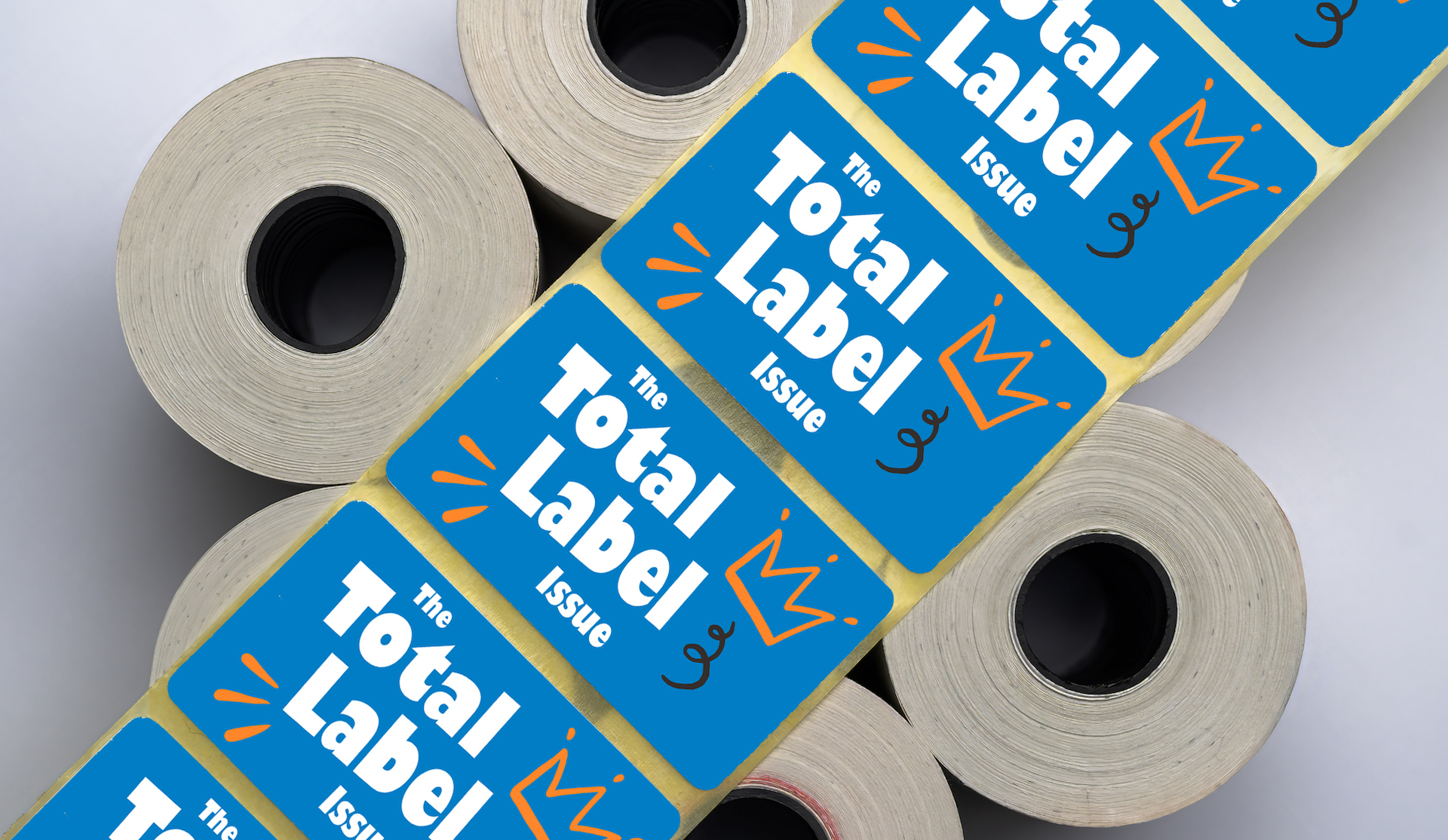
The Total Label Issue

The Total Label Issue

This issue of the WhatTheyThink Quarterly is all about labels, which are seen as a high-growth part of commercial printing, driven by e-commerce, food/beverage demand, and regulations. The market has surpassed 1.2 trillion square meters of label production volume per year, and is moving toward high-mix, low-waste production rather than only high-volume throughput. While flexo is still used for high-volume label production, digital label printing often complements it—or in some cases replaces it. But labels are about more than printing technology. Read More
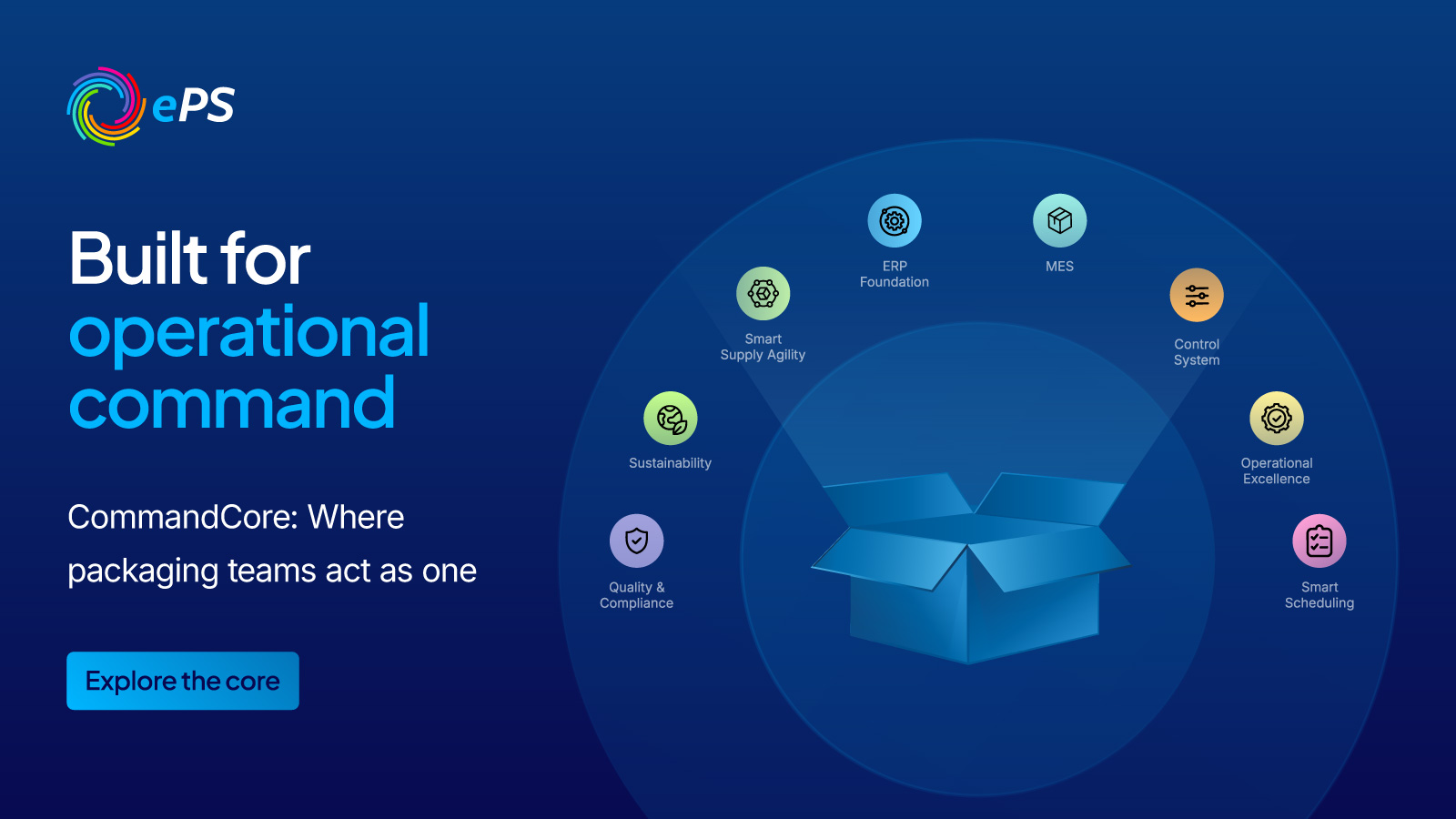
The Unified Platform for Packaging Manufacturing Excellence

The Unified Platform for Packaging Manufacturing Excellence

Leverage 30+ years of plant-floor expertise. Trusted by 700+ packaging manufacturers globally to reduce waste, optimize scheduling, and drive digital transformation. One unified foundation. Eight packaging-native pillars. Zero fragmentation. Read More

Expand Your Opportunities with the Truepress JET 560HDX from SCREEN

Expand Your Opportunities with the Truepress JET 560HDX from SCREEN

Commercial, direct mail, and publishing printers accustomed to producing jobs over several weeks can now print them in days with the SCREEN Truepress JET 560HDX. The press can accommodate 120 lb. coated or uncoated paper up to 560 mm wide. Read More

Around the Web: Of Water and Winners

Around the Web: Of Water and Winners

A sign-writer created the visual style of music festivals. The “2026 Milky Way Photographer of the Year” winners. AI appears to be catching on among the Amish. Sony has upgraded its wearable air conditioner. How to easily reuse produce bags. A complex digital water clock. A Nobel Prize–winning technology is able to extract water from dry air. Yes, it is possible to be allergic to water. Laser-induced graphene on Kevlar enables multifunctional structural composites. The “most desired” place in each of the 50 states. “The rise in plastic surgeons asked to create ‘AI face.’” K-pop band BTS has teamed with Oreo to release limited edition OREO x BTS Cookies. Welcome to WhatTheyThink’s weekly miscellany. Read More
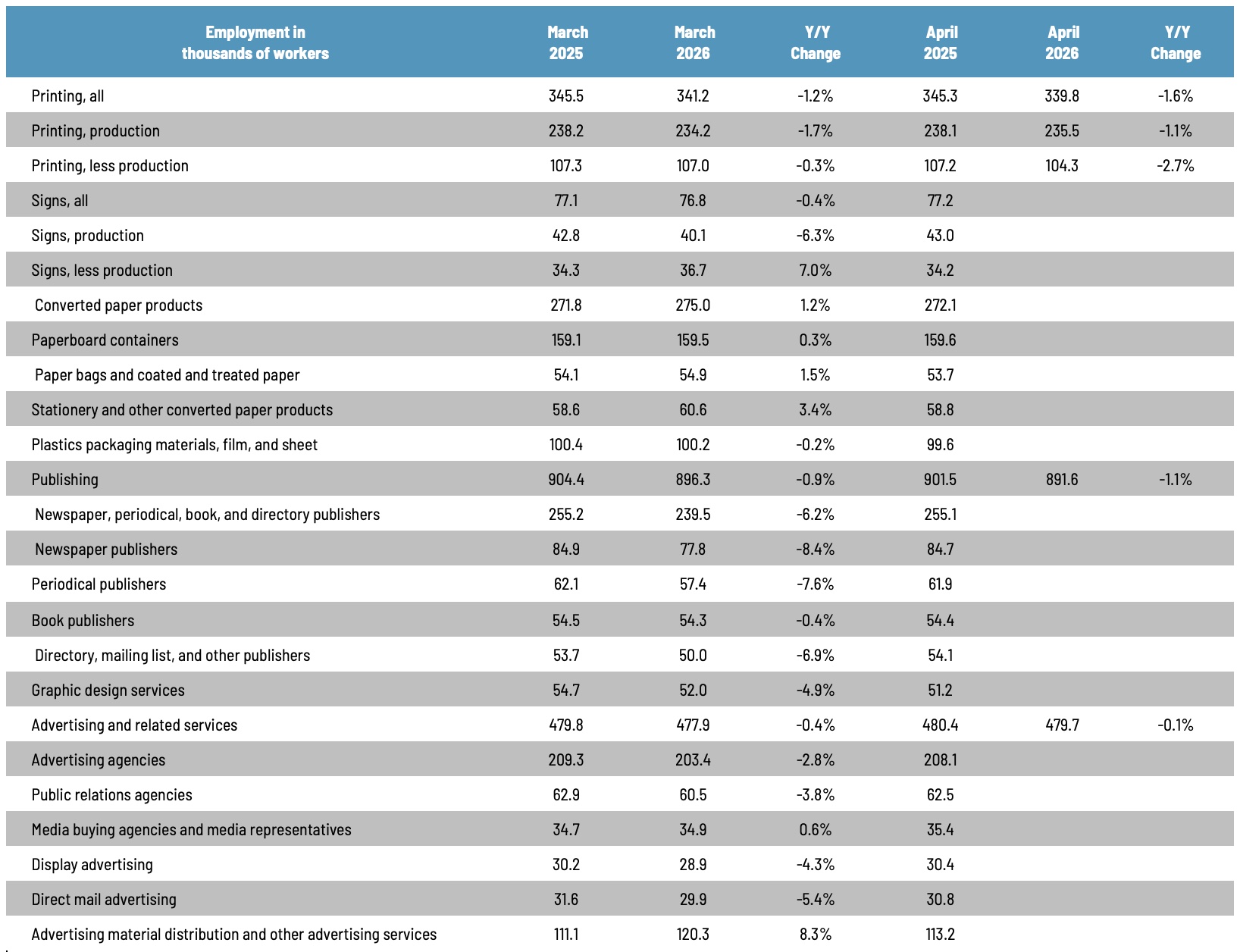
Graphic Arts Employment in April Down Overall—Substantially Among Non-Production

Graphic Arts Employment in April Down Overall—Substantially Among Non-Production

April 2026 saw printing industry employment overall generally flat, down 0.4% from March. And while production employment was up 0.6%, non-production employment was down by 2.5%—basically the reverse of what we saw in March. Read More

Recent Printing Industry News

Wednesday, June 03, 2026