WhatTheyThink

Premium Commentary & Analysis

When Applications Cross the Line: Bringing Digital Document Workflow to the Enterprise - Part I

As digital workflow becomes the standard for the document factory,

Thursday, March 14, 2002

As digital workflow becomes the standard for the document factory, companies are considering the further advantages of linking various islands of workflow across the enterprise. Organizations are also coming face-to-face and screen-to-screen with the difficult reality of efficiently and affordably coordinating these processes. Chris Ahearn, a longtime document industry veteran and vice president of sales and marketing for nowdocs.com, shares his insights in the first of two columns on the challenges and rewards of taking digital document workflow into the enterprise.

"This trend is seen in many industries, but especially in paperwork-intensive environments like insurance and finance," says Ahearn. "The documents central to their general business are typically not complex applications, and the volume of actual impressions is very small. Traditionally, companies just print and distribute a bunch of forms, and this is their base application. The workflow usually involves requesting information and getting various levels of approval."

Moving Into Complex Territory
"Any time you have an application that leaves one specialized functional area for another for approval, data gathering or some other activity, you run into enterprise applications. This is when it gets complex because each group has its own way of doing things," he notes.

Some departments completely manage their flow of paper from approval to archive, and it does not move into another area without a break in the workflow. With multiple paper forms and process islands, it may take weeks to find and process information when a claim or other query comes in. Clearly, seamless document flow has its advantages in these situations.

"One insurance company I consulted with had eleven claim forms, and the latest revision was from 1979. All forms had the same information, and no one could identify who owned them. We recommended that the company convert to one form produced digitally, and they could save money."

The Business Advantage of Reduced Liability
Another significant business advantage of linking documents to enterprise-level workflow is the ability to control revisions and ensure that people are using the right documents. For some industries, like insurance and finance, this can mean reduced risk and liability.

"For example, to stay accredited or to satisfy regulations, a bank or healthcare institution may have to request certain information from patients, subscribers or applicants, or share specific data with them," Ahearn explains. "If the version in circulation doesn't include that information, or if someone has the wrong form, you could open yourself up to liability. When forms are available digitally, you don't have to figure out what is the most current one and or what is old and should be thrown away.

"It's amazing that organizations with huge data banks of scanned images don't take into account the hardware and effort it takes to scan these documents, and they still can't do much more with the data. When it's done right, companies can reduce the servers and other resources required to capture and manage information," he says. "If they can get documents into a common digital form, they gain advantages of reduced risk, better customer satisfaction, more manageable inventories and the ability to revise."

Watch for the second part of this interview, when Chris Ahearn talks about digital workflow genetics, problems with selling enterprise workflow, and implementation Catch 22.


Continue reading your article
with a WhatTheyThink membership.

WhatTheyThink Annual Membership

Less than $4/week.

Get unlimited access to in-depth commentary and analysis covering the latest trends, emerging technologies, operational strategies, and key events across every segment of today's printing industry.

Stay informed. Stay competitive. Stay ahead.
WhatTheyThink Day Pass

$5 for 24 hours

Unlimited access to all of WhatTheyThink. Get your Day Pass

Already a member?
Sign In

About WhatTheyThink

WhatTheyThink is the global printing industry's go-to information source with both print and digital offerings, including WhatTheyThink.com, WhatTheyThink Email Newsletters, and the WhatTheyThink magazine. Our mission is to inform, educate, and inspire the industry. We provide cogent news and analysis about trends, technologies, operations, and events in all the markets that comprise today's printing and sign industries including commercial, in-plant, mailing, finishing, sign, display, textile, industrial, finishing, labels, packaging, marketing technology, software and workflow.

Recent Articles from WhatTheyThink

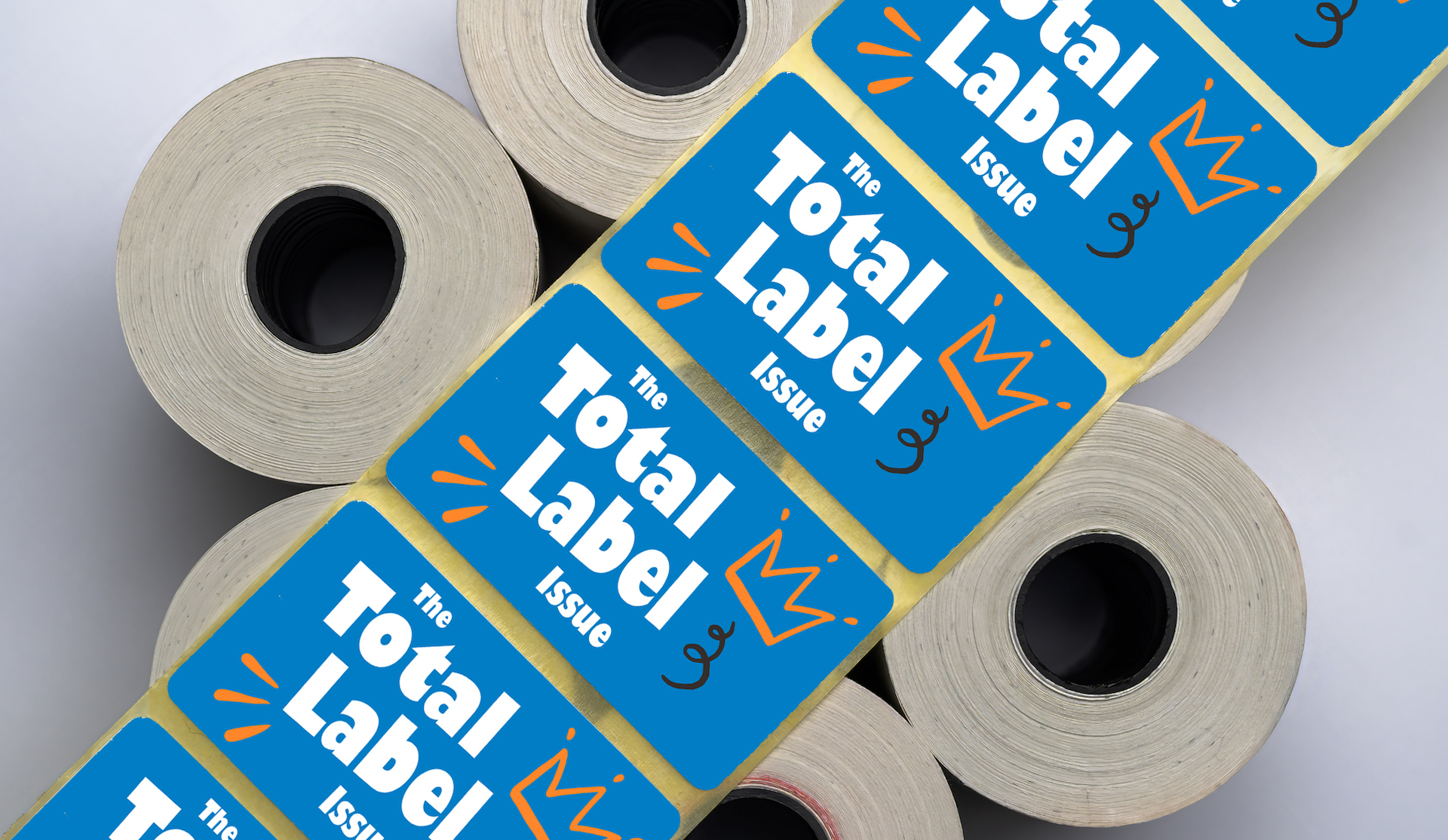
The Total Label Issue

The Total Label Issue

This issue of the WhatTheyThink Quarterly is all about labels, which are seen as a high-growth part of commercial printing, driven by e-commerce, food/beverage demand, and regulations. The market has surpassed 1.2 trillion square meters of label production volume per year, and is moving toward high-mix, low-waste production rather than only high-volume throughput. While flexo is still used for high-volume label production, digital label printing often complements it—or in some cases replaces it. But labels are about more than printing technology. Read More
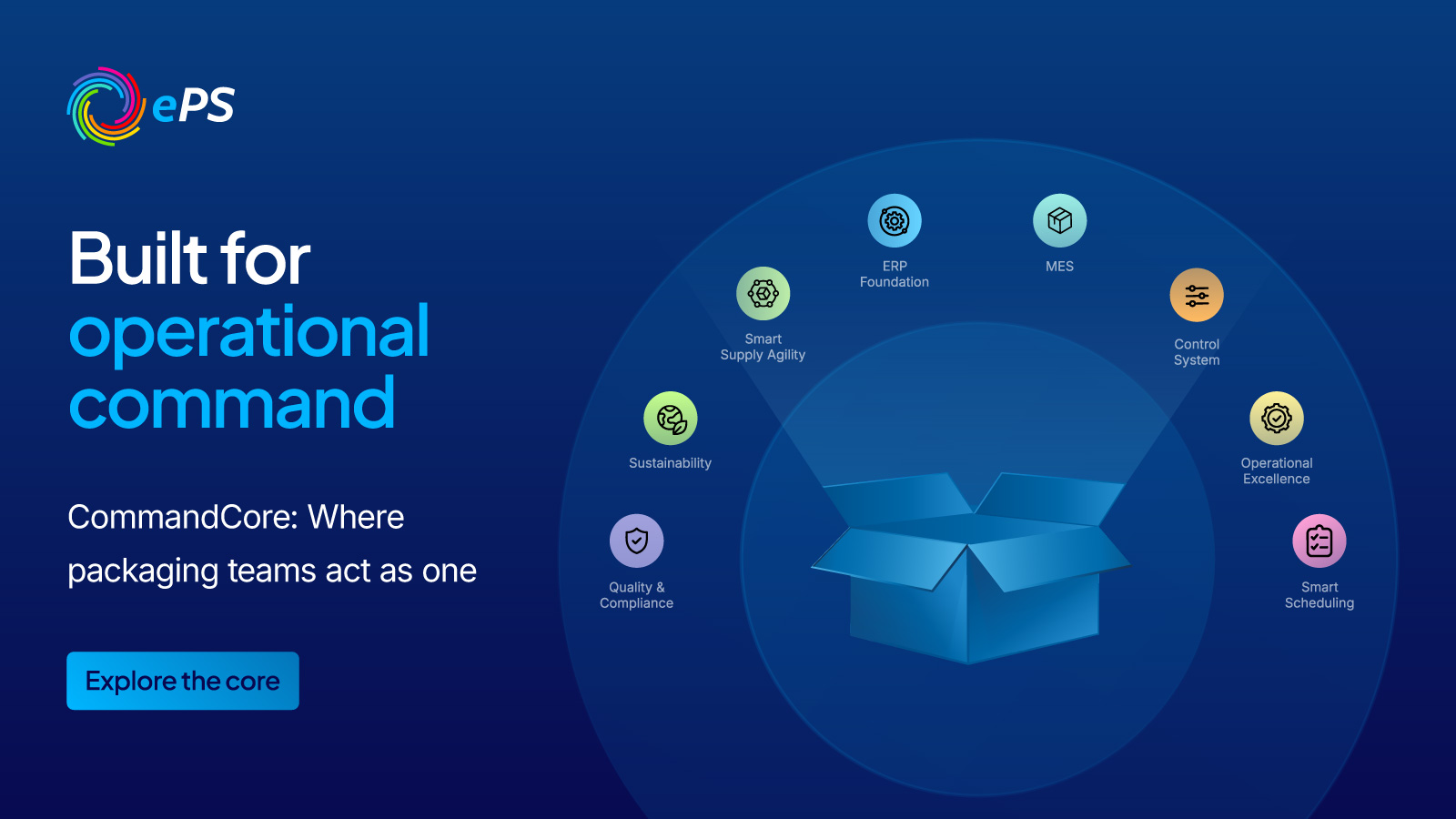
The Unified Platform for Packaging Manufacturing Excellence

The Unified Platform for Packaging Manufacturing Excellence

Leverage 30+ years of plant-floor expertise. Trusted by 700+ packaging manufacturers globally to reduce waste, optimize scheduling, and drive digital transformation. One unified foundation. Eight packaging-native pillars. Zero fragmentation. Read More
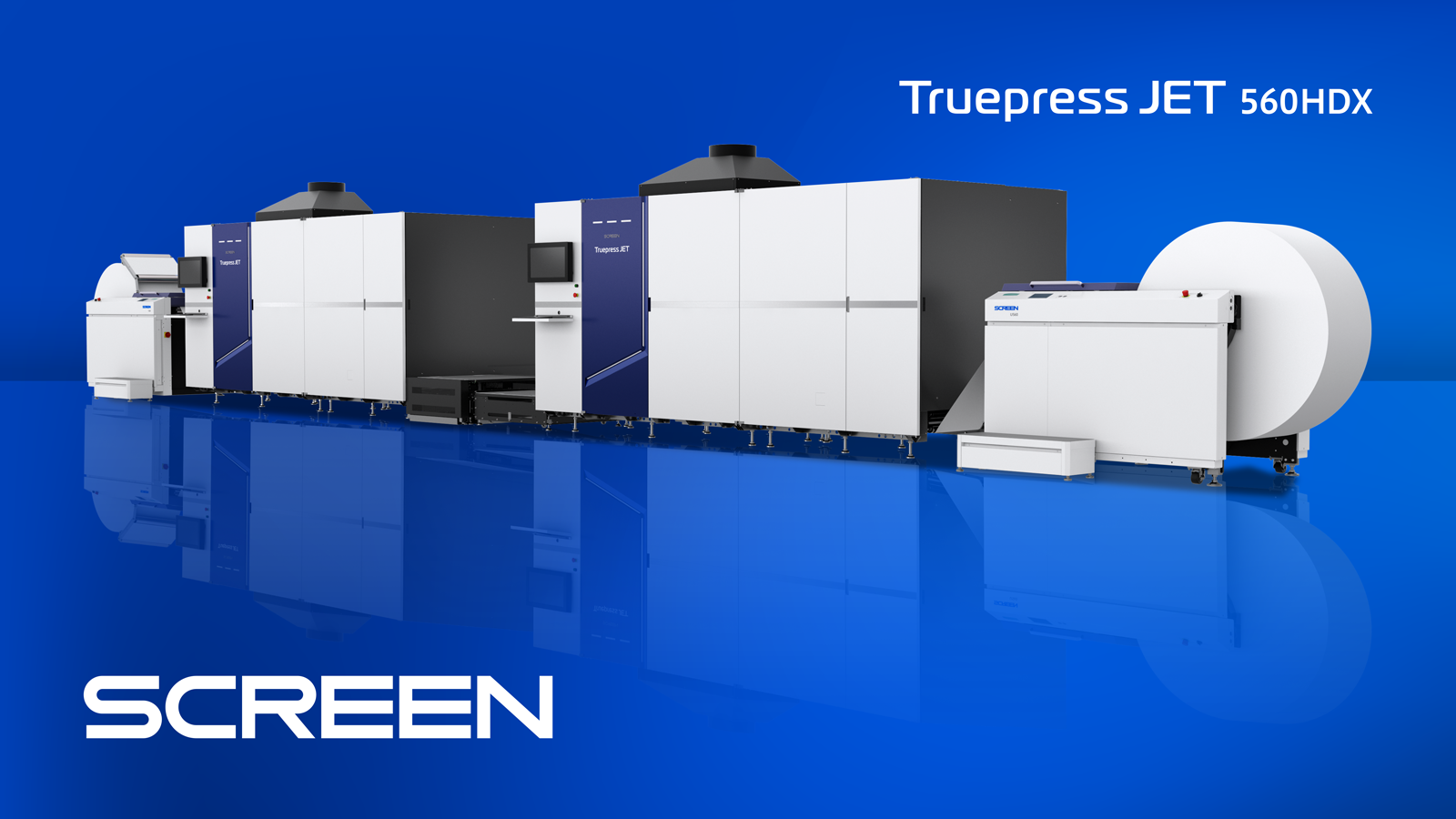
Expand Your Opportunities with the Truepress JET 560HDX from SCREEN

Expand Your Opportunities with the Truepress JET 560HDX from SCREEN

Commercial, direct mail, and publishing printers accustomed to producing jobs over several weeks can now print them in days with the SCREEN Truepress JET 560HDX. The press can accommodate 120 lb. coated or uncoated paper up to 560 mm wide. Read More

Around the Web: Of Water and Winners

Around the Web: Of Water and Winners

A sign-writer created the visual style of music festivals. The “2026 Milky Way Photographer of the Year” winners. AI appears to be catching on among the Amish. Sony has upgraded its wearable air conditioner. How to easily reuse produce bags. A complex digital water clock. A Nobel Prize–winning technology is able to extract water from dry air. Yes, it is possible to be allergic to water. Laser-induced graphene on Kevlar enables multifunctional structural composites. The “most desired” place in each of the 50 states. “The rise in plastic surgeons asked to create ‘AI face.’” K-pop band BTS has teamed with Oreo to release limited edition OREO x BTS Cookies. Welcome to WhatTheyThink’s weekly miscellany. Read More
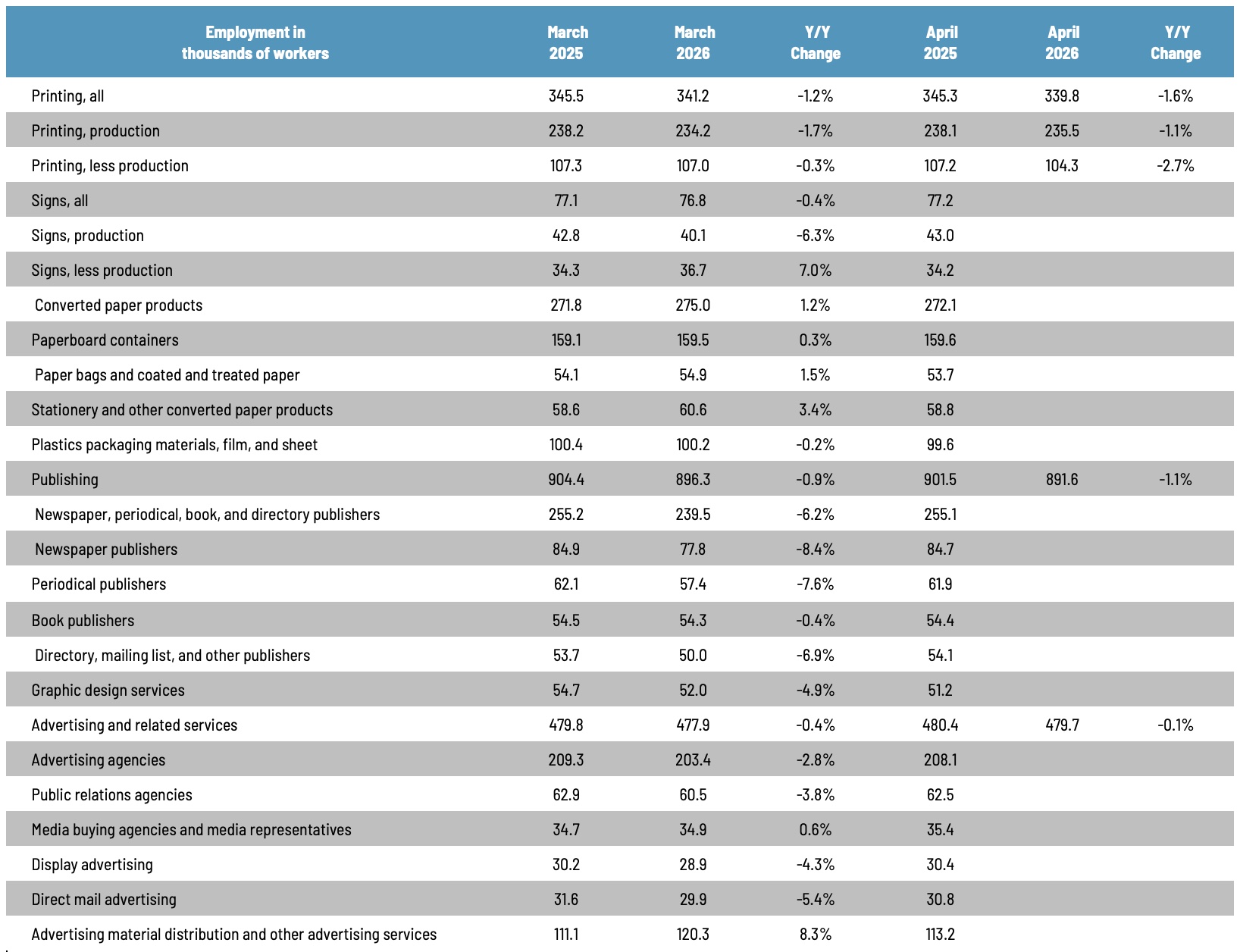
Graphic Arts Employment in April Down Overall—Substantially Among Non-Production

Graphic Arts Employment in April Down Overall—Substantially Among Non-Production

April 2026 saw printing industry employment overall generally flat, down 0.4% from March. And while production employment was up 0.6%, non-production employment was down by 2.5%—basically the reverse of what we saw in March. Read More

Recent Printing Industry News

Wednesday, June 03, 2026