WhatTheyThink

Premium Commentary & Analysis

Understanding Digital Workflow

Digital workflow automation is driving the document industry to new heights of productivity,

Sunday, January 13, 2002

Digital workflow automation is driving the document industry to new heights of productivity, flexibility and profitability. Some print and publishing operations already have fully evolved systems in place. Others are trying to figure out exactly what digital workflow means and why they need it. Even companies with sophisticated processes find they are continually looking for better ways to do the work.

In "Understanding Digital Workflow," experts from a variety of areas will share insights and ideas about this wide-ranging capability. The first few columns will lay the groundwork for the complex topic, as we try to get a handle on what is meant by digital workflow. Like many broad concepts, the idea means different things to different people.

From General to Specific

Tim West, vice president of development at APT (artplustechnology.com), a firm that melds document design with document production, sees digital workflow as "software products that automate what is manual in many cases. Further, workflow can be applied just about anywhere." Dave Squires, director of solution sales for Sefas Innovation (sefas.com), specialists in front-end development tools, concurs that digital workflow is the application of information technology -- computer hardware and software -- to a business process. These are good starting points for defining the concept. Now let's add another layer.

Digital workflow has roots in practices such as Computer Integrated Manufacturing (CIM) and Manufacturing or Material Resource Planning (MRP). It has found its widest use in business-specific Enterprise Resource Planning (ERP) systems that integrate and automate multiple processes and steps within those processes. "Digital workflow applied to document production means taking those same principles of 'integrate and automate,' and applying them to the steps of the document production life-cycle," explains Squires. In the context of document digital workflow, the life-cycle stages are concept, creation, data integration, production, finishing, distribution and customer service. This leads to more function-specific definitions, such as that of Group 1 Software (g1.com) Vice President Ann Jurczyk, who describes digital workflow as the automatic routing of materials through their review cycles.

Why Bother?

Perhaps we're getting ahead of ourselves. Before framing a definition, perhaps we should ask why print executives might care about digital workflow in the first place? The reasons are ample and convincing. Digital workflow and its intelligent automation enable companies to do more with less, with greater job integrity and faster throughput. It has the potential to reduce production steps, labor requirements and excess inventory. By smartly routing and directing workflow, digital automation manages capacity and optimizes resource utilization. Digital workflow can enhance relationships with customers who are able to submit work and track jobs electronically. Changes are more easily accomplished with less cost and effort. Work can be turned around faster, increasing capacity for more work and more profit. Of course, all of this depends on having the right tools, partners and strategies, all things to be examined in future installments of "Understanding Digital Workflow."

Upcoming columns will also explore topics such as the stages of digital workflow; bringing color into workflow; accommodating multiple data streams and standards; tracking and security; linking to online and enterprise systems; creating RFPs for digital workflow; and developing digital workflow for personalized POD documents. Readers are encouraged to send in questions and topics they would like to know more about, and we will try to dig into the answers.


Continue reading your article
with a WhatTheyThink membership.

WhatTheyThink Annual Membership

Less than $4/week.

Get unlimited access to in-depth commentary and analysis covering the latest trends, emerging technologies, operational strategies, and key events across every segment of today's printing industry.

Stay informed. Stay competitive. Stay ahead.
WhatTheyThink Day Pass

$5 for 24 hours

Unlimited access to all of WhatTheyThink. Get your Day Pass

Already a member?
Sign In

About WhatTheyThink

WhatTheyThink is the global printing industry's go-to information source with both print and digital offerings, including WhatTheyThink.com, WhatTheyThink Email Newsletters, and the WhatTheyThink magazine. Our mission is to inform, educate, and inspire the industry. We provide cogent news and analysis about trends, technologies, operations, and events in all the markets that comprise today's printing and sign industries including commercial, in-plant, mailing, finishing, sign, display, textile, industrial, finishing, labels, packaging, marketing technology, software and workflow.

Recent Articles from WhatTheyThink

The Total Label Issue

The Total Label Issue

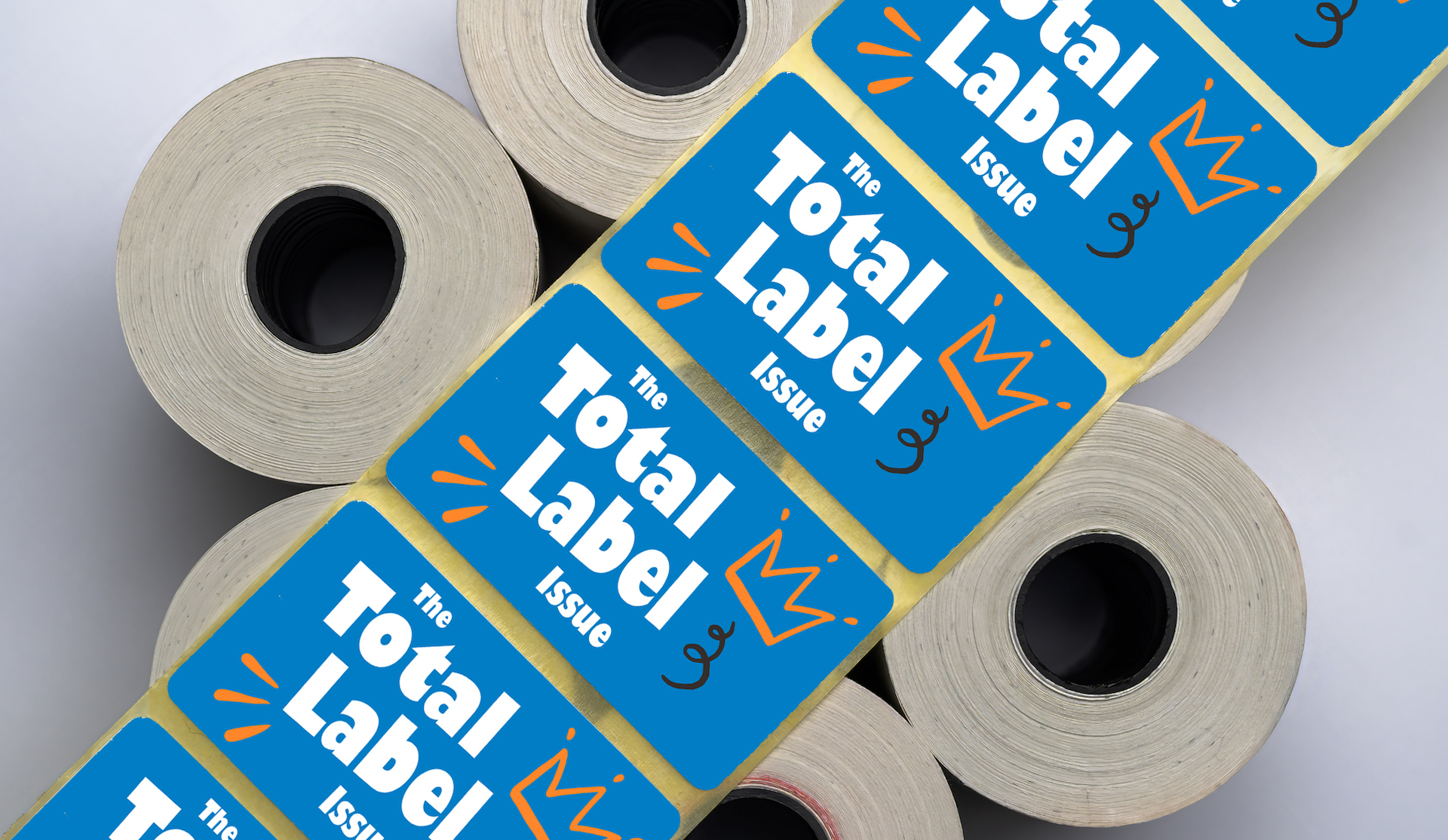
This issue of the WhatTheyThink Quarterly is all about labels, which are seen as a high-growth part of commercial printing, driven by e-commerce, food/beverage demand, and regulations. The market has surpassed 1.2 trillion square meters of label production volume per year, and is moving toward high-mix, low-waste production rather than only high-volume throughput. While flexo is still used for high-volume label production, digital label printing often complements it—or in some cases replaces it. But labels are about more than printing technology. Read More
The Unified Platform for Packaging Manufacturing Excellence

The Unified Platform for Packaging Manufacturing Excellence

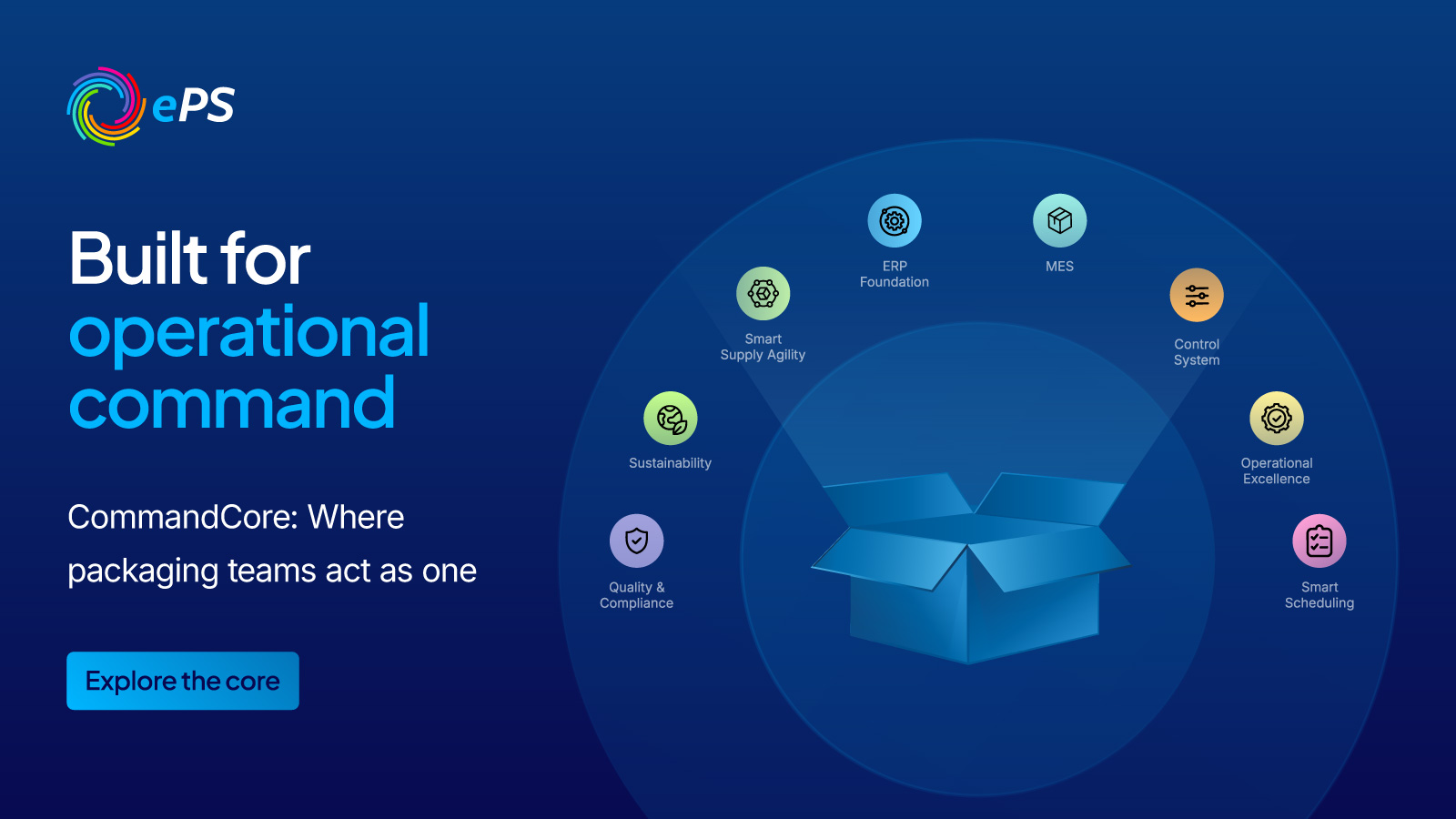
Leverage 30+ years of plant-floor expertise. Trusted by 700+ packaging manufacturers globally to reduce waste, optimize scheduling, and drive digital transformation. One unified foundation. Eight packaging-native pillars. Zero fragmentation. Read More
Expand Your Opportunities with the Truepress JET 560HDX from SCREEN

Expand Your Opportunities with the Truepress JET 560HDX from SCREEN

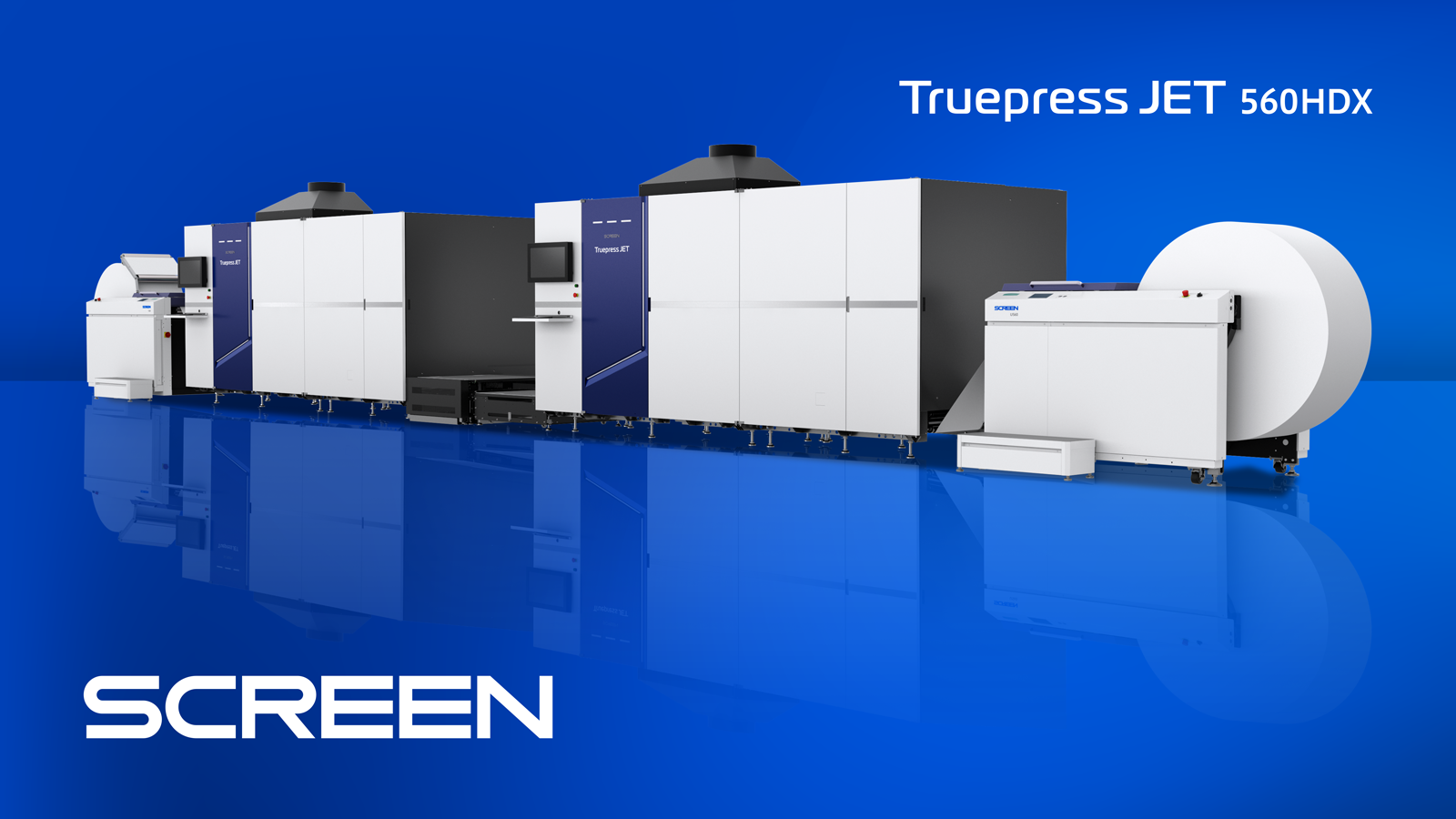
Commercial, direct mail, and publishing printers accustomed to producing jobs over several weeks can now print them in days with the SCREEN Truepress JET 560HDX. The press can accommodate 120 lb. coated or uncoated paper up to 560 mm wide. Read More

Around the Web: Of Water and Winners

Around the Web: Of Water and Winners

A sign-writer created the visual style of music festivals. The “2026 Milky Way Photographer of the Year” winners. AI appears to be catching on among the Amish. Sony has upgraded its wearable air conditioner. How to easily reuse produce bags. A complex digital water clock. A Nobel Prize–winning technology is able to extract water from dry air. Yes, it is possible to be allergic to water. Laser-induced graphene on Kevlar enables multifunctional structural composites. The “most desired” place in each of the 50 states. “The rise in plastic surgeons asked to create ‘AI face.’” K-pop band BTS has teamed with Oreo to release limited edition OREO x BTS Cookies. Welcome to WhatTheyThink’s weekly miscellany. Read More
Graphic Arts Employment in April Down Overall—Substantially Among Non-Production

Graphic Arts Employment in April Down Overall—Substantially Among Non-Production

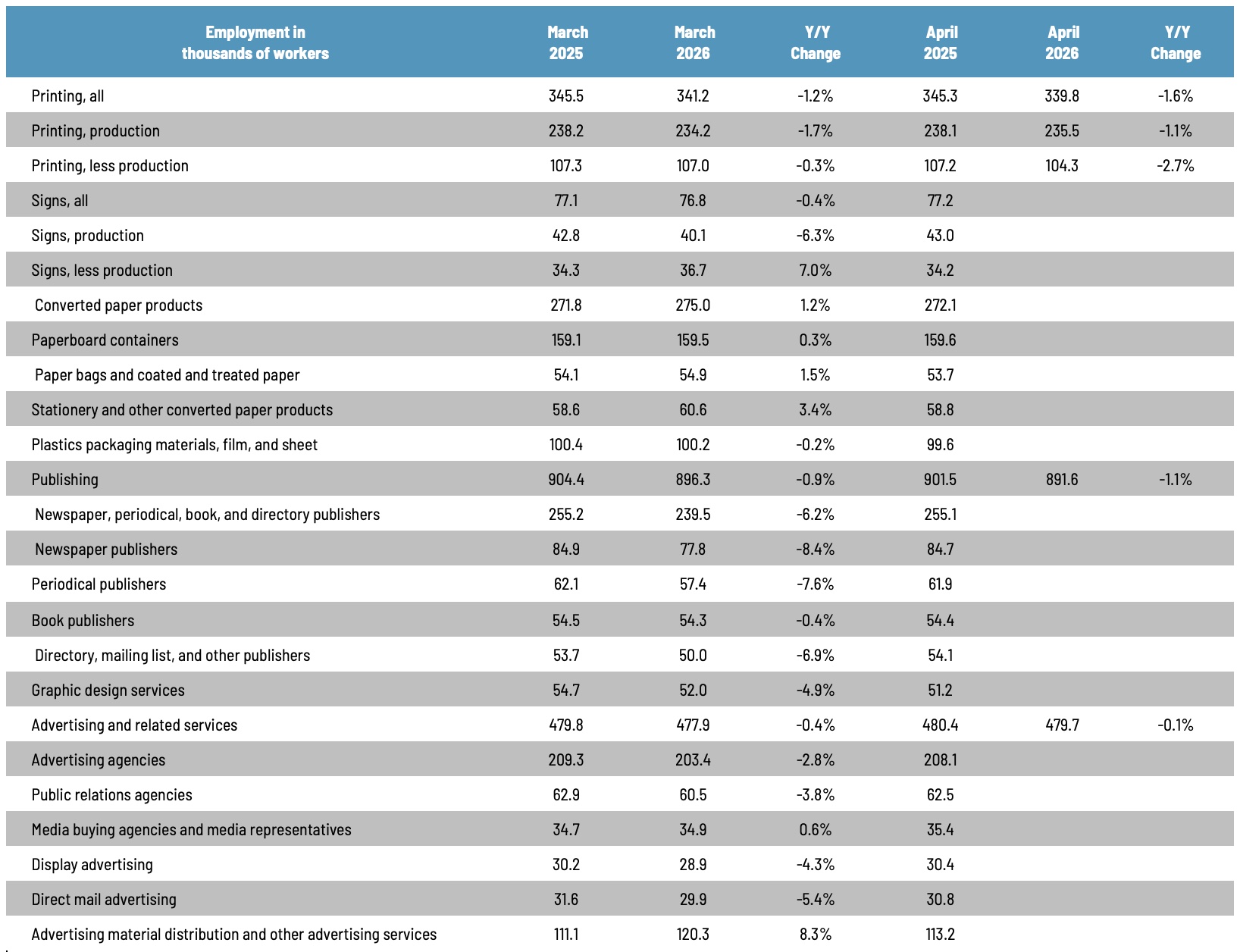
April 2026 saw printing industry employment overall generally flat, down 0.4% from March. And while production employment was up 0.6%, non-production employment was down by 2.5%—basically the reverse of what we saw in March. Read More

Recent Printing Industry News

Wednesday, June 03, 2026