WhatTheyThink

Premium Commentary & Analysis

Professional Education: Why do I need it and where can I get it?

When I first entered the printing/

Friday, January 18, 2002

When I first entered the printing/production field I had very little experience. It was a change in careers for me (I was once an Aerospace Black Project Goob) and I had to swallow every ounce of pride I had and start at the bottom (again). The only way I saw to make myself more marketable and proficient was professional education. It worked for me and over the years I’ve encouraged others to follow a very strict course of constant education in all aspects of our wonderful industry.

I have been very happy to see others that have worked for and with me rise in professional stature and, most importantly, become the sort of production person that others love to work with and respect. I know that when I was a CSR at a printer I worshiped knowledgeable clients and they made my job much easier as their projects were locked and cocked even before I got my hands on them. So our two questions are: Why is professional education important? and Where can I get it?

Why educate employees? Can’t we just use “On the Job Training (OJT)?”

Why educate yourself indeed. Many companies love to use good old OJT. Believe me, I feel there is NO substitute for real life experiences, but when someone uses OJT they normally learn inside a very small box. Their skill set will only match, but normally not exceed, the skill sets of those around them and I feel this is not to their benefit or the benefit of their company.

The ability to better one’s processes and, in turn, squeeze as much money out of a system (whether saving it or making it) many times depends on a knowledge base outside of that currently held by the status quo at any company. If someone already had the foresight to implement positive change they probably would, in all likelihood, already have done so. OJT, in my humble opinion, only recycles old ideas and skill sets within a company and does not contribute to improving oneself outside of the current norms. So if we feel that professional education can save a company money then that alone should justify a program being initiated and is, from the employer’s view, one wonderful answer to “why”.

Another answer would be the esprit that it instills in your employees and coworkers. Professional education can be pricey (we’ll get to that in a moment) and is, whether in time or money, an investment. When an employee feels their company is investing in them personally, their level of loyalty to that company increases in a significant way. It's a good way of keeping exceptional people! This is an added value to the company, above and beyond specific monetary matters.

Let’s put it this way: would you rather have educated, dedicated, professionals working for you or someone that can squeeze by with a great deal of supervision? I think I know your answer. Now, on the individual level, what does professional education do you? It makes you more prepared to handle daily challenges and, in doing so, keeps you from loosing your ever-loving mind and jumping off your building some afternoon. It, quite simply, prepares you so that when a question arises or a new project comes on line, you can effectively and efficiently tackle the challenge. This makes you look good each day and comes in handy when asking for that 20% raise at review time. Being professionally educated also come in handy if, and when, you enter the “looking for a job” force. With the plethora of resumes shooting about skills above the norm can make you standout in the crowd. Needless to say, professional education benefits the employee and employer alike. On job descriptions, I produce a line stating that the position requires a “willingness to continue ones professional education”.

Where can I get this ongoing training and, anyway, isn’t it expensive? My company doesn’t have deep pockets!

Professional education falls into two categories - formal and informal. Formal education can be pricey on the outside, but if one concept or skill is developed through said training, it can pay for itself over and over again and the ROI can be very quick. Here is an example- If your company sends you to New York for a conference and spends, lets say $3,000 for travel, per diem, conference registration and hotel and you come back with an idea that saves your group $12,400 per year, that’s a pretty sweet $9,400 in the bank that you would not have realized. (This happened to me this year!). Enough said.

Our staff takes advantage of formal training as long as we can justify it with future savings related to that training. Formal education can be found at conferences all across the globe. They can be researched using the Internet.

Informal educational opportunities can be found at web sites like WhatTheyThink.com. Trade publications, many of them free, are also invaluable. On-line forums like PrintPlanet.com bring a healthy dose of education right to your desktop and many companies, like Adobe, offer free seminars and demos in cities across the world. The sources are out there; they simply need to be tapped into. Your only real investment is time and I know that time is at a premium with all of us.

Try and set aside 20 minutes a day to research and study. I devise research projects for myself and study a specific subject over a period of time. It’s a small investment, but pays off when I need to know something or when the boss man asks a question that I’m able to readily answer and boy, does that feel good.

I hope you enjoyed this little article and I look forward to speaking with you again (in a virtual sense) soon. A very happy and profitable New Year to you all!


Continue reading your article
with a WhatTheyThink membership.

WhatTheyThink Annual Membership

Less than $4/week.

Get unlimited access to in-depth commentary and analysis covering the latest trends, emerging technologies, operational strategies, and key events across every segment of today's printing industry.

Stay informed. Stay competitive. Stay ahead.
WhatTheyThink Day Pass

$5 for 24 hours

Unlimited access to all of WhatTheyThink. Get your Day Pass

Already a member?
Sign In

About WhatTheyThink

WhatTheyThink is the global printing industry's go-to information source with both print and digital offerings, including WhatTheyThink.com, WhatTheyThink Email Newsletters, and the WhatTheyThink magazine. Our mission is to inform, educate, and inspire the industry. We provide cogent news and analysis about trends, technologies, operations, and events in all the markets that comprise today's printing and sign industries including commercial, in-plant, mailing, finishing, sign, display, textile, industrial, finishing, labels, packaging, marketing technology, software and workflow.

Recent Articles from WhatTheyThink

The Total Label Issue

The Total Label Issue

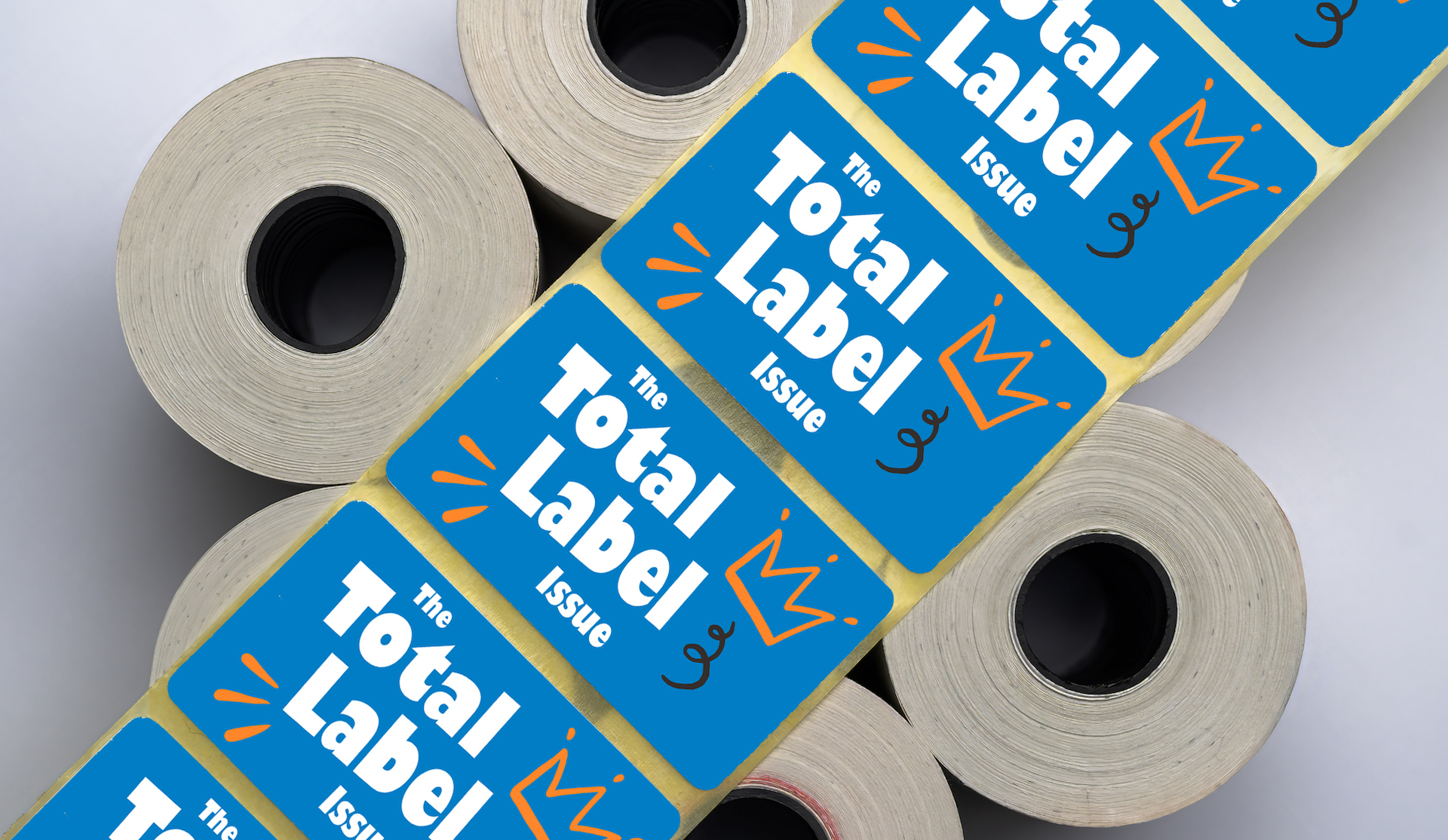
This issue of the WhatTheyThink Quarterly is all about labels, which are seen as a high-growth part of commercial printing, driven by e-commerce, food/beverage demand, and regulations. The market has surpassed 1.2 trillion square meters of label production volume per year, and is moving toward high-mix, low-waste production rather than only high-volume throughput. While flexo is still used for high-volume label production, digital label printing often complements it—or in some cases replaces it. But labels are about more than printing technology. Read More
The Unified Platform for Packaging Manufacturing Excellence

The Unified Platform for Packaging Manufacturing Excellence

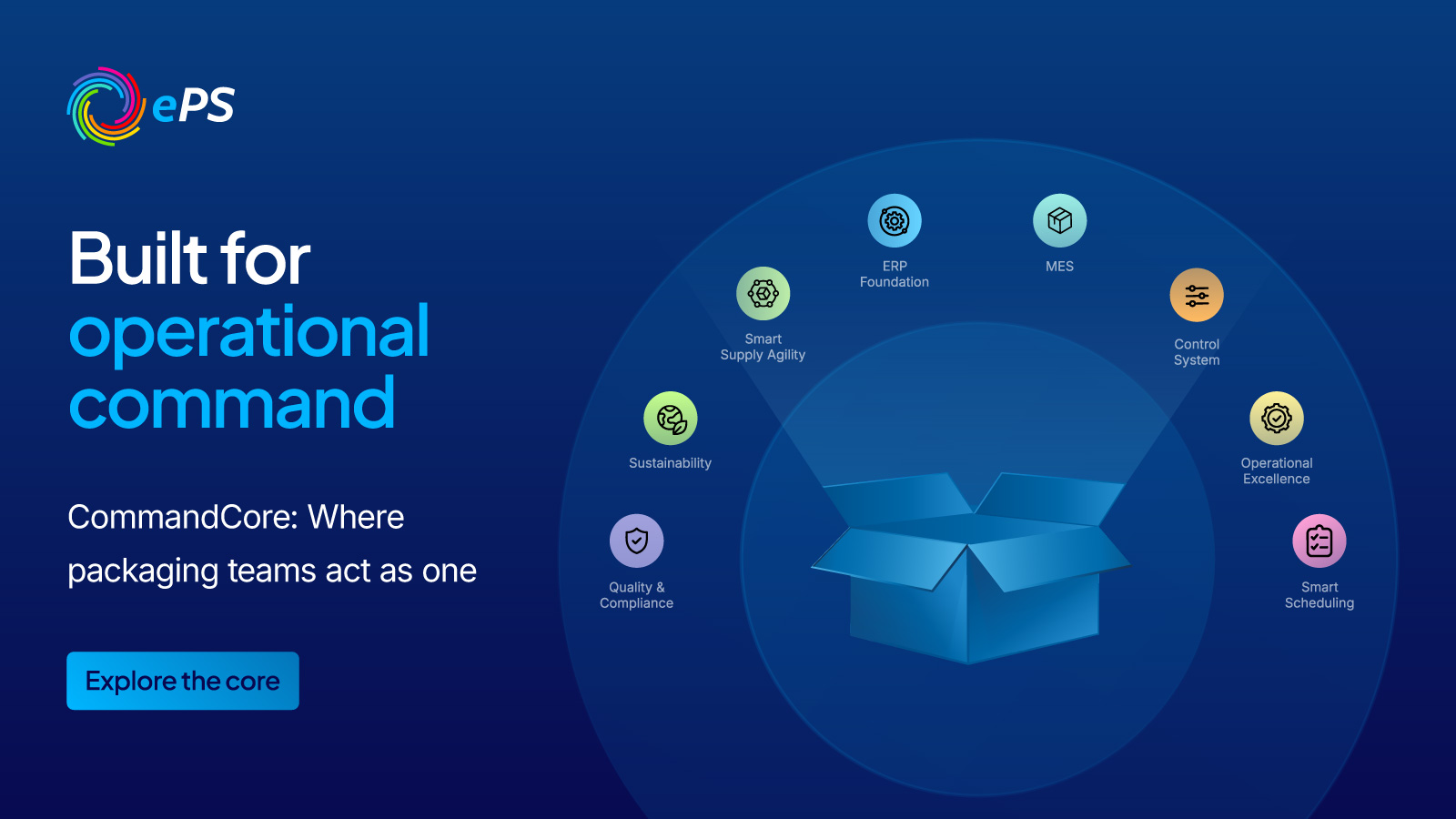
Leverage 30+ years of plant-floor expertise. Trusted by 700+ packaging manufacturers globally to reduce waste, optimize scheduling, and drive digital transformation. One unified foundation. Eight packaging-native pillars. Zero fragmentation. Read More
Expand Your Opportunities with the Truepress JET 560HDX from SCREEN

Expand Your Opportunities with the Truepress JET 560HDX from SCREEN

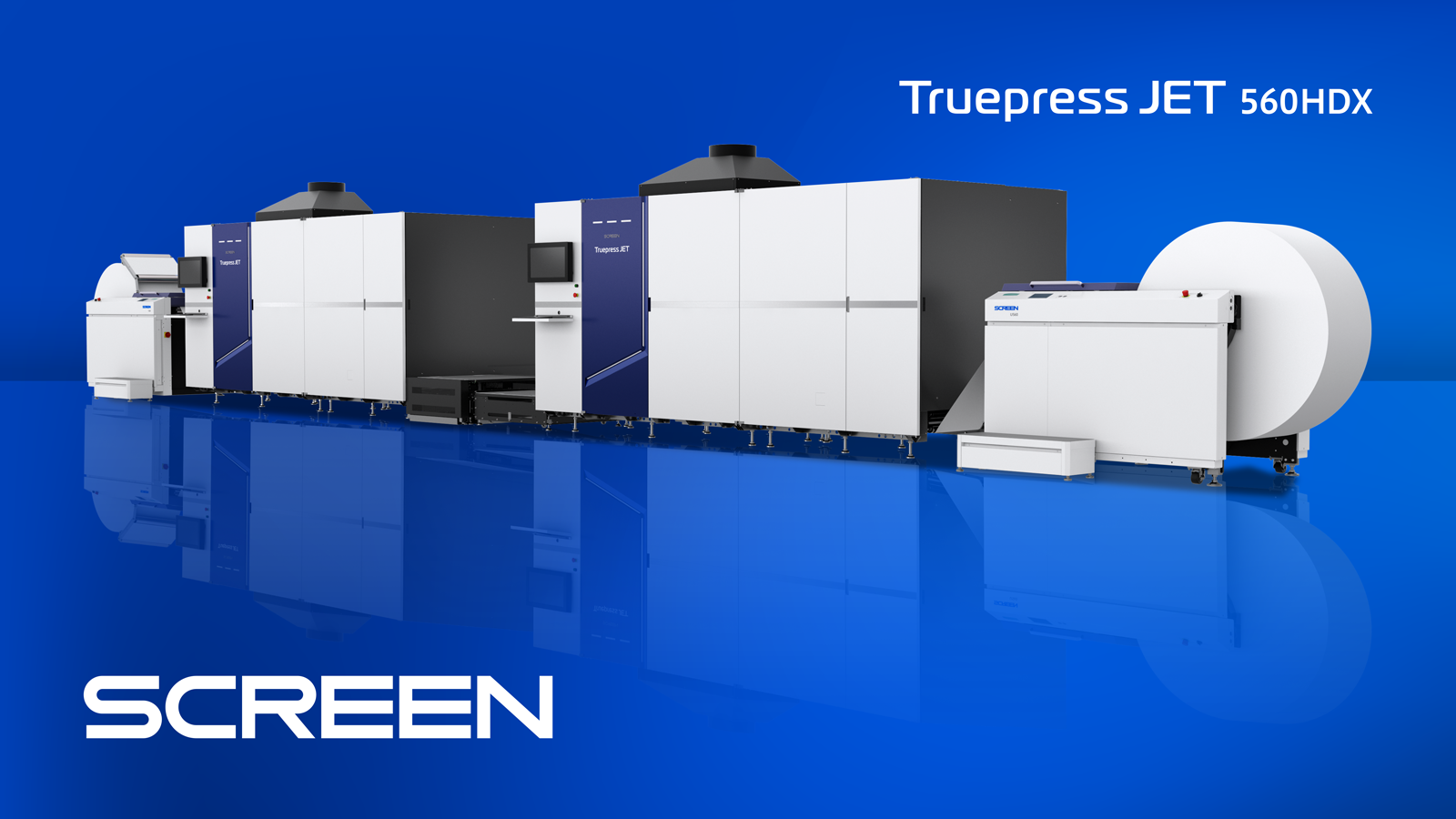
Commercial, direct mail, and publishing printers accustomed to producing jobs over several weeks can now print them in days with the SCREEN Truepress JET 560HDX. The press can accommodate 120 lb. coated or uncoated paper up to 560 mm wide. Read More

Around the Web: Of Water and Winners

Around the Web: Of Water and Winners

A sign-writer created the visual style of music festivals. The “2026 Milky Way Photographer of the Year” winners. AI appears to be catching on among the Amish. Sony has upgraded its wearable air conditioner. How to easily reuse produce bags. A complex digital water clock. A Nobel Prize–winning technology is able to extract water from dry air. Yes, it is possible to be allergic to water. Laser-induced graphene on Kevlar enables multifunctional structural composites. The “most desired” place in each of the 50 states. “The rise in plastic surgeons asked to create ‘AI face.’” K-pop band BTS has teamed with Oreo to release limited edition OREO x BTS Cookies. Welcome to WhatTheyThink’s weekly miscellany. Read More
Graphic Arts Employment in April Down Overall—Substantially Among Non-Production

Graphic Arts Employment in April Down Overall—Substantially Among Non-Production

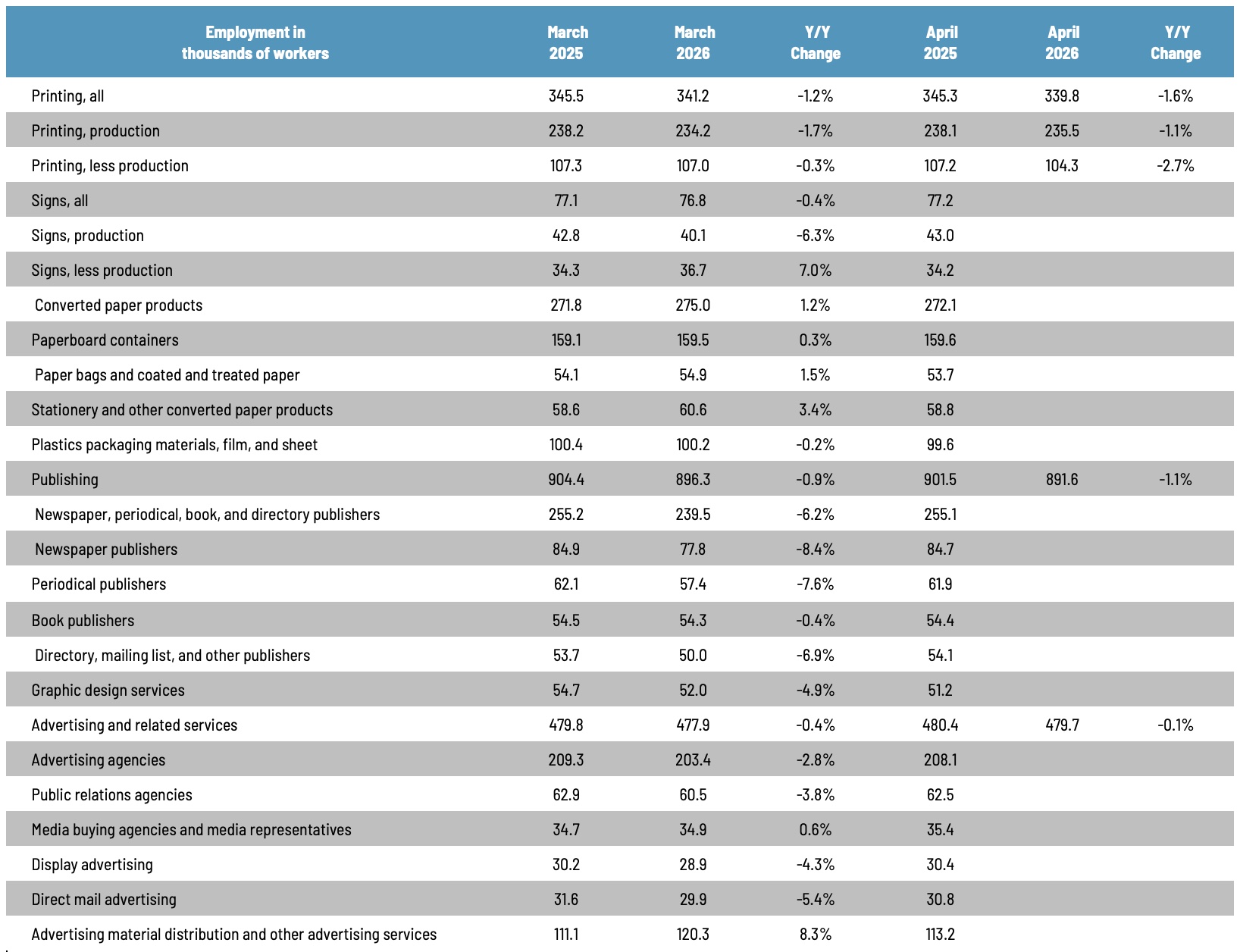
April 2026 saw printing industry employment overall generally flat, down 0.4% from March. And while production employment was up 0.6%, non-production employment was down by 2.5%—basically the reverse of what we saw in March. Read More

Recent Printing Industry News

Wednesday, June 03, 2026