WhatTheyThink

Premium Commentary & Analysis

Your Guide to a Successful Sales Call

The effectiveness of any given sales call will be directly related to your planning in advance of the call,

Monday, January 14, 2002

The effectiveness of any given sales call will be directly related to your planning in advance of the call, applying your sales skills during the call and your actions after the call. (Note the emphasis on applying your sales skills. There is a difference between having sales skills and effectively using them.)

This guide provides a quick review of the key points in preparing for and executing a new business development sales call. You will find it organized into 4 sections.

1. The first is "Planning and Preparation" – Increasing your chances for success with a solid game plan.

There is no substitute for good planning, but without a specific and meaningful objective (agreed upon by both you and your prospect) then for what would you plan? Without an objective for each call on what basis will you be able to measure your success or failure?

Athletes, in all sports, spend hours reviewing films from their previous games or events as well as those of their opponents. They study the preferences and tendencies of their competitors in certain situations to help anticipate their next move when they will eventually face them in competition. They study their own performance to look for areas to improve and to see how they might better execute their game plan.

Each sales call needs a plan as well. Each call should be connected to your account development plan and each account plan should be a part of your overall sales plan.

Review your plan before you leave for the call to ensure you have all of the items you need to execute the call successfully. On the way to your prospect’s office focus on the objective of the call, the questions you will ask during the call and the best course of action for you and your prospect to follow after the call. Visualizing the "positive" outcome of the call is a great habit as well.

This should be no startling revelation, even the great Chinese warrior of 2,400 years ago, SunTzu, extolled the virtues of planning.

And finally, just in case the unexpected happens make sure you have a plan B ready to go.

2. The second is "Walking through the door" – You’ve practiced, you’ve done your research…now it is time to put your game face on.

This is no time to be timid. If you have done your homework, have a specific objective and you understand your plan then you should be ready to tackle anything. If you need a shot in the arm, focus on your desire to achieve your goals - keep your eye on the prize!

On entering the prospect’s building or office, make note of the culture or "feel" inside. Is it more casual or more formal? How do the employees you see interact? Is this a progressive or conservative company? Note the lobby interior, furnishings, photographs and artwork – remember their lobby is their chance to make their first impression on their customers…and on you.

You are looking for clues as to what makes this company work! What motivates these individuals to do what they do?

How do they prefer to be communicated with? What image are they trying to project?

3. The third is "Getting Down to Business" – Executing an effective sales call.

Once seated with your prospect and the appropriate pleasantries are complete, review your mutually agreed upon objectives with the prospect, reconfirm the time and planned duration of the meeting and proceed with your plan. Focus on the agenda for the meeting, depending on the objective – this may be a discovery meeting, a presentation or a negotiation meeting.

If you are in the discovery process make sure that it does not become an interrogation. Remember your prospect will be asking "What is in this for me?" throughout.

If a presentation is in order, make sure that you stay in a dialog mode…not a speech. Like any effective sales call, the best presentations are those in which the prospect will speak as much, if not more, than you.

If in negotiations, make sure that you keep long-term success in mind and not the quick victory that may jeopardize any future interaction. Assure that any conclusions reached are clearly understood, and do not assume anything.

Before departing, make sure you summarize, recommend the next point of action for both you and the prospect, and agree on when you will meet again.

4. The fourth is "After the meeting" – It is time to review the call, measure the results and plan for the next step.

Hold on – you are not quite done yet. The best time to review the call is now while it is fresh in your mind. Mentally replay what transpired, critique yourself candidly then review and make any final notes.

Last but not least - good or bad you have to put this meeting behind you and begin the process all over again for the next call.

Keep selling!


Continue reading your article
with a WhatTheyThink membership.

WhatTheyThink Annual Membership

Less than $4/week.

Get unlimited access to in-depth commentary and analysis covering the latest trends, emerging technologies, operational strategies, and key events across every segment of today's printing industry.

Stay informed. Stay competitive. Stay ahead.
WhatTheyThink Day Pass

$5 for 24 hours

Unlimited access to all of WhatTheyThink. Get your Day Pass

Already a member?
Sign In

About WhatTheyThink

WhatTheyThink is the global printing industry's go-to information source with both print and digital offerings, including WhatTheyThink.com, WhatTheyThink Email Newsletters, and the WhatTheyThink magazine. Our mission is to inform, educate, and inspire the industry. We provide cogent news and analysis about trends, technologies, operations, and events in all the markets that comprise today's printing and sign industries including commercial, in-plant, mailing, finishing, sign, display, textile, industrial, finishing, labels, packaging, marketing technology, software and workflow.

Recent Articles from WhatTheyThink

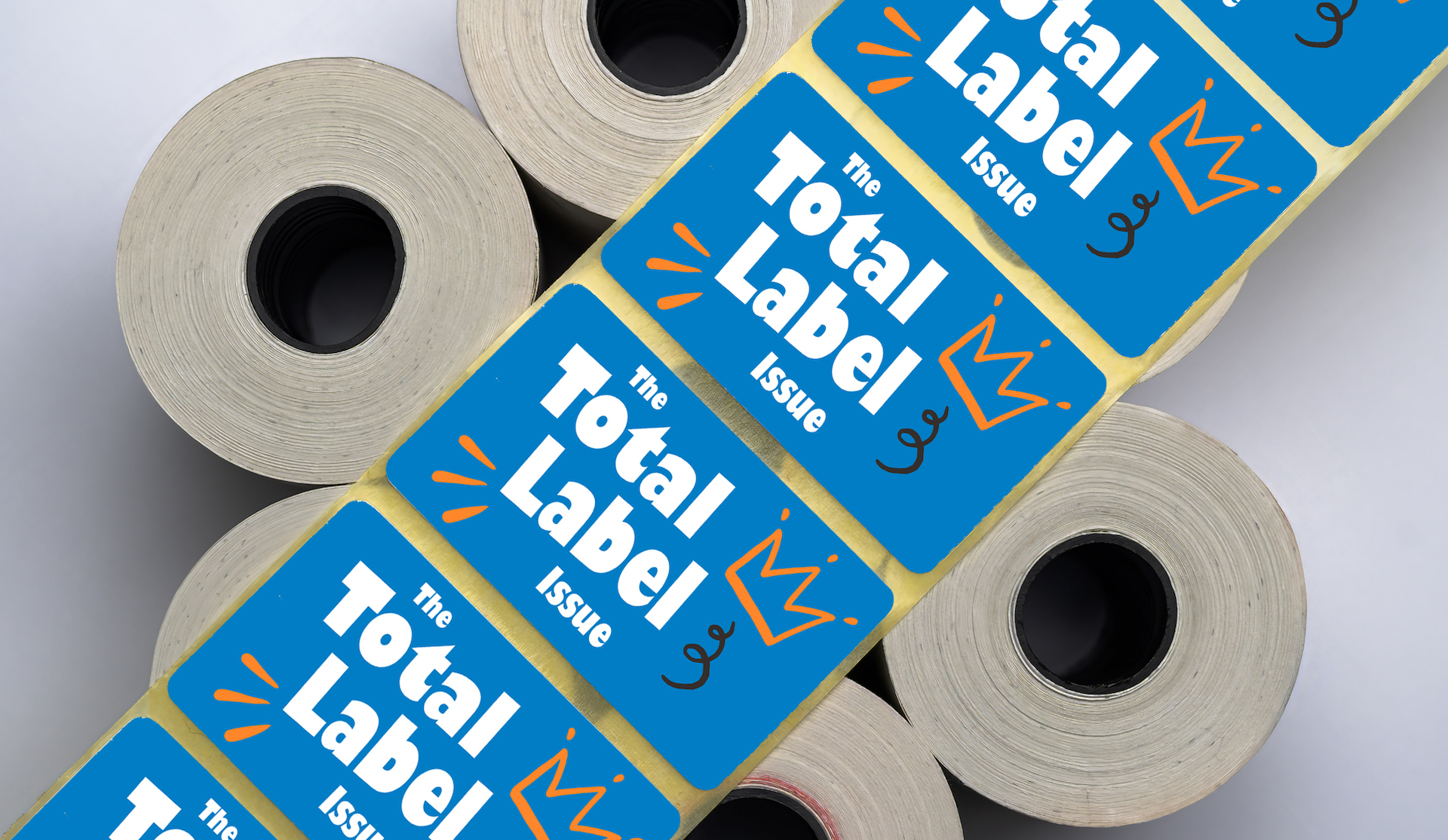
The Total Label Issue

The Total Label Issue

This issue of the WhatTheyThink Quarterly is all about labels, which are seen as a high-growth part of commercial printing, driven by e-commerce, food/beverage demand, and regulations. The market has surpassed 1.2 trillion square meters of label production volume per year, and is moving toward high-mix, low-waste production rather than only high-volume throughput. While flexo is still used for high-volume label production, digital label printing often complements it—or in some cases replaces it. But labels are about more than printing technology. Read More
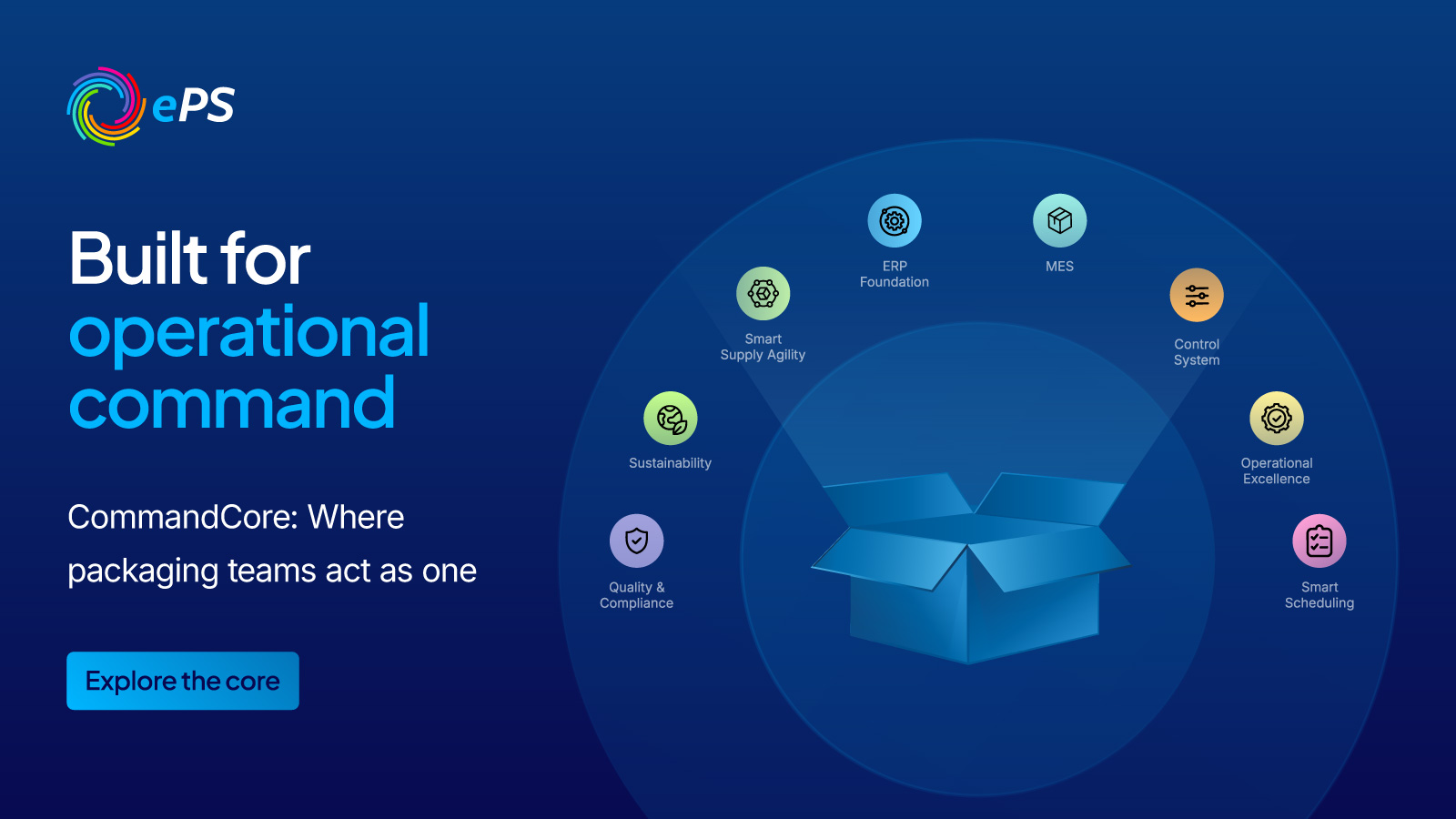
The Unified Platform for Packaging Manufacturing Excellence

The Unified Platform for Packaging Manufacturing Excellence

Leverage 30+ years of plant-floor expertise. Trusted by 700+ packaging manufacturers globally to reduce waste, optimize scheduling, and drive digital transformation. One unified foundation. Eight packaging-native pillars. Zero fragmentation. Read More

Expand Your Opportunities with the Truepress JET 560HDX from SCREEN

Expand Your Opportunities with the Truepress JET 560HDX from SCREEN

Commercial, direct mail, and publishing printers accustomed to producing jobs over several weeks can now print them in days with the SCREEN Truepress JET 560HDX. The press can accommodate 120 lb. coated or uncoated paper up to 560 mm wide. Read More

Around the Web: Of Water and Winners

Around the Web: Of Water and Winners

A sign-writer created the visual style of music festivals. The “2026 Milky Way Photographer of the Year” winners. AI appears to be catching on among the Amish. Sony has upgraded its wearable air conditioner. How to easily reuse produce bags. A complex digital water clock. A Nobel Prize–winning technology is able to extract water from dry air. Yes, it is possible to be allergic to water. Laser-induced graphene on Kevlar enables multifunctional structural composites. The “most desired” place in each of the 50 states. “The rise in plastic surgeons asked to create ‘AI face.’” K-pop band BTS has teamed with Oreo to release limited edition OREO x BTS Cookies. Welcome to WhatTheyThink’s weekly miscellany. Read More
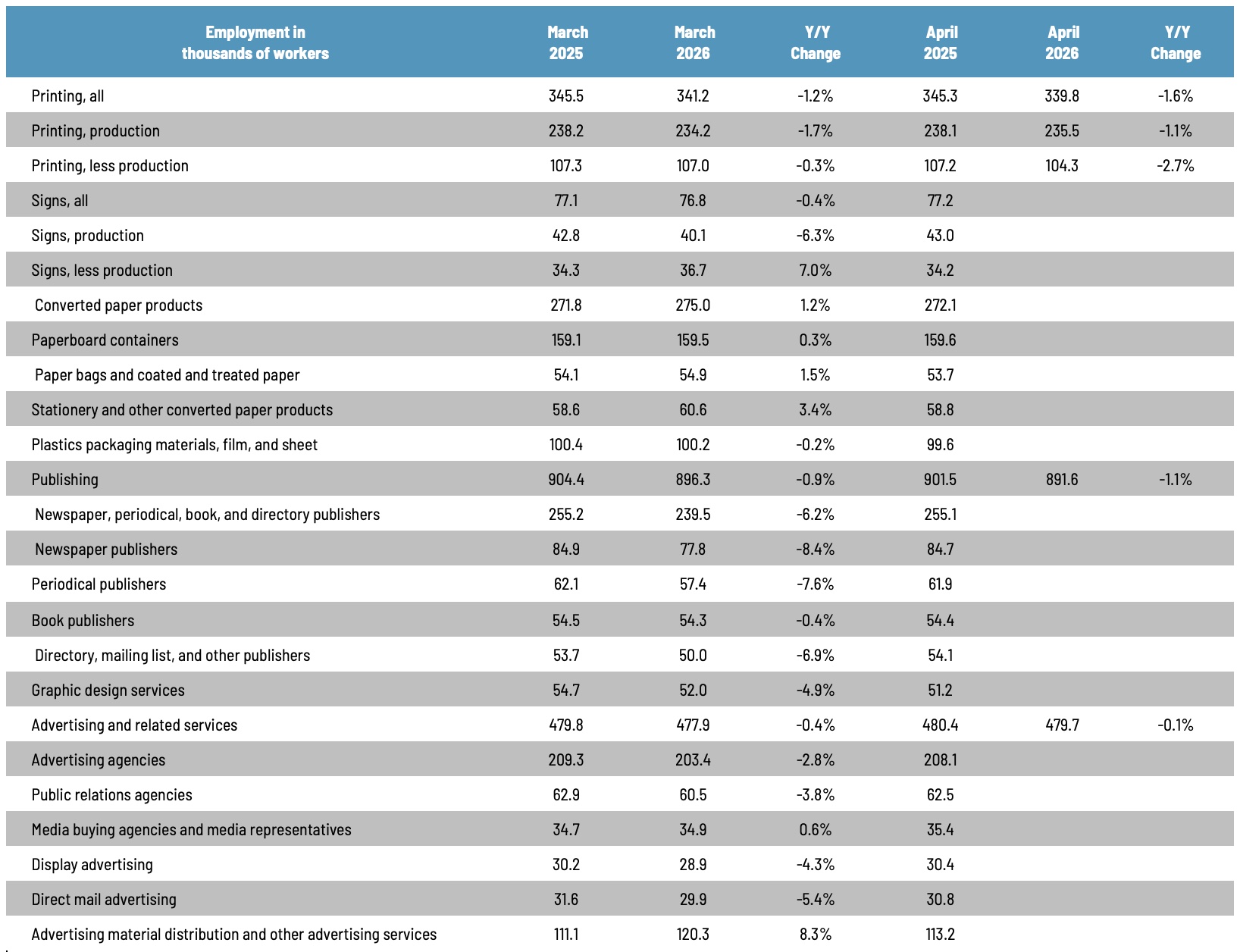
Graphic Arts Employment in April Down Overall—Substantially Among Non-Production

Graphic Arts Employment in April Down Overall—Substantially Among Non-Production

April 2026 saw printing industry employment overall generally flat, down 0.4% from March. And while production employment was up 0.6%, non-production employment was down by 2.5%—basically the reverse of what we saw in March. Read More

Recent Printing Industry News

Wednesday, June 03, 2026