WhatTheyThink

Premium Commentary & Analysis

Looking for Mr. GoodPrint

About a dozen years ago I was at a trade show in San Jose,

Tuesday, February 03, 2009

About a dozen years ago I was at a trade show in San Jose, California, eavesdropping on two printers who were peering at prints from a big full-color digital press.

I wonder what those two guys are thinking today. If they are like many of the people Gartner talked with in the course of its latest research on print quality, they may be saying something quite different.

Major study

Gartner has just completed a study of some 443 production print managers in the U.S., France, Germany, and the UK that provides convincing evidence that, for the first time, long-held preferences for offset printing have been up-ended. The companies contacted included financial services, insurance, utilities, communications carriers and retail enterprises, as well as print service specialists. Respondents were production print operation managers, senior-level managers overseeing an operation, or had responsibility for production print hardware and/or software purchases. The documents their operations produce encompassed bills and statements, direct mail, insurance documents, and book, magazine and newspaper printing. In the estimation of these print professionals, offset's dominance has been superseded by digital printing's quality and value for the money. As Peter Basiliere, a Gartner research director closely involved with the study, said to me over breakfast when we discussed the study, "2009 officially marks the beginning of offset printing’s long decline."

The study was designed to provide unequivocal evidence about the perceived differences between the four main printing technologies. In one of its primary questions, the telephone survey asked respondents to rate the image quality of toner (dry ink), liquid ink (HP-Indigo), ink jet, and offset printing on a scale of 1 to 7, where 1 was “Poor Quality” and 7 was “Excellent Quality."

And the winner is. . .

Overall, the data show survey respondents think toner not only provides better image quality than offset printing, but offset comes in last among the four technologies.

Toner: 5.68

Liquid Ink: 5.40

Ink Jet: 5.24

Offset: 5.17

"With 443 respondents, differences of as little as 0.10 are statistically meaningful," explains Basiliere. "The much smaller sample sizes commonly found in other surveys require a much greater difference in order to make a valid statement about the results."

"The difference between toner (and, to a lesser extent, liquid ink) and offset is particularly significant," he continues. "Ink jet is preferred over offset, but only by a slight margin, so those two are basically on a par. This means ink jet technologies still have a ways to go before there is a significant perceived quality difference compared with offset printing."

There were some notable differences by country. France, for instance, preferred liquid ink over dry toner and had the least affection for offset printing. German respondents on the other hand -- perhaps predictably-- had a different take, preferring offset over digital printing by a wider margin than other respondents' preference for digital over offset. Gartner thinks the difference may be in part attributed to the legacy of German print service providers using locally manufactured offset presses such as Heidelberg, Manroland or KBA, all capable of producing very high-quality printing.

But Basiliere thinks that perception may shift before much longer. "Germany is very environmentally conscious," he says, "They are concerned with recycling, limiting waste, and reducing costs. And they're interested in more color. I think we're going to see a shift in Germany toward greater acceptance of digital as run lengths get shorter, and the capability of digital to print on a wide variety of substrates continues to improve. The quality is already there, it just has to be accepted by German printers and their customers."

Value

Image quality may be the most obvious measure for print providers, but value is a close second. Using the same 1 to 7 scale, respondents said digital printing, particularly with toner, provides the best value for money.

Toner: 5.58

Liquid Ink: 5.29

Ink Jet: 5.23

Offset: 5.13

Perhaps predictably, this trend was reversed in Germany, where the offset preferring respondents had a much-lower regard for digital printing's value.

Mix of Color and Mono Expected to be Flat

On average, color accounts for about 40% of all pages printed in respondents' operations over the past two years, a share they don't expect to change during 2009. Because of the mix of documents that the responding companies produce are biased towards transactional and direct mail, color growth may in fact be flat in this time of economic uncertainty. Whether this is true for graphic arts, where color is expected, is a deeper question that doesn't seem to be addressed in this study.

My take

In my opinion the data, with a sample of 443, is pretty much bulletproof. However ---and this is a fairly big "however"--- the companies surveyed are more involved with high volume production print than the "graphic arts" types of applications targeted by iGen, Indigo, Xeikon, and NexPress owners. This means the data does not necessarily reflect the opinions or experiences of users of those machines. But when you consider that many print providers with such devices have come to use their digital and offset presses interchangeably based on press availability, turnaround times and internal economics, it would seem that while Gartner's data does not specifically address the graphic arts side of the market, it certainly confirms that the tide has turned and that offset is merely on the mountain, not at the top.


Continue reading your article
with a WhatTheyThink membership.

WhatTheyThink Annual Membership

Less than $4/week.

Get unlimited access to in-depth commentary and analysis covering the latest trends, emerging technologies, operational strategies, and key events across every segment of today's printing industry.

Stay informed. Stay competitive. Stay ahead.
WhatTheyThink Day Pass

$5 for 24 hours

Unlimited access to all of WhatTheyThink. Get your Day Pass

Already a member?
Sign In

About WhatTheyThink

WhatTheyThink is the global printing industry's go-to information source with both print and digital offerings, including WhatTheyThink.com, WhatTheyThink Email Newsletters, and the WhatTheyThink magazine. Our mission is to inform, educate, and inspire the industry. We provide cogent news and analysis about trends, technologies, operations, and events in all the markets that comprise today's printing and sign industries including commercial, in-plant, mailing, finishing, sign, display, textile, industrial, finishing, labels, packaging, marketing technology, software and workflow.

Recent Articles from WhatTheyThink

Around the Web: Of Books and Bots

Around the Web: Of Books and Bots

New book “Empire of Ink” is a look at the history and mythology of the American newspaper. A hacked smart lightbulb provides access to banned books. A digital archive reassembles Leonardo da Vinci’s long-cut-apart notebooks. Michelangelo’s secret underground hiding place—complete with the artist’s graffiti. Marie Antoinette may have been history’s first influencer. A worn copy of a 1912 pulp magazine featuring Tarzan sold at auction for $58,560. New book, “The Graphene Handbook - Making Sense of Graphene at Its Inflection Point.” Visa is integrating its payment network into ChatGPT, which should be fun. A humanoid robot plans to climb Everest. A designer who specializes in chairs without legs. Did a flying monk see Halley’s Comet…twice? The British geologist whose goal was to eat as many different animals as he possibly could. Welcome to WhatTheyThink’s weekly miscellany. Read More
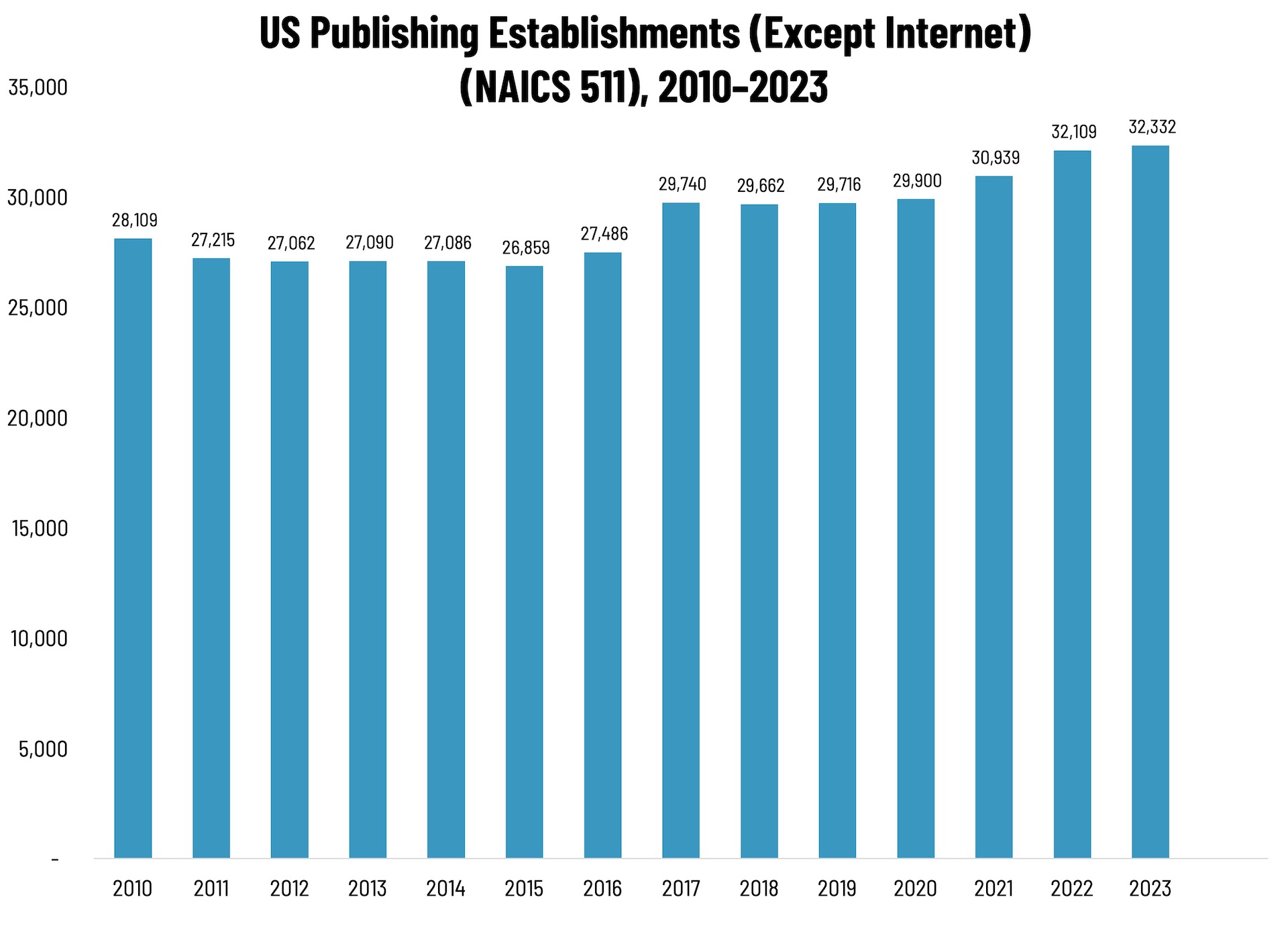
Publishing Establishments—2010–2023

Publishing Establishments—2010–2023

According to the latest, recently released edition of County Business Patterns, in 2023 there were 32,332 establishments in NAICS 511 (Publishing Industries [except Internet]). This represents an increase of 15% since 2010. In macro news, the University of Michigan’s Consumer Sentiment Index is at record lows. Read More
Finishing: Production Inkjet's Next Frontier

Finishing: Production Inkjet's Next Frontier

As production inkjet has advanced, a new primary factor limiting productivity has emerged: finishing. How are PSPs adapting their investment and automation strategies? New research shows many can gain a competitive advantage by focusing on finishing. Read More

HanGlobal Launches New LabStar 330mini at Flexo & Labels Expo 2026

HanGlobal Launches New LabStar 330mini at Flexo & Labels Expo 2026

Discover HanGlobal's newly launched LabStar 330mini digital label press! Get the full show roundup to see how this ultra-integrated, high-performance inkjet solution captured the crowd's attention and redefined narrow-web printing. Read More
Around the Web: Of Food and Feynman

Around the Web: Of Food and Feynman

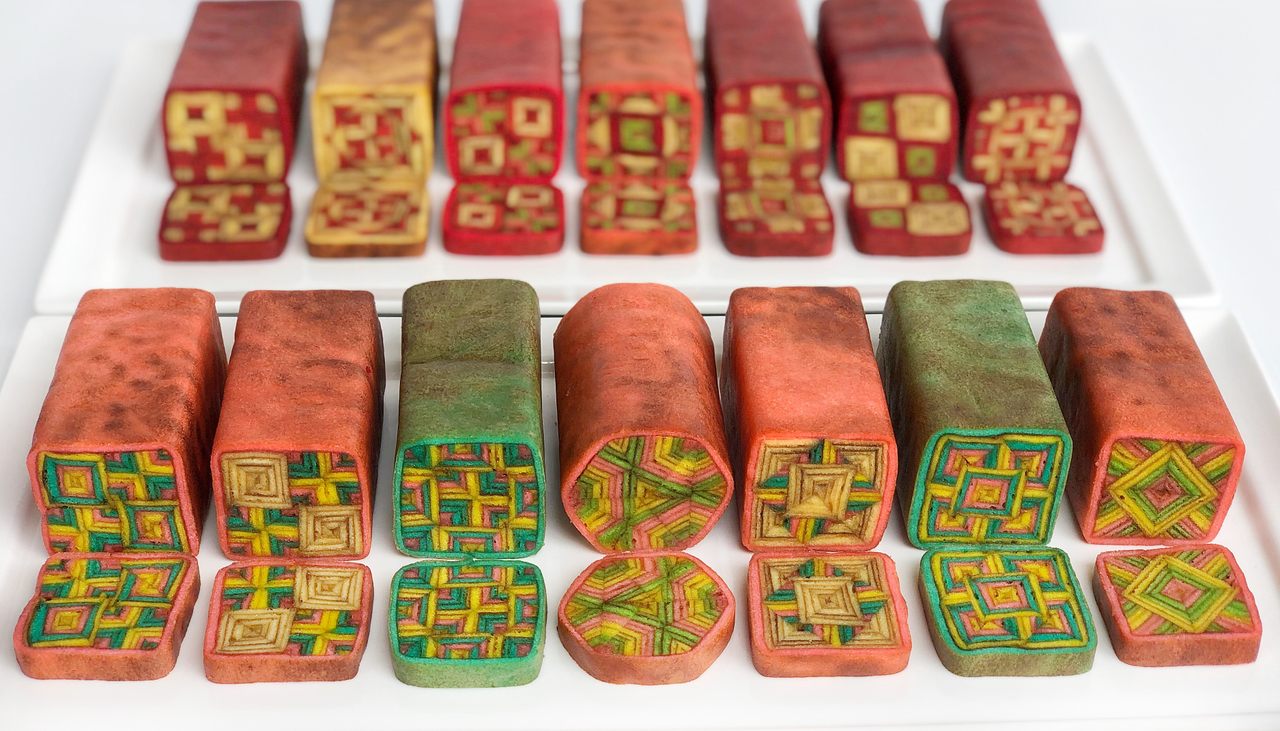
A book designer who specializes in spine design. The Chinese postal service is using humanoid robots to sort packages. An amusingly overproduced Day Display. Allen Ginsberg’s spoken-word poetry recitation album is being reissued. The winners of this year’s World Food Photography Awards. A retired geneticist launched the online Museum of Plugs & Sockets. A viral warning about a new gas station scam is actually a hoax. What is the world’s longest domestic flight? Aw, et tu, graphene: Skeleton Technologies launches graphene-based GrapheneUPS for AI data centers. What is the quietest spot in the U.S.? Researchers finally cracked Richard Feynman’s “Restaurant Problem.” Malaysia’s kek lapis Sarawak is perhaps the world’s most complex cake. Welcome to WhatTheyThink’s weekly miscellany. Read More