New Rules
You would think large companies would know better than this, but apparently not. Pro tip: when designing and producing packaging, secure the rights of celebrities if you’re going to use their likenesses. Says Ars Technica, Samsung fell afoul of singer Dua Lipa:
On Friday, Lipa filed a lawsuit against Samsung for using her image on some of its TV boxes, alleging that its use constitutes copyright infringement, trademark infringement, and a violation of her right of publicity. The complaint (PDF), filed in the US District Court for the Central District of California, says that Lipa owns all “rights, title, and interest in the image titled ‘Dua Lipa – Backstage at Austin City Limits, 2024.’”
And did Samsung correct the error? Of course not.
The filing says Lipa learned about the boxes around June 2025 “and immediately demanded that Samsung cease and desist.” However, Samsung was “dismissive and callous, and the Infringing Products remain on the market to this day, still being sold throughout” the US, the filing says. Lipa would not have allowed the image to be used on Samsung TV boxes, the complaint says
Oddly (or perhaps not), packaging does indeed help sell product:
Lipa’s complaint points to apparent screenshots of X posts as evidence that her image helped Samsung sell TVs. One comment, according to the complaint, says, “I wasn’t even planning on buying a tv but I saw the box so I decided to get it[.]” Another X user reportedly said, “get that tv just because Dua is on it.”
(We confess that we are only moderately aware of who Dua Lipa is, had to look her up to find the name of one of her songs for the title to this AtW item, and, regardless, if we were in the market for a TV, probably would be more motivated by a positive Consumer Reports review than a celebrity image.)
Still, Lipa can play their game—maybe she could put a picture of a Samsung TV on her next album and see if it boosts sales.
Table of Contents
Food labels need to serve multiple purposes. They need to not only be attractive and help sell the item within, but also convey certain requirements as mandated by the government, be it federal or state. Naturally, balancing all of these things created challenges for food label designers.
Burkey Belser (1947–2023) may not be a household name, but more people have probably seen his work than that of any other designer: he designed the Nutrition Facts label that adorns every foodstuff that is sold and which has been in use since 1992. But, via Print magazine, Steven Heller points out that other labeling requirements for food packaging can cause more confusion than they alleviate. Take this warning on a package of flatbed sold by Whole Foods:
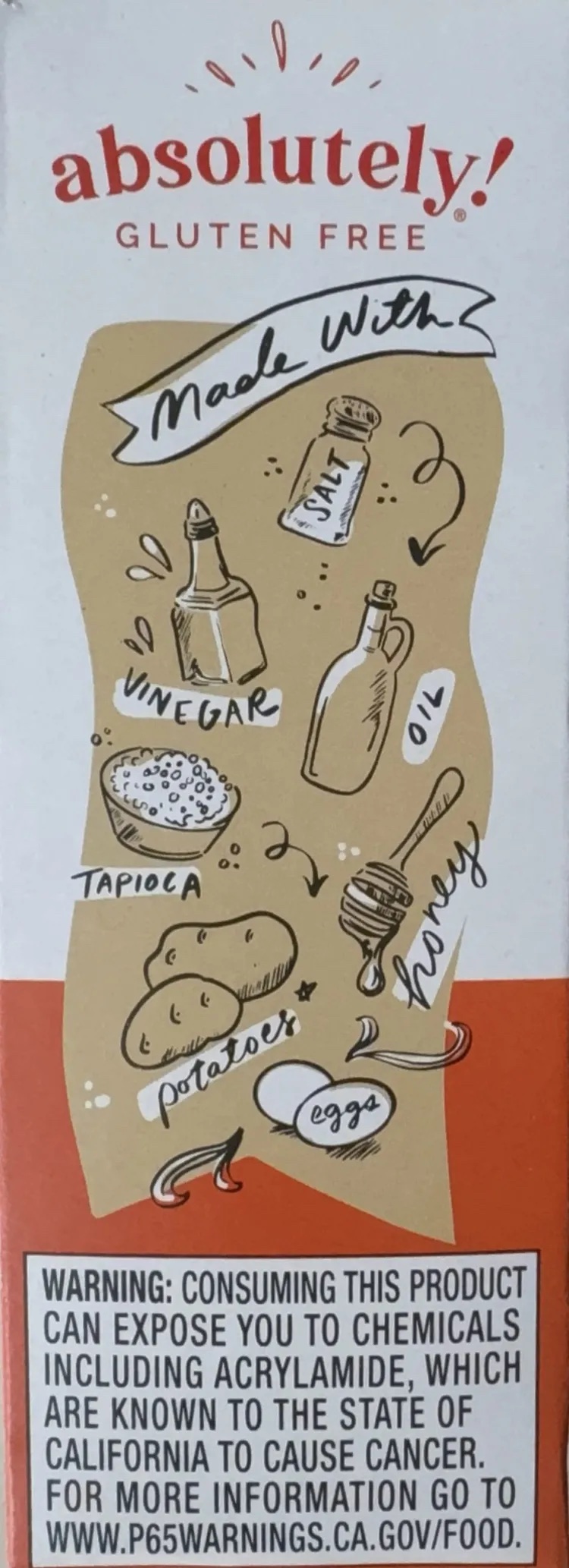
It is one thing to get allergen warnings … it’s another to be told you are being exposed to “chemicals including ACRYLAMIDE” that potentially cause CANCER.
Sounds dire. Heller visited the website on the label and learned that “California’s Proposition 65 requires businesses to warn people before exposing them to a significant amount of a chemical listed under Proposition 65 for cancer or reproductive toxicity.”
The chemicals on the Prop 65 list include mercury, alcoholic beverages, lead, arsenic, cadmium, Bisphenol A and Acrylamide, a chemical formed in some plant-based foods during cooking or processing at high temperatures, such as frying (french fries and potato chips), roasting, grilling and baking. “In general, the browner the surface, the higher the level of acrylamide.”
So…is eating the flatbread a death sentence? Or not?
Thus the producer of Absolutely! was complying with California law. Designing to avoid confusion is critical when it comes to so many products. But compliance is not always the answer, if it is designed in such a haphazard way as to increase fear and suspicion. Recently, “a court has decided that businesses do not have to warn about exposure to acrylamide in food.”
On plus side, the bread is gluten free. That’s got to count for something.
Pressure-Sensitive Labeling
The BBC has an interesting article on the ways that food labels and packaging affect what we eat and, ultimately our health.
What's now increasingly being understood is that the messaging on packing itself influences what we buy and eat. Small changes to labelling can make a surprising difference to what we buy – but equipping ourselves with better knowledge about nutrition can also help us make better choices.
They identify that the “food environment” is at heart “obesogenic”—yes, it’s a word, apparently—or one that promotes obesity and unhealthy good choices. We’re not ones for fat-shaming, but:
What makes this particularly troubling is ultra-processed foods (UPFs) are tweaked by manufacturers to make them as irresistible as possible – and, as some increasingly point out, addictive. This is despite the increasing understanding of the link between UPFs and adverse health outcomes – even an early death.
But:
Making this abundantly clear on food labels can and does cause behavioural change. In 2016, Chile implemented mandatory black labels on products to indicate that they were high in sugar, salt or calories. This resulted in a 23.8% decline in purchases of products high in calories.
And we have to say, the nutrition labels that are on nearly all food packages are a big help—once one does the math to determine what the food manufacturer thinks is “one serving,” which is often intensely amusing.
Similarly in several European countries, many food products now have a front-of-pack label called a "Nutri-score", which was first implemented in France. It consists of colour-coded letters from most from most nutritionally healthy (dark green/A) to least healthy (red/E) and was developed to help consumers make more informed choices when purchasing food, says Mathilde Touvier, director of research at the French National Institute for Health and Medical Research and co-creator of the logo. To date, 1,500 brands use the label and pressure is now increasing to make it mandatory in Europe.
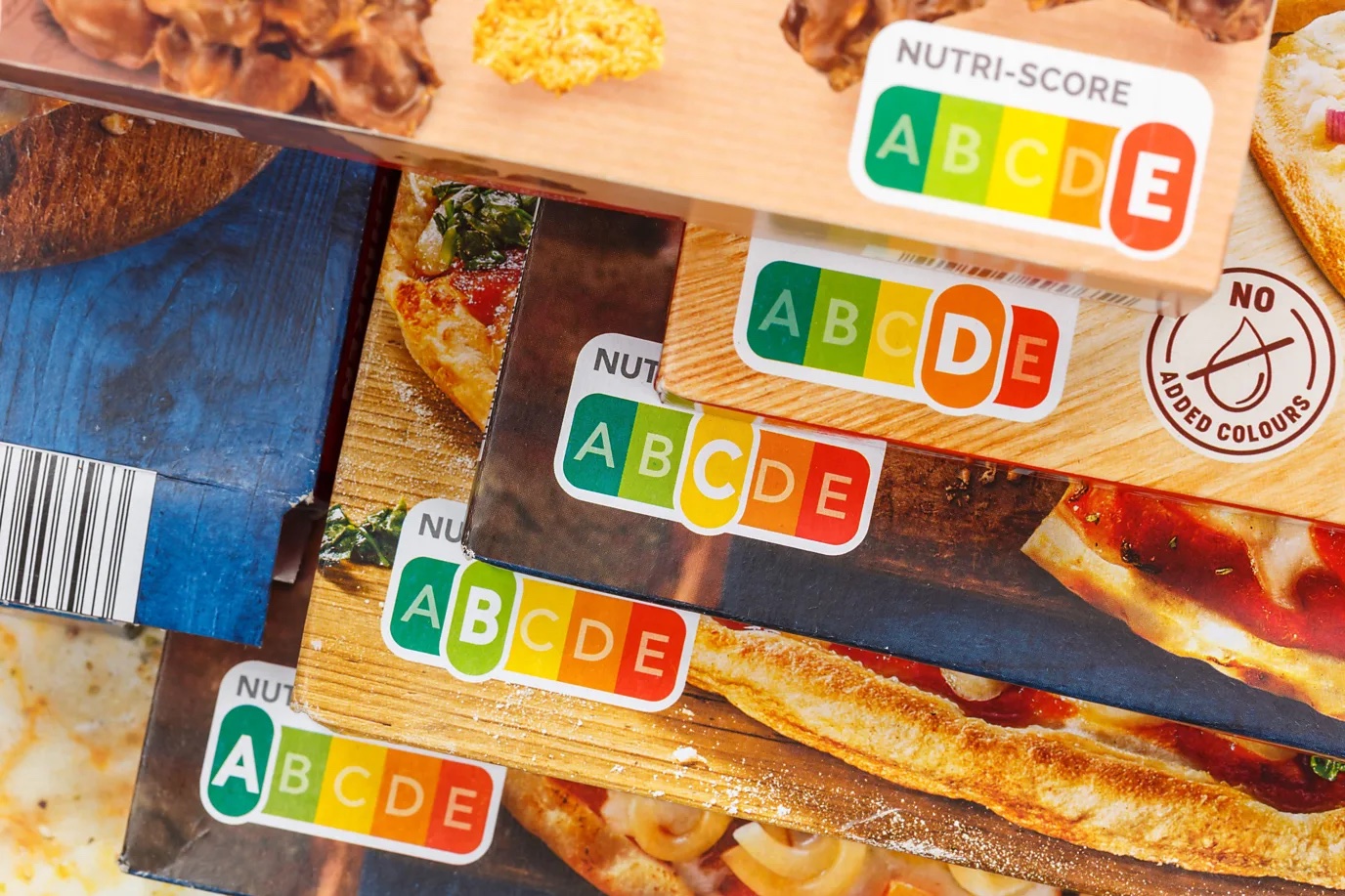
There are days when we would deliberately seek out the D and E foods. “Broccoli is a comfort food,” said no one ever.
Price Tags
We have yet to see it in our neck of the woods, but we have read reports of the imminent proliferation of electronic shelf labels and, via Food & Wine, electronic shelf labels (ESLs) are indeed on the way. Essentially, ESLs replace paper price tags with digital displays that can be updated remotely. (Interestingly, an old TrendWatch research report we worked on that came out when E Ink’s e-paper was introduced predicted this in the mid-2000s.)
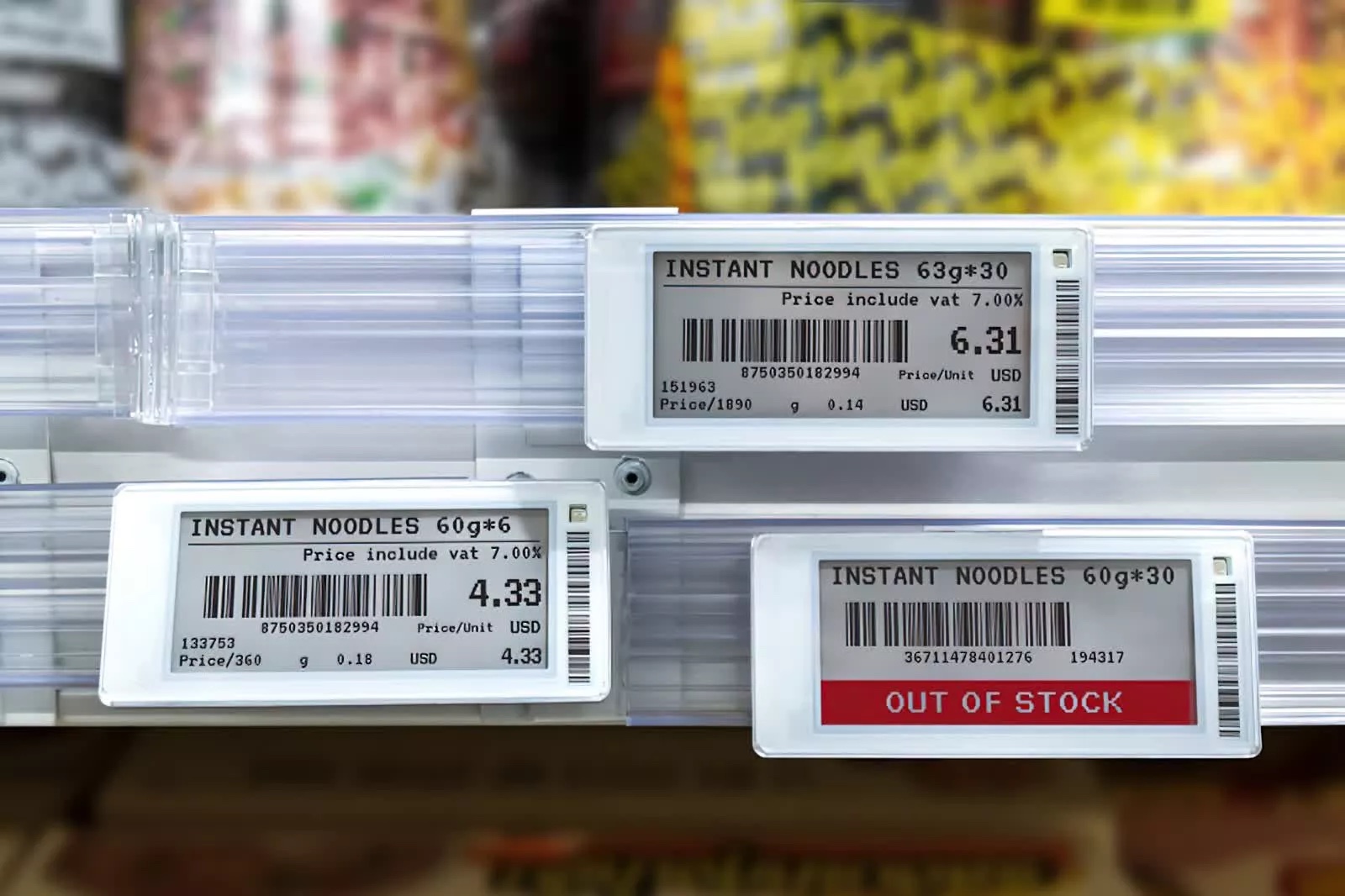
Walmart plans to install them in all 4,600 of its United States stores by the end of 2026; unions are urging lawmakers to halt or ban the use of electronic labels; and one state has already passed legislation regulating how digital pricing can be used in supermarkets, with several others now considering similar measures. Supporters say ESLs improve price accuracy and reduce food waste, while critics warn they could accelerate job cuts and open the door for data-driven price manipulation.
Consumer advocates fear the potential is there for dynamic pricing—that is, charging shoppers more for items based on variables like high demand or peak shopping times. (Like Uber’s surge pricing.) Naturally, retail advocates say “posh!”
Robyn Babbitt, director of corporate communications for the chain, emphasizes that the technology doesn’t alter the company’s pricing philosophy. "Customers see clear, consistent prices at the shelf that match what they are charged at the register," she says. "Prices are the same for all customers in any given store and are consistent regardless of demand, time of day, or who is shopping."
Is there any research on this?
Surge!
Why, yes, there is. Via TechSpot:
Research recently published by teams from the University of Texas at Austin, the University of California, San Diego, and Northwestern University analyzed five years of pricing data from a major grocery chain that adopted digital shelf labels in 2022. The study found no evidence that the store engaged in surge pricing after installing the digital labels. Temporary price hikes remained rare, affecting just 0.005 percent of products per day before the switch and increasing by only 0.0006 percentage points afterward. Researchers also observed a slight increase in product discounts following the rollout.
The idea is that store would charge more for ice cream during a heatwave or umbrellas when it rains—and we’re shocked to learn that stores don’t actually do this already.
There are also potential privacy concerns, in that a store might integrate electronic labels with cameras and data analytics to enable dynamic pricing.
Naturally, everyone denies this will happen, and while there is little evidence that it is occurring, consider us a tad skeptical that it won’t become commonplace someday.
The Chips Are Down
Here’s an interesting consequence of the Iran War. Via Core 77, it turns out that one item that is routinely shipped via the Strait of Hormuz is naphtha, a derivative of crude oil that is used in colored inks. We have not heard of a colored ink shortage, at least not in the US, but in Japan, a colored ink shortage has led Calbee, basically the “Frito-Lay of Japan,” to decolorize its chip bags.
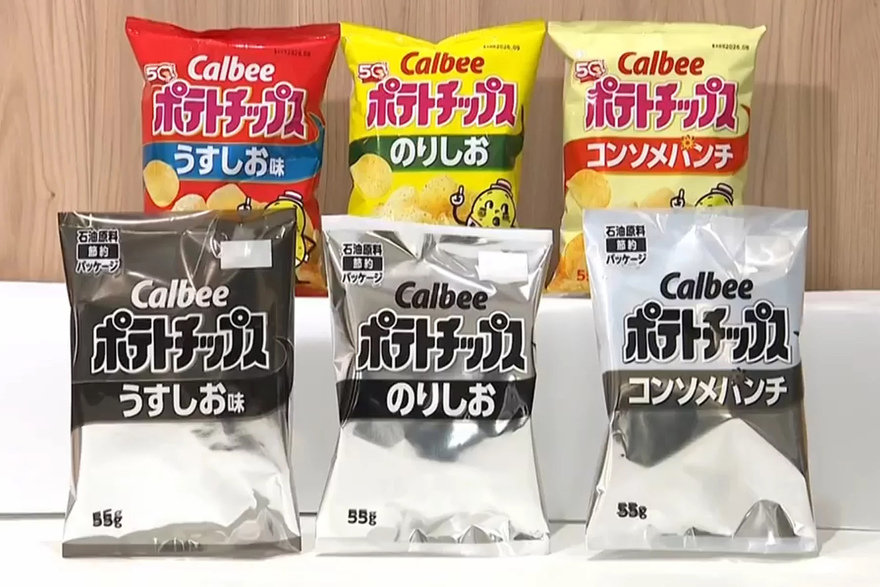
Now, this makes no sense:
Tragically, the change also means that their potato pitchman must be removed from the graphic; apparently he doesn't translate well to black and white.
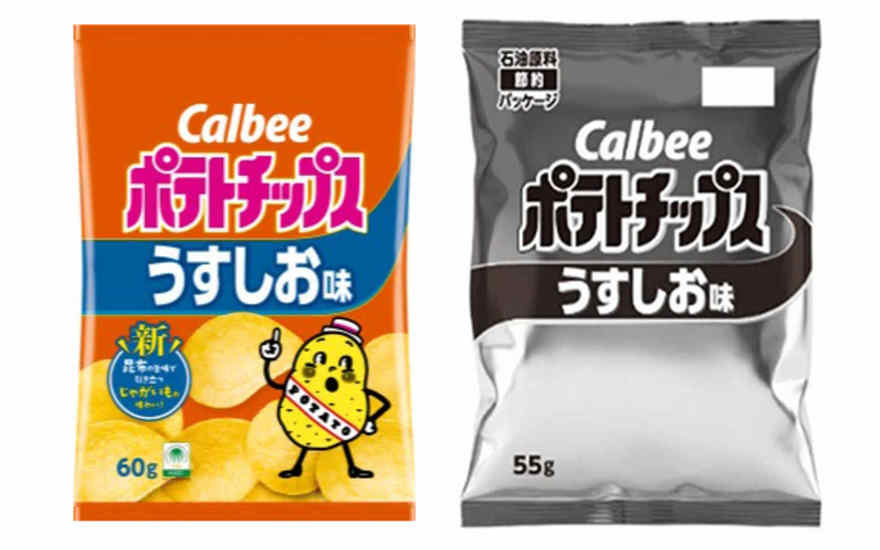
It also appears he was responsible for 5g of the overall package weight.
Well, potato chips can be fattening.
Surely an anthropomorphic potato can be rendered in some kind of grayscale. (Or is the thought of 50 Shades of Gray featuring an anthropomorphic potato too upsetting?)
It’s a missed opportunity for some clever designers to take advantage of the situation.
Vandals Took the Handles
If you live and/or shop for groceries in the San Francisco Bay Area, you may have experienced what is surely a first-world problem: the “Safeway bag nightmare.” Via SFGate, the supermarket chain Safeway apparently switched to a new form of paper bag—one that lacks handles. As it happened, Safeway shoppers…flew off the handle.
Safeway quietly switched to paper bags without handles sometime in April, despite some customers calling the bags “completely useless” because it’s more difficult to carry heavy groceries without handles. On Monday, SFGATE confirmed that all 13 Safeway stores were stocked with handleless bags, although some stores also carried paper bags with handles in addition to the handleless options.
Safeway’s parent company Albertson’s has not commented on whether they will bring back the handled bags. This must be a West Coast thing, as we can’t recall the last time we saw paper bags with handles in a supermarket. Indeed, we prefer to bring our own canvas or vinyl totes, which supermarkets sell for about a buck or two. This option apparently has little appeal.
“You can buy $7.00 bags there that are very heavy, adding to weight to carry upstairs, or cloth bags that don’t sit well on stair steps,” Aitchison told SFGATE via email. Aitchison added that she saved some of Safeway’s previously handled bags and is currently using those, having to “patch them up with strapping tape when needed.”
Safeway has blamed the handleless bag nightmare on a “global supplier shortage” although handled bags are available at Trader Joe’s and Whole Foods.
And it gets even weirder.
In January, California banned reusable plastic bags, although a spokesperson for the city told KGO-TV that the ban does not apply to San Francisco because of the way the law was written. That means Safeway could possibly have the right to use heavy plastic bags with handles in place of the paper versions.
Using plastic bags seems like the most un-San Francisco thing one could imagine…
Handy
If you frequented a Pasadena City School Library in the 1920s you may have often seen a little warning label inside library books:
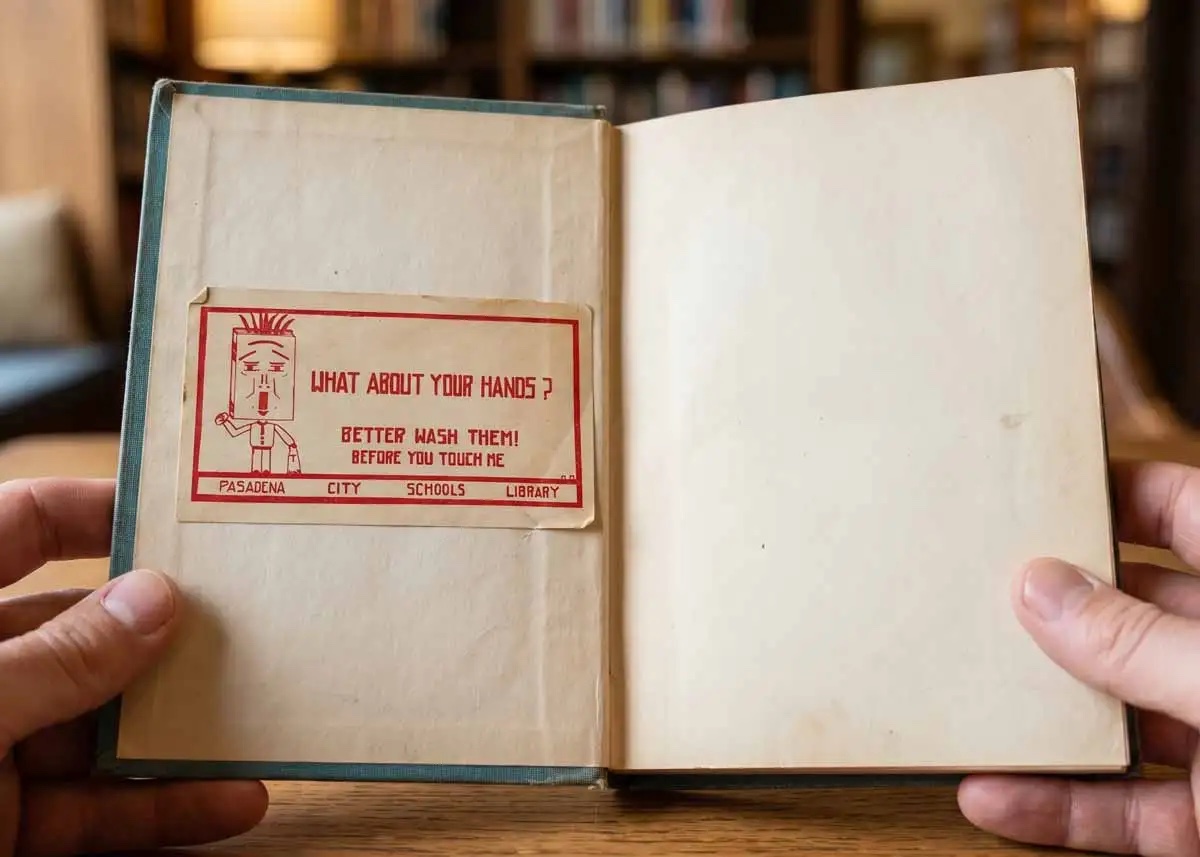
Via Boing Boing:
This label dates to an era when libraries were deeply concerned with sanitation, as books circulated through hundreds of households, during which diseases like tuberculosis, influenza, scarlet fever, and polio were major public fears. Public libraries and schools often pasted etiquette labels inside books reminding children not to cough on pages, turn pages with clean fingers, or return books promptly.
This had been right after the Spanish Flu epidemic, and, after our recent COVID pandemic, maybe these little labels are needed more than ever.
Gel Oh!
Silica gel packets. Often used in consumer packaging to keep out moisture, believe it or not they have ways of being repurposed rather than chucked in the trash—and, no, not eaten (they’re quite clear about that). Via Laughing Squid, Virginia non-profit Sustainability Matters produced this useful PSYTV (public service YouTube video) with some clever suggestions—basically anywhere that needs to stay dry, such as tool or jewelry boxes (to avoid rusting and/or tarnishing), electronics/camera bag, and so on.
Cardboard Wars
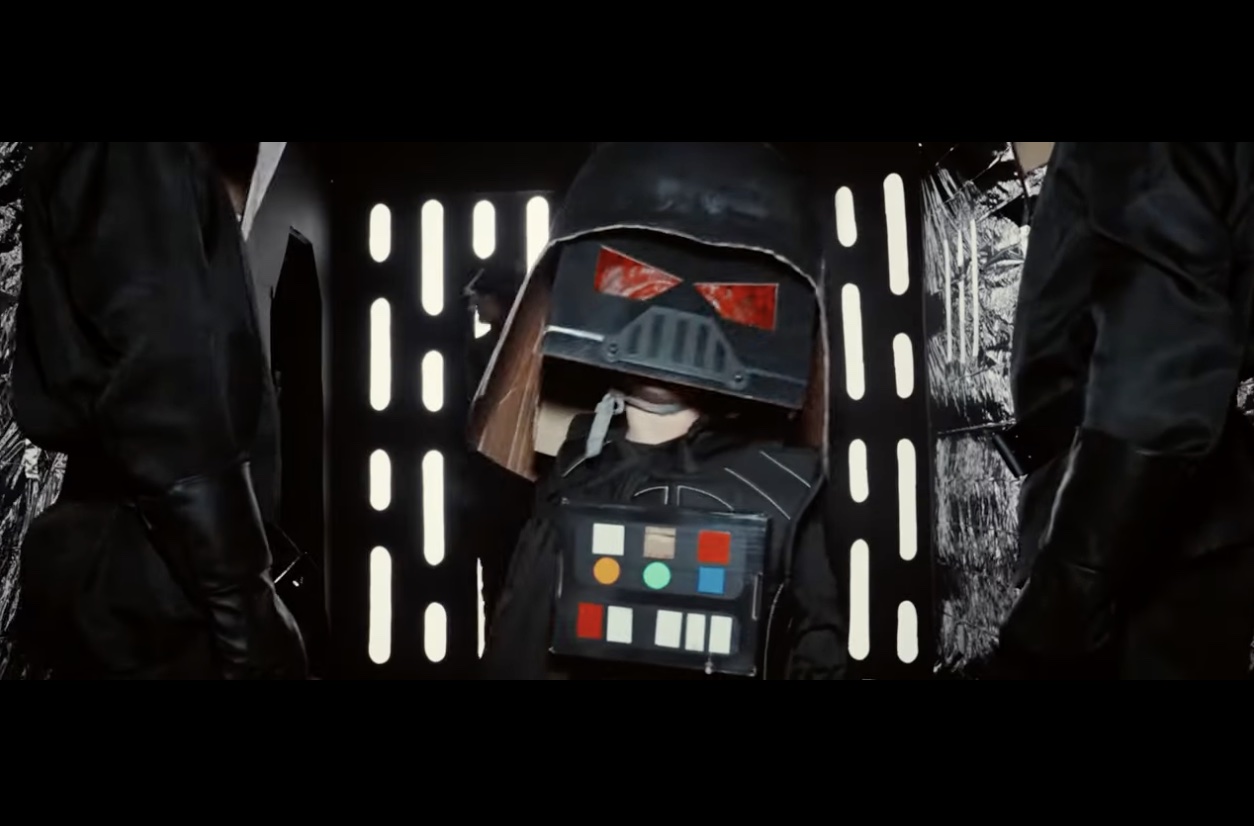
Do you like Star Wars? Do you also like cardboard? If yes to both, good news! Via Boing Boing, check out Cardboard Wars, a 52-minute Star Wars parody (in the vein of the old Hardware Wars, which some of you may remember).
Cardboard Wars tells the entire story of Star Wars using practical effects and cardboard. The Millennium Falcon is made out of a pizza box. Vader is played by an adorable-sounding kid who rides on Governor Tarkin's shoulders. Everyone, except Vader, wears flip flops, because California? Stormtroopers bump into things because they can't see anything in their helmets. OK, that part is the same in the original, but it's still funny.