AI-Yi-Yi, Part the Infinity: Do We Decimal System?
It’s a pretty rough time to be in any kind of creative endeavor, with AI threatening to take work away from creatives, and artists of all kinds are feeling no small amount of helplessness and powerlessness as their industry changes beneath their feet. And it’s not just print-centric or other kinds of graphic artists. Movie and television now, too, are beset by the encroachment of AI. But, via Print magazine, not everyone is taking it lying down.
The Creators Coalition on Artificial Intelligence (CCAI) is an organization newly established to define the ethical and artistic boundaries of AI in the entertainment industry. Founded by a collective of professionals—including Everything Everywhere All At Once director Daniel Kwan and actor Joseph Gordon-Levitt—the CCAI is a nonprofit organization dedicated to establishing ethical guardrails and artistic protections as generative AI reshapes the film and television industry.
Like any respectable organization, they needed a brand identity. So they turned to AI… No, no, no, not at all. They turned to design firm Decimal, initially looking for a logo and color scheme.
Decimal created that and more, going as far as to build out a web-based drawing tool as part of the system, which organically developed through their design process.
The folks at Decimal spoke to Print about the project.
Across the identity system, we explored this tension between humans and AI in several ways. For the logo, we reinterpreted the idea of a “sparkle”—a common symbol of AI, often presented as something magical. Instead of rendering it as a self-contained form, we treat it as a negative space, emerging only as a result of the convergence of the four circles, symbolizing a coalition. The underlying message is that technology serves the collective, not the other way around.
The Pencil Is Mightier
Here’s a question you may never have considered before. Why are pencils yellow? Not all pencils are, true, but the default color has always seems to have been yellow. Pourquoi?
Via Laughing Squid, The Process explores the history of pencils, specifically why a particular shade of yellow became the industry standard in the US.
Pencils were not always yellow. Before the 1890s, most were dark wood or unpainted. Then one company painted theirs yellow to signal that the graphite inside came from China — because in Chinese culture, yellow meant royalty and prestige. The pencil was not better. The paint told you it was supposed to be.
Interestingly, the US seems to be the only country that bought into this; British pencils usually come in red and black.
Watch the full video here.
The Pen Is Mightier
How many of you remember this little gem:
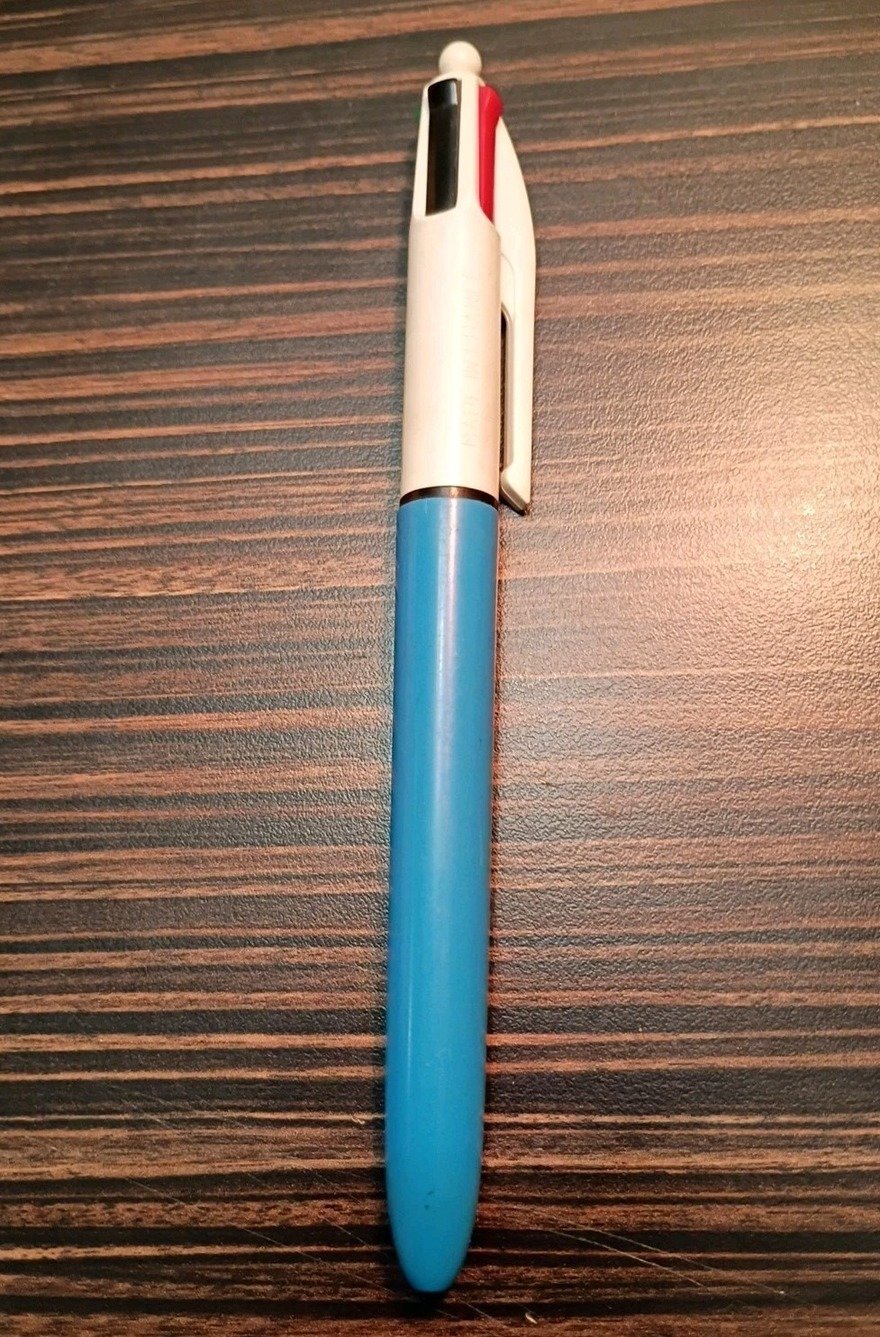
Released in 1970 by French writing utensil company Bic, the 4 Color Pen was aimed at French schoolchildren, and featured four spring-loaded cartridges providing black, blue, red and green inks. And it wasn’t just French schoolchildren. Released in the US the following year, by mid-decade, all of us wanted one of these in our pencil boxes. (It was a simpler time…) Says Core77:
The product became so ubiquitous in America that I think most people didn't even realize it was a French invention.
By the way, here’s something we just learned: that ball at top of the pen? It was for dialing rotary phones. Go figure.
As clever as the design was, it still bore the flaws of ’70s thinking: The pen was sealed shut and therefore disposable. People tended to burn through the blue ink first, and then the pen was tossed, even though the other three colors still had plenty in the chamber. Bic later rectified this by providing a threaded barrel and selling refill cartridges.
And because everything old is new again, also via Core77, Japan’s Pentel has just come out with the Multi 8, an eight-color mechanical pencil that is not a million miles away from our old friend from the 70s.
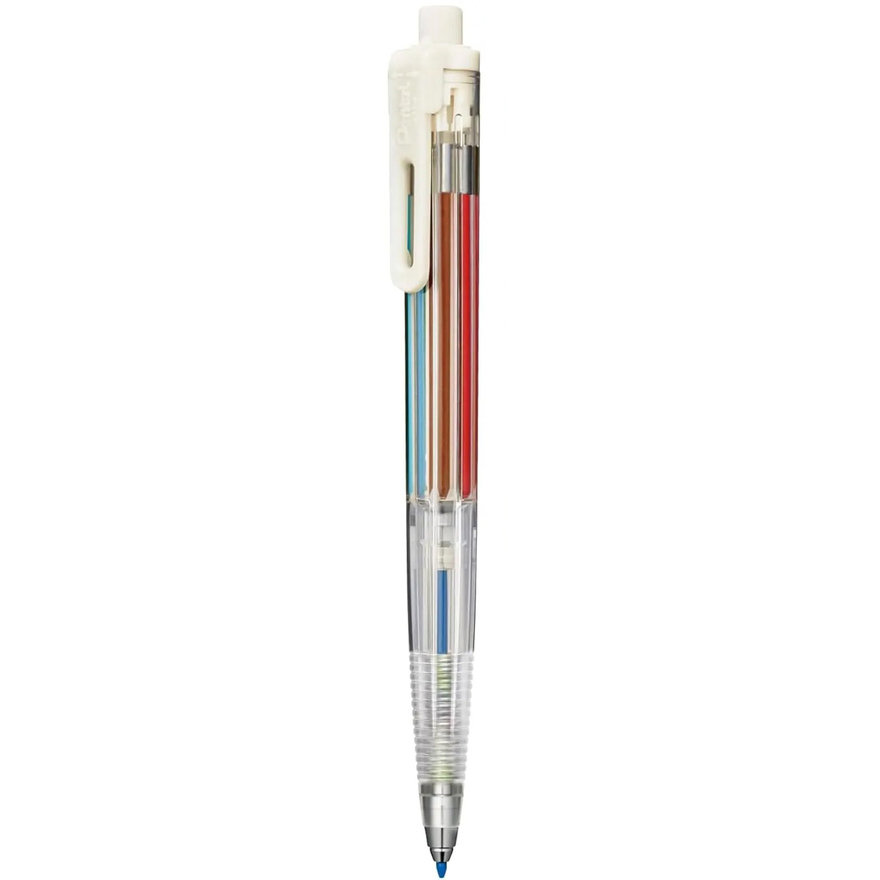
And while it holds eight colors at one time, there are actually 12 colors available, so they can be swapped out.
Pentel had originally aimed the Multi 8 at artists, designers, and architects, but it found an unexpected market:
Religious readers. Thanks to (non-affiliated-with-Pentel) influencer videos, the Multi 8 has become popular for those studying and annotating scripture. Indeed, religious retailers specifically market the Multi 8 as a “Scripture Marker.”
It has other markets as well.
Pentel also makes a version with special leads “For Checking Use.” That loses a little something in translation: This version is for editors and designers who need to mark up documents, where the marks won't be picked up by a copy machine or blueprint machine.
Pencils. Always evolving.
This Blessed Plot, This Earth, This Realm…
If you have ever read a biography of William Shakespeare, you know that very little is actually known about his life—and not just his upbringing in Stratford-Upon-Avon, but even when he was a successful and popular playwright and actor in London. For ages, scholars knew that Shakespeare had lived in the Blackfriars section of London, but no one knew exactly where. He is known to have staged plays at the Blackfriars Theater and he apparently owned property somewhere in the vicinity. There is a plaque at 5 St. Andrew’s Hill hinting at the proximity of the Bard’s lodgings and indicates that “a property” was purchased by Shakespeare in March,1613. But, again, no one knew exactly where.
Until now.
Lucy Munro, a professor at King’s College London and a Shakespeare expert, got her hands on and analyzed two documents from the London Archives and another from the National Archives that revealed the exact location of Shakespeare’s property. From (of all places) Popular Mechanics:
As it turns out, the building that had long been vaguely marked by the plaque stands directly over the site of Shakespeare’s home away from home after he retired from his theatre career. While he spent most of his retirement in Stratford-Upon-Avon, one of the documents that Munro analyzed from the London Archives was a plan that had been drawn up when renovations on a London property were underway two years after the fire [i.e., the Great Fire of London in 1666]. The plan doesn’t actually show anything built across the friary gate (which would have had no foundations), but it did illustrate that the property’s dimensions would have been sufficient to accommodate two houses back in the mid-1600s. This suggests that Shakespeare spent more time in London than scholars had previously assumed.
At the time, the property that included Shakespeare’s lodgings spread over the end of Burgon Street and the eastern stretch of Ireland Yard, as well as an area on Burgon Street and St. Andrew’s Hill. We found it on Google Maps:
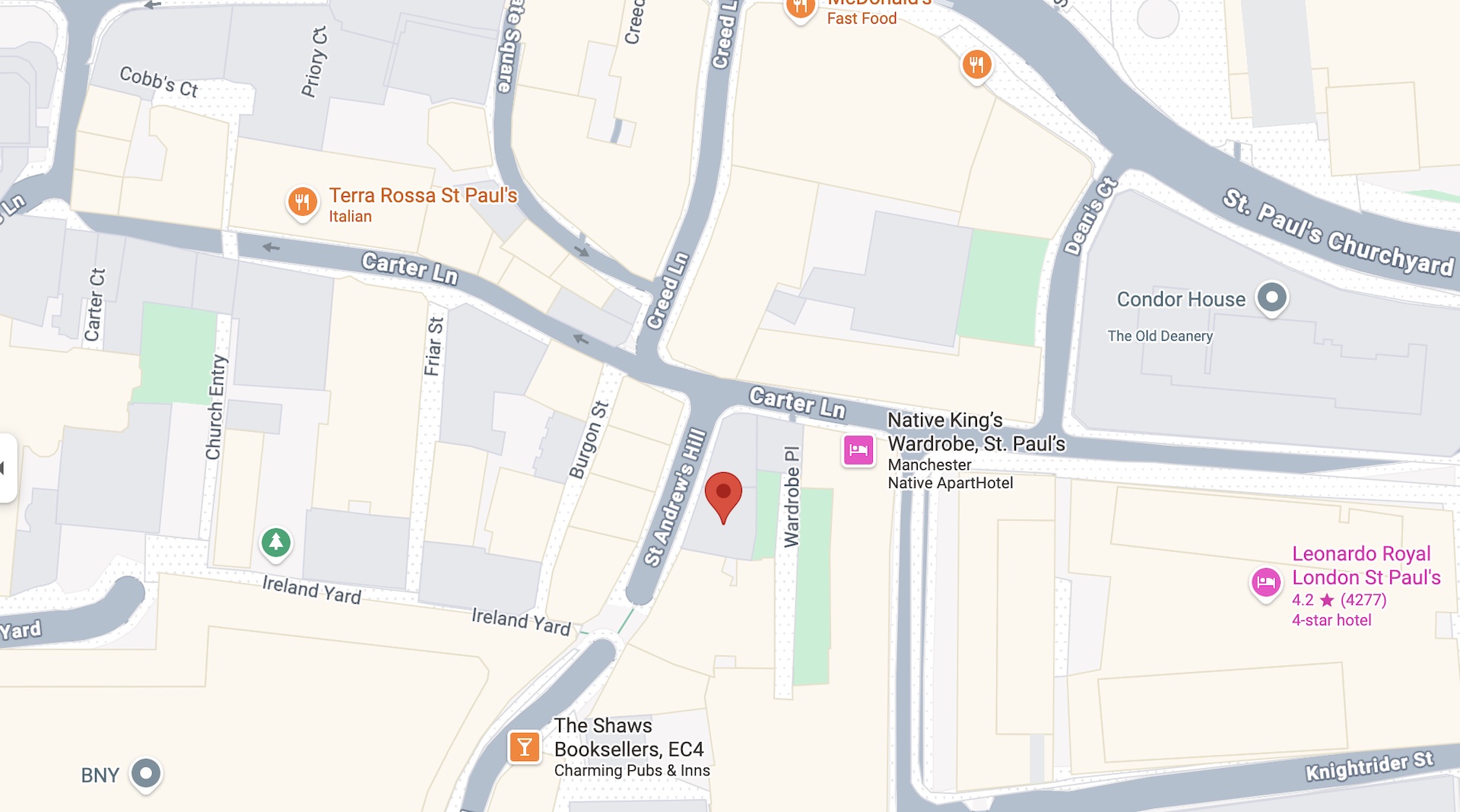
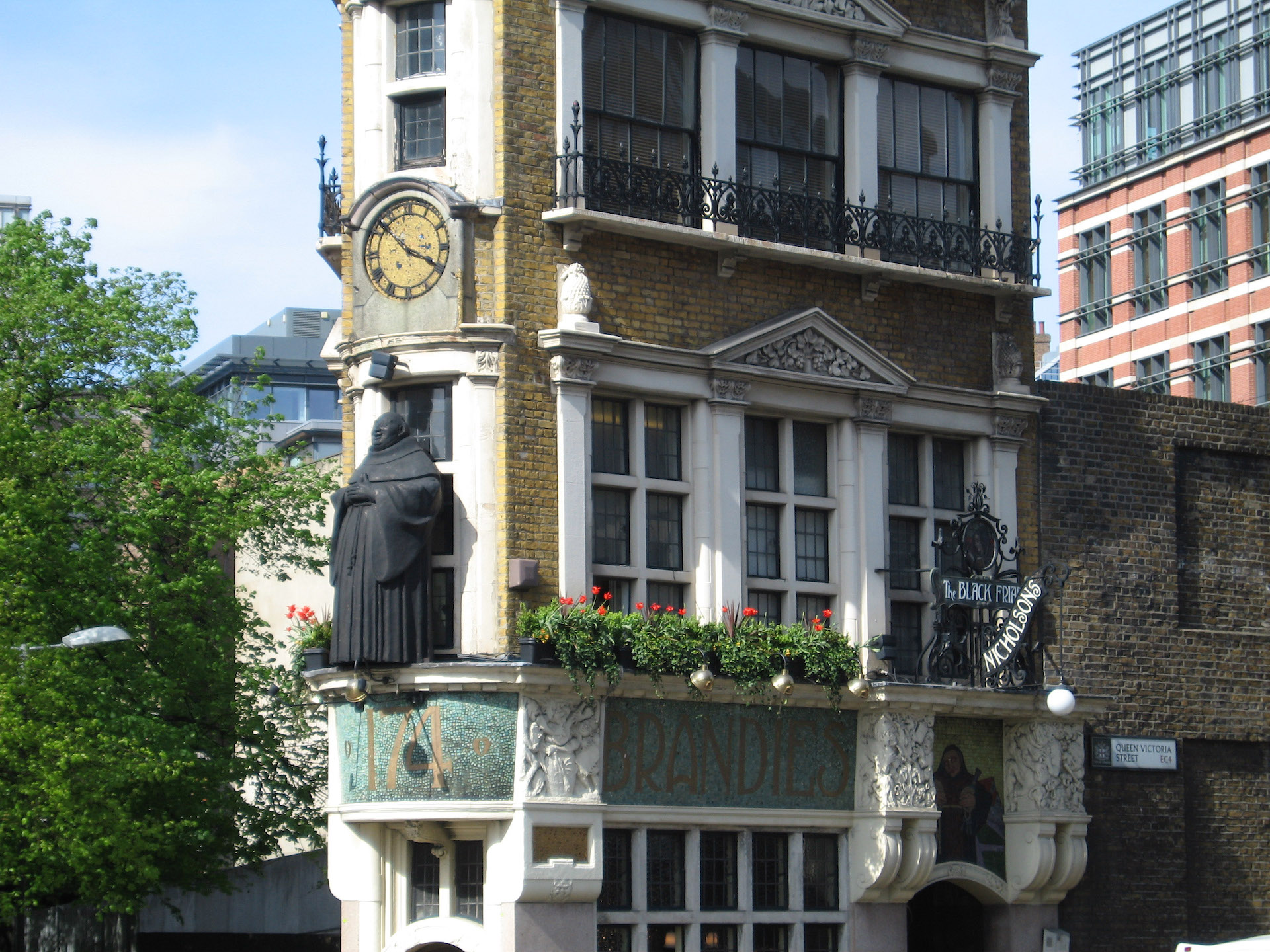
So, Shakespeare fans, plan your pilgrimages accordingly. Google Maps also helpfully points out that it is only a three-minute walk to The Black Friar pub, a favorite London destination of ours.
Using the Old Beanie
Do you find typing to be an onerous task? Do you wish you could just think something, and it would just appear on screen? A dangerous idea, to be sure, but the reality may only be a beanie away. Says TechSpot:
Silicon Valley startup Sabi is the latest entrant to suggest using the brain as an interface device. The company is developing a noninvasive device that translates internal speech into text. Rather than relying on implanted hardware, Sabi is building a wearable device – initially in the form of a beanie, with a baseball cap version coming later – that captures neural activity and converts it into words displayed on a screen.
This is in contrast to approaches by companies such as Neuralink, that are looking at brain implants. Sabi is more sanguine about non-invasiveness.
Sabi's system uses electroencephalography (EEG), a technique that records electrical activity in the brain through sensors placed on the scalp. The medical and research industries have used EEG for decades, and recent advances have enabled the decoding of limited forms of imagined speech. The challenge is that these signals are weak and diffuse when measured noninvasively, especially compared to the high-fidelity data captured by implanted electrodes.
The solution? More sensors. While conventional EEG systems use anywhere from a dozen to a few hundred sensors, Sabi claims its hat will include between 70,000 and 100,000 sensors, boosting the resolution. Still, roadblocks remain.
Even with denser sensing, decoding internal speech remains a complex problem. Neural patterns associated with language vary not only across individuals but also within the same person over time. Factors such as fatigue, attention, and context can subtly shift how the brain encodes intended words, complicating real-time interpretation.
As one would expect, Sabi is turning to AI to help with identifying common patterns linked to inner speech. That should be fun.
By the way, this is Sabi’s conception of their beanie:
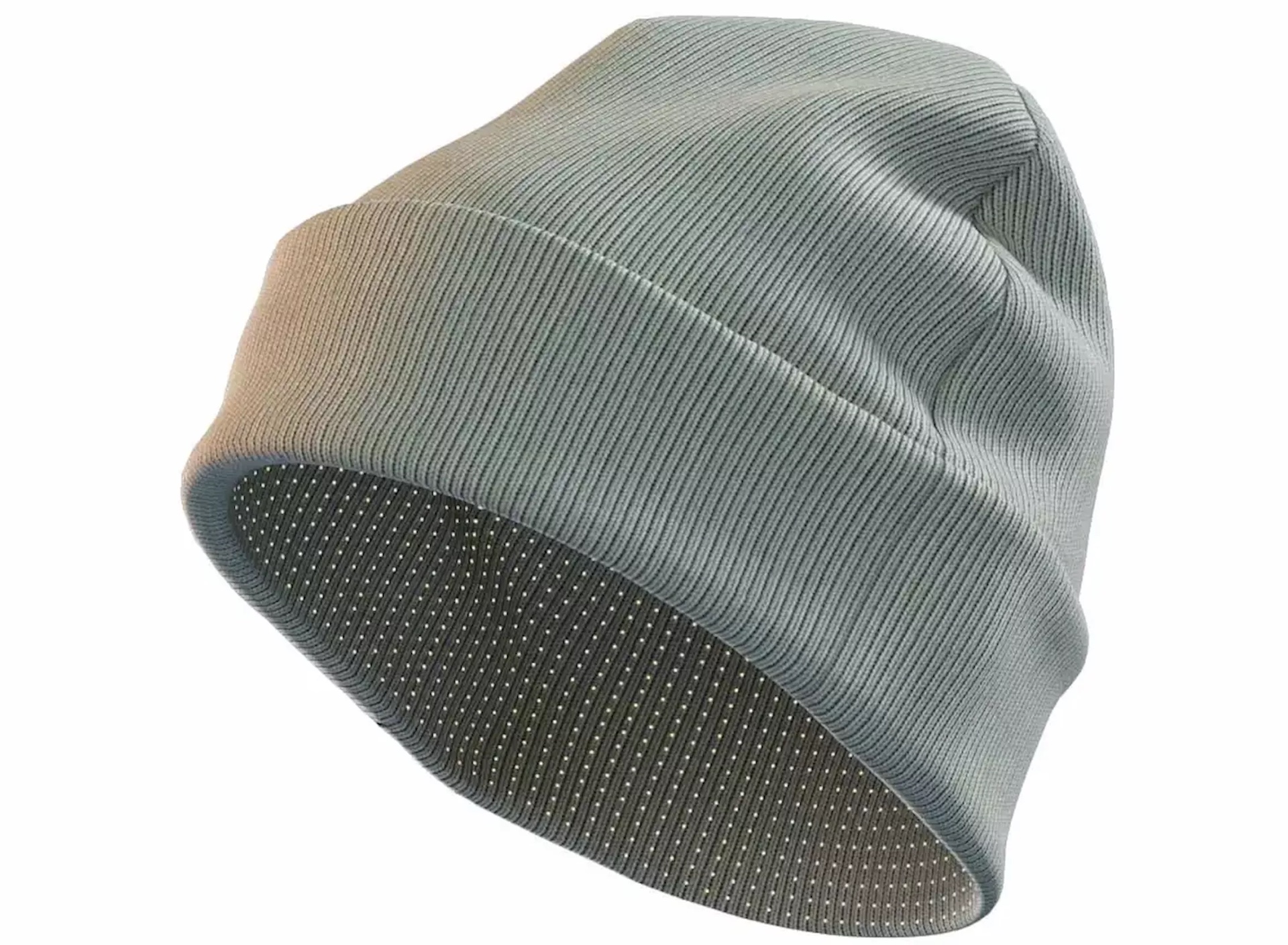
That’s not what usually comes to mind when we think of a “beanie.” That’s more of a knit hat or stocking cap. This is what we usually think of as a beanie:
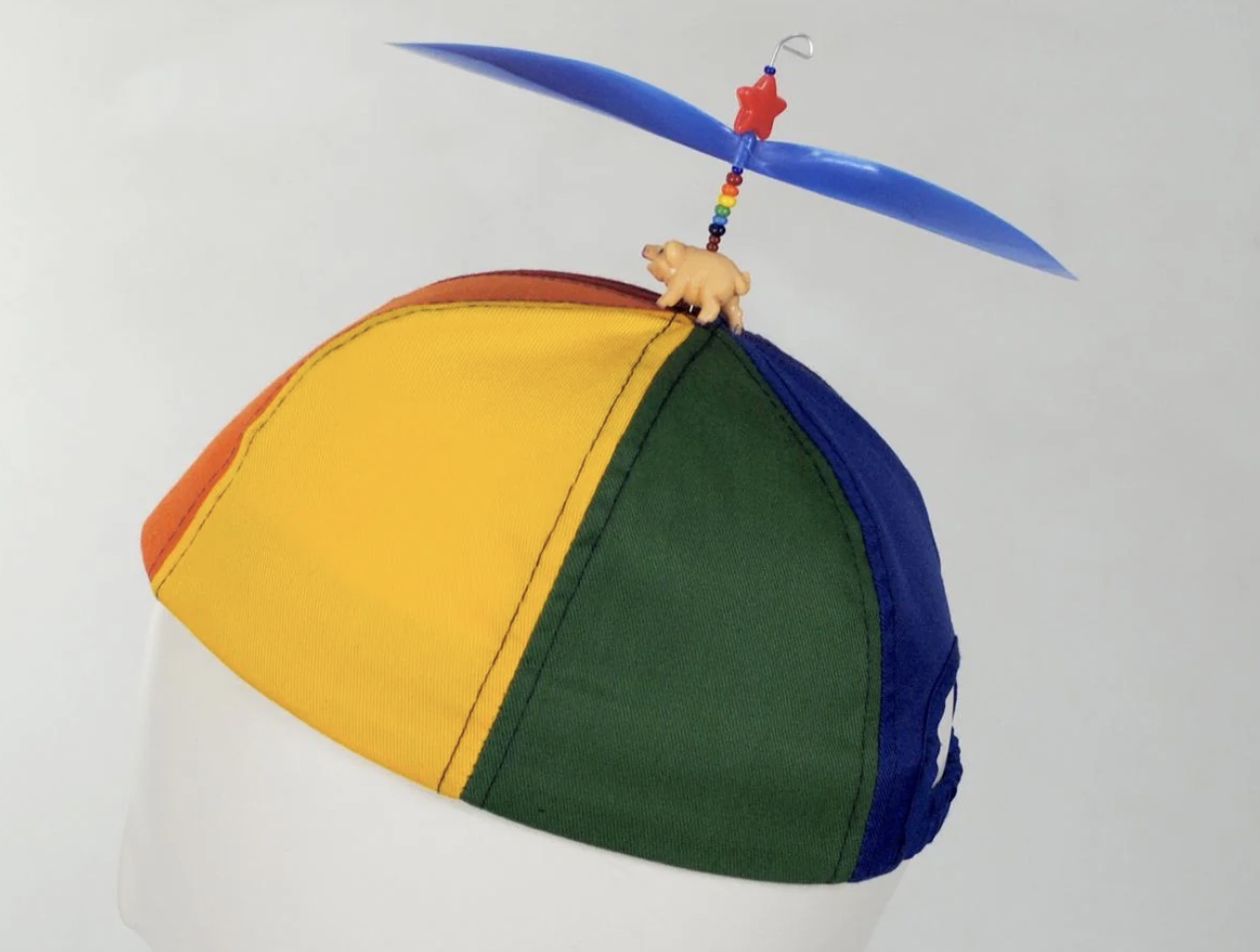
Which, coincidentally, is exactly what we wear when compiling Around the Web.
A Grand Illusion
OK, ready for this? Ready to have your brain manufacture a color? Well, tough, it’s going to happen anyway. Check out, via Boing Boing, this image:
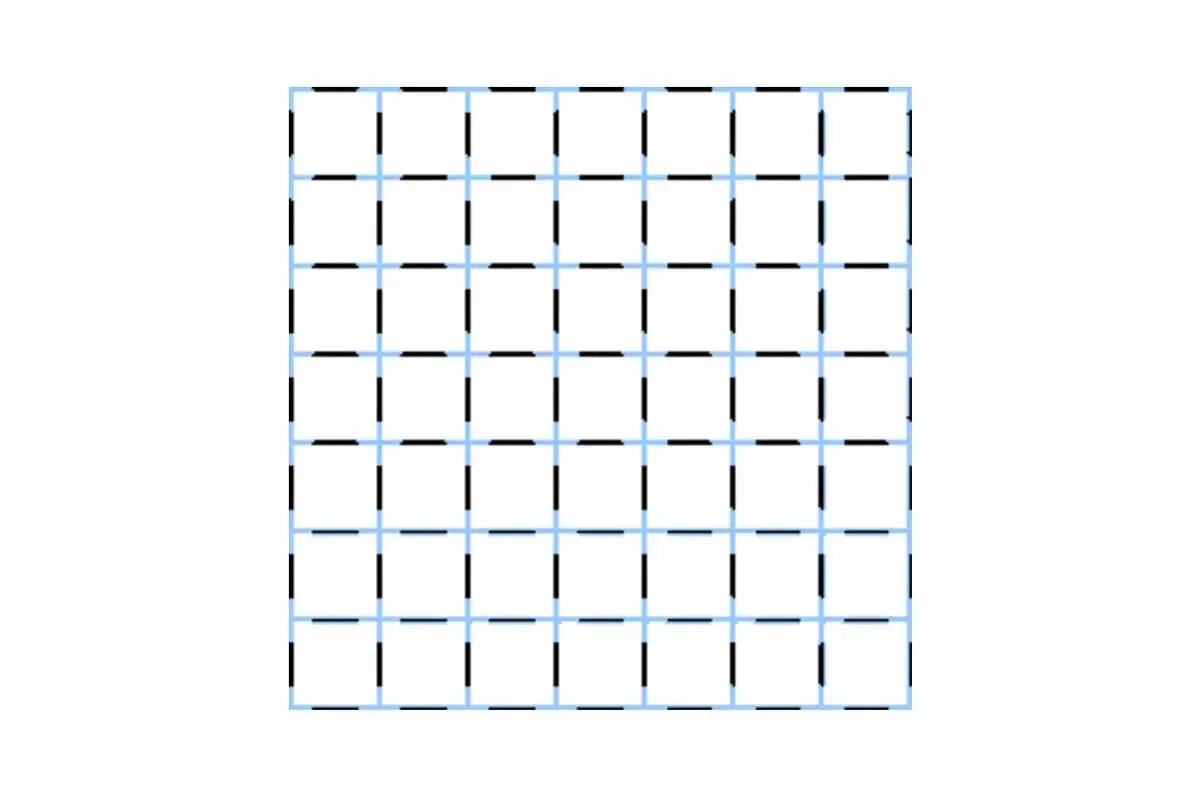
It’s a visual illusion called neon color spreading, in which the brain makes up color where none really exists.
Arrange a set of black spokes radiating from a center, then recolor short pieces of each spoke to red or blue, positioning them so they'd trace an invisible circle. The white space inside that circle will glow with a faint tint, like a translucent colored disk hovering over the pattern. The pixels there are white; your brain is painting the color in.
Trippy, huh?
Saturated reds and blues produce the strongest effect; greens and yellows barely work. Dim lighting deepens the glow, bright rooms suppress it. Break the alignment of the colored segments even slightly and the whole percept collapses.
Postcards from the Edge
You’ve probably seen the stories about how soldiers tracking their workouts on Strava gave away their location. Now, via TechSpot, a $5 Bluetooth tracker gave away a warship’s whereabouts, specifically, the HNLMS Evertsen, a Dutch air-defense frigate, which was on active deployment in the eastern Mediterranean.
Journalist Just Vervaart concealed a Bluetooth tracker inside a postcard. He then mailed it to the vessel using publicly available instructions from the Dutch Ministry of Defense, intended to help families send mail to loved ones stationed on the ship. This protocol provided enough details to get the tracker aboard the ship.
Once delivered, the tracker transmitted location data for roughly 24 hours. During that window, it showed the Evertsen departing from Heraklion, Crete, traveling west along the island's coastline, and then turning east toward Cyprus. The signal stopped the following day when the ship was near Cyprus and has not resumed since.
The crew found it, but not immediately, leading to some procedural changes.
The Ministry is now moving to ban greeting cards containing batteries and is reviewing broader mail-handling guidelines.
From a military standpoint, the incident shows that operational security can be weakened not by advanced tools, but by the combination of open information and cheap consumer technology. The same dynamic applies to enterprises, where convenience-driven processes can create exposure when paired with modern sensing and networked devices.
Around the Clock
Here’s another entry in our category of “clocks that make it difficult to determine what time it is.” In this case, via Boing Boing, it is a clock that “sorts the 43,200 times of day alphabetically.”
Ryan Bateman, a Berlin-based technologist who tinkers with oddball web projects at boat.horse, built a working clock that tells time by spelling every possible moment in English and sorting the list A to Z. He calls it The Accursèd Alphabetical Clock, and it runs in your browser with two modes to pick from.
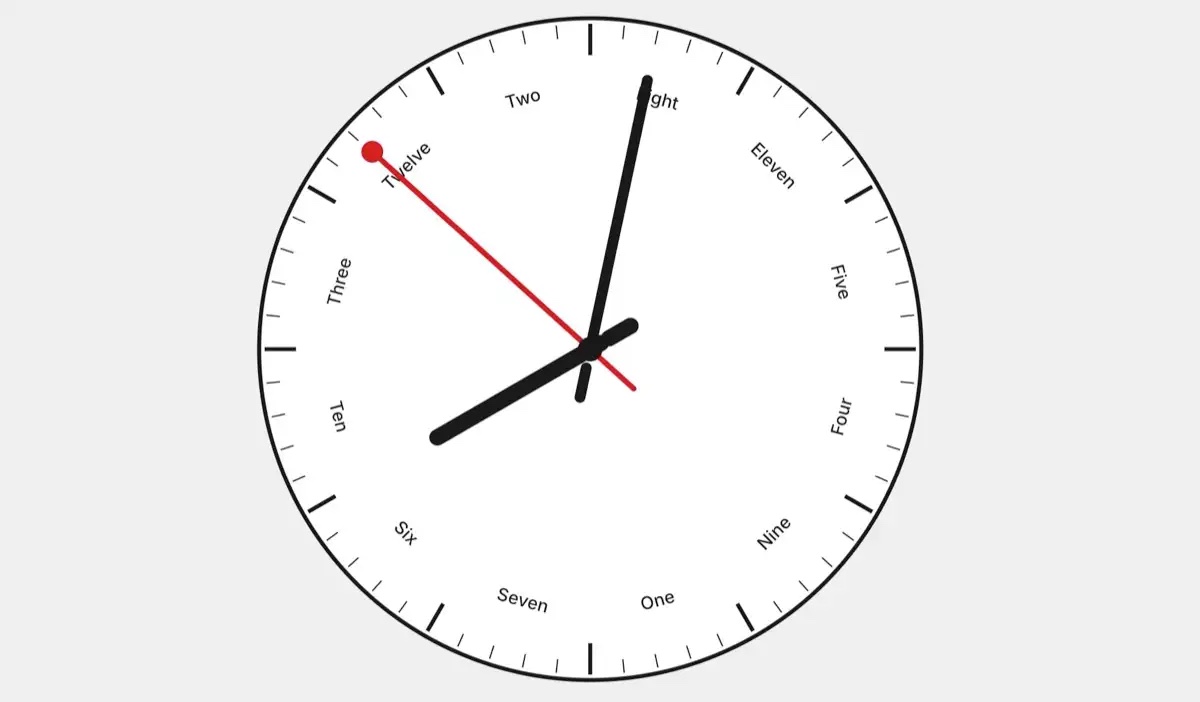
In Three-Hand mode, each hand moves through its own alphabetized dial. The hour hand travels through "eight, eleven, five, four, nine, one, seven, six, ten, three, twelve, two." The minute and second hands do the same dance through their 60-entry lists. The hands jump around the face in an order that makes no mechanical sense but follows perfect dictionary logic.
If you really want to be late for meetings or appointments, you’ll want to run it in Combined mode.
All 43,200 distinct times in a 12-hour day ("eight eleven and forty-two," "nine forty-six and thirteen," and so on) get written out in English and arranged dictionary-style. A single red needle sweeps around a dial containing every entry, pointing to whichever phrase matches right now. The needle moves, but not in any direction that corresponds to the passage of time.
We’ve had days like that.
Never the Twain Shall Mail
Mark Twain (né Samuel Clemens) was many things—novelist, humorist, essayist—but he could also be a big pain in the butt. Never one to not speak his mind, he once said of Jane Austen, “Every time I read Pride and Prejudice I want to dig her up and beat her over the skull with her own shin-bone.” So he was more on the prejudice side than the pride side. Anyway, Twain had many rivalries, but for some reason one of his biggest, via Atlas Obscura, was with the United States Postal System.
Twain’s opposition to the post office spanned several decades, with the acclaimed author making many of his gripes public. He published newspaper articles with harsh criticisms of new regulations, publicly feuded with members of the service, and even scored a meeting with Britain’s Postmaster General in an effort to makes overseas shipments more affordable.
So what was his beef with USPS?
Twain often shared his frustrations about the post office in editorials for local newspapers, with particular ire reserved for Postmaster General David M. Key, a senator who served in the role from 1877 until 1880. Key’s new, stricter regulations on mailing letters and packages infuriated Twain to no end. In an 1879 letter to the Hartford Courant, Twain expressed discontent at Key’s most recent addition to the postal regulations, which required envelope addresses to be more specific (addresses before were not required to list streets or states, often times a name and city would suffice).
Well, that is unreasonable. Good thing Twain never lived to see the advent of the ZIP code.
Graphene is Always On My Mind
Was it a good week for graphene news? It’s always a good week for graphene news! Patient recruitment completed for first-in-human study evaluating its graphene cortical interface. From (who else?) Graphene-News:
The study (NCT06368310), sponsored by the University of Manchester and conducted with Northern Care Alliance NHS Foundation Trust, evaluated INBRAIN’s graphene-based cortical interface during neurosurgical procedures for brain tumor resection. The primary objective was to assess safety, with secondary objectives focused on signal quality, stability, stimulation capability, and suitability for intraoperative use with standard surgical tooling and recording equipment.
Ten patients were recruited for the study, and eight patients were treated surgically, “with no perioperative device failure observed during use.”
In the study, INBRAIN’s graphene electrodes were used alongside standard-of-care monitoring systems during tumor resection procedures. In select cases involving awake surgery, patients performed functional tasks such as object naming, enabling researchers to evaluate the system’s performance to decode speech representation in the brain in high resolution.
The study reportedly demonstrated a favorable perioperative safety profile with no device-related adverse events observed in all eight patients treated up to surgical discharge. The primary endpoint of the study includes a post-operative safety monitoring period of 90 days, which includes imaging.
Ultimately, the study showed that graphene can safely interface with the human brain. Well, we’re off to go get some now.
Run, Robot, Run
A friend of ours ran the Boston Marathon earlier this week—not setting any records, but we applaud her for finishing, something we could never do (even if we were 30 years younger). Humans who can participate in these kinds of events—and even win them—are truly impressive. Gotta say, though, we find robots accomplishing similar feats to be a lot more meh. Take, for example, the recent Beijing robot half-marathon. Says Engadget:
This year's half-marathon hosted more than 100 competitors, with first place going to Honor, better known for its smartphones, and its red-clad robot named Lightning. Living up to the name, the gold medalist finished the race in 50 minutes and 26 seconds. That's several minutes faster than the human record that was recently set by Uganda's Jacob Kiplimo last month.
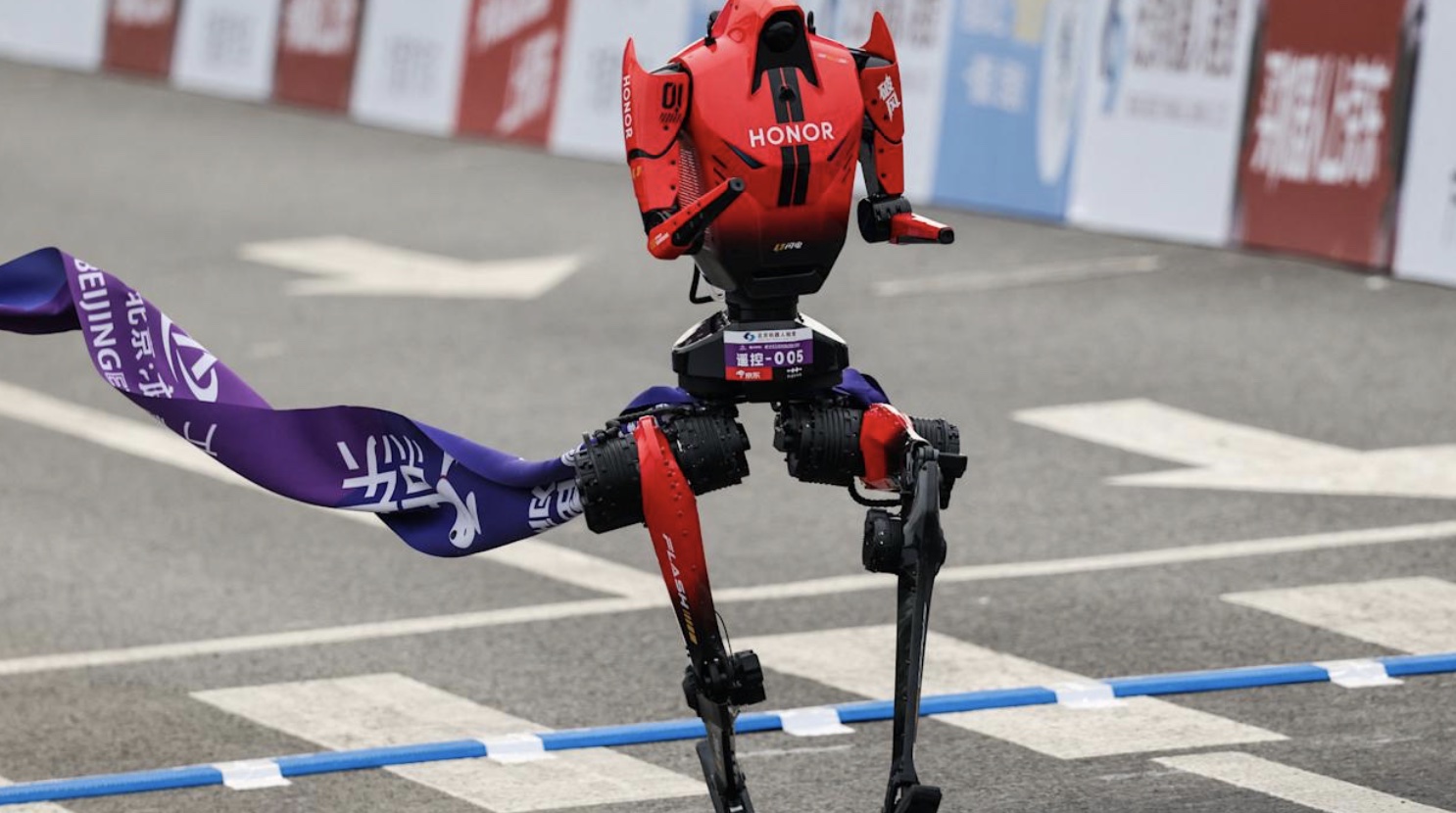
Yes, but it’s a machine that likely won’t need PT for the next six months.
However, the BBC reported that around 40 percent of the robots competed autonomously this year, while the rest were remote-controlled. Despite the rapid improvements, this year's event still had its fair share of crashes, even from Honor's robots.
Still, we do acknowledge that it’s a remarkable feat of engineering to get bipedal robots to move like that, autonomously or not. But we’d rather cheer on humans.
Prego Convo
When a company like Prego—the pasta sauce company—introduces a new product, it’s not usually a million miles removed from something like a new flavor (new Ranch dressing-flavored pasta sauce, or something like that). One doesn’t expect some kind of dystopian nightmare technology from a spaghetti sauce maker. Says Wired:
Prego, the pasta sauce company, is getting into hardware with a device that sits on your table and records dinner conversations.
Huh?
The Connection Keeper is a round puck that houses two microphones for recording around the table. The recorder was developed in partnership with StoryCorps, the 23-year-old nonprofit that has recorded conversations with more than 720,000 people about their lives.
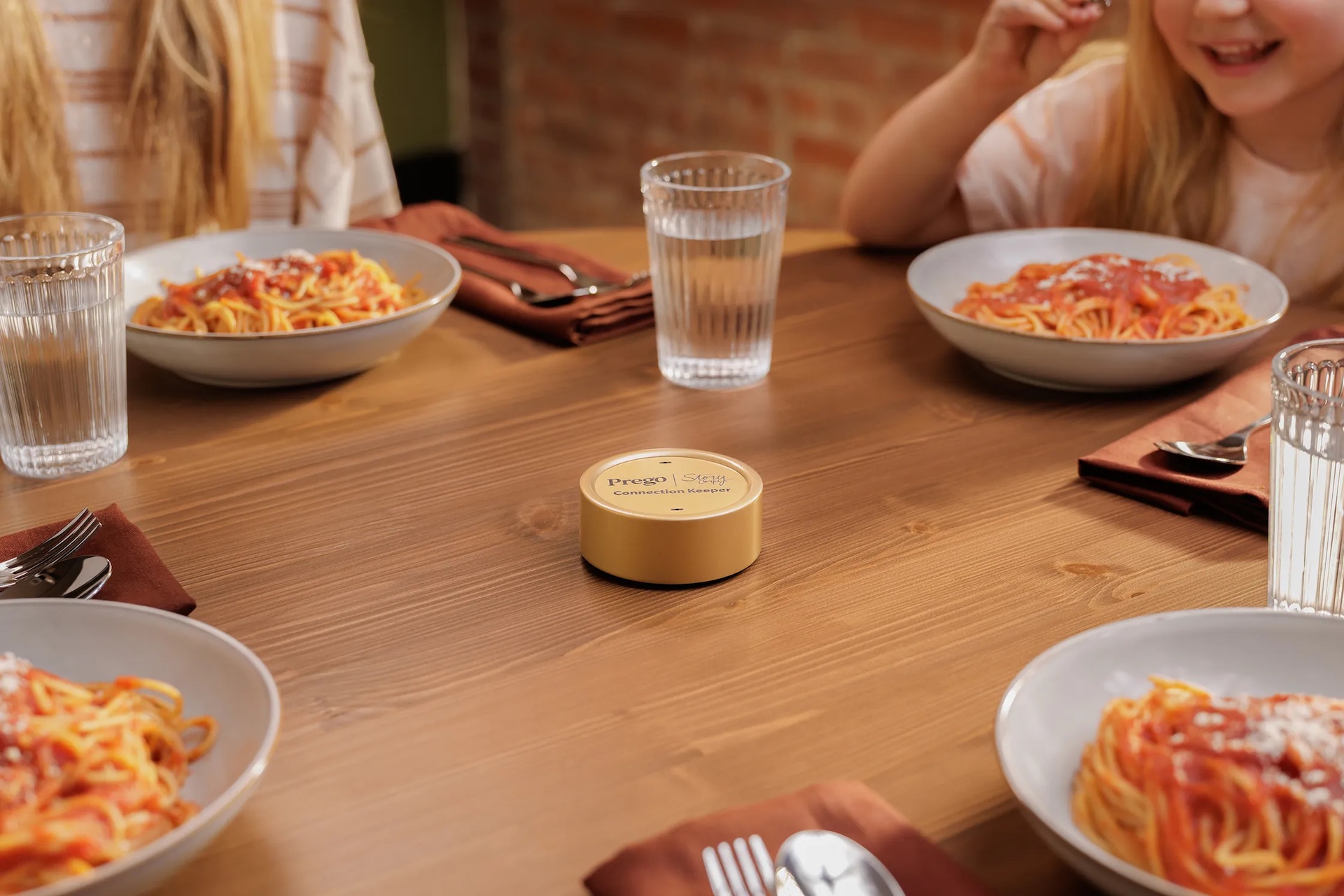
They’re sure that’s not just a can of cat food? That picture also has a weird, Led Zeppelin Presence cover feel to it...
Sounds annoying, but there is, we suppose, a noble motivation behind it: “The whole goal here, Prego and StoryCorps say, is to advocate for keeping people off their phones during dinner.”
“Everything now is AI, and everyone has their phones on the table,” says Elyce Henkin, a managing director of StoryCorps studios and brand partnerships.
Non-sequitur! Your thoughts are disjointed. I am Nomad. Anyway:
“It interrupts the conversation and the flow. We wanted to get rid of that and go back to the basics and have everyone talking to each other.”
Well, this probably started generations ago with televisions near the dinner table, and probably radio before that.
But how does having dinner conversations recorded stimulate those conversations? We’d be less likely to say anything if it could be played back to us at some point. Well, it turns out that the Connection Keeper comes with “cue cards” inspired by StoryCorps “designed to prompt conversations between family members.” So…fighting AI by providing people with prompts. That’s how we like our irony.
There is no truth to the rumor that Ragu is going one better and will videorecord dinner conversations and automatically convert and upload them as short TikTok videos—dang, that’s not even out of the realm of possibility…
This Week in Printing, Publishing, and Media History
April 20
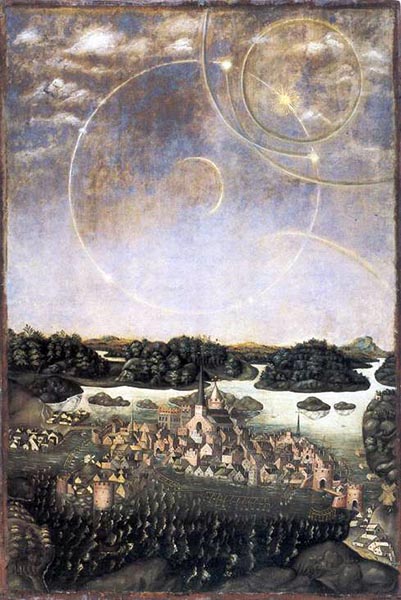
1535: The sun dog phenomenon observed over Stockholm and depicted in the famous painting Vädersolstavlan.
1893: Spanish painter and sculptor Joan Miró born.
1912: Anglo-Irish novelist and critic, creator of Count Dracula, Bram Stoker dies (b. 1847).
April 21
753 BC: Romulus founds Rome (traditional date), but not in a day.
1816: Cornish-English novelist and poet Charlotte Brontë born.
1838: Scottish-American environmentalist and author John Muir born.
1910: American novelist, humorist, and critic Mark Twain dies (b. 1835).
1934: The “Surgeon's Photograph,” the most famous photo allegedly showing the Loch Ness Monster, is published in the Daily Mail. (In 1999, it was revealed to have been a hoax.)

1977: Annie opens on Broadway.
April 22
1616: Spanish novelist, poet, and playwright Miguel de Cervantes dies (b. 1547).
1707: English novelist and playwright Henry Fielding born.
1724: German anthropologist, philosopher, and academic Immanuel Kant born.
1876: The first game in the history of the National League was played at the Jefferson Street Grounds in Philadelphia. This game is often pointed to as the beginning of Major League Baseball.
1899: Novelist and critic Vladimir Nabokov born.
1977: Optical fiber is first used to carry live telephone traffic.
April 23
1616: English playwright and poet William Shakespeare dies (b. 1564).
1850: English poet and author William Wordsworth dies (b. 1770).
1985: Coca-Cola changes its formula and releases New Coke. The response is overwhelmingly negative, and the original formula is back on the market in less than three months.
2005: The first ever YouTube video, titled “Me at the zoo,” was published by user “jawed.”
April 24
1704: The first regular newspaper in British Colonial America, The Boston News-Letter, is published.
1731: English journalist, novelist, and spy Daniel Defoe dies (b. 1660).
1800: The United States Library of Congress is established when President John Adams signs legislation to appropriate $5,000 to purchase “such books as may be necessary for the use of Congress.”
1905: American novelist, poet, and literary critic Robert Penn Warren born.
1940: B is for Birthday—American author Sue Grafton born.
1990: The Hubble Space Telescope is launched from the Space Shuttle Discovery.
April 25
1901: New York becomes the first U.S. state to require automobile license plates.
1908: American journalist Edward R. Murrow born.
1953: Francis Crick and James Watson publish “Molecular Structure of Nucleic Acids: A Structure for Deoxyribose Nucleic Acid” describing the double helix structure of DNA.
1954: The first practical solar cell is publicly demonstrated by Bell Telephone Laboratories.
1961: Robert Noyce is granted a patent for an integrated circuit.
April 26
1564: Playwright William Shakespeare is baptized in Stratford-upon-Avon, Warwickshire, England (date of actual birth is unknown). Much ado about nothing?
1785: French-American ornithologist and painter John James Audubon born.
1889: Austrian-English philosopher and academic Ludwig Wittgenstein born.
1970: The Convention Establishing the World Intellectual Property Organization enters into force.
1989: People’s Daily publishes the April 26 Editorial which inflames the nascent Tiananmen Square protests.
2019: Marvel Studios’ blockbuster film, Avengers: Endgame, is released, becoming the highest grossing film of all time, surpassing the previous box office record of Avatar.