Facing the Year
Last year, designer Alberto Molina set himself a unique goal: design a new typeface each month. The project was called FontMonth and was conceived as a way to “understand typography from the inside out—by drawing, testing, breaking, and rebuilding letters over and over again.” Says Print magazine:
The project also reinforced something that often gets lost in discussions about type design: drawing letters isn’t only about consistency or technical precision. It’s also about voice.
By the end of the year, FontMonth had produced more than two thousand glyphs, but the real result was less measurable—a deeper understanding of how forms evolve, how constraints generate ideas, and how discipline and play can coexist.
Some examples:
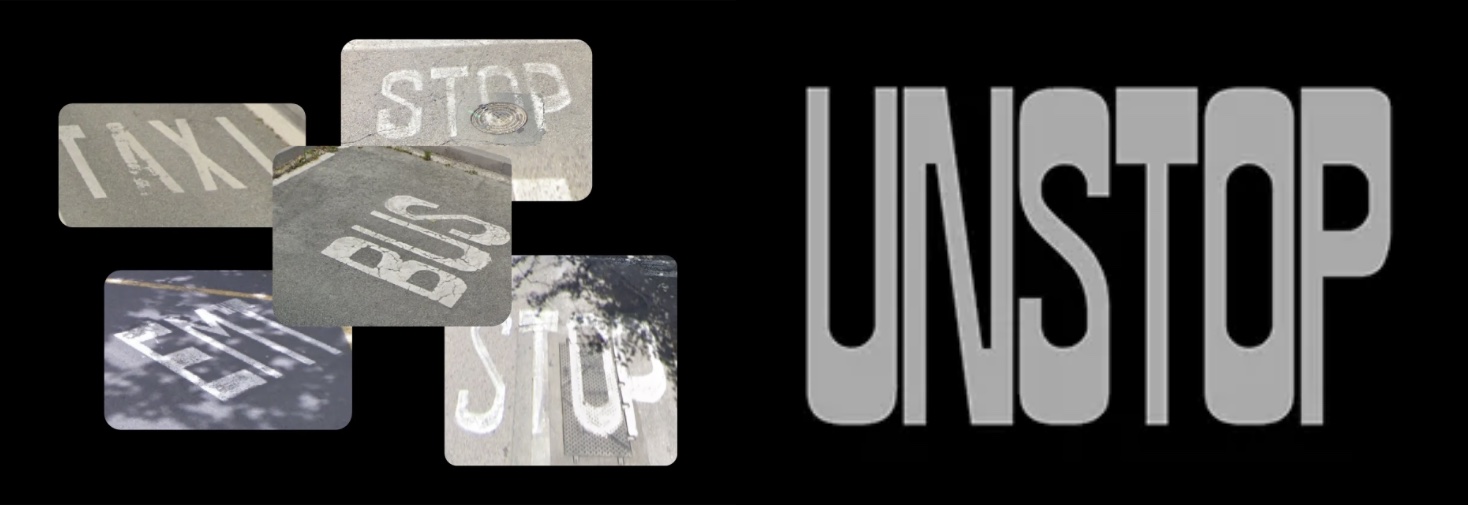
Unstop started with observation—Spanish road signage became the reference point for a typeface built from everyday visual language.
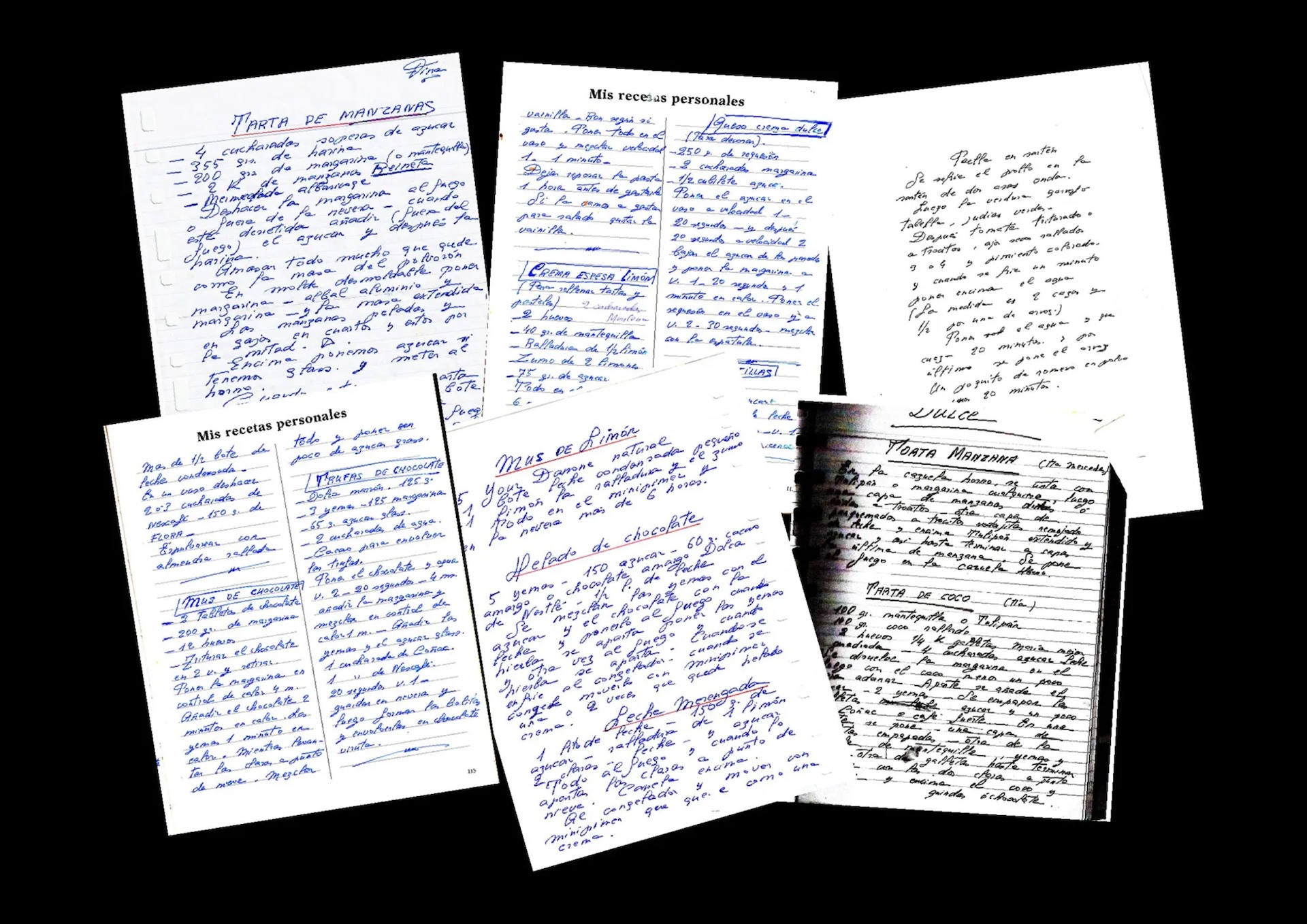
Some of the most meaningful designs were the most personal. Fina is based on handwritten recipes from Molina’s paternal grandmother, each letter carefully vectorized while preserving the irregular rhythm of the original writing.
Be sure to check out the full FontYear here.
Boxing Day
One dilemma we are faced with when it comes to packaging is that corrugated cardboard is recyclable and compostable, but the tape, glue, or other adhesive used to form and seal the box is not. And while recycling facilities can filter these things out, corrugated boxes put into a compost pile will add microplastics and other bad stuff into the soil. What is to be done? Via Core77, Chinese company Yuto Packaging has created the Zero-Glue Express Box, which can be assembled without adhesives—and doesn’t need tape to close.
Instead, the sheets have been designed with a locking tab of “an ingenious design — it cannot be opened without causing damage,” the company writes, “effectively preventing theft and tampering while ensuring aesthetics, practicality and environmental sustainability.”
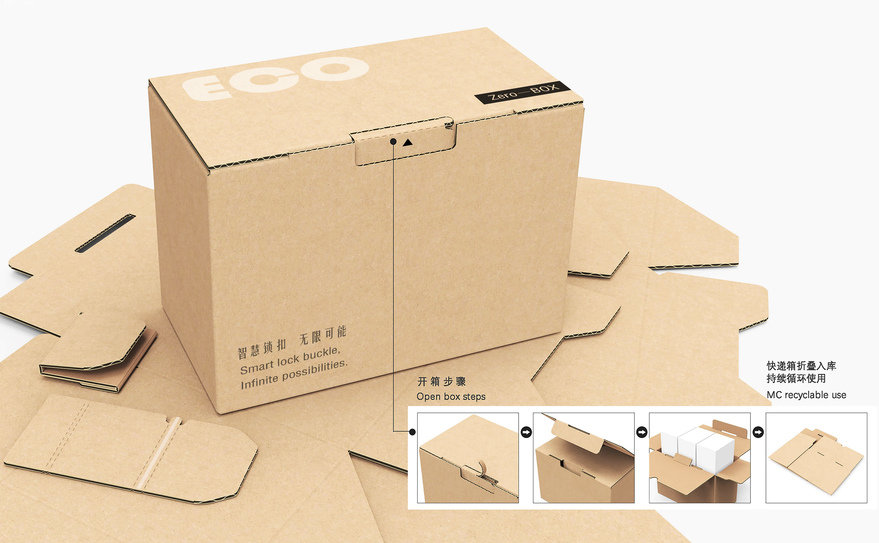
The box can be recycled or composted easily enough, although we presume that if “it cannot be opened without causing damage” it can’t be reused as a box.
Interestingly, a commenter wrote:
I work in the packaging machinery industry and there’s nothing innovative about this box/carton. It’s basically an auto-bottom carton with a double tuck top flap. These are all designs that have been around for decades. There are also a number of alternative designs that do not use glue (cold or hot).
Touché.
Games People Play
Here’s a subset of graphic design that rarely gets much consideration: board games. Via a blog called Pathetic Fallacy, a detailed look at the graphic design of Parker Brothers board games of the 1970s.
From around 1970 to 1980, the Salem, Massachusetts-based Parker Brothers (now a brand of Hasbro) published games whose innovative and fanciful designs drew inspiration from Pop Art, Op Art, and Madison Avenue advertising. They had boxes, boards, and components that reflected the most current techniques of printing and plastics molding. They were witty, silly, and weird. The other main players in American games at the time were Milton-Bradley, whose art tended towards cartoony, corny, and flat designs, and Ideal, whose games (like Mousetrap) were mostly showcases for their novel plastic components.
Founded in 1883, Parker Brothers was a family-owned business that would acquire child-friendly board games from independent developers (they did not do their own R&D), and initially the games were very simple and easy to produce. They also did not do any marketing. Still, they had managed to acquire some hot properties, such as Monopoly and the British game Cluedo (renamed Clue in the US). In 1968, Parker Brothers was acquired by General Mills (of breakfast cereal fame) and the whole operation changed.
For the first time, the company had project leaders and marketing staff (largely on loan from General Mills). They brought in professionals in design, production, and printing. They bought a new state-of-the art press capable of much finer detail and vibrant colors, and they switched to making their components out of injection molded plastic. They were out to compete, and that meant to advertise on the new medium of television, and to be distinctive.
The post runs through some distinctively designed and produced games of the 1970s—The Inventors, Waterworks (A Leaky Pipe Card Game), etc., only two of which we remember (Pay Day and Bonkers, the latter only from the TV commercial).
In the Bonkers graphic design Parker Brothers reached an apotheosis. For years they had been cribbing from the cheekier parts of Madison Avenue; here they went full-on Peter Max with shooting stars, lightning bolts, volumetric arrows, and exclamation points everywhere. The board starts pretty empty, but players fill in the spaces with U-shaped cards that change the flow of movement, directing tokens forwards and backwards and eventually into spaces that score or remove points.
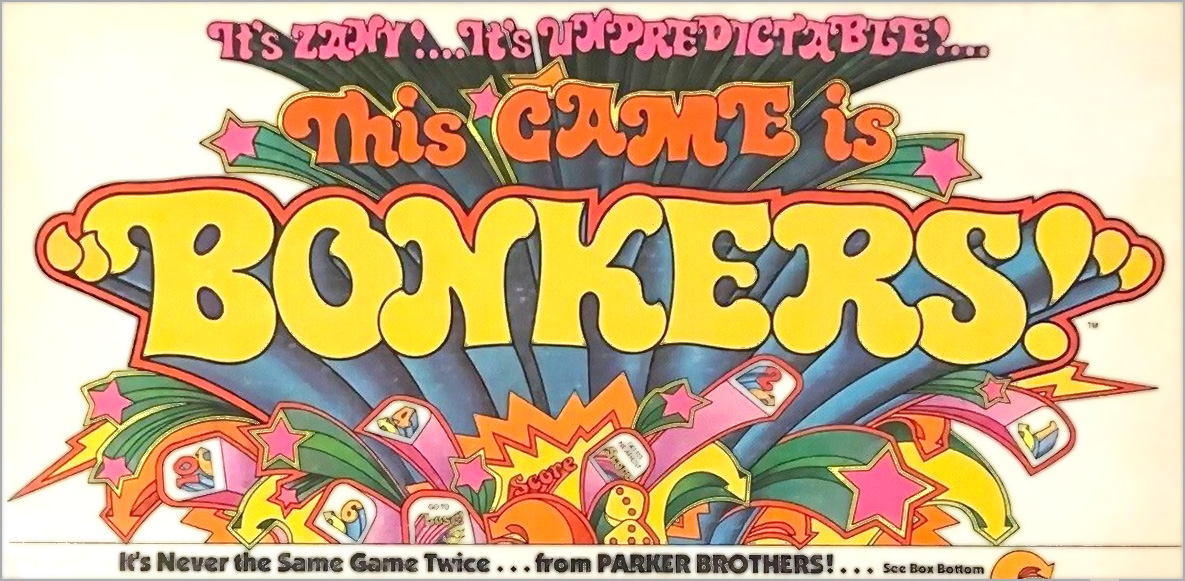
Yes, it was the 70s.
Unfortunately, the graphics promise a zanier time than the gameplay delivers. The mechanic of players altering the rules of the game as they go is a good one (see modern games like Fluxx), but that’s not really what’s happening here; instead, the normal clockwise race around the board is being lengthened by digressions. It’s still a fixed track. But man, does it look great.
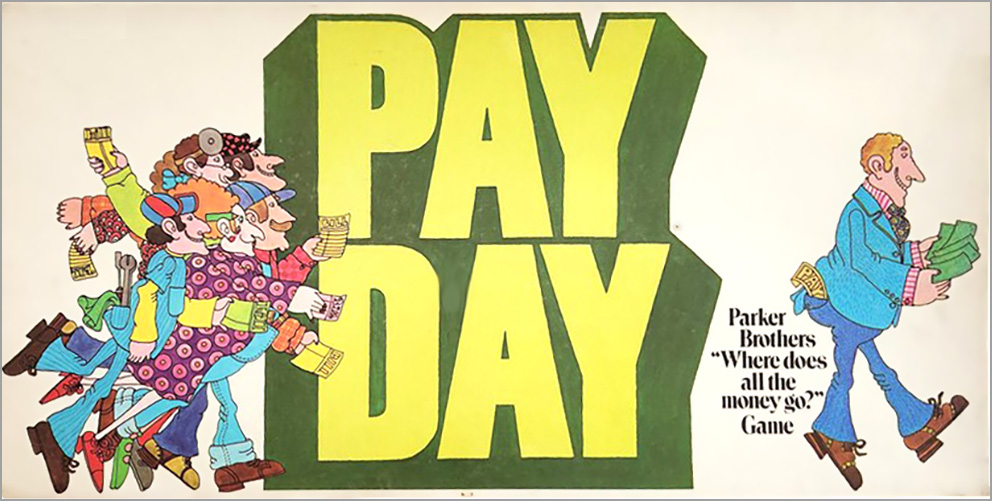
Bonkers was designed by Paul J. Gruen, who also designed Pay Day, with graphics inspired by The Beatles’ Yellow Submarine.
Toward the end of the 70s, Parker Brothers transitioned to electronic games and toys, like Merlin and even cartridges for the Atari 2600. It merged with Kenner in 1985, then sold to Tonka in 1987. In 1991, everything got absorbed by Hasbro.
Fun times.
Nailed It
Some of you—who played 1970s Parker Brothers board games like Bonkers—may remember the mood ring, a piece of jewelry containing a thermochromic element that changed color depending on the temperature of the wearer’s finger. Mood rings were a fad in the mid-1970s (roughly contemporaneous with the Pet Rock—remember when fads were harmless fun?) but faded quickly as most fads do.
The same basic principle—sort of—has now been applied to what might be called “mood nails.” A company called iPolish (not based in Warsaw) has developed press-on acrylic fingernails that change color when an electric charge is applied. No, they don’t require you to stick your fingers in an electrical outlet. Says Engadget:
In order to enjoy kaleidoscopic nails, you’ll need to charge the wand, which then connects to your phone. Once you’ve selected your color of choice, you just put the tip of the nail into the wand, and it’ll pass a short charge into the nail to change it.
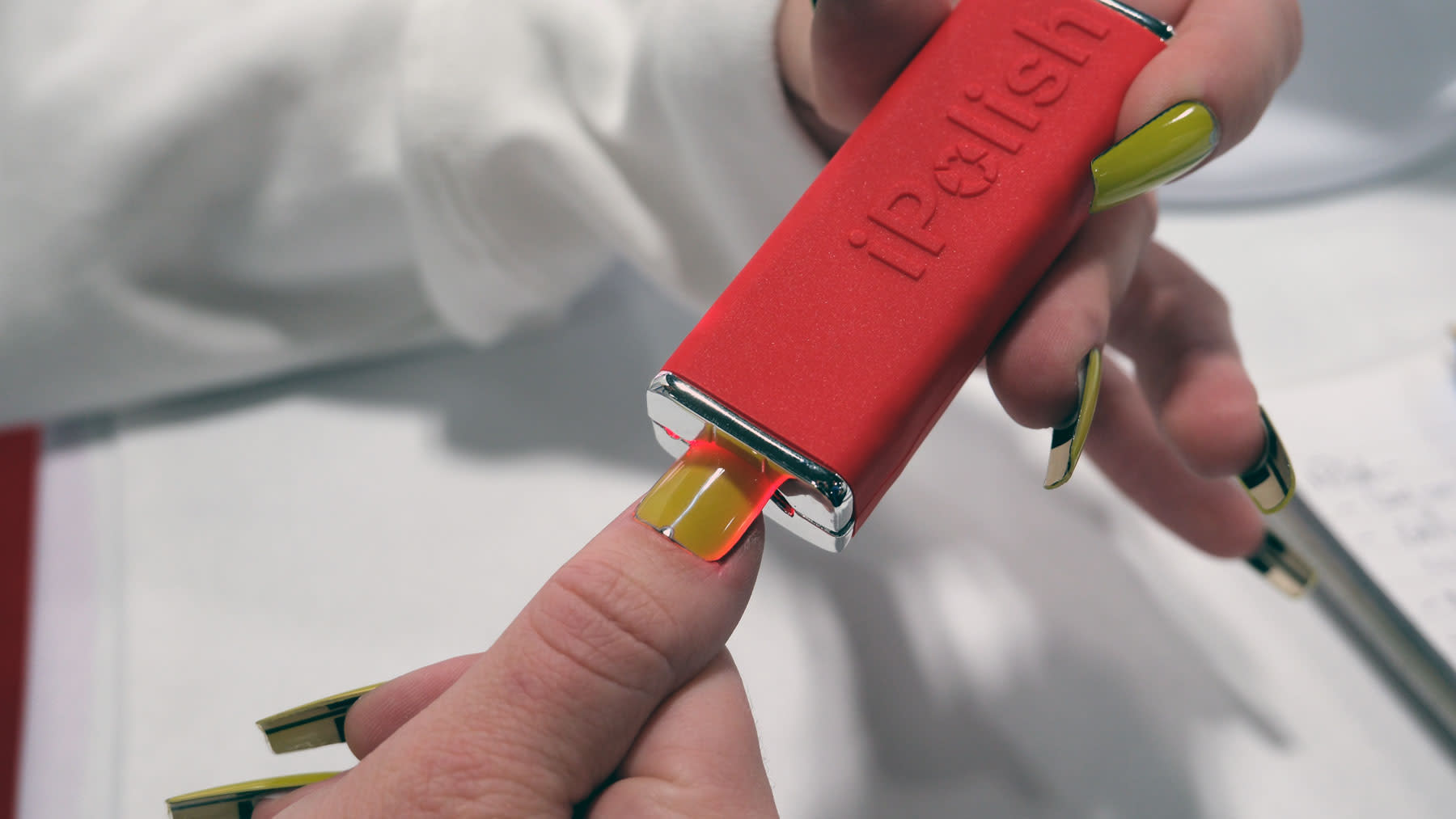
Syncing one’s fingernails to one’s phone…surely that’s a sign of the Apocalypse.
iPolish says that each nail can display 400 colors, and can be changed as many times as the user would like. So, if you’re coordinating your nails with your outfits, you’re not bound to a single color palette in the weeks between salon visits.
A steal at $95 for a starter set, which includes two sets of nails, one in “Ballerina” cut, one in “Squoval.” OK. Presumably fingernail experts know what that means.
Botsitter
There is an old joke about automation that goes something like: the factory of the future will employ only a dog and a human. The job of the dog is to keep the human away from the machine, and the job of the human is to feed the dog. Waka waka.
We were reminded of this joke when we read about, via Futurism, one of the newest jobs in the field of robotics: robositting.
New reporting by the Wall Street Journal documented the deployment of Digit, a humanoid robot, to a factory assembly line in South Carolina. For eight hours each day, the bipedal bot toils at the Schaeffler plant in Cheraw, SC, where — under the watchful eyes of a human “Agility contractor” — it operates a stamping press.
Since the robot can’t detect humans (yet), it needs to be sequestered in a Plexiglas enclosure for health and safety reasons, but they say that’s likely to change by the end of the year.
What any of that means for human workers remains to be seen. Agility, the company behind Digit, told the paper that the robots currently pan out to between $10 to $25 an hour, depending on how the factory decides to deploy them. Going forward, Agility’s co-founder, Damion Shelton, said the goal is to hit around $2 to $3 an hour.
Entry-level jobs for humans at that plant start at $20 an hour so do the math. Or at least until the robots become sentient enough to demand higher pay.
Robokaren
But then perhaps robots already have become sentient enough to complain about their jobs. Via Gizmodo, a robot worker in a California restaurant apparently went nuts.
The scene was captured on video by a patron, and it’s really something. As the clip commences, we see the robot facing the camera, dressed in a bright orange apron emblazoned with the words “I’M GOOD!”. Despite the creepy LED smile that adorns its “face,” it projects the same air of world-weary misery you might expect from any human stuck working at a depressing-ass chain restaurant during a promo event for a second-tier Disney movie.
This robot, one senses, has had enough. And sure enough, we watch as it raises its arms, pauses for a moment, and then brings them down on a stack of plates. Smash! And once again for good measure! And now that it’s got everyone’s attention, the robot moves onto the main event.
Which was to dance with relentless abandon, and two human staff members had trouble restraining it.
In all seriousness, it’s disconcerting to see how much trouble the staff have restraining the robot, and it’s also notable that—inevitably—turning it off appears to require the use of a phone application.
Watch it here.
Another sign of the Apocalypse.
Core Competencies
(Optional musical accompaniment to this item.)
We have never worked in a corporate environment (mercifully), but we have been to enough meetings and seen enough presentations (and read enough press releases) to know that “corporatespeak” is, via Boing Boing, “‘a specific style of communication that uses confusing, abstract buzzwords in a functionally misleading way,’ cognitive psychologist Shane Littrell told the Cornell Chronicle’s Kate Blackwood.” This is not to be confused with “technical jargon,” which is a form of communication designed to precisely refer to or clarify something.
We mention this because researchers at Cornell University have developed the Corporate [BS] Receptivity Scale (CBSR), which measures how much someone likes “empty organizational rhetoric.”
High scorers thrive in corporate environments but are measurably worse at their jobs than people who keep things to the point. Unfortunately, it turns out that synergizing the collaterization graph with productivity incentives doesn't.
Maybe they just need to be incentivized. We’ll circle back around and let you know.
Littrell made a corporate [BS] generator (not linked to, alas, but presumably similar to ones like this, this and this) and asked 1,000 office workers to rate the [BS] (“We will actualize a renewed level of cradle-to-grave credentialing,” “pressure-test a renewed level of adaptive coherence”), with quotes from successful real-life business folks as the control. Those more susceptible to the [BS] were more likely to idolize their own leaders and less likely to score well on standard tests of effective workplace decision-making.
…Given as an example of the highest degree of corporate [BS] is Pepsi's infamous 2009 marketing plan (“The Pepsi DNA finds its origin in the dynamic of perimeter oscillation”) and the worst email ever, as sent by an executive vice president at Microsoft, Stephen Elop, when laying off thousands of workers. (“Microsoft’s strategy… must be accomplished within an appropriate financial envelope”)
The study develops a taxonomy of corporate [BS], such as “pseudo-profound,” “persuasive,” “evasive,” and “organizational.” Action item: find the study online at Research Gate.
Shakespeare’s Sense of Humor
There has been a seemingly infinite number of analyses of the plays of William Shakespeare, focusing on virtually every aspect of those works. One we have not come across before is food. That is, how do foods mentioned in Shakespeare’s plays reflect on the characters consuming them? For example, in Taming of the Shrew, Petruchio attempts to “tame” the short-tempered Katherine by grabbing a leg of roast mutton from her, saying, “It engenders choler, planteth anger/better ’twere both of us did fast.” Roast mutton? Well, via Atlas Obscura, the characterization of foods in Shakespeare is reflective of how the Elizabethans thought that the effects of foods on the body were not just physical but also affected the mind and soul.
Shakespeare’s peers still hewed to the 2nd-century theories of the Greek physician, Galen, who believed the balance of four humors (categories of fluid) corresponded to different temperaments. A surplus of blood meant a person was sanguine, too much black bile made someone melancholy, yellow bile meant you were choleric, and an oversupply of phlegm caused one to be, naturally, phlegmatic.
Different foods were thought to affect the balance of these humors.
roast mutton, for example, was considered hot and dry, spurring choleric (irritable) temperament. Which is why Petruchio deprived hot-tempered Katherine of her mutton.
Shakespeare’s characters often personified a specific temperament. Hamlet and Ophelia, who exude melancholy, should avoid tart or sour foods such as lemon and vinegar in favor of sanguine (moist and warm) foods such as basil, butter, and, apparently, peacock. Yet, in his grief over Ophelia’s death, Hamlet claims he will drink vinegar, though it will exacerbate his melancholy, to prove his love for her.
Two especially bad imbalances in Elizabethan society were at opposite end of the consumption spectrum: gluttony (aka fat-shaming—for example, the comic character of Falstaff “epitomized both the humoral imbalance and sin of gluttony”) and fasting:
In The Merry Wives of Windsor, Slender, a thin man characterized by his refusal to accept food or drink, is portrayed as dim-witted.
…Shakespeare mentions food in every one of his plays. Like the real-life experiences of his contemporary audience, these are not just dinner parties or polite conversation, but moments that reveal virtue and sin.
To eat, or not to eat, that is the question.
Engineers Get Toothless
Consider the gear, the cornerstone of human invention for millennia. Gears drove the chariots of antiquity, the robotic arms of modernity, and nearly everything in between. And whilst gears have remained virtually unchanged for thousands of years, engineers at NYU are, ahem, gearing up to change their very nature. Eschewing teeth and even physical contact, the new gears made of liquid. Says TechSpot:
The study, published January 13 in Physical Review Letters, replaces the metal or plastic cogs of conventional gears with controlled flows of liquid. In their experiments, NYU physicists submerged two cylinders in a viscous water – glycerol mixture. When one cylinder rotated, the liquid currents it generated transmitted motion to the other – mimicking the performance of classical gears, but without any interlocking parts.
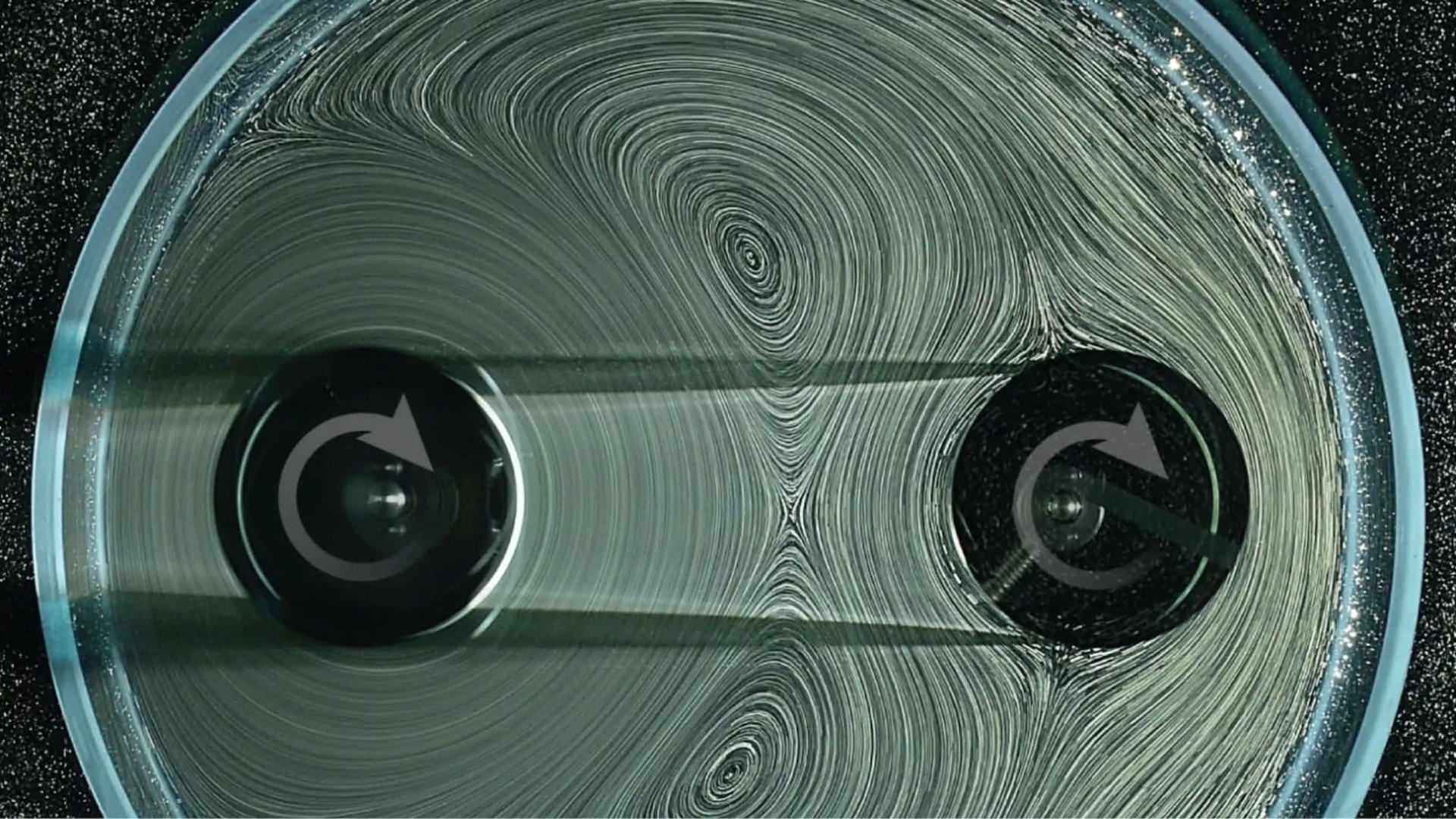
NYU professor Jun Zhang, who led the project alongside mathematics professor Leif Ristroph, highlighted the broader significance of the finding: the ability to tune rotation speed and direction without solid contact offers a fundamental redesign of the gearbox itself.
Watch a video here.
Now instead of a cog in the machine, we can be a drop in the machine.
Graphene Gets On the Nerves
Was it a good week for graphene news? It’s always a good week for graphene news! Graphene enables biosensing of depression. From (who else?) Graphene-News:
University of Delhi researchers have developed an environmentally friendly method to synthesize graphene oxide quantum dots (GO QDs) for use in ultrasensitive biosensors capable of detecting key neurological biomarkers such as dopamine and serotonin.
…This work not only advances the development of dual-mode (optical and electrochemical) biosensors but also demonstrates the potential of GO QDs as a next-generation nanomaterial for neurological diagnostics. By combining the quantum efficiency of traditional QDs with the high functional surface area of graphene oxide, the University of Delhi team achieved a robust, sustainable sensing platform that could pave the way for rapid, non-invasive biomarker detection in clinical and research applications.
Musical Flops
Granted, we are not familiar with too many music scenes these days, but one with which we are especially unfamiliar is the “floppy disk music scene.” We’re not sure which is more unexpected, that there is such a thing as a floppy disk music scene, or that floppy disks still exist at all. But, via Boing Boing, “Linked to strong punk movements with a DIY aesthetic, it is an anti-capitalist niche exploiting a medium considered dead.” Adds The Verge:
There are almost 2,300 floppy releases listed on Discogs.com, most of which are electronic, but other genres include hip-hop, a smattering of classical and jazz, a bunch of metal subgenres, and "non-music" like experimental field recordings from Norway and spoken word from China. In 2018, Rolling Stone covered a "mini-boom" of vaporwave releases on floppies, noting that the lo-fi, lobit nature of vaporwave was an obvious match for the storage constraints of the 3.5-inch. There are net labels like Loser Crew, Pionierska Records, and Strudelsoft devoted to floppy releases, which are snapped up as soon as they launch. Floppies also pop up on broader retro labels like DataDoor, which does Commodore 64 music. Floppy disks are a realm of technical extremities and some of the rarest and most collectible music in the world.
Who knew?
Perhaps there is a scene where music is distributed on paper tape.
Top Nut
What is the number one nut in America? You can insert your own joke here, but via Food & Wine, while there are generational differences in nut preference, generally speaking, the cashew is Americas favorite nut.
It bears mentioning that, botanically speaking, a cashew is not a nut, but a seed.
According to a new report by Nuts.com, 43% of Americans prefer that “nut” over all others.
That figure rises to 51% among Boomers alone, while Gen Z and Millennials say they prefer peanuts (42%) over cashews.
It bears mentioning that, botanically speaking, a peanut is not a nut, but a legume.
About 25% of Gen Zers and Millennials prefer pistachios or almonds compared to Boomers.
It bears mentioning that, botanically speaking, pistachios and almonds are not nuts, but seeds.
Gen Z and Millennials appreciate hazelnuts — both groups are three times more likely to reach for the tree nut than Baby Boomers.
It bears mentioning that, botanically speaking, a hazelnut—hey!—is actually a nut.
Still, it’s all pretty nutty.
This Week in Printing, Publishing, and Media History
March 16
1870: The first version of the overture fantasy Romeo and Juliet by Tchaikovsky receives its première performance.
1894: Jules Massenet's opera Thaïs is first performed.
1906: English-American violinist and comedian Henny Youngman born. Take his wife...please!
1926: Robert Goddard launches the first liquid-fueled rocket, at Auburn, Massachusetts.
2020: The Dow Jones Industrial Average falls by 2,997.10, the single largest point drop in history and the second-largest percentage drop ever at 12.93%, an even greater crash than Black Monday (1929).
March 17
1941: American singer-songwriter and guitarist Paul Kantner born.
1956: American actor, comedian, screenwriter, and author Fred Allen dies (b. 1894).
1973: The Pulitzer Prize-winning photograph Burst of Joy is taken, depicting a former prisoner of war being reunited with his family, which came to symbolize the end of United States involvement in the Vietnam War.
March 18
1733: German author and bookseller Christoph Friedrich Nicolai born.
1768: Irish novelist and clergyman Laurence Sterne dies (b. 1713).
1850: American Express is founded by Henry Wells and William Fargo.
1932: American novelist, short story writer, and critic John Updike born.
1961: American singer-songwriter and guitarist Grant Hart born.
March 19
1813: Scottish missionary and explorer David Livingstone born, we presume.
1895: Auguste and Louis Lumière record their first footage using their newly patented cinematograph.
1928: Irish-American actor, director, producer, and screenwriter Patrick McGoohan born. Be seeing you.
1931: Gambling is legalized in Nevada. (What are the odds it’ll catch on?)
1933: American novelist Philip Roth born.
1962: Bob Dylan releases his first album, Bob Dylan.
2008: British science fiction writer Arthur C. Clarke dies (b. 1917).
March 20
43 BC: Roman poet Ovid born.
1828: Norwegian poet, playwright, and director Henrik Ibsen born (not in a doll’s house).
1852: Harriet Beecher Stowe’s Uncle Tom’s Cabin is published.
1896: With the approval of Emperor Guangxu, the Qing dynasty post office is opened, marking the beginning of a postal service in China.
1915: Albert Einstein publishes his general theory of relativity.
1922: American actor, director, producer, and screenwriter Carl Reiner born.
1923: The Arts Club of Chicago hosts the opening of Pablo Picasso's first United States showing, entitled Original Drawings by Pablo Picasso, becoming an early proponent of modern art in the United States.
1948: With a Musicians Union ban lifted, the first telecasts of classical music in the United States, under Eugene Ormandy and Arturo Toscanini, are given on CBS and NBC.
1950: English drummer, percussionist, and songwriter Carl Palmer born.
1964: Irish republican and playwright Brendan Behan dies (b. 1923).
March 21
1952: Alan Freed presents the Moondog Coronation Ball, the first rock and roll concert, in Cleveland, Ohio.
2006: The social media site Twitter is founded.
March 22
1765: The British Parliament passes the Stamp Act that introduces a tax to be levied directly on its American colonies. (Spoiler alert: it didn’t go well.)
1832: German novelist, poet, playwright, and diplomat Johann Wolfgang von Goethe dies (b. 1749).
1887: American actor Chico Marx born. (Why a duck?)
1931: Canadian actor William Shatner born.
2020: Indian Prime Minister Narendra Modi announces the country's largest ever self-imposed curfew, in an effort to fight the spread of COVID-19.